奢侈品市场

Search documents
贝恩:2026年中国个人奢侈品市场将适度增长
Guo Ji Jin Rong Bao· 2026-01-29 15:16
Core Insights - The 2025 China Personal Luxury Goods Report by Bain & Company indicates a contraction of 3% to 5% in the mainland personal luxury goods market, showing a significant easing compared to the sharp decline in 2024 [1] - The report highlights a shift in consumer behavior towards high-cost performance products that balance quality, uniqueness, and practicality, with a preference for experiential consumption such as travel and health [1] - The report notes that the high-value customer (VIC) group remains the core driver of the luxury goods market, while younger potential consumers are entering the luxury market with a more cautious and delayed approach [1] Market Performance - Different luxury categories show varied performance: beauty and personal care products are recovering with a growth of 4% to 7%, while apparel is declining by 5% to 8%, leather goods by 8% to 11%, watches by 14% to 17%, and jewelry is expected to decline by 0% to 5% compared to 2024 [1] Consumption Trends - The share of overseas luxury goods consumption has significantly decreased in 2025, with 65% of luxury consumption occurring in mainland China and 35% abroad, indicating an increase in consumption return [2] - Mainland consumers' enthusiasm for outbound travel has not diminished their willingness to purchase luxury goods domestically, aided by reduced price gaps between mainland and major overseas markets [2] - The rise of local Chinese luxury brands, particularly in beauty and personal luxury categories, is emphasized, with these brands leveraging culturally relevant product designs and competitive pricing strategies [2] Competitive Advantages - Local brands are building differentiated advantages through a deeper understanding of local consumer preferences, implementing a "China-first" customer outreach strategy, and enhancing access to local quality resources and materials to establish price advantages [3] - Despite ongoing market volatility and uncertainty, Bain forecasts moderate growth for the Chinese personal luxury goods market in 2026, supported by the expanding middle-income group and improving consumer confidence [3]
免税巨头又出手了,中国中免拟以近28亿收购DFS港澳业务
Nan Fang Du Shi Bao· 2026-01-20 14:23
Core Viewpoint - China Tourism Group Duty Free Corporation (China Duty Free) has announced a partnership with LVMH and DFS Group to acquire DFS's travel retail business in Hong Kong and Macau for up to $395 million, enhancing its market presence in the Greater China region [2][3]. Group 1: Acquisition Details - China Duty Free will acquire 100% of DFS Cotai Limitada and all operational assets of DFS stores in Hong Kong and Macau, excluding the City of Dreams store in Macau [3]. - The acquisition includes exclusive rights to a series of brands and intellectual properties under DFS in the Greater China region [2]. - LVMH and Robert Miller will subscribe to new H-shares issued by China Duty Free as part of the transaction, which will be a small portion of the proceeds from the sale [3]. Group 2: Strategic Cooperation - A strategic cooperation memorandum has been signed between China Duty Free and LVMH to establish a partnership in retail sectors aligned with their strategic interests [5]. - This collaboration aims to leverage the strengths of both companies to deepen cooperation in the Greater China region and achieve mutual benefits [5]. Group 3: Financial Performance and Market Context - DFS reported a revenue of 2.754 billion yuan and a net profit of 133 million yuan from its Hong Kong and Macau operations in the first three quarters of the 2025 fiscal year [6]. - China Duty Free's revenue for the same period was 39.86 billion yuan, a decline of 7.34% year-on-year, with a net profit of 4.42 billion yuan, down 18.89% [6]. - The luxury goods market is projected to recover, with a forecasted growth of 3% to 5% in 2026, following a slight decline in 2025 [8].



服饰行业周度市场观察-20251217
Ai Rui Zi Xun· 2025-12-17 08:38
Investment Rating - The report does not explicitly provide an investment rating for the industry Core Insights - The luxury goods market in China has passed its "crisis peak," with a projected global growth of 5% by 2026, driven by consumer confidence recovery and high-net-worth individuals [2] - The children's clothing market is experiencing accelerated concentration, with leading brands driving industry upgrades, while traditional brands face challenges [2][5] - The global eyewear market is expected to exceed $330 billion by 2030, with significant growth driven by aging populations and increased awareness of eye health [4] - The domestic lingerie industry shows signs of weak recovery and strong differentiation, with varying performance among major players [5] - The children's clothing market is projected to reach 473.8 billion yuan by 2025, attracting multiple entrants due to high margins [2][5] Industry Environment - The luxury goods market is forecasted to grow 5% globally by 2026, with China expected to grow 4% [2] - The children's clothing market is shifting towards a "consumption dividend," with Z-generation parents prioritizing brand, technology, and sustainability [2] - The global eyewear market is projected to reach $335.9 billion by 2030, with an annual growth rate of 8.6% [4] - The domestic lingerie market is characterized by weak recovery and strong differentiation among brands [5] - The children's clothing market concentration is increasing, with the top 10 brands expected to reach a 31% market share by 2025 [5] Top Brand Dynamics - Decathlon is attempting to reshape its brand image by collaborating with a French space agency to launch a space suit, aiming to shift consumer perception from "affordable" to "high-end" [8] - The brand "Yishijifeng" has rapidly risen in the apparel e-commerce sector, leveraging self-media IP advantages to achieve significant sales [9] - The brand "Aonrun" reported a 24.9% increase in net sales in Q3 2025, focusing on high-end markets and channel expansion [9] - Hema has begun selling luxury goods to enhance its platform's appeal and drive associated consumption [11] - Kering Group plans to establish a new investment department to focus on emerging brands and reduce reliance on Gucci [11] - The brand "Dai'anfen" is exiting the Chinese market due to failure to adapt to changing consumer preferences and market dynamics [12] - The outdoor brand "Bershka" is applying for a Hong Kong IPO, showcasing significant revenue growth and high gross margins [14]
SMCP计划出售控股权;杰尼亚家族第四代上台|二姨看时尚
2 1 Shi Ji Jing Ji Bao Dao· 2025-12-01 02:38
Group 1: SMCP and PUMA Developments - SMCP Group has initiated a process to sell up to 51.2% of its equity, aiming to stabilize its shareholder structure and focus on development strategies [3] - Anta Sports is listed as a potential buyer for PUMA, which has seen its stock price drop nearly 50% over the past year due to various market pressures [4] Group 2: Financial Performance of Luxury Brands - Golden Goose reported a 13% increase in net revenue to €517 million for the first nine months of the fiscal year, with a 21% growth in direct-to-consumer (DTC) sales [5][6] - The adjusted EBITDA for Golden Goose grew by 7% to €173.6 million, with an EBITDA margin of 33.6% [6] Group 3: Market Trends and Consumer Behavior - A report by Bain & Company indicates that global luxury goods spending is expected to reach €1.44 trillion by 2025, remaining stable compared to the previous year [8] - Chinese luxury consumption is projected to shrink by 3%-5% this year, with a shift towards more localized and accessible brands [8] Group 4: Leadership Changes in Luxury Brands - Ermenegildo Zegna Group announced a new leadership structure, with the fourth generation of the Zegna family taking over as co-CEOs [11] Group 5: Investments and Expansions - L'Oréal plans to invest €60 million to upgrade its perfume factory in France, aiming to double its annual production capacity to 200 million bottles [10] - Watsons is preparing for an IPO in Hong Kong and the UK, with a potential fundraising target of $2 billion [15] Group 6: Bankruptcy and Market Challenges - Parfümerie Pieper, Germany's largest family-owned perfume retailer, has filed for self-administration bankruptcy while maintaining normal operations [13] - Estée Lauder is considering selling its Korean skincare brand Dr.Jart+, which is expected to generate $150 million in revenue for 2025, significantly lower than initial expectations [14]
SMCP计划出售控股权;杰尼亚家族第四代上台
2 1 Shi Ji Jing Ji Bao Dao· 2025-12-01 02:37
Group 1: Luxury Goods Market Overview - The global luxury goods market is expected to reach €1.44 trillion by 2025, remaining stable compared to the previous year, with a trend of gradual improvement anticipated for the coming year [10][11] - The personal luxury goods market is projected to maintain stability, with a forecasted market size of €358 billion for 2025, although a decline of approximately 2% is expected this year [11] Group 2: Company Developments - SMCP Group has initiated a process to sell up to 51.2% of its equity, aiming to stabilize its shareholder structure and focus on strategic development [3] - Anta Sports is reportedly a potential buyer for German sports brand PUMA, which has seen its stock price drop nearly 50% over the past year due to various market pressures [6] - Golden Goose reported a 13% increase in revenue to €517 million for the first nine months of the fiscal year, with a 21% growth in direct-to-consumer (DTC) sales [6][7] - L'Oréal announced a €60 million investment to upgrade its perfume factory in France, aiming to double its annual production capacity to 200 million bottles [16] - Ermenegildo Zegna Group will implement a new leadership structure, with the fourth generation of the Zegna family taking over as co-CEOs [17] - Parfümerie Pieper, a major family-owned perfume retailer in Germany, has filed for bankruptcy management while continuing normal operations [19] - Estée Lauder is considering selling its Korean skincare brand Dr.Jart+, which is expected to generate approximately $150 million in revenue for 2025 [21] - Watsons is planning to list in Hong Kong and the UK, with an expected fundraising target of up to $2 billion [24]
PRADA(01913) - 2025 Q3 - Earnings Call Transcript
2025-10-23 13:32
Financial Data and Key Metrics Changes - The Prada Group recorded net revenues of EUR 4.1 billion in the first nine months of 2025, representing a 9% increase compared to the same period last year at constant FX [9] - Retail sales increased by 8% in Q3 compared to the prior year, while wholesale sales rose by 4% in the first nine months and 19% in Q3 [9][10] - Royalties grew by 11% over the periods, supported by eyewear and beauty segments [10] Business Line Data and Key Metrics Changes - Prada's performance was resilient, with a -2% change in the first nine months, while Miu Miu reported a significant growth of 41% overall and 29% in Q3 [10] - Church's also returned to double-digit growth in the quarter [11] Market Data and Key Metrics Changes - Asia Pacific saw a 10% growth in the first nine months, with Q3 showing similar trends [11] - The Americas experienced a 15% increase in retail sales over the nine months, with Q3 at +20% [11] - Europe grew by 6% in the nine months, with Q3 trends remaining positive [11] Company Strategy and Development Direction - The company is committed to creative leadership and plans to continue investing in creativity and desirability [13] - There is a focus on maintaining a selective approach to store openings, with plans to close underperforming locations while expanding in key areas [29] - The company aims to balance its product offerings across different price levels and segments [44] Management's Comments on Operating Environment and Future Outlook - Management noted a plateau in growth in China, with expectations of gradual improvement [20][70] - The company is optimistic about the upcoming holiday period and expects to see continued improvement in Q4 [13][14] - Management emphasized the importance of the last six weeks of the year for overall performance [21] Other Important Information - The company is awaiting authorizations for the Versace acquisition, which is not yet closed [18] - Management highlighted the importance of maintaining a strong brand identity while exploring new product segments [44] Q&A Session Summary Question: Initial priorities for Versace integration - The transaction is not closed yet, and authorizations are still pending [18] Question: Current trading and improvement in Q3 - The company observed a plateau in China, with better-than-expected holiday performance [20] Question: Wholesale trends in Q3 - No exceptional timing of shipments was noted [22] Question: Cluster trends for key Prada brands - All clusters showed positive growth, with local transactions driving improvements [28] Question: Store expansion plans for Prada and Miu Miu - Miu Miu has seen store growth, while Prada is taking a more cautious approach [29] Question: Margin expectations for the upcoming year - The company is on track to deliver on margin expectations, with Q4 being crucial [37] Question: FX headwinds for H2 - Hedging strategies are expected to mitigate FX issues for 2025, but 2026 may face challenges [42] Question: Aspirational customers returning - There are weak signals of improvement, but the market remains on a plateau [52] Question: Growth by category in Q3 - Leather goods showed significant growth for both Prada and Miu Miu [109]

LVMH pops 13% after posting growth for the first time this year
CNBC· 2025-10-15 07:37
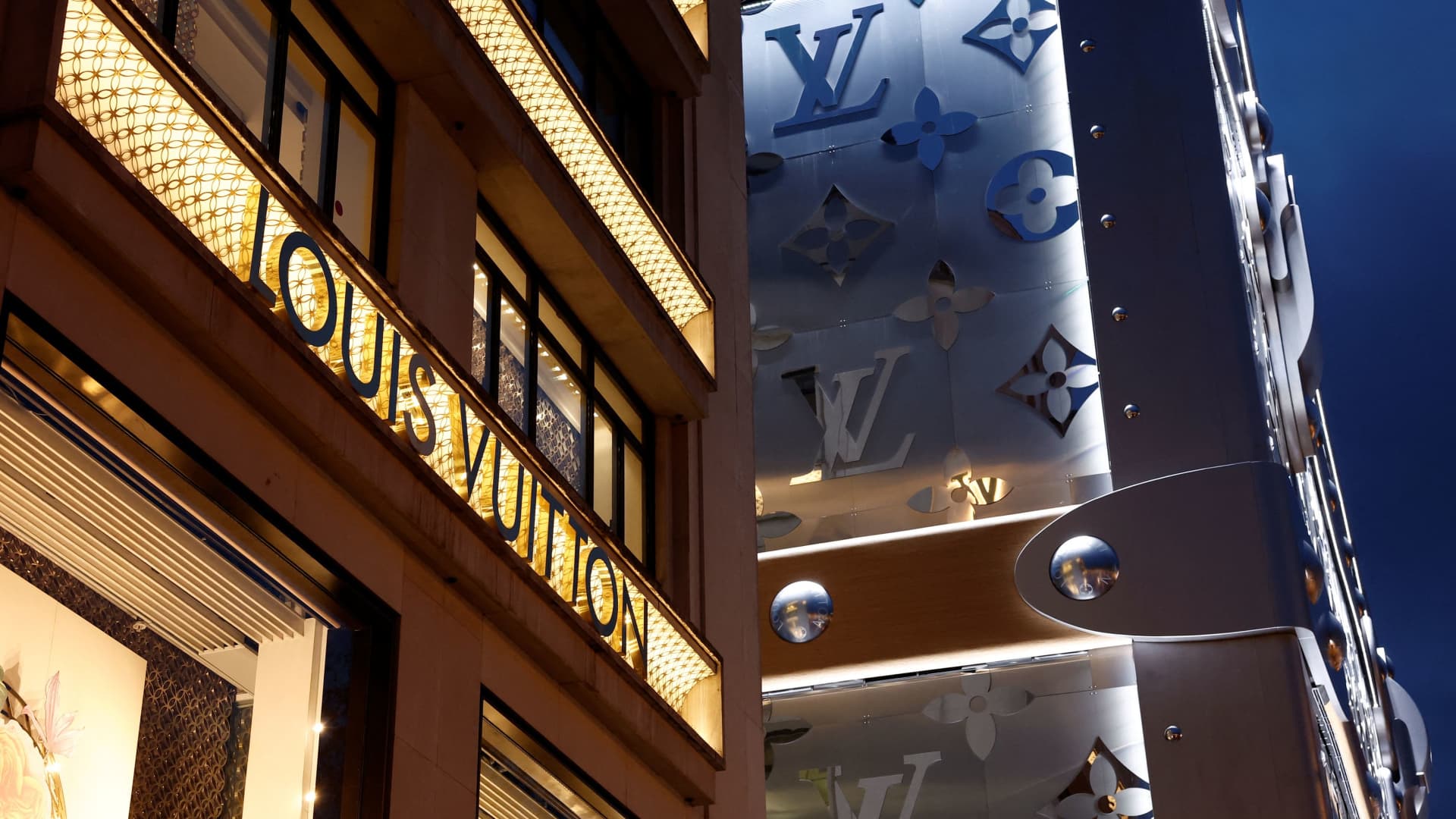
Core Insights - LVMH shares increased by 12% following the announcement of growth for the first time this year, with a commitment to strengthen its position in the global luxury market [1] - The company's revenue for the third quarter reached 18.3 billion euros ($21.3 billion), which, while lower than the 19.1 billion euros from the same period last year, exceeded analysts' expectations [2] - The firm faced challenges such as currency fluctuations, trade tensions, and economic disruptions in the first nine months, but highlighted its resilience and innovative momentum in the third quarter [3] Company Performance - LVMH's revenue for Q3 2023 was reported at 18.3 billion euros, marking a decline from the previous year's 19.1 billion euros but surpassing market forecasts [2] - The wine and spirits division showed signs of recovery after previous growth was hindered by uncertainties related to new tariffs and levies affecting the market [3] Market Position - LVMH is recognized as a key indicator for the global luxury goods market, with a diverse brand portfolio that includes Louis Vuitton, Tiffany & Co., Christian Dior, and Moet & Chandon [2]
加速国际化 老铺黄金亮相香港地标ifc
Zheng Quan Ri Bao Zhi Sheng· 2025-09-30 06:08
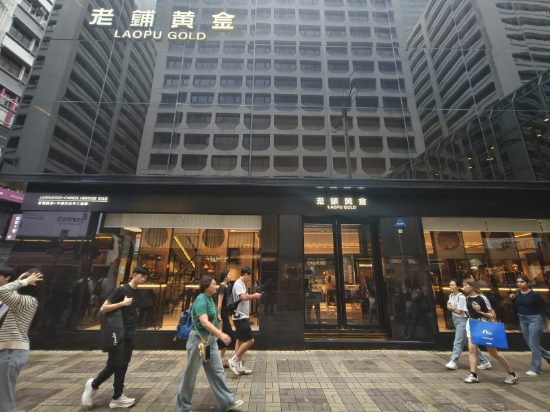
Core Viewpoint - The opening of Lao Pu Gold's new flagship store in Hong Kong International Financial Centre marks a significant expansion for the brand, enhancing its international presence and cultural richness in the luxury market [1][3]. Company Expansion - Lao Pu Gold has opened its third store in Hong Kong, following its previous locations in Harbour City and Guangdong Road, with the new store being over 400 square meters [1]. - The brand has strategically increased its store presence in key cities, with more than half of its new stores this year located in Shanghai, Hong Kong, and Singapore [3][5]. Market Performance - The Singapore store, which opened in June, exceeded expectations with a 95% conversion rate, indicating strong consumer interest, particularly among first-time visitors [4]. - Existing stores in Hong Kong have shown over 30% higher performance compared to mainland counterparts, benefiting from a growing number of international tourists [4]. Consumer Trends - There is a notable shift in consumer perception, with high-net-worth individuals increasingly recognizing the value of Chinese brands like Lao Pu Gold, which are now seen as mainstream in the luxury market [5]. - Lao Pu Gold's sales performance has significantly outpaced traditional luxury brands, with a reported store efficiency of nearly 500 million yuan in the first half of 2025, surpassing all domestic and international jewelry brands [5]. Industry Impact - The brand's success reflects a broader trend of high-end retail spaces moving away from reliance on international luxury brands towards embracing local Chinese brands [5]. - The increasing presence of Lao Pu Gold in high-end shopping centers indicates a structural change in the luxury market landscape, as it becomes a key player in the global luxury goods sector [5].
辛芷蕾封后,“押对宝”的香奈儿危机四伏?
Xin Lang Cai Jing· 2025-09-07 08:07
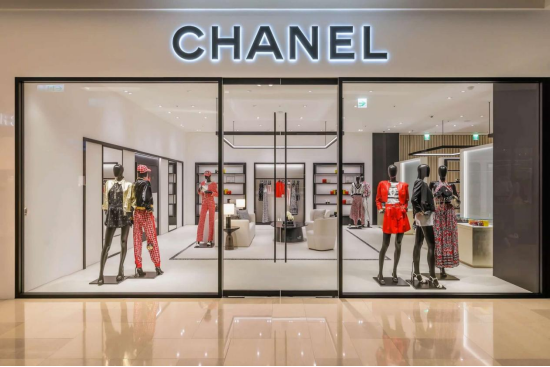
Core Viewpoint - Chanel is facing significant challenges in the Chinese market, with declining revenues and increased layoffs, while its brand image is suffering due to various controversies and consumer dissatisfaction [2][3][4]. Financial Performance - Chanel's total revenue for 2024 decreased by 5.3% to $18.7 billion, and net profit fell by 28.2% to $3.4 billion [3]. - The Asia-Pacific market, which accounts for nearly half of Chanel's total revenue, saw a substantial decline of 9.3%, totaling $9.233 billion [3]. - In contrast, competitors like Hermès and Prada reported growth, with Hermès achieving a 4.5% increase and Prada experiencing a 17% rise in global revenue [3]. Layoffs and Workforce Changes - Chanel is reportedly increasing layoffs in China, with plans to reduce its workforce from approximately 460 to about 370, representing a nearly 20% cut [6]. - The layoffs are affecting various employee levels, including long-term staff with permanent contracts [4][6]. Brand Image and Consumer Sentiment - Chanel's brand image has been negatively impacted by incidents involving staff and customer conflicts, leading to public backlash [7][8]. - Complaints regarding poor service and product quality have surged, with over 6,000 complaints filed against Chanel [2]. - Controversies such as the "powder pricing incident" have further fueled consumer dissatisfaction, with consumers accusing Chanel of overpricing [10]. Market Position and Strategy - Chanel's reliance on classic products and frequent price increases have led to consumer resistance, as many perceive a lack of innovation and value [13][14]. - The rise of domestic luxury brands and changing consumer preferences are diverting demand away from Chanel [14]. - Analysts suggest that Chanel needs to realign its value proposition and improve service quality to regain consumer trust and market position [14].
涨价倒计时! 老铺黄金“抢购潮”为何消失了?| 贵圈
Xin Lang Ke Ji· 2025-08-22 00:22
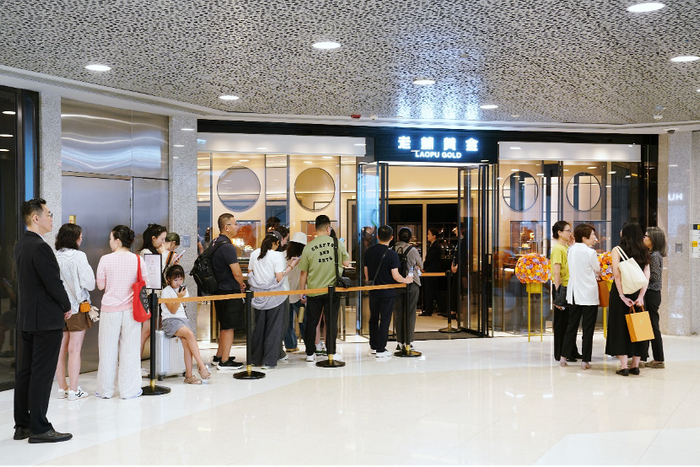
Core Viewpoint - The recent price increase announcement by Laopu Gold has not triggered the expected consumer rush, contrasting with previous price hikes that led to long queues and high customer turnout [2][6]. Group 1: Price Increase and Consumer Behavior - Laopu Gold announced a price adjustment effective August 25, with previous increases ranging from 5% to 12% [2][4]. - Despite the price increase, customer traffic has significantly decreased, with average wait times reduced to 10-20 minutes, unlike the previous 3-4 hour waits [6][11]. - Sales personnel confirmed the receipt of the price adjustment notice but did not provide specific details on the affected product categories [3][4]. Group 2: Financial Performance - Laopu Gold reported a substantial increase in financial performance for the first half of the year, with revenue reaching 12.354 billion yuan, a year-on-year growth of 251% [12]. - Net profit for the same period was 2.268 billion yuan, reflecting a 285.8% increase, while adjusted net profit was 2.35 billion yuan, up 291% [12][15]. Group 3: Competitive Landscape - Local competitors such as Chow Tai Fook and Chow Sang Sang are launching similar products and aggressive pricing strategies to capture market share from Laopu Gold [7][11]. - These competitors are offering similar styles at lower prices, with significant discounts that challenge Laopu Gold's pricing strategy [11][15]. - Concerns have been raised regarding Laopu Gold's gold purity, with competitors emphasizing their higher purity levels (AU9999) compared to Laopu Gold's AU990 [3][11]. Group 4: Market Position and Future Outlook - Laopu Gold's stock has experienced volatility, peaking at 1,100 HKD before a significant drop, attributed to market expectations and shareholder pressure [12][13]. - The company's chairman expressed confidence in maintaining a premium market position, likening Laopu Gold to the "Hermès of gold" [15]. - Industry experts predict increasing competition and potential price wars in the high-end gold market, emphasizing the need for brands to secure a top-three position to survive [15].