无人机

Search documents
多地低空经济下游应用场景开拓如火如荼 | 投研报告
Zhong Guo Neng Yuan Wang· 2025-12-17 04:03
Market Overview - The low-altitude economy index increased by 2.23% this week, with a relative increase of 2.31% [1][2] - The average daily transaction amount reached 633.48 billion yuan, while the price-to-earnings ratio (TTM) stood at 121.53 times [1][2] - There was a net outflow of main funds averaging -12.59 billion yuan this week, despite a significant increase in transaction volume compared to last week [1][2] Stock Performance - The top five stocks by increase this week were Xibu Materials, Chaojie Co., Ltd., Sichuang Electronics, Guanglian Aviation, and Aerospace Electronics [3] - The bottom five stocks by decrease were ZTE Corporation, Yingboer, Xingyuan Zhuomei, ChaoTu Software, and China Chemical Geology [3] Industry Dynamics - The National Development and Reform Commission is working on improving the low-altitude economic industry ecosystem [4] - Hainan's annual drone flight volume has surpassed 10 million [4] - A regular logistics route for low-altitude drones from Haikou Xiuying to Guangdong Xu Wen has been established [4] - Successful maiden flights of the "Jiutian" drone and the Rainbow-7 high-altitude stealth drone have been reported [4] - The domestic transport drone SUNNY-T2000 has officially rolled off the production line [4] - The first heavy-lift eVTOL AR-E800 has successfully completed its maiden flight [4] - Jinhua, Zhejiang, is developing a network for unmanned delivery to facilitate the "last mile" [4] - Hefei City held a meeting to promote low-altitude delivery logistics [4] - The National Medical Insurance Administration organized a seminar on cultivating and opening scenarios in the medical insurance field [4] Policy Developments - Two mandatory national standards for drone real-name registration and operational identification have been released [5] - Several local "14th Five-Year" planning suggestions mention the development of the low-altitude economy [5] - The Hubei Provincial Low-altitude Operation Management Center issued a notice on the "Guidelines for Low-altitude Flight Service Work Procedures (Trial)" [5] - Zhuhai City published a list of application scenario opportunities in the low-altitude field for 2025 [5] Company Developments - Aerospace Rainbow (002389.SZ) plans to jointly invest with Zhongtian Rocket to establish Xinjiang Zhongtian Rocket Weather Modification Technology Co., Ltd. [6] - Jifeng Technology (300022.SZ) has a subsidiary that is expected to procure drones and parts from Dongtai Lianfei, with a total transaction amount not exceeding 100 million yuan [6]


科技消费崛起,大疆、影石争锋相对
2025-12-17 02:27
Summary of Key Points from Conference Call Records Industry Overview - The global consumer drone market is projected to reach approximately $4.27 billion in 2024, with an expected growth to $5.23 billion by 2030, reflecting a compound annual growth rate (CAGR) of about 3% [7][1] - The smart imaging device market, particularly the panoramic camera segment, is estimated to be around ¥6 billion, with a future CAGR of approximately 10% [11][1] Company Insights: DJI - DJI holds a dominant position in the global consumer drone market with a market share of 76%, covering over 170 countries. In the U.S., DJI's market share ranges from 70% to 90%, with an 80% share in agricultural drones [5][1] - DJI's competitive edge is attributed to its vertical integration of key technologies, including flight control systems, gimbal technology, and transmission systems, which create high technical barriers [1][9] - The company has continuously upgraded its transmission technology, evolving from public WiFi protocols to LightBridge and now to OcuSync 4.0, significantly enhancing transmission distance, anti-interference capabilities, and latency [1][10] - DJI's product lineup includes the Mini, Air, and Mavic series, targeting different market segments from entry-level to professional users [8][1] Competitive Landscape - DJI faces competition from Insta360 in the smart imaging market, with DJI capturing a 43% market share in panoramic cameras by Q3 2025, while Insta360's share has decreased to 49% [13][1] - In the action camera segment, DJI's Action 4 has significantly increased its market share to 66% by Q3 2025, challenging GoPro, which has historically led the market [13][1] - The sweeping robot market is highly concentrated, with leading brands like Roborock and Ecovacs. DJI's Romo series has underperformed due to high costs and lack of significant differentiation in obstacle avoidance technology [14][1] Emerging Trends - The rise of technology consumption in China is driven by technological innovation and the engineer dividend, contrasting with new consumption trends influenced by demographic changes and youth preferences [2][1] - The competition in the smart imaging market is expected to intensify, reminiscent of the 1980s when Japanese companies fiercely competed in handheld imaging devices [4][1] Additional Insights - DJI's entry into the sweeping robot market has been met with challenges, including high pricing and limited consumer acceptance of its design innovations [14][1] - The overall consumer drone market is expected to see increased penetration as technology matures and costs decrease, leading to sustained growth [7][1]
呈和科技收购中电科翌智航,铺路低空经济新材料赛道
Di Yi Cai Jing Zi Xun· 2025-12-17 02:09
Core Viewpoint - The low-altitude economy is attracting investment from material-related companies, with Chenghe Technology acquiring a 48% stake in Yizhi Aviation to enhance its presence in this sector [2][3]. Group 1: Company Developments - Chenghe Technology announced the acquisition of a 48% stake in Yizhi Aviation, which specializes in drone management platforms, to leverage its customer resources and data for material development in the low-altitude economy [2]. - In the first three quarters of this year, Chenghe Technology reported revenues of 740 million yuan and a net profit of 228 million yuan, reflecting year-on-year growth of 14.15% and 15.08% respectively [2]. Group 2: Industry Insights - The low-altitude economy presents opportunities in new materials, particularly high-strength lightweight materials and materials that enhance battery energy density, which can improve drone performance [2]. - Other companies in the materials sector, such as Guangwei Composite and Zhongfu Shenying, are also expanding their presence in the low-altitude economy, indicating a growing market demand for new materials [4]. - Yizhi Aviation has developed various platforms for drone management and logistics, indicating the complexity and potential of the low-altitude economy, which is expected to see significant application growth in the next three to five years [3].


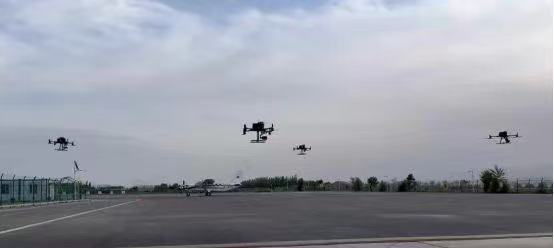
每架在中国境内运行的民用无人机都需规范“上户口”——民用无人机“谁能飞”迎新规
Xin Hua Wang· 2025-12-17 00:27
Core Viewpoint - The rapid expansion of drone applications in various sectors necessitates the implementation of new regulatory standards to ensure safety and accountability in drone operations [1][2][3] Group 1: New Regulations - The State Administration for Market Regulation has approved two mandatory national standards for civil unmanned aerial vehicles (UAVs), which will take effect on May 1, 2026 [1] - The standards include requirements for real-name registration and operational identification of drones, mandating that every drone operating in China undergo a formal registration process [1][3] Group 2: Technical Requirements - Drones must have activation and deactivation control functions to ensure they cannot fly before registration and after deactivation [1] - The operational identification standard requires drones to send identification, location, speed, and status information via both broadcast and network methods, with a maximum interval of one second [2] - Drones must store at least 120 hours of operational identification data that cannot be manually deleted, ensuring traceability of flight records [2] Group 3: Transition Period - A reasonable transition period is established for existing drones, requiring manufacturers to install operational identification modules within 12 months of the standard's announcement [3] - Owners of existing drones must complete registration and activation by the 13th month after the standards take effect, with non-compliant drones prohibited from operation after the transition period [3] Group 4: Industry Implications - The introduction of these standards is seen as a necessary step towards refined management of the drone industry in China, which is the most active market for civil drones globally [3] - The new regulations aim to address critical questions regarding who can fly and who is currently flying, thereby supporting the effective implementation of existing flight management regulations [3]
民用无人机“谁能飞”迎新规
Ren Min Ri Bao· 2025-12-16 22:55
Core Viewpoint - The rapid expansion of drone applications in various sectors has led to the introduction of two mandatory national standards in China, effective from May 1, 2026, aimed at ensuring safer drone operations through real-name registration and operational identification requirements [1][2][3] Group 1: Real-name Registration and Activation Requirements - Every civil drone operating in China must undergo a standardized registration process, which includes clear responsibilities for manufacturers, distributors, and users [1] - The core technical requirement mandates that drones must have activation and deactivation control functions, ensuring they cannot fly until registered and activated, or after deactivation [1] Group 2: Operational Identification Standards - Drones are required to have both broadcast and network-based operational identification capabilities, continuously sending identity, location, speed, and status information to regulatory authorities at intervals not exceeding one second [2] - Strict safety measures are in place, such as preventing takeoff if the identification module fails before flight and triggering alarms with automatic safety procedures if the broadcast function fails during flight [2] - Drones must store at least 120 hours of operational identification data that cannot be manually deleted, ensuring traceability of flight records [2] Group 3: Transition Period and Industry Impact - A reasonable transition period is established for existing drones, requiring manufacturers to retrofit operational identification modules within 12 months of the standard's announcement, with a 36-month grace period for compliance [3] - Owners of existing drones must complete registration and activation by the 13th month after the standards take effect [3] - The introduction of these standards is seen as a necessary step towards refined management of the drone industry in China, which is the most active market for civil drone applications globally [3]
【公告全知道】商业航天+无人驾驶+芯片+量子科技+无人机!公司星体系列业务主要聚焦于商业卫星和航天防务领域
财联社· 2025-12-16 15:06
Group 1 - The article highlights the importance of major announcements in the stock market, including "suspensions and resumption of trading, shareholding changes, investment wins, acquisitions, performance reports, unlocks, and high transfers" to help investors identify investment hotspots and mitigate risks [1] - The company focuses on commercial satellites and aerospace defense, with its Star series business primarily targeting these sectors [1] - Another company is involved in satellite communication modules based on high-orbit satellites, integrating technologies such as 6G, digital currency, and humanoid robots [1] - A third company has made a significant procurement of servers worth 9 billion, aimed at providing cloud computing services to its clients, leveraging storage chips and data centers [1]

中无人机:累计回购公司股份637005股
Zheng Quan Ri Bao· 2025-12-16 12:12
(文章来源:证券日报) 证券日报网讯 12月16日,中无人机发布公告称,截至2025年12月16日,公司通过上海证券交易所交易 系统以集中竞价交易方式累计回购股份637,005股,占公司总股本的比例为0.09437%。 ...

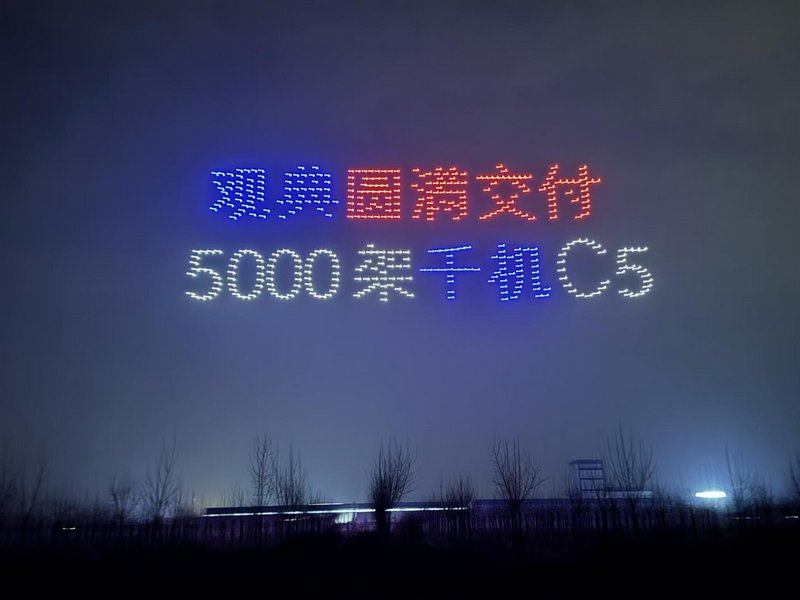
观典防务:与千机科技完成首批5000套表演无人机交付,共筑低空经济新生态
Zheng Quan Shi Bao Wang· 2025-12-16 09:29
交付仪式上,观典防务董事长高迎轩表示:"此次合作不仅是公司拓展民用无人机市场、实现'军、警、民'业务协 同的重要一步,更是我们将高性能无人机技术应用于低空经济新场景的生动实践。我们期待以可靠的军品级产 品,助力千机科技提升演出效果与运营稳定性。这只是双方合作的开端,未来我们将在机型联合研发、数据算法 融合及市场共同开拓等方面开展更深层次的战略协作。" 日前,观典防务(688287)与上海千机创新文旅科技集团有限公司(以下简称"千机科技")成功举办无人机交付仪 式,标志着双方在低空经济与文旅演艺领域的战略合作取得实质性进展。仪式上,由观典防务自主研发生产的 5000套户外编队智能飞行设备正式交付千机科技,并在现场进行了精彩纷呈的无人机集群表演,展现了双方技术 融合与协同创新的最新成果。 展望未来,观典防务表示,与千机科技将继续深化合作,致力于探索更多低空应用场景,共同研发下一代智能表 演无人机系统,携手推进技术迭代与产业融合,为开发低空经济万亿级市场注入持续动力。(燕云) 据了解,本次交付的产品为观典防务针对千机科技在大型文旅演出、城市庆典等场景中对无人机集群表演的精准 化、规模化及高可靠性需求,所专项研发与制 ...
中国军用货运无人机市场爆发:“未来战场后勤革命”正在中国率先成型
QYResearch· 2025-12-16 09:08
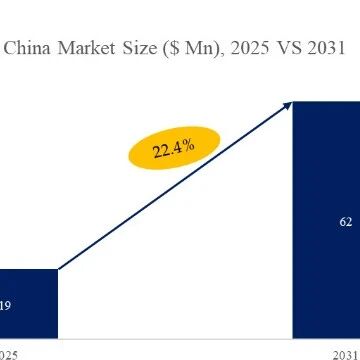
Core Insights - The military cargo drone market is rapidly growing, with China emerging as a leading innovator and testing ground for this technology [2][3][11] Group 1: Need for Military Cargo Drones in China - China has a high adaptability for unmanned supply due to its geographical environment and strategic needs, leading to a swift transition from experimental equipment to systematic deployment [3] - The demand for military cargo drones in China is significantly higher than the global average [3] Group 2: Market Growth Projections - The Chinese military cargo drone market is expected to grow from $1.85 million in 2020 to $62.43 million by 2031, indicating a growth of over 30 times [4] - The growth rate in China is expected to surpass the global average, transitioning from a research phase to large-scale application [4] Group 3: Market Structure - China has developed a dual-core system of "rotary-wing + fixed-wing" cargo drones, with rotary-wing drones currently being the mainstay for tactical supply [7] - Fixed-wing and hybrid cargo drones are the fastest-growing category in the market, driven by advancements in domestic power systems and AI technology [8] Group 4: Competitive Landscape - The market is dominated by two leading companies: Tengdun Technology, which excels in fixed-wing and hybrid drones, and AVIC Zhizhi, which specializes in rotary-wing drones [9] - Other innovative companies are also emerging rapidly, contributing to a diverse competitive landscape [9] Group 5: Technological Advantages - Chinese companies are leading in high-altitude performance, advanced material systems, and AI autonomous flight capabilities, which are crucial for military applications [13] - The transition from traditional vehicle supply to aerial unmanned supply networks enhances logistical response times and reduces personnel exposure to risks [13] Group 6: Industry Significance - The introduction of higher payload and longer-range cargo drones is transforming the military logistics framework in China, making it a key driver of change in military structure [11] - Over the next five to ten years, China is expected to maintain its global leadership in this field, pushing the international military logistics system towards an unmanned era [12]
人民日报:聚四方之才 建开放之港
Ren Min Ri Bao· 2025-12-16 08:15
Core Viewpoint - Hainan Province is actively reforming its talent system to attract high-end talent and foster innovation, particularly in the context of the upcoming full closure of the Hainan Free Trade Port on December 18, 2023 [9][10]. Group 1: Talent Attraction Initiatives - Hainan has implemented the "Million Talents into Hainan" action plan to create a more open talent mechanism, attracting numerous professionals like engineer Xu Hui, who returned to contribute to the local commercial space industry [9][10]. - The province is focusing on key industries and future-oriented sectors, establishing significant parks and "national-level" innovation platforms to provide effective support for high-end talent [10][12]. Group 2: Research and Development Support - Researchers like Lv Peitao are drawn to Hainan due to its robust research platforms, such as the National Key Laboratory for Tropical Crop Biotechnology, which offers substantial resources and funding for projects [11][12]. - Hainan's government provides financial support and guarantees for project leaders, allowing researchers to focus on their work without financial concerns [11][12]. Group 3: Comprehensive Talent Services - Hainan has established a unified talent service platform and innovative systems like the "Tianya Talent Card" to address issues related to residency, housing, and healthcare for high-level talent [14][15]. - The province's proactive approach includes sending talent liaison officers to assist enterprises directly, enhancing the connection between academia and industry [15][16]. Group 4: Skills and Vocational Training - The introduction of the "Skill Free Trade Port" action plan aims to break the bias towards higher education, allowing skilled workers to enjoy the same benefits as degree holders, thus enhancing the value of craftsmanship [16][17]. - Over 76,000 high-level talents have been recognized under the new classification system, which includes various skill levels and market-oriented evaluation criteria [17][18]. Group 5: Market-Driven Talent Evaluation - Hainan has decentralized the authority for talent evaluation to the market, allowing companies to directly recognize high-level talents based on their contributions, such as tax payments and research investments [18]. - This shift has enabled companies like Huayan Technology to attract specialized talent, enhancing their competitive edge in the industry [18].