天然气

Search documents
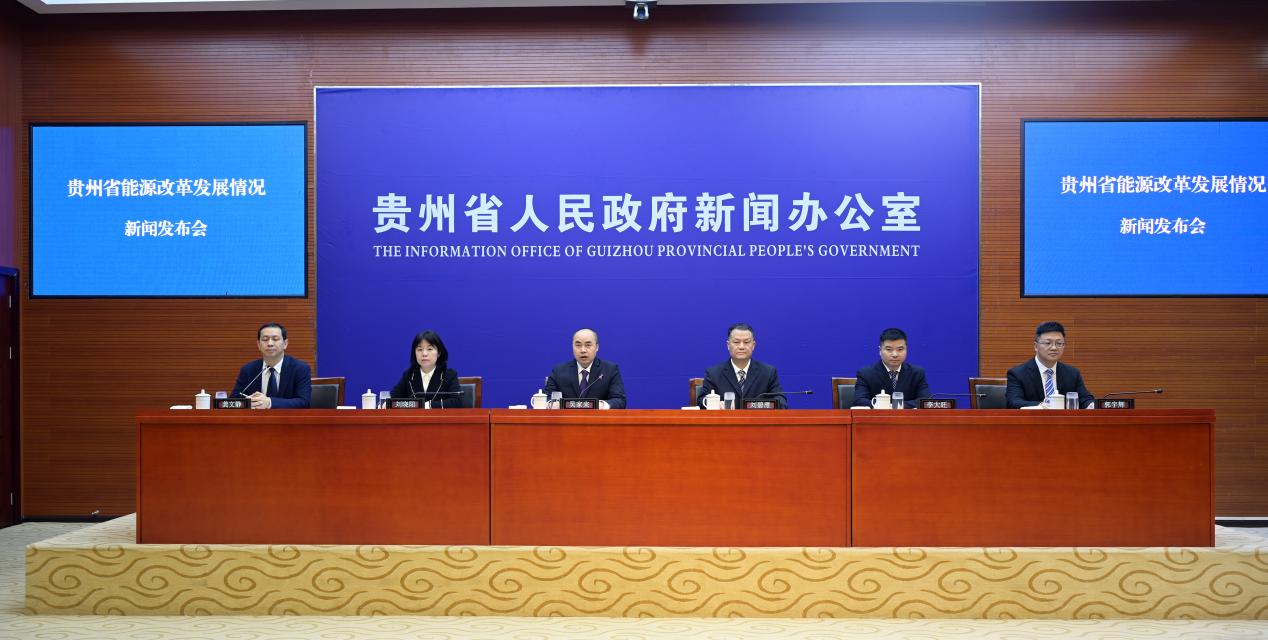
贵州省能源改革发展情况新闻发布会召开
Zhong Guo Neng Yuan Wang· 2026-01-13 09:32
Core Insights - Guizhou Province has made significant progress in energy sector reforms and development during the "14th Five-Year Plan" period, with a focus on enhancing energy security and promoting green transformation [4][6][12] Group 1: Energy Investment and Infrastructure - Total energy investment in Guizhou exceeded 420 billion yuan, with new integrated energy bases contributing approximately 35% to the total output of six major industrial bases [4] - The province's power generation capacity reached 105 million kilowatts, with renewable energy accounting for 37% of the total installed capacity [4] - The energy infrastructure network has been improved, with over 250,000 charging facilities established and a total oil and gas pipeline length of 5,158 kilometers [4] Group 2: Coal and Natural Gas Development - The "rich mines and precise mining" strategy has led to the establishment of 10 open-pit coal mines with an annual capacity of 8.6 million tons, and the average single well capacity in coal mines increased to 677,000 tons/year [6] - Unconventional natural gas development has seen significant advancements, with coalbed methane reserves of 44.7 billion cubic meters and shale gas reserves of 38 billion cubic meters [6] Group 3: Safety and Production Management - The province has maintained a long-term contract fulfillment rate of over 90% for coal supply, ensuring a total of 386 million tons of coal for electricity generation [4] - Safety measures in coal mining have improved, with a 53% reduction in major accidents and a 35% decrease in fatalities [10] Group 4: Innovation and Regulatory Framework - The energy system has strengthened its legal and regulatory framework, with the implementation of the "Guizhou Province Oil and Gas Pipeline Protection Regulations" and a 100% completion rate for administrative licensing matters [8] - Investment in energy research and development has increased, with over 10 major provincial scientific projects undertaken [8] Group 5: Future Outlook - The Guizhou Energy Bureau plans to continue promoting high-quality energy development and safety, focusing on the "rich mines and precise mining" strategy and the construction of a new energy industry cluster [13]

美国对俄制裁放大招,500%关税逼全球选边,中国直面三重冲击
Sou Hu Cai Jing· 2026-01-13 06:05
Core Viewpoint - The "Sanctioning Russia Act of 2025" aims to fundamentally reshape global sanctions logic, transitioning from targeted punishments to forcing countries to choose sides, with severe penalties for those continuing to engage with Russian energy products [1][3]. Summary by Sections Section 1: Direct Sanctions on Russia - The act imposes punitive tariffs of no less than 500% on nearly all Russian imports, including previously exempt essential goods like agricultural fertilizers, with a goal to fully ban Russian uranium by 2028 [1]. - It includes stringent measures against the Russian Central Bank, freezing its assets in the U.S. and prohibiting transactions with U.S. entities, while also targeting major Russian banks and financial institutions to cut off their access to capital and the dollar system [1]. - The sanctions list has been expanded to include key figures in the Russian government, military, and energy sectors, employing asset freezes and transaction bans to enhance accountability [1]. Section 2: Secondary Sanctions on Third Countries - The act's most threatening aspect is the secondary sanctions clause, which imposes a 500% tax on all goods and services exported to the U.S. from countries that knowingly purchase Russian energy products [3]. - This clause applies indiscriminately, effectively acting as a trade embargo on countries reliant on exports to the U.S., which could devastate their economies [3]. - The vague definition of "knowingly" allows the U.S. to interpret and expand the sanctions scope, potentially penalizing countries that indirectly engage with Russian energy through third parties [3]. - China is explicitly excluded from any exemptions, facing heightened tariff threats despite the act's national security waiver provisions [3]. Section 3: Risks for China - China faces significant risks across trade, finance, and energy sectors due to the act, as it attempts to draw China into a geopolitical conflict between the U.S. and Russia [5]. - The potential implementation of 500% tariffs could drastically reduce China's exports to the U.S., which reached $540 billion in 2024, affecting key sectors like electrical equipment and textiles [7]. - Anticipated tariffs may lead U.S. importers to shift orders to other regions, increasing costs and extending settlement periods for Chinese exporters, creating long-term negative effects [7]. - Financially, Chinese banks may need to limit dealings with Russia to avoid U.S. sanctions, complicating trade financing and cross-border transactions, which could slow down trade growth with Russia [7]. - In the energy sector, China must navigate a dilemma between reducing Russian energy imports to maintain access to the U.S. market or continuing its current procurement levels and facing severe tariffs [7]. - The act represents a strategic tool for the U.S. to bind global energy trade to geopolitical objectives, compelling countries to comply with U.S. strategic arrangements [7].

俄媒:欧盟制裁俄罗斯致自身出口损失
Huan Qiu Shi Bao· 2026-01-12 22:54
Group 1 - The core point of the article highlights the significant decline in EU exports to Russia since the imposition of sanctions in 2022, with a drop of approximately 48 billion euros, equating to a 65% decrease in annual export value [1] - In the period from January to October 2025, EU exports to Russia amounted to 25 billion euros, down from 73 billion euros in the same period of 2021 [1] - Germany experienced the largest impact, with a 73.6% decrease in exports to Russia, amounting to 16.3 billion euros, while Poland and France also saw substantial declines of 71.2% and 70%, respectively [1] Group 2 - A significant portion of EU-Russia trade involves natural gas, with Russia currently being the second-largest supplier to the EU, holding a 15.1% share of total gas imports [2] - The EU plans to stop importing Russian gas by 2027, but the shift to more expensive US liquefied natural gas (LNG) could lead to rising energy prices and economic slowdown in the EU [2] - Reports indicate that the likelihood of restoring economic relations between Russia and the EU to pre-conflict levels in the next decade is nearly zero due to systemic geopolitical rifts [2]
“十四五”贵州完成能源投资超四千二百亿元
Xin Lang Cai Jing· 2026-01-12 22:06
Core Insights - During the "14th Five-Year Plan" period, Guizhou Province has made significant progress in energy security by implementing the "Four Revolutions, One Cooperation" strategy, with total energy investments exceeding 420 billion yuan, providing robust support for modernization efforts in the province [1] Group 1: Energy Industry Development - Guizhou aims to establish the energy industry as a strategic pillar, with the new comprehensive energy base expected to generate a value of 310 billion yuan by 2025, accounting for 35% of the total output of six major industrial bases in the province [1] - The coal industry is undergoing structural optimization, with production capacity projected to reach 216 million tons per year by 2025, and raw coal output expected to exceed 183 million tons, representing increases of 30.1% and 48% respectively compared to 2020 [1] - The new power system is being rapidly constructed, with total installed power capacity reaching 105 million kilowatts, of which renewable energy accounts for 37% [1] Group 2: Infrastructure Improvement - The electricity grid has been significantly enhanced, with a comprehensive 500 kV backbone grid established and 220 kV coverage achieved at the county level, resulting in a supply reliability rate of 99.91% [2] - A total of over 250,000 charging facilities and 59 battery swap stations have been built, with electric heavy trucks exceeding 6,600 units promoted [2] - The total length of oil and gas pipelines has reached 5,158 kilometers, improving energy service accessibility across 67 counties [2] Group 3: Supply and Demand Balance - Guizhou has ensured a stable supply of 386 million tons of electricity coal during the "14th Five-Year Plan," maintaining a contract fulfillment rate of over 90% [2] - The average annual growth rate of total electricity consumption is 5.22%, with cumulative electricity exports reaching approximately 330 billion kilowatt-hours [2] - By 2025, natural gas consumption is expected to exceed 3.5 billion cubic meters, more than double the 2020 figure, while refined oil consumption is projected to reach 8.297 million tons [2] Group 4: Innovation and Market Dynamics - Guizhou has introduced the first provincial-level electricity demand response plan in the country, achieving significant innovations in market transactions, including the first county-level simulated trading in the southern region [3] - Market-based electricity trading volume has increased by 57.8%, with renewable energy market transactions expected to reach 13.6 billion kilowatt-hours by 2025 [3] - The province has implemented advanced services such as "face recognition electricity service" and cross-network electricity reporting with Chongqing, enhancing industry management mechanisms [3]
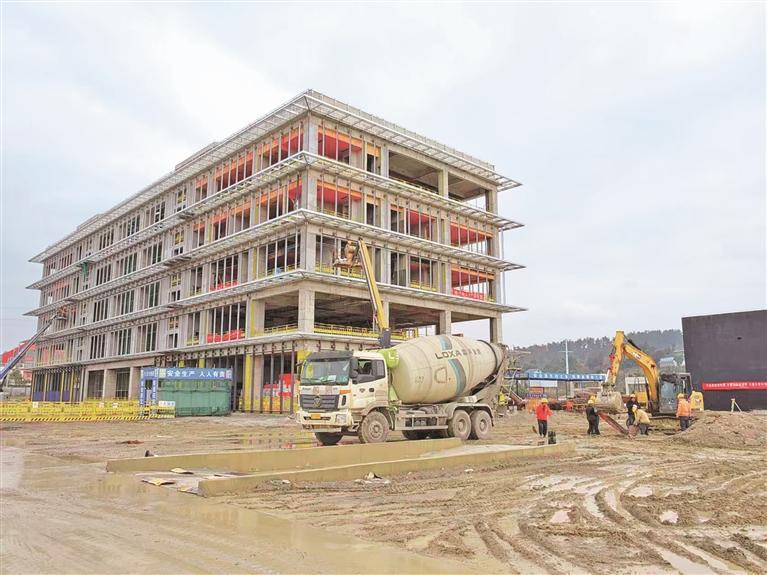
打造绿色环保的天然气项目
Xin Lang Cai Jing· 2026-01-12 22:06
Group 1 - The construction of the Zunyi Natural Gas Liquefaction Peak Shaving Reserve Station and Comprehensive Utilization Project is progressing well, with 60% of the overall project completed and core process equipment installed [2] - The project has a total investment of 3.015 billion yuan and covers an area of 342 acres, being implemented in two phases. The first phase will establish a natural gas purification and liquefaction facility with a daily processing capacity of 2 million cubic meters [2] - The second phase will focus on the construction of a carbon nanotube new material production line, promoting the integration of the energy industry with the new materials industry [2] Group 2 - The project employs advanced technologies such as Distributed Control Systems (DCS) and Safety Instrumented Systems (SIS) for visual management and quality control throughout the construction process [3] - Upon completion, the project will significantly enhance the natural gas supply capacity for Zunyi and surrounding areas, creating a complete industrial chain from natural gas trading, storage, processing to new material production [3]
突发!普京发威,欧洲最大能源设施被炸,美英法德紧急应对
Sou Hu Cai Jing· 2026-01-12 17:50
Group 1 - The explosion at the Lviv gas storage facility has left 1.2 million people in Ukraine facing heating difficulties during winter, highlighting the severe impact of the ongoing conflict on civilian life [1][8] - The incident serves as a reminder of Russia's military capabilities, particularly the use of the Hazelnut missile, which was deployed for the first time in a significant attack, indicating a shift in the conflict dynamics [3][5] - The Lviv gas storage facility is crucial as it holds half of Ukraine's natural gas, making it a key node in the European energy supply chain, and its destruction has raised concerns about energy security across Europe [3][5] Group 2 - The use of the Hazelnut missile, which relies on kinetic energy rather than high-explosive warheads, demonstrates a strategic approach to inflict damage on critical infrastructure without traditional explosive methods [5] - The geopolitical implications of the attack have caused alarm among Western nations, prompting a reevaluation of their strategies in response to Russian aggression [6][10] - The ongoing conflict has revealed a stark contrast between political maneuvers and the harsh realities faced by ordinary citizens, emphasizing the disconnect between high-level negotiations and the immediate needs of the population [8][10]

哥伦比亚政府评估自委内瑞拉进口天然气方案
Shang Wu Bu Wang Zhan· 2026-01-12 16:54
Core Viewpoint - The Colombian government is evaluating the possibility of importing natural gas from Venezuela to alleviate domestic supply shortages and rising prices, but the plan faces multiple obstacles [1] Group 1: Natural Gas Consumption and Import Dependency - By 2025, approximately 20% of Colombia's natural gas consumption is expected to rely on imports, increasing to 26% by 2026 [1] - Rising gas prices in multiple regions are significantly influenced by import costs and logistics [1] Group 2: Import Feasibility and Challenges - The Colombian Minister of Mines and Energy, Palma, stated that importing natural gas from Venezuela is the most cost-effective option [1] - A natural gas sales and transportation agreement was signed between the two countries in 2007, allowing for cooperation through cross-border pipelines [1] - The plan is currently hindered by U.S. sanctions on Venezuela's state oil company, requiring authorization from the U.S. Department of the Treasury's Office of Foreign Assets Control (OFAC) [1] Group 3: Infrastructure and Uncertainties - Recent changes in the situation in Venezuela have prompted the Colombian government to restart the evaluation of the import plan [1] - Palma has requested the energy planning department to include the import from Venezuela in their research [1] - Industry experts note that apart from sanctions, some sections of the cross-border pipeline are severely damaged, requiring at least 1.5 to 2 years for repairs, and the uncertainty remains due to the lack of formal lifting of U.S. sanctions on Venezuela [1]
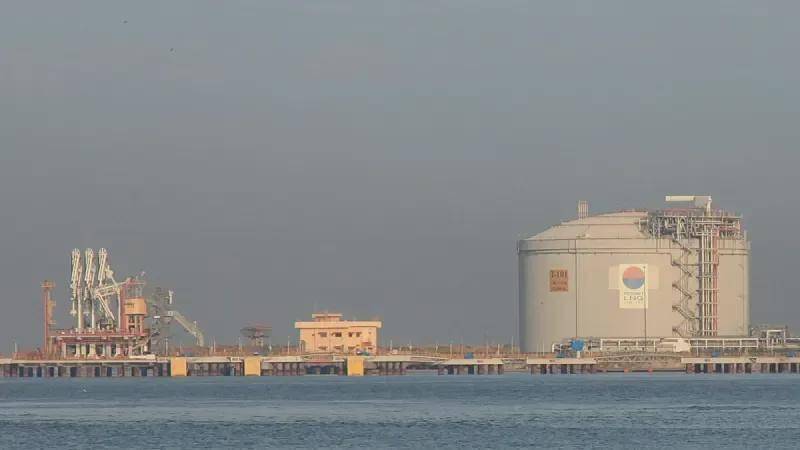
德国天然气储备创近年新低
Sou Hu Cai Jing· 2026-01-12 15:56
Core Viewpoint - The article highlights the alarming decline in Germany's natural gas storage levels, which have reached a historical low, raising concerns about energy security as the country continues to resist Russian energy supplies [1][3]. Group 1: Current Storage Levels - As of January 9, 2026, Germany's gas storage facilities are filled to only 48.3%, significantly lower than previous years' levels, such as 90.1% in January 2023 and 91.8% in January 2024 [3]. - The storage levels are projected to be only 75% at the start of the heating season in November 2025, according to assessments from industry experts [3]. Group 2: Risks and Predictions - The speed of gas depletion from storage facilities has accelerated due to lower temperatures in January, with warnings that reserves could drop to a critical level of 5% by March if depletion rates remain consistent with the previous year [4]. - The INES industry association predicts that extreme cold weather in January could lead to the depletion of gas storage by mid-January, although this scenario is considered an extreme risk model [3]. Group 3: Infrastructure and Market Conditions - Current conditions of gas storage facilities are concerning, with low levels of commercial raw materials and a decrease in extractable gas, leading to infrastructure deterioration [4]. - The situation is similar to 2022, but the presence of new LNG receiving terminals in the North Sea and the Baltic Sea provides some support to the market [4]. Group 4: Government Response and Strategy - The German Federal Ministry of Economic Affairs and Energy indicates that the import of liquefied natural gas has made supply logistics more flexible, shifting the reliance from traditional gas storage mechanisms [5]. - The ministry maintains a confident outlook on the continuity of Germany's gas supply, although there are recommendations for establishing emergency strategic gas reserves to address potential disruptions [6].
浙能集团:再创历史新高!
Xin Lang Cai Jing· 2026-01-12 12:29
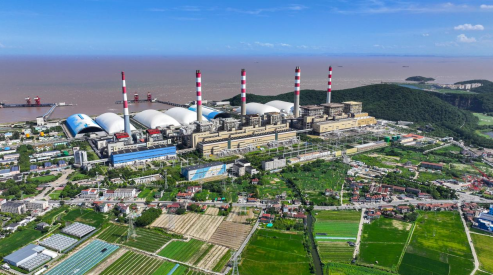
Core Viewpoint - Zhejiang Energy Group achieved record-high energy supply in 2025, with total power generation of 211.5 billion kWh, coal supply of 75.23 million tons, gas supply of 14.9 billion cubic meters, and heat supply of 138.16 million GJ, all showing year-on-year growth, demonstrating high-quality energy security [1][14]. Group 1: Energy Supply Achievements - In 2025, Zhejiang Energy Group's total power generation reached 211.5 billion kWh, marking a historical high [1][14]. - The company supplied 75.23 million tons of coal and 14.9 billion cubic meters of gas, both of which also saw significant year-on-year increases [1][14]. - The heat supply amounted to 138.16 million GJ, contributing to the overall energy security [1][14]. Group 2: Project Development and Capacity Expansion - Zhejiang Energy Group focused on major project construction, completing nearly 5 million kW of new installed capacity in the past year [3][16]. - Key projects included the expansion of the Taizhou Power Plant, Jiaxing Power Plant, and the renovation of the Zhenhai natural gas power plant, all of which feature advanced emission reduction technologies [3][16]. - The completion of these projects has enhanced the stability and safety of energy supply, supporting local economic development [3][16]. Group 3: Operational Efficiency and Reliability - During peak summer demand, Zhejiang Province experienced record-high electricity loads, with Zhejiang Energy Group's power generation units playing a crucial role in meeting this demand [5][18]. - The company implemented strategies to improve equipment reliability and enhance load capacity, ensuring maximum output from coal power units [5][18]. - Management focused on reducing non-scheduled outages and addressing output constraints, contributing to stable energy supply [5][18]. Group 4: Fuel Supply and Infrastructure - Zhejiang Energy Group's fuel supply strategy, leveraging a complete industrial chain, ensured effective coal supply to power plants [7][20]. - The company achieved record coal import volumes of 15 million tons and throughput of 30 million tons at its port, both marking new highs since its establishment [7][20]. - The natural gas division established a comprehensive supply system, optimizing energy structure and enhancing public welfare [11][24]. Group 5: Green Energy Transition - Zhejiang Energy Group is accelerating its green transition, focusing on offshore wind power and renewable energy projects [11][24]. - The company successfully integrated solar power projects, achieving a twofold increase in renewable energy capacity compared to the end of the 13th Five-Year Plan [11][24]. - The LNG receiving station in Wenzhou set a record for peak output, ensuring sufficient supply during high-demand periods [11][24]. Group 6: Winter Preparedness - As winter approaches, Zhejiang Energy Group is refining its strategies for power generation, coal supply, gas supply, and heating [13][26]. - The company is prioritizing equipment safety and risk management while optimizing coal supply and transportation scheduling [13][26]. - These efforts aim to enhance supply capabilities and ensure stable energy access for the community during winter [13][26].

能源涨价 美国严重欠费家庭数量增加
Sou Hu Cai Jing· 2026-01-12 12:01
Group 1 - The core issue highlighted is the increasing number of American households unable to pay their energy bills, with a reported 3.8% increase in households with severe utility bill arrears since the beginning of Trump's second term [4] - The average monthly energy bill for some families has surged to $1,800, three times the previous level, exacerbated by rising costs of electricity and gas [4] - The National Energy Assistance Directors' Association predicts a 9.2% increase in heating costs for American households this winter due to rising electricity and gas prices [4] Group 2 - A significant finding is that one in every twenty American households is severely behind on their utility payments, facing potential collection agency actions [6] - The rising energy bills and persistent inflation have led to increased dissatisfaction among American families regarding the government's handling of economic issues [7] - Experts warn that the Trump administration's proposed cuts to funding for local governments to assist low-income families with energy bills could worsen the situation, as rising costs of electricity are driven by increased demand and higher generation costs [7]