
软件服务

Search documents
升辉清洁(02521)附属与好活(重庆)网络科技就有关可能注资订立意向协议
智通财经网· 2025-11-18 12:57
Group 1 - The company, Shenghui Clean (02521), has entered into a non-binding letter of intent for a potential cash injection into the target company, Hao Huo (Chongqing) Network Technology Co., Ltd., which will result in Shenghui Clean holding at least 51% of the target company's equity after the investment is completed [1] - A refundable deposit of RMB 9 million has been agreed upon, which will be returned within three working days if the letter of intent is terminated or if a formal investment agreement is not established within 60 days after the deposit payment [1] - The target company specializes in providing software solutions that utilize artificial intelligence (AI) and cloud technology to assist small and medium-sized enterprises in areas such as human resource allocation, training, administration, and legal management [1] Group 2 - The potential investment is seen as a significant opportunity for the group to expand revenue sources, integrate technology with daily operations to reduce costs, and optimize resource allocation [2] - The group primarily provides cleaning and maintenance services, which are labor-intensive and face challenges such as high employee turnover and constraints related to working hours, geography, gender, and age [2] - By adopting AI algorithms developed by the target company, the platform can be used for training new employees and allocating available full-time and part-time staff to necessary job positions, thereby optimizing internal and external resources and significantly reducing labor costs [2]
升辉清洁附属与好活(重庆)网络科技就有关可能注资订立意向协议
Zhi Tong Cai Jing· 2025-11-18 12:57
Group 1 - The company, Shenghui Clean (02521), announced a non-binding intention agreement for potential investment in Hao Huo (Chongqing) Network Technology Co., Ltd., aiming to acquire at least 51% equity after the investment completion [1] - Guangzhou Shenghui has agreed to pay a refundable deposit of RMB 9 million to the target company, which will be fully refunded within three working days if the agreement is terminated or a formal investment agreement is not established within 60 days [1] - The target company specializes in providing software solutions using AI and cloud technology to assist small and medium-sized enterprises in human resource allocation, training, administration, and legal management [1] Group 2 - The board believes that the potential investment, if realized, presents a good opportunity for the group to expand revenue sources, integrate technology with daily operations, reduce costs, and optimize resource allocation [2] - The group primarily provides cleaning and maintenance services, which are labor-intensive and face high employee turnover, constrained by factors such as working hours, location, gender, and age [2] - By adopting AI algorithm technology developed by the target company, the platform can be used for training new employees and allocating available full-time and part-time staff to required job positions, significantly reducing labor costs and facilitating digital transformation for long-term development [2]
升辉清洁(02521.HK)可能认购好活(重庆)网络科技不少于51%股权
Ge Long Hui· 2025-11-18 12:55
Core Viewpoint - The company, Shenghui Clean (02521.HK), has entered a non-binding intention agreement for a potential investment in HaoHuo (Chongqing) Network Technology Co., Ltd., aiming to acquire at least 51% of the target company's equity by November 18, 2025 [1] Group 1: Investment Details - The potential investment is aimed at expanding revenue sources and integrating technology into daily operations to reduce costs and optimize resource allocation [1] - The target company specializes in providing software solutions that utilize AI and cloud technology to assist small and medium-sized enterprises in human resource allocation, training, administration, and legal management [1] Group 2: Strategic Benefits - The board believes that the investment could create synergies with the company's existing business, which primarily involves labor-intensive cleaning and maintenance services [1] - The adoption of AI algorithms developed by the target company could enhance training for new employees and optimize the allocation of full-time and part-time workers to necessary job positions, significantly reducing labor costs [1] - This move is seen as a step towards digital transformation and long-term development for the company [1]
升辉清洁(02521) - 有关可能注资目标公司的意向协议
2025-11-18 12:39
香港交易及結算所有限公司及香港聯合交易所有限公司對本公告的內容概不負 責,對其準確性或完整性亦不發表任何聲明,並明確表示,概不對因本公告全部 或任何部分內容而產生或因倚賴該等內容而引致的任何損失承擔任何責任。 Shenghui Cleanness Group Holdings Limited 升輝清潔集團控股有限公司 (於開曼群島註冊成立的有限公司) (股份代號:2521) 有關可能注資目標公司的 意向協議 有關可能注資目標公司的意向協議 董 事 會 欣 然 宣 佈,於 二 零 二 五 年 十 一 月 十 八 日(交 易 時 段 後),廣 州 升 輝(本 公 司間接全資附屬公司)與目標公司就有關可能注資訂立無法律約束力意向協議。 一般事項 可 能 注 資(倘 落 實)可 能 構 成 上 市 規 則 項 下 本 公 司 的 須 予 公 佈 及 關 連 交 易。倘 廣州升輝訂立任何正式注資協議或決定終止意向協議,或倘就可能注資有任 何重大發展,本公司將適時根據上市規則刊發進一步公告。 本 公 司 謹 此 強 調,可 能 注 資 須 待(其 中 包 括)簽 立 正 式 注 資 協 議 後,方 可 作 實, 而 其 ...
远光软件:聘任赵开强、张磊为公司高级副总裁
Mei Ri Jing Ji Xin Wen· 2025-11-18 10:12
Group 1 - The company announced the resignation of Lin Wuxing, the director, senior vice president, and CFO, due to work adjustments, effective November 17, 2025 [1] - Zhao Kaiqiang and Zhang Lei were appointed as senior vice presidents, with Zhang Lei also being appointed as the CFO after the board's review and recommendations [1] - The company approved the nomination of Zhao Kaiqiang as a non-independent director for the eighth board, recommended by the controlling shareholder [1] Group 2 - For the first half of 2025, the company's revenue composition was 96.79% from the power industry and 3.21% from other industries [1] - The company's market capitalization is currently 12.4 billion yuan [2]

逆势拉升!A股这一概念,突然爆发
Zheng Quan Shi Bao· 2025-11-18 08:35
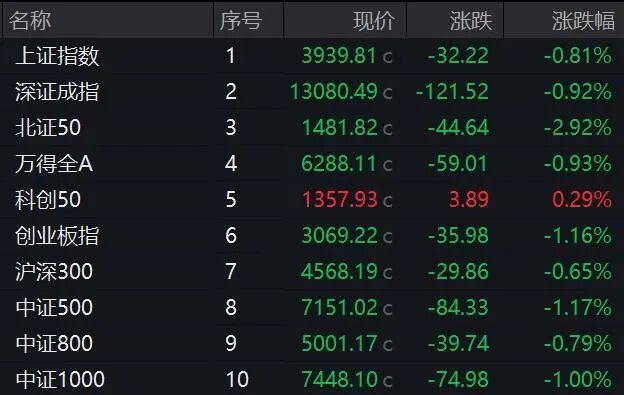
Market Overview - On November 18, the A-share market experienced a decline, with the Shanghai Composite Index falling by 0.81% to 3939.81 points, and the Shenzhen Component Index dropping by 0.92% to 13080.49 points [2][3] - The overall market turnover exceeded 1.9 trillion yuan, an increase of over 15 billion yuan compared to the previous day, with more than 4100 stocks declining [2] Sector Performance - AI application concepts showed resilience, with stocks like Rongji Software, Inspur Software, and Xuanyuan International achieving consecutive gains [3] - The internet e-commerce sector also saw an increase, highlighted by Liren Lizhuang hitting the daily limit [3] - Conversely, the coal sector faced significant losses, with Yunmei Energy and Baotailong hitting the daily limit down [3] Automotive Industry - XPeng Motors reported a significant drop of over 10% in its stock price, reaching a low of 85.5 HKD [6] - In Q3, XPeng Motors achieved a total delivery of 116,007 vehicles, marking a year-on-year increase of 149.3% and a quarter-on-quarter increase of 12.4% [8] - The company's Q3 revenue reached 20.38 billion yuan, up 101.8% year-on-year, with a gross margin of 20.1%, an increase of 4.8 percentage points year-on-year [8] - For Q4 2025, XPeng anticipates total deliveries between 125,000 and 132,000 vehicles, representing a year-on-year increase of 36.6% to 44.3% [8] Global Market Context - Global markets faced a downturn, with the Nikkei 225 and the Korean Composite Index both dropping over 3% [9][10] - The Nasdaq 100 futures saw a decline of up to 1%, while Bitcoin fell below 90,000, erasing all gains for 2025 [10] - There is a growing debate regarding the valuation of AI stocks, particularly in light of Nvidia's performance and upcoming employment reports, with some institutions suggesting a bubble may be forming [10]

逆势拉升!A股这一概念,突然爆发!
Zheng Quan Shi Bao Wang· 2025-11-18 08:25
Market Overview - On November 18, the A-share market experienced a decline, with the Shanghai Composite Index falling by 0.81%, the Shenzhen Component Index down by 0.92%, and the ChiNext Index decreasing by 1.16% [1] - Despite the overall market downturn, AI application concepts and the internet e-commerce sector showed resilience, with significant gains in specific stocks [1] AI and E-commerce Sector - AI application concepts saw strong performance, with stocks like Rongji Software, Inspur Software, and Xuanyuan International achieving consecutive gains [1] - The internet e-commerce sector also rose, highlighted by Liren Lizhuang hitting the daily limit [1] Automotive Industry - XPeng Motors' stock fell over 10% on November 18, reaching a low of 85.5 HKD, amidst a broader decline in the Hong Kong electric vehicle sector, including companies like Li Auto and NIO [2] - XPeng Motors reported a record high total delivery of 116,007 vehicles in Q3 2025, marking a year-on-year increase of 149.3% and a quarter-on-quarter increase of 12.4% [2] - The company's Q3 revenue reached 20.38 billion RMB, up 101.8% year-on-year, with a gross margin of 20.1%, an increase of 4.8 percentage points from the previous year [2] - For Q4 2025, XPeng anticipates total deliveries between 125,000 and 132,000 vehicles, representing a year-on-year increase of 36.6% to 44.3% [2] New Energy Vehicle Market - In October, new energy vehicles accounted for over 50% of total new car sales in China, with production and sales reaching 1.772 million and 1.715 million units, respectively, reflecting year-on-year growth of 21.1% and 20% [3] - From January to October, cumulative production and sales of new energy vehicles reached 13.015 million and 12.943 million units, with year-on-year growth of 33.1% and 32.7% [3] Global Market Sentiment - Global stock markets faced significant declines, with the Nikkei 225 and KOSPI dropping over 3%, and the Hang Seng Index falling more than 2% [4] - The Nasdaq 100 and S&P 500 futures also experienced declines, indicating a broader risk-off sentiment among investors [4] - The ongoing debate regarding the valuation of AI stocks, particularly in light of Nvidia's performance, has intensified, with some institutions expressing concerns over potential bubbles in the AI sector [4]
科创板收盘播报:科创50指数涨0.29% 新股恒坤新材较发行价涨310.61%
Xin Hua Cai Jing· 2025-11-18 07:33
Group 1 - The Sci-Tech Innovation 50 Index opened lower on November 18 but later rose, closing at 1357.93 points with a gain of 0.29% and a total trading volume of approximately 612.2 billion yuan [1] - The Sci-Tech Comprehensive Index experienced a decline of 0.20%, closing at 1596.41 points with a total trading volume of 1869 billion yuan [2] - Among the 592 stocks in the Sci-Tech Board, high-priced stocks mostly rose while low-priced stocks mostly fell, with semiconductor and software service stocks showing strong performance [2] Group 2 - Hengkun New Materials was listed on the Sci-Tech Board on November 18 with an issuance price of 14.99 yuan per share and a price-to-earnings ratio of 71.42 times, closing up 74.41% from the issuance price with a trading volume of approximately 11.1 billion yuan [2] - Excluding Hengkun New Materials, the average decline for the remaining 592 stocks on the Sci-Tech Board was 0.58%, with an average turnover rate of 2.62% and a total trading volume of approximately 1846.08 billion yuan [2] - In terms of individual stock performance, Longxun Co. and Guangyun Technology reached the daily limit, while Huasheng Lithium fell by 17.44%, marking the largest decline [2]

港股异动 | 聚水潭(06687)一度跌超9% 股价再创上市新低 较招股价已跌超一成
智通财经网· 2025-11-18 06:24
Core Viewpoint - The stock of Jushuitan (06687) has experienced significant volatility, dropping over 9% and reaching a new low since its listing, indicating market concerns about its performance and valuation [1] Company Overview - Jushuitan was established in 2014 and focuses on providing a one-stop SaaS product and service centered around its core product "Jushuitan ERP" [1] - The company reported revenues of 523 million RMB, 697 million RMB, and 910 million RMB for the years 2022 to 2024, respectively, achieving a compound annual growth rate (CAGR) of 31.9% during this period [1] - Jushuitan is expected to turn a profit in 2024, with an adjusted net profit of 48.988 million RMB, ending a three-year cumulative loss exceeding 986 million RMB [1] Recent Developments - On November 16, Jushuitan announced that the overall coordinator fully exercised a 15% over-allotment option, involving a total of 10.2249 million shares at a price of 30.6 HKD per share, generating additional net proceeds of approximately 300 million HKD [1] - The stabilization period for the global offering ended on the same day, during which the stabilization agent, China International Capital Corporation, did not buy or sell any shares [1]
聚水潭一度跌超9% 股价再创上市新低 较招股价已跌超一成
Zhi Tong Cai Jing· 2025-11-18 06:23
Core Viewpoint - Jushuitan (06687) experienced a significant decline in stock price, dropping over 9% and reaching a new low since its listing, indicating market concerns about its financial performance and growth prospects [1] Company Overview - Jushuitan was established in 2014 and focuses on providing a one-stop SaaS product and service centered around its core product "Jushuitan ERP" [1] - The company is projected to achieve revenues of 523 million RMB, 697 million RMB, and 910 million RMB from 2022 to 2024, with a compound annual growth rate (CAGR) of 31.9% during this period [1] - Jushuitan is expected to turn a profit in 2024, with an adjusted net profit of 48.988 million RMB, ending a three-year cumulative loss exceeding 986 million RMB [1] Stock Performance - On November 16, Jushuitan announced that the overall coordinator fully exercised a 15% over-allotment option, involving a total of 10.2249 million shares at a price of 30.6 HKD per share, generating approximately 300 million HKD in additional net proceeds [1] - The stabilization period for the global offering ended on the same day, during which the stabilizing agent, China International Capital Corporation, did not buy or sell any shares [1]