网约车

Search documents
滴滴千亿交易规模持续攀升,二季度GTV同比增长15.9%
中国基金报· 2025-08-28 11:29
Core Insights - Didi's core platform transaction value (GTV) reached 109.6 billion yuan in Q2 2025, showing a year-on-year growth of 15.9% at fixed exchange rates [1] - The company has maintained double-digit growth in order volume for 10 consecutive quarters since 2023, with a total of 4.464 billion orders in Q2, a 15.2% increase year-on-year [2] Group 1: Financial Performance - In Q2, Didi's GTV for domestic travel was 82.5 billion yuan, growing 12.2% year-on-year, while international business GTV reached 27.1 billion yuan, with a 27.7% increase at fixed exchange rates [1] - The adjusted net profit for Didi in Q2 was 3.1 billion yuan, indicating improved operational efficiency [4] Group 2: Market Expansion - Didi has expanded its international business to 14 countries across Latin America, Asia-Pacific, and Africa, with a focus on diversifying services beyond ride-hailing to include food delivery and financial services [2][3] - In Brazil, Didi's platform 99 has over 55 million users and has successfully launched its food delivery service, achieving 1 million orders within 45 days of its launch in Goiânia [2][3] Group 3: Membership and Ecosystem Development - Didi upgraded its membership system in August, partnering with hotels and restaurants to create a comprehensive ecosystem covering travel, dining, and accommodation [2] - The company aims to build a high-value membership ecosystem that enhances user experience and service offerings [2]

滴滴千亿交易规模持续攀升 二季度GTV同比增长15.9%
Sou Hu Cai Jing· 2025-08-28 10:14
Group 1 - Didi's core platform Gross Transaction Value (GTV) reached 109.6 billion yuan in Q2 2025, with a year-on-year growth of 15.9% at fixed exchange rates [1] - The GTV for Didi's domestic ride-hailing services was 82.5 billion yuan, growing 12.2% year-on-year, while international business GTV was 27.1 billion yuan, with a year-on-year growth of 27.7% at fixed exchange rates [1] - Total core platform order volume increased by 15.2% year-on-year to 4.464 billion orders, with domestic orders growing 12.4% to 3.376 billion and international orders growing 24.9% to 1.088 billion [1] Group 2 - Didi has been expanding its international business since 2018, currently covering 14 countries, with a GTV growth rate of over 25% year-on-year [2] - In Brazil, Didi's platform 99 has over 55 million users and has launched its food delivery service, achieving 1 million orders in 45 days in Goiânia and expanding to São Paulo [2] - In Mexico, Didi has diversified from ride-hailing to include financial and food delivery services, serving over 30 million users across more than 70 cities [2] Group 3 - Didi achieved an adjusted net profit of 3.1 billion yuan in Q2, indicating improved operational efficiency [3] - The CEO emphasized the importance of user experience and driver ecosystem, committing to enhancing service and efficiency while promoting AI and autonomous driving [3]

滴滴二季度核心平台交易额1096亿元 同比增长15.9%
Sou Hu Cai Jing· 2025-08-28 09:51
Core Insights - Didi's Q2 2025 performance report shows continued double-digit growth, with a core platform transaction value (GTV) reaching 109.6 billion yuan, a year-on-year increase of 15.9% at fixed exchange rates [1] - The domestic ride-hailing GTV reached 82.5 billion yuan, growing 12.2% year-on-year, while international business GTV hit 27.1 billion yuan, with a significant year-on-year growth of 27.7% at fixed exchange rates [1] - The total order volume for the core platform increased by 15.2% year-on-year to 4.464 billion orders, marking a record high for both domestic and international orders [1] Domestic Business Performance - The domestic ride-hailing segment saw a year-on-year order volume growth of 12.4%, reaching 3.376 billion orders, with a daily average of 37.1 million orders [1] - Didi has been expanding its service offerings by enhancing its membership system and collaborating with hotels and restaurants to create a comprehensive lifestyle ecosystem [1] International Business Expansion - Didi's international business continues to grow rapidly, maintaining a year-on-year growth rate of over 25% for nearly a year [2] - The international operations cover 14 countries across Latin America, Asia-Pacific, and Africa, with a focus on diversifying services beyond ride-hailing [2] - In Brazil, the 99 platform has over 55 million users, and its food delivery service has achieved significant milestones, including 1 million orders in 45 days and expansion plans to reach 100 cities by mid-2026 [2] Operational Efficiency and Profitability - Didi achieved an adjusted net profit of 3.1 billion yuan in Q2, indicating improved operational efficiency [3] - The CEO emphasized the importance of user experience and driver ecosystem, with plans to enhance service efficiency and invest in AI and autonomous driving technologies [3]
滴滴二季度实现GTV 1096亿,固定汇率下同比增长15.9%,订单量同比增长15.2%至44.64亿单;经调整净利润31亿
Ge Long Hui· 2025-08-28 09:38
Core Insights - Didi's Q2 2025 performance report indicates a significant growth trajectory, with the total gross transaction value (GTV) reaching 109.6 billion yuan, reflecting a year-on-year increase of 15.9% at fixed exchange rates [1] - The company achieved a record high in daily average orders, with domestic and international business order volumes growing by 12.4% and 24.9% respectively [1] - Adjusted net profit for the quarter was reported at 3.1 billion yuan [1] Group 1 - Didi's core platform GTV reached 109.6 billion yuan in Q2 2025, with a year-on-year growth of 15.9% [1] - The total order volume increased to 4.464 billion, marking a 15.2% year-on-year growth [1] - Daily average orders for domestic and international businesses reached 37.1 million and 11.96 million respectively, setting new quarterly records [1] Group 2 - Domestic ride-hailing orders grew by 12.4% year-on-year, while international business orders surged by 24.9% [1] - The adjusted net profit for the quarter was 3.1 billion yuan [1]
滴滴二季度核心平台交易额1096亿元
Bei Jing Shang Bao· 2025-08-28 09:36
Core Insights - Didi's core platform gross transaction value (GTV) reached 109.6 billion yuan in Q2 2025, reflecting a year-on-year growth of 15.9% at fixed exchange rates [1] - The GTV for Didi's China mobility segment was 82.5 billion yuan, showing a year-on-year increase of 12.2% [1] - International business GTV amounted to 27.1 billion yuan, with a year-on-year growth of 27.7% at fixed exchange rates [1] Transaction Volume - The total order volume for the core platform increased by 15.2% year-on-year, reaching 4.464 billion orders [1] - In the China mobility segment, order volume grew by 12.4% to 3.376 billion orders, averaging 37.1 million orders per day [1] - The international business saw a significant increase in order volume, up 24.9% to 1.088 billion orders, averaging 11.96 million orders per day [1]
滴滴:二季度经调整净利润31亿元,订单量同比增长15.2%
Zheng Quan Shi Bao Wang· 2025-08-28 09:24
Core Insights - Didi's Q2 2025 earnings report reveals an adjusted net profit of 3.1 billion yuan [1] - The company's Gross Transaction Value (GTV) reached 109.6 billion yuan, reflecting a year-on-year growth of 15.9% at fixed exchange rates [1] - Total order volume increased by 15.2% year-on-year, totaling 4.464 billion orders [1] Business Performance - In terms of order volume, Didi's domestic ride-hailing business saw a year-on-year increase of 12.4%, while international business orders grew by 24.9% [1] - The average daily orders reached a record high of 37.1 million for domestic services and 11.96 million for international services [1]
滴滴:二季度GTV达到1096亿元,同比增长15.9%
Xin Lang Ke Ji· 2025-08-28 09:12
Core Insights - Didi's Q2 2025 performance report shows a robust growth trajectory, with a core platform transaction volume (GTV) reaching 109.6 billion yuan, reflecting a year-over-year increase of 15.9% at constant exchange rates [1] - The Chinese ride-hailing segment contributed 82.5 billion yuan to GTV, growing 12.2% year-over-year, while international business GTV reached 27.1 billion yuan, marking a 27.7% increase at constant exchange rates [1] - The total order volume for the core platform grew by 15.2% year-over-year to 4.464 billion orders, with both domestic and international segments achieving record highs [1] Domestic Market Performance - The Chinese ride-hailing segment saw a year-over-year order volume increase of 12.4%, totaling 3.376 billion orders, with a daily average of 37.1 million orders [1] - Didi has maintained a stable double-digit year-over-year growth in order volume for ten consecutive quarters since 2023 [1] International Market Expansion - Didi's international business has sustained a growth rate of over 25% year-over-year for nearly a year, with operations in 14 countries across Latin America, Asia-Pacific, and Africa [1] - In Brazil, the ride-hailing platform 99 has surpassed 55 million users, and its food delivery service has achieved significant milestones, including 1 million orders within 45 days of launch in Goiânia [2] - 99 plans to expand its food delivery service to 100 cities in Brazil by mid-2026, while also diversifying into financial services in Mexico, serving over 30 million users across more than 70 cities [2] Financial Performance - Didi reported an adjusted net profit of 3.1 billion yuan in Q2, indicating improved operational efficiency alongside stable growth [2] - The CEO emphasized the company's commitment to enhancing user experience and driver welfare while advancing AI applications and autonomous driving technologies to create long-term value for users, drivers, and partners [2]
净亏损同比收窄62.3% 如祺出行毛利首次转正
Zhong Guo Jing Ying Bao· 2025-08-28 02:06
Core Viewpoint - The company, 如祺出行, reported a significant revenue growth of 61.7% year-on-year, reaching 1.676 billion RMB in the first half of 2025, while narrowing its net loss by 62.3% to 124 million RMB, indicating a continuous improvement in financial performance and a potential breakthrough in profitability [1][2][3]. Revenue Growth - The revenue increase was primarily driven by the core businesses of ride-hailing and technology services, with ride-hailing services generating 1.636 billion RMB, a remarkable increase of 86% year-on-year [2][3]. - Technology services revenue surged by 207% year-on-year, contributing new growth momentum to the company's revenue structure [2][3]. Profitability Improvement - For the first time since its listing, the company achieved a positive gross profit, totaling 37.438 million RMB, a substantial increase of 215.4% year-on-year, with a gross margin of 2.2%, up from -3.1% in the previous year [2][3]. - The improvement in gross margin is attributed to rapid order growth and ongoing cost structure optimization, enhancing the platform's pricing power and profitability [3]. Cost Control and Efficiency - The company successfully reduced sales and marketing expenses, financial costs, and general administrative expenses, with financial costs decreasing by 43.4% year-on-year and both sales and marketing and administrative expenses dropping by over 20% [3]. - Despite a saturated ride-hailing market, the company achieved a 51.13% year-on-year increase in total orders, reaching 73.3 million orders, and a 56.83% increase in transaction volume to 2.032 billion RMB [3]. Autonomous Driving and National Expansion - Since its listing, the company has invested over 137 million HKD in autonomous driving and Robotaxi operations, with plans to invest an additional 256 million HKD by 2026 [5]. - The company has deployed over 300 Robotaxis in key areas of the Greater Bay Area, with related order volume increasing by over 470% and monthly active users growing by over 70% [5][6]. - The "Robotaxi+" strategy was launched to open platform resources to all compliant local Robotaxi operators, aiming to expand operations to 100 core cities and build a fleet of over 10,000 vehicles within five years [5][6]. Market Positioning - The company has established a "ripple effect" strategy, expanding from the Greater Bay Area to surrounding regions, achieving coverage in 94 cities nationwide as of August 26 [6].
李长安:优化网约车市场,仅降抽成还不够
Huan Qiu Wang Zi Xun· 2025-08-28 00:16
Group 1 - Major ride-hailing platforms, including Didi and T3, have collectively reduced their commission rates, with the highest now at 27% and Cao Cao Chuxing at 22.5% [1] - Drivers generally welcome the reduction in commission rates, but some still find the new rates high and the pricing rules complex, which continues to hinder income improvement [1] - The increase in the number of licensed ride-hailing platforms, now totaling 389, and over 7.5 million drivers has led to excess capacity and declining per-driver order volumes, negatively impacting driver income [1] Group 2 - The reduction in commission rates is a positive response to regulatory requirements aimed at setting commission caps and promoting transparency [2] - However, driver income is influenced by multiple factors, including dynamic commissions and bonus mechanisms, indicating that merely lowering commissions is not a fundamental solution [2] - The government, platforms, and drivers need to collaborate to promote high-quality development in the ride-hailing industry, with a focus on regulatory frameworks and fair competition [2] Group 3 - Platforms should optimize dispatch and pricing algorithms to reduce reliance on driver commissions and explore new business opportunities to alleviate income pressure on drivers [3] - Drivers are encouraged to participate in platform governance and advocate for their rights, fostering a collaborative effort to address industry challenges [3]
智能识别车辆接单 司乘碰面“车到即走”
Nan Fang Du Shi Bao· 2025-08-27 23:09
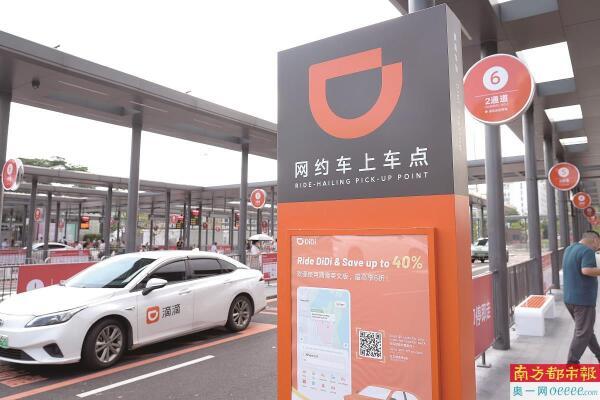
Core Viewpoint - The establishment of the Shenzhen Bay Smart Port aims to enhance the travel experience for cross-border travelers between Shenzhen and Hong Kong, addressing the growing demand for cross-border travel and improving efficiency in transportation services [2][3]. Group 1: Infrastructure and Services - Didi Chuxing has collaborated with relevant Shenzhen authorities to build a dedicated pick-up point, waiting area, and an intelligent license plate recognition system at Shenzhen Bay Port, providing a more convenient and comfortable travel experience for passengers [2][3]. - The waiting area includes resting seats and designated pick-up spots for ride-hailing services, allowing users to relax while waiting for their rides, thus improving overall travel efficiency [3][4]. - The implementation of a "person-finding-car" model at the port allows for precise vehicle positioning and quick matching with passengers, effectively solving the traditional "finding a car" problem [2][3]. Group 2: User Experience Enhancements - Passengers can use the same Didi app for cross-border travel, which automatically converts currency for payments, and they can receive exclusive discounts for rides at Shenzhen Bay Port [2][5]. - A dual-language guide for using Didi services is available in the waiting area to assist foreign tourists, catering to the increasing demand for cross-border travel [5]. - Didi is offering promotional activities, such as a discount of 100 HKD for first-time users in Hong Kong and various fare reduction coupons for users in Shenzhen, to encourage usage and enhance the travel experience [5]. Group 3: Operational Improvements - The upgrade includes a refined entry recognition system that identifies whether vehicles have accepted rides, helping to reduce congestion and improve the efficiency of passenger pick-up [3][5]. - Didi has implemented a system that allows passengers to view real-time parking information for their rides, facilitating quicker and more efficient pick-ups [3][5]. - The company has rolled out experience optimization measures in 255 airports and train stations across 137 cities in China, enhancing both passenger and driver experiences [5].