
啤酒

Search documents
东北再无雪花啤酒
Sou Hu Cai Jing· 2025-12-17 03:37
Core Viewpoint - China Resources Beer is undergoing a significant transformation as it exits its long-standing dominance in Northeast China, marked by asset disposals and a strategic shift to Shenzhen, aiming for growth in high-end markets while facing challenges in the beer industry [2][3][9]. Group 1: Asset Disposals and Challenges - The announcement of asset disposals at Dalian Property Exchange highlights the difficulties China Resources Beer faces in Northeast China, with multiple factories being listed for sale, including the Qiqihar factory, which saw its price drop from 6.35 million to 5.08 million yuan, a decrease of over 120,000 yuan, yet remains unsold [2][4]. - By the end of 2025, China Resources Beer had eight factories in Northeast China listed for transfer, reflecting a trend of closures and asset write-downs, as the company struggles with outdated facilities and declining local demand [3][4]. - The closure of the Changchun factory, which had been in operation since 2001, took six years to finalize due to numerous labor disputes and legal issues, illustrating the complexities involved in shutting down operations [4][6]. Group 2: Historical Context and Strategic Shift - China Resources Beer, once a dominant player in Northeast China with a market share of 68% in Liaoning, is now retreating from its historical stronghold, marking the end of an era characterized by aggressive acquisitions and market expansion [5][6]. - The company's aggressive "mushroom strategy" led to the acquisition of many underperforming breweries, which became burdensome as the market shifted to a phase of stagnation, prompting a significant reduction in the number of operational factories from 98 to 62 between 2016 and 2024 [5][6]. - The departure of long-time chairman Hou Xiaohai and the relocation of the headquarters to Shenzhen signify a strategic overhaul aimed at embracing high-end markets and reducing reliance on the Northeast [7][9]. Group 3: Financial Performance and Future Outlook - Despite reporting a net profit of 4.76 billion yuan in 2024, China Resources Beer faces ongoing challenges as the Chinese beer market has reached a saturation point, leading to intense competition in both high-end and craft beer segments [10][11]. - The company incurred 2.41 billion yuan in fixed asset impairments and employee compensation in the first half of 2025, indicating that the repercussions of factory closures are still being felt [11]. - The transition to a new growth strategy, including the integration of its white wine business and the need to adapt to a changing market landscape, presents significant hurdles for the company moving forward [8][11].


重庆啤酒支付1亿元了结旧账
Shen Zhen Shang Bao· 2025-12-16 23:34
Group 1 - The core point of the article is that Chongqing Brewery has reached a settlement agreement with Jiawei during the second trial phase, which, if successful, will conclude the litigation process [1] - The settlement agreement includes a one-time payment of 100 million yuan (excluding tax) by the company or its subsidiaries to Jiawei for all price difference settlements due by December 31, 2025 [1] - The agreement also outlines the cooperation terms for product distribution between the company and Jiawei from 2026 to 2028, including provisions for dividends [1] Group 2 - Following the settlement, Chongqing Brewery's subsidiary, Carlsberg Chongqing Brewery Co., Ltd., plans to reverse a previously recognized estimated liability of approximately 254 million yuan based on the first-instance judgment [1] - The company intends to recognize a new liability of about 217 million yuan for the one-time payment and other related costs, which is in line with the principle of prudence [1] - These accounting adjustments are expected to increase the company's total profit for 2025 by approximately 37.11 million yuan and the net profit attributable to shareholders by about 19.08 million yuan [1] Group 3 - In the past two years, Chongqing Brewery has experienced a continuous decline in performance, with financial data indicating a decrease in both revenue and net profit last year [2]

财信证券晨会纪要-20251217
Caixin Securities· 2025-12-16 23:30
Market Strategy - The market is experiencing continuous volume contraction, with the retail sector showing resilience [5][10] - The overall A-share market saw a decline of 1.45%, with the Shanghai Composite Index down 1.11% and the ChiNext Index down 2.10% [9][10] - The retail sector is expected to benefit from government policies aimed at boosting consumption, especially as the year-end shopping season approaches [10][11] Company Tracking - Chongqing Beer (600132.SH) is involved in a lawsuit and is planning to sign a mediation agreement, which may impact its financials positively [38][41] - Miao Ke Lan Duo (600882.SH) announced expected related party transactions for 2026, with a projected decrease in procurement amounts compared to 2025 [33][35] - YH Bio (688575.SH) received two medical device registration certificates, indicating potential growth in its product offerings [36] - Mingyang Smart Energy (601615.SH) won a bid for a significant offshore wind power project valued at 1.834 billion yuan, enhancing its market position in renewable energy [42][44] Industry Dynamics - The Three Gorges Jiangsu Dafeng 800 MW offshore wind power project has achieved full capacity grid connection, marking a significant advancement in China's offshore wind energy capabilities [31][32] - The National Development and Reform Commission emphasized the need to enhance domestic consumption and support various sectors, including e-commerce and health care, to stimulate economic growth [21][22]



重庆啤酒1亿元结算款背后的利益博弈
Guo Ji Jin Rong Bao· 2025-12-16 15:13
Core Viewpoint - The lawsuit between Chongqing Beer and Chongqing Jiawei Beer Co., Ltd. is progressing towards a potential settlement in the second instance, focusing on the sales expense agreement in the original distribution contract [1][2]. Group 1: Legal Dispute Background - The dispute originated from a 20-year exclusive distribution agreement signed on January 5, 2009, where Chongqing Beer was to distribute "Shancheng Beer" produced by Chongqing Jiawei [1]. - After the acquisition of Chongqing Beer by Carlsberg in 2013, adjustments made by Carlsberg led to a reduction in sales volume for Chongqing Jiawei, resulting in financial losses [1]. - Negotiations between Carlsberg and Chongqing Jiawei regarding compensation for losses have been ongoing, with a significant amount of 38 million yuan in sales expenses being disputed since 2017 [2]. Group 2: Settlement Agreement - A proposed settlement agreement indicates that Chongqing Beer or its subsidiaries will pay Chongqing Jiawei a total of 100 million yuan (excluding tax) within 10 days after the agreement takes effect [3]. - The settlement stipulates that neither party can claim any breach of the distribution agreement until December 31, 2025, and all previous claims related to the agreement are waived [3][4]. - Starting from January 1, 2026, Chongqing Jiawei will no longer pay or bear transportation or sales expenses for the distributed beer [5]. Group 3: Financial Implications - The accounting treatment related to the case is expected to allow Chongqing Beer to reverse a previously recognized liability of 254 million yuan and recognize a new liability of 217 million yuan [5]. - This adjustment is projected to increase Chongqing Beer's total profit for 2025 by approximately 37.11 million yuan and net profit attributable to shareholders by about 19.08 million yuan [6]. Group 4: Recent Financial Performance - In the first three quarters of the year, Chongqing Beer reported revenue of 13.059 billion yuan, a slight decrease of 0.03% year-on-year, with net profit attributable to shareholders declining by 6.83% to 1.241 billion yuan [7]. - The third quarter alone saw revenue of 4.22 billion yuan, with a year-on-year net profit drop of 12.71%, amounting to approximately 376 million yuan [7]. - Product performance varied, with high-end beer showing slight growth, while mainstream and economy products experienced declines of 3.15% and 10.5% respectively [9].
重庆啤酒1亿元了结包销旧账,将与“老冤家”继续合作三年
Jing Ji Guan Cha Wang· 2025-12-16 10:16
此外,双方达成调解预计将使重庆啤酒本年度净利润有所增加。重庆啤酒公告称,根据《调解协议》约 定,并依据《企业会计准则》相关规定,经与审计机构沟通,公司下属实施该包销业务的控股子公司嘉 士伯重庆啤酒有限公司拟将以前年度基于本案一审判决计提的预计负债25,402.92万元冲回,同时,基于 谨慎性原则,拟计提一次性支付的量价差结算款等负债21,692.37万元。上述会计处理预计增加公司2025 年度利润总额3,710.55万元、归属于上市公司股东的净利润1,907.96万元。 12月15日晚,重庆啤酒发布关于公司涉及诉讼进展暨拟签订《调解协议》的公告称,重庆啤酒、重庆嘉 威拟在二审阶段达成调解,如顺利达成调解,则诉讼程序将以调解结案。双方诉讼起始于2023年,彼时 重庆嘉威主张重庆啤酒未依约履行包销义务要求赔偿,当地法院于2025年3月一审判决重庆啤酒向重庆 嘉威支付约3.53亿元,重庆啤酒不服并上诉,此后诉讼进入二审阶段。 重庆啤酒公告称,为彻底解决公司与重庆嘉威本次诉讼涉及的合同纠纷,在重庆高院的调解下,双方协 商拟签订《调解协议》,《调解协议》已经公司董事会会议审议通过,尚需提交公司2025年第三次临时 股东 ...
重庆啤酒1亿元“排雷” 和嘉威的合同纠纷诉讼拟达成调解
Xi Niu Cai Jing· 2025-12-16 10:13
12月16日,重庆啤酒股份有限公司(下称"重庆啤酒",600132.SH)发布公告称,与重庆嘉威啤酒有限公司(下称"嘉威")拟在二审阶段达成调解,如顺利 达成调解,则诉讼程序将以调解结案。 公告显示,双方拟签署的《调解协议》主要内容包括:重庆啤酒或其子公司向嘉威一次性支付截至2025年12月31日的全部量价差结算款1亿元(不含税), 同时就重庆啤酒与嘉威2026年至2028年期间产品包销方面的合作方式进行约定,以及约定嘉威分红等相关事宜。 之前的一审判决判令重庆啤酒在判决生效之日起10日内向嘉威支付3.53亿元,驳回嘉威其他诉讼请求及重庆啤酒反诉请求。 诉讼涉及的合同纠纷主要是双方于2007年签署的《战略合作协议》、2009年签署的《产品包销框架协议》、2016年的《补充协议》《产品包销备忘录》、 2019年的《备忘录二》《备忘录三》及为履行该等协议和备忘录而签署和/或形成的所有会议纪要、会谈备忘录等文件(统称"包销协议文件")的履行而产 生的争议。 重庆啤酒表示,经与审计机构沟通,重庆啤酒下属实施该包销业务的控股子公司嘉士伯重庆啤酒有限公司拟将以前年度基于本案一审判决计提的预计负债 2.54亿元冲回。同时, ...
重庆啤酒:2025年12月31日将召开2025年第三次临时股东会
Zheng Quan Ri Bao Wang· 2025-12-16 08:11
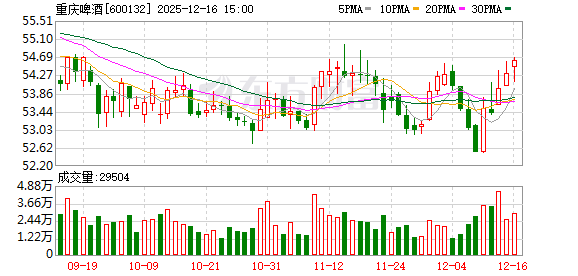
证券日报网讯12月15日晚间,重庆啤酒(600132)发布公告称,公司将于2025年12月31日召开2025年第 三次临时股东会。 ...
重庆啤酒:第十一届董事会第六次会议决议公告
Zheng Quan Ri Bao· 2025-12-16 08:11
证券日报网讯 12月15日晚间,重庆啤酒发布公告称,公司第十一届董事会第六次会议审议通过《关于 召开公司2025年第三次临时股东会的议案》等多项议案。 (文章来源:证券日报) ...
食品饮料2026年度策略:大年起点,持旧迎新
2025-12-16 03:26
Summary of the Food and Beverage Industry Conference Call Industry Overview - The food and beverage industry is entering a pivotal year in 2026, characterized as a "starting point for a big year" with expectations for absolute returns across the sector [2][3] - The industry has seen a decline in valuations to reasonable levels, with performance being the core issue [3] Key Insights and Arguments - **Consumer Demand Trends**: Anticipated L-shaped recovery in consumer demand driven by the repair of household balance sheets and economic structural transformation [3] - **Traditional vs. New Consumption**: Both traditional and new consumption are expected to coexist, with traditional consumption showing signs of bottoming out and potential recovery [2][8] - **Investment Recommendations**: - Prioritize investments in frozen food companies, followed by the liquor sector [5] - Companies like Anjuke, Qianqianwei, and Sanquan in the frozen food sector are expected to optimize competition through B-end transformations [5] - High market share beer companies such as Yanjing and Zhujiang are seen as having good growth potential [5] New Consumption Opportunities - The new consumption sector is expected to benefit from structural dividends, with significant growth potential for companies like New Dairy and Yanjing Zhujiang [4][10] - New channels and product categories are anticipated to drive performance growth in beverages and snacks, even in the current economic environment [6][12] Liquor Industry Insights - The liquor sector, characterized by strong commercial barriers and high inventory accumulation, is expected to see improvements in Q1 2026 as inventory levels decrease [7] - The stability of liquor prices or an L-shaped trend is viewed as an attractive investment opportunity, with companies like Wuliangye, Yanghe, and Moutai being highlighted as good choices [7][9] Market Characteristics and Future Outlook - The future consumer market in China is expected to exhibit three main characteristics: large market size, high innovation in channels and categories, and a trend towards international expansion to address supply-demand imbalances [11] - Structural dividends are anticipated to arise from new channels, new product categories, and new markets [11] Specific Investment Targets - In the snack sector, companies with strong channel adjustment and category expansion capabilities, such as Weilong and Yanjin, are recommended [12] - In the beverage sector, functional drinks and sugar-free tea segments are highlighted, with companies like Dongpeng and Nongfu Spring expected to maintain leading growth [12] Strategic Recommendations - The investment strategy for 2026 emphasizes that the food and beverage sector is likely to rise, with a focus on performance recovery, particularly in the liquor sector [13] - The strategy includes holding traditional consumption while embracing new consumption, indicating a balanced approach to investment [14]
重庆啤酒与重庆嘉威18年纠纷拟达成和解
Bei Jing Shang Bao· 2025-12-16 02:44
北京商报讯(记者 刘一博 冯若男)12月15日晚间,重庆啤酒就与重庆嘉威啤酒有限公司(以下简称"重 庆嘉威")的合同纠纷案发布公告称,双方拟在二审阶段达成调解,并签署《调解协议》,尚需提交公 司2025年第三次临时股东大会审议。 根据协议,重庆啤酒或其子公司将向重庆嘉威一次性支付截至2025年12月31日的量价差结算款1亿元 (不含税),双方互相放弃历史索赔。2026至2028年期间,公司每年向重庆嘉威固定采购14.26万千升 啤酒,采购价4000元/千升,并约定补量机制与现金补偿标准。包销合作将于2028年底终止,不再续 期。 对此,重庆啤酒方面表示,本次调解将冲回此前计提的预计负债2.54亿元,同时新增计提2.17亿元,预 计增加公司2025年度利润总额3710.55万元、归母净利润1907.96万元。 据了解,公开资料显示,重庆啤酒与重庆嘉威的合同纠纷源于双方自2007年起围绕《战略合作协议》及 后续多份包销协议履行产生的争议。重庆嘉威于2023年10月向法院提起诉讼,主张重庆啤酒未依约履行 包销义务,一审法院于2025年3月判决重庆啤酒向重庆嘉威支付约3.53亿元,重庆啤酒不服并上诉,纠 纷进入二审阶 ...