
Footwear

Search documents
Deckers vs. Nike: Which Shoe Stock Is the Better Buy Right Now?
The Motley Fool· 2025-04-30 01:50
Core Viewpoint - Nike and Deckers Outdoor are both struggling in the current economic climate, with Nike down 24% and Deckers down 46% this year, making them vulnerable to discretionary spending declines and increased consumer costs due to tariffs [1] Group 1: Company Performance - Deckers has shown better growth compared to Nike, achieving double-digit growth for multiple quarters, while Nike is facing challenges in maintaining its revenue [2] - Deckers caters to a more diverse customer market, which aids its growth potential, while Nike's larger scale does not guarantee better performance [4] - Deckers' annual sales are approximately $5 billion, significantly lower than Nike's $50 billion, allowing it to maintain a high growth rate with less revenue pressure [4] Group 2: Valuation Comparison - Both companies have seen their valuations decrease sharply this year, with their price-to-earnings (P/E) multiples now being comparable [5] - Nike is trading at a slightly higher valuation than Deckers, despite its larger market presence and stronger brand [7] Group 3: Future Outlook - Deckers is currently experiencing excellent growth and has a promising long-term trajectory due to its diverse product lines, despite potential challenges from tariffs and economic slowdowns [8] - Nike is undergoing a long and uncertain transition, with management focusing on reconnecting with retailers and launching innovations, but faces challenges from rising fast fashion trends and consumer price sensitivity [9] - Deckers is viewed as the better investment option due to its growth rate and lower P/E ratio, without the complications of a turnaround strategy that Nike is facing [10]


Rocky Brands(RCKY) - 2025 Q1 - Earnings Call Transcript
2025-04-30 01:19
Financial Data and Key Metrics Changes - Reported net sales for Q1 increased 1.1% year over year to $114.1 million, slightly ahead of expectations [17] - Retail sales increased 20.5% to $36.6 million, while wholesale sales decreased by 6.3% to $74.8 million [18] - Gross profit for Q1 was $47 million, representing 41.2% of sales, the highest gross margin reported in Q1 [18] - Adjusted net income for Q1 was $5.5 million or $0.73 per diluted share, compared to $3.1 million or $0.41 per diluted share a year ago [20] Business Line Data and Key Metrics Changes - The XTRA TUF brand experienced double-digit growth, with bookings up approximately 80% versus last year [8] - MUC brand saw better-than-expected growth, particularly in the women's segment, with double-digit increases [9] - Rocky work category delivered the strongest performance, while Rocky Outdoor returned to growth with a single-digit increase [12] Market Data and Key Metrics Changes - The retail segment showed healthy demand, particularly in the B2B Lehigh business, which saw high teens sales growth [14] - Direct-to-consumer business grew faster than Lehigh, driven by marketplace volumes [15] - Wholesale sales were impacted by a planned reduction in commercial military sales, contributing to the overall decline [17] Company Strategy and Development Direction - The company plans to implement price increases on most footwear styles in response to higher tariffs [6] - Efforts are being made to reduce sourcing from China, with a goal to have less than 20% of total volume from China by year-end [27] - The company is leveraging its manufacturing facilities in the Dominican Republic and Puerto Rico to mitigate tariff impacts [37] Management's Comments on Operating Environment and Future Outlook - Management acknowledged a higher degree of uncertainty for the remainder of the year but expressed confidence in maintaining financial targets [16] - The company is well-positioned to navigate current challenges due to its diversified sourcing structure and strong brand portfolio [6] - Management noted that consumer demand has not shown signs of panic despite economic uncertainties [34] Other Important Information - Interest expense decreased significantly to $2.4 million from $4.5 million year over year due to lower interest rates from refinancing [19] - Inventory levels increased by 6.3% year over year, reflecting proactive measures taken in anticipation of tariff impacts [21] Q&A Session Summary Question: Can you elaborate on the guidance and the migration out of China? - Management indicated a strong inventory position allowing them to navigate tariff impacts and transition sourcing out of China effectively [26][27] Question: What are wholesale partners saying about consumer ability to absorb price increases? - Management noted that retail partners are cautiously optimistic, with no significant panic from consumers regarding price increases [34] Question: How are pricing increases being planned? - The company is focused on preserving gross profit dollars while implementing price increases to offset higher costs [46][47] Question: What is the capacity shift to third-party manufacturers in Vietnam, India, and Cambodia? - Management confirmed that approximately 90-92% of products have found new homes, with ongoing efforts to transition remaining capacity [56]

浙江奥康鞋业股份有限公司 2025年第一季度报告
Zheng Quan Ri Bao· 2025-04-29 23:38
登录新浪财经APP 搜索【信披】查看更多考评等级 证券代码:603001 证券简称:奥康国际 本公司董事会及全体董事保证本公告内容不存在任何虚假记载、误导性陈述或者重大遗漏,并对其内容 的真实性、准确性和完整性承担法律责任。 重要内容提示 公司董事会、监事会及董事、监事、高级管理人员保证季度报告内容的真实、准确、完整,不存在虚假 记载、误导性陈述或重大遗漏,并承担个别和连带的法律责任。 公司负责人、主管会计工作负责人及会计机构负责人(会计主管人员)保证季度报告中财务信息的真 实、准确、完整。 第一季度财务报表是否经审计 □是 √否 一、 主要财务数据 (一) 主要会计数据和财务指标 单位:元 币种:人民币 (二) 非经常性损益项目和金额 √适用 □不适用 单位:元 币种:人民币 对公司将《公开发行证券的公司信息披露解释性公告第1号——非经常性损益》未列举的项目认定为非 经常性损益项目且金额重大的,以及将《公开发行证券的公司信息披露解释性公告第1号——非经常性 损益》中列举的非经常性损益项目界定为经常性损益的项目,应说明原因。 □适用 √不适用 单位:股 持股5%以上股东、前10名股东及前10名无限售流通股股东 ...

Rocky Brands(RCKY) - 2025 Q1 - Earnings Call Transcript
2025-04-29 21:32
Financial Data and Key Metrics Changes - Reported net sales for Q1 increased 1.1% year over year to $114.1 million, slightly ahead of expectations [18] - Retail sales increased 20.5% to $36.6 million, while wholesale sales decreased by $5 million or 6.3% to $74.8 million [19] - Gross profit for Q1 was $47 million, representing 41.2% of sales, the highest gross margin reported in Q1, compared to 39.1% in the same period last year [19] - Adjusted net income for Q1 was $5.5 million or $0.73 per diluted share, compared to $3.1 million or $0.41 per diluted share a year ago [21] Business Line Data and Key Metrics Changes - The rubber boot business, particularly the XTRA TUF brand, experienced strong demand with a 20% top line growth in the retail segment [5][6] - MUC brand also saw better than expected growth due to improved winter weather, with women's business delivering double-digit increases [10] - The Rocky brand group showed increases in both work and outdoor categories, with Rocky work delivering the strongest performance [12][13] Market Data and Key Metrics Changes - The company is shifting sourcing from China to countries like Vietnam, Cambodia, and India, aiming to reduce reliance on Chinese manufacturing [7][28] - The company anticipates total volume out of China to be just less than 20% by the end of the year [28] Company Strategy and Development Direction - The company plans to implement price increases on the majority of footwear styles in early June to mitigate the impact of higher tariffs [7][29] - The strategy includes diversifying sourcing and increasing production in the Dominican Republic and Puerto Rico [7][37] Management's Comments on Operating Environment and Future Outlook - Management acknowledged a higher degree of uncertainty for the remainder of the year but expressed confidence in maintaining financial targets due to strong Q1 performance [17] - The company is prepared to navigate the current retail environment with a diverse brand portfolio and functional footwear [18] Other Important Information - Interest expense decreased significantly to $2.4 million from $4.5 million year over year due to lower interest rates from debt refinancing [21] - Inventory at the end of Q1 was $175.5 million, up 6.3% compared to the previous year, as the company accelerated receipts to avoid tariff impacts [22] Q&A Session Summary Question: Can you elaborate on the guidance and the migration out of China? - Management indicated a good inventory position allowing them to transition products out of China and into other countries, expecting to reduce volume from China to less than 20% by year-end [27][28] Question: What are your wholesale partners saying about consumer ability to absorb price increases? - Management noted that there hasn't been significant panic from consumers, and retail partners are cautiously navigating the situation [34][36] Question: Can you clarify the guidance regarding revenue and gross margin? - Management confirmed that while revenue assumptions remain unchanged, they expect lower gross margin percentages but aim to maintain gross profit dollars [42][43] Question: How are you planning the price increases? - The company plans to implement price increases to preserve gross profit dollars while being mindful of retail dynamics [45][46] Question: What is the capacity shift to third-party manufacturers in Vietnam and Cambodia? - Management stated that they have found homes for about 90-92% of their products and are working to secure the remaining capacity [56][57]
Rocky Brands(RCKY) - 2025 Q1 - Earnings Call Transcript
2025-04-29 21:32
Financial Data and Key Metrics Changes - Reported net sales for Q1 increased 1.1% year over year to $114.1 million, slightly ahead of expectations [18] - Retail sales increased 20.5% to $36.6 million, while wholesale sales decreased by $5 million or 6.3% to $74.8 million [18] - Gross profit for Q1 was $47 million, representing 41.2% of sales, the highest gross margin reported in Q1, compared to 39.1% in the same period last year [19] - Adjusted net income for Q1 was $5.5 million or $0.73 per diluted share, compared to $3.1 million or $0.41 per diluted share a year ago [21] Business Line Data and Key Metrics Changes - The rubber boot business, particularly the XTRA TUF brand, experienced strong demand with double-digit growth in Q1 [6][8] - MUC brand also saw better than expected growth, particularly in the women's segment, driven by improved winter weather [10] - The Rocky brand group showed increases in both work and outdoor categories, with Rocky work delivering the strongest performance [12][13] - Georgia Boot faced a softer March due to economic uncertainty, but new product introductions continued to perform well [11] Market Data and Key Metrics Changes - Retail segment saw a 20% top line growth, indicating strong demand across distribution channels [5] - The company is shifting sourcing from China to countries like Vietnam, Cambodia, and India, aiming to reduce reliance on Chinese manufacturing [7][28] - The B2B Lehigh business reported high teens sales growth, marking the third consecutive quarter of double-digit gains [16] Company Strategy and Development Direction - The company plans to implement price increases on most footwear styles in response to higher tariffs, while maintaining flexibility to adjust prices based on future changes [7][29] - There is a focus on diversifying sourcing to mitigate tariff impacts, with a goal to reduce product sourced from China to less than 20% by year-end [28] - The company aims to maintain gross profit dollars despite anticipated pressure on gross margins due to tariffs [24] Management's Comments on Operating Environment and Future Outlook - Management acknowledged growing macroeconomic uncertainty but expressed confidence in navigating the current retail environment due to a diverse brand portfolio [5][18] - The company reiterated its full-year 2025 guidance, expecting low single-digit revenue growth over 2024 levels [23] - Management noted that consumer demand has not shown panic despite rising prices, indicating a stable retail environment [34] Other Important Information - Interest expense decreased significantly to $2.4 million from $4.5 million year over year due to lower interest rates from refinancing [20][21] - Inventory levels increased by 6.3% year over year, as the company accelerated receipts to mitigate tariff impacts [22] Q&A Session Summary Question: Can you elaborate on the guidance and the migration out of China? - Management indicated a strong inventory position allowing them to navigate tariff impacts and transition sourcing out of China effectively [27][28] Question: What are wholesale partners saying about consumer ability to absorb price increases? - Management noted that retail partners are cautiously optimistic, with no significant panic from consumers regarding price increases [32][34] Question: How much capacity is being shifted to third-party manufacturers in Vietnam and India? - Management stated that approximately 90-92% of products have found new homes, with ongoing efforts to transition the remaining 8% from China [56][57]
为什么亚洲脚,更难穿到合脚运动鞋?
3 6 Ke· 2025-04-28 23:50
Group 1 - The core issue in the Asian market is that many consumers struggle to find athletic shoes that fit properly, leading to discomfort and potential foot health problems [1][6][10] - Research indicates that 63% to 72% of individuals wear shoes that do not match their foot length and width, a problem that is particularly pronounced in Asia due to differences in foot shape [1][3][10] - The design of most Western athletic shoes is based on Western foot data, which does not accommodate the wider and shorter foot shapes common in Asia, resulting in a mismatch in fit and comfort [3][8][10] Group 2 - Many consumers are unaware of their own foot shapes, leading to incorrect shoe purchases and inappropriate usage of shoes for different activities, which can cause discomfort and injuries [3][13][15] - The design logic of athletic shoes has historically centered around Western standards, neglecting the unique characteristics of Asian foot shapes, which can lead to various foot health issues [8][10][12] - Common design features in athletic shoes, such as high heels and narrow toe boxes, can exacerbate foot problems for Asian consumers, leading to conditions like bunions and plantar fasciitis [10][12][19] Group 3 - There is a growing demand for shoes designed specifically for wider Asian foot shapes, prompting some brands to introduce models that cater to these needs [19][21] - Brands are beginning to offer more specialized fitting services, including 3D foot scanning and dynamic gait analysis, to help consumers find the right shoe for their foot type [19][21][23] - A comprehensive guide for consumers on how to select the right athletic shoes has been compiled, emphasizing the importance of understanding one's foot shape and the specific requirements for different types of athletic activities [21][24][25]
成都太古里旗舰店开幕,On昂跑进入快速发展期|最前线
3 6 Ke· 2025-04-28 11:42
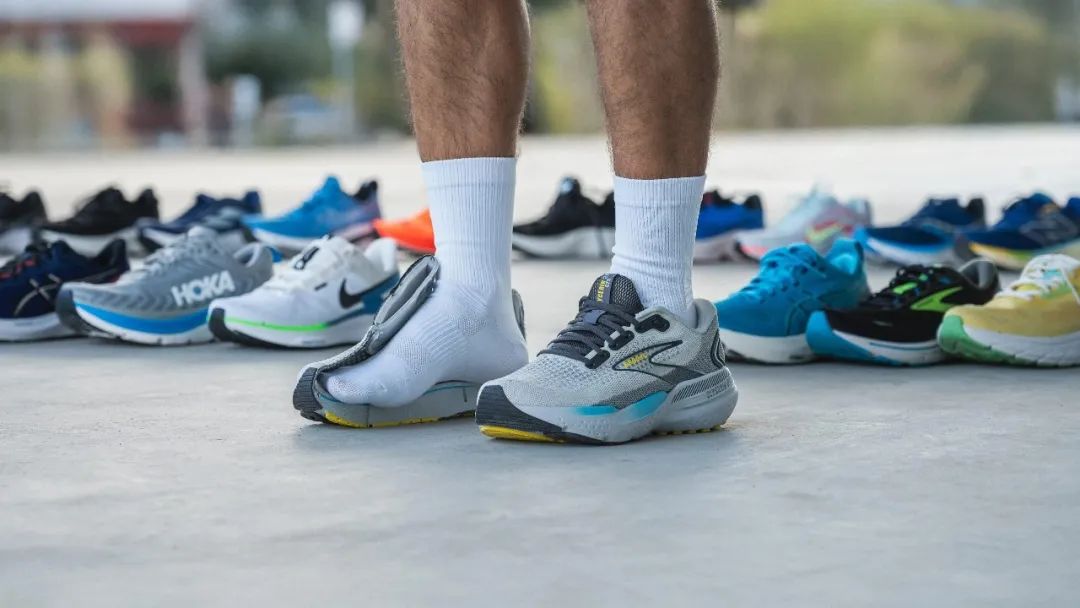
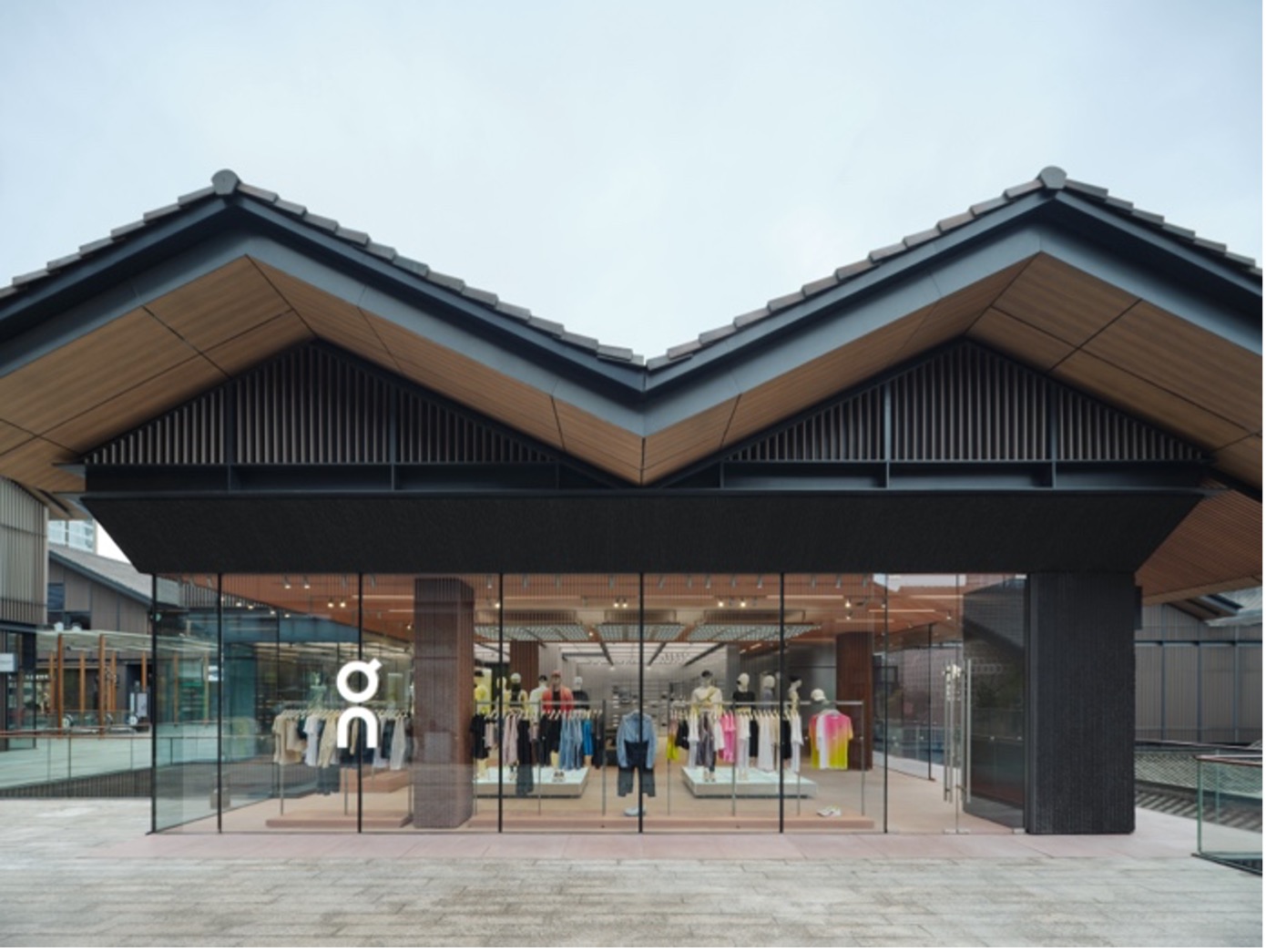
Core Insights - On has opened its first flagship store in Chengdu, marking the end of a five-year exploration period in China [1][3] - The company plans to expand its store count in China to over 100 by 2026, currently operating 66 stores [1][3] - On's new Cloudboom Strike LS shoe, featuring innovative LightSpray™ technology, aims to enhance production efficiency and comfort [5][6] Group 1: Store Expansion - The flagship store in Chengdu covers 500 square meters and showcases a variety of products for different sports [1][3] - On's strategy emphasizes the need for more self-operated retail stores in China, moving away from reliance on wholesale channels [3] - The company aims to open more flagship stores in both China and other regions in the future [1][3] Group 2: Product Innovation - The Cloudboom Strike LS is the first mass-produced racing shoe using LightSpray™, a technology that simplifies the manufacturing process [5][6] - The shoe weighs only 170 grams, making it lighter than competitors, which is crucial for professional runners [6] - On's team has developed a unique formula for the shoe's material, enhancing durability and comfort [5] Group 3: Financial Performance - On's annual compound growth rate from 2021 to 2024 exceeds 47% [7] - In 2024, the company reported a net revenue of 2.318 billion Swiss francs (approximately 19 billion RMB), a year-on-year increase of 29.4% [7] - The net profit for 2024 reached 242 million Swiss francs (approximately 1.984 billion RMB), showing a remarkable growth of 204% [7]

【女鞋】行业市场规模:2024年中国女鞋行业市场规模超过2200亿元 美低帮鞋市场份额占比超45%
Qian Zhan Wang· 2025-04-28 08:26
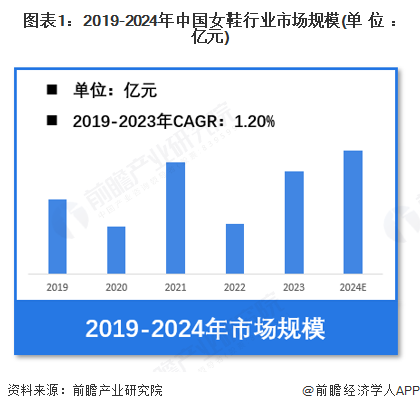
Core Insights - The Chinese women's footwear market is projected to exceed 220 billion yuan in 2024, following a market size of over 215 billion yuan in 2023, with a compound annual growth rate of 1.20% over the past four years [1][3]. Market Overview - The women's footwear industry includes products made from leather, synthetic leather, textile materials, and rubber, categorized into men's, women's, and children's shoes [1]. - Low-top shoes and boots are the primary consumer products in the Chinese women's footwear market, with low-top shoes accounting for over 45% of the market share in 2023 [3]. Competitive Landscape - The domestic women's footwear market is highly competitive, featuring numerous brands, including both global and local players such as Red Dragonfly, Qianbaidu, Daphne, and Belle [4]. - Most domestic fashion and casual brands focus on diversified business strategies, covering high heels, sports shoes, and casual shoes, while sports brands primarily emphasize sports shoes and extend into casual and flip-flop segments [4].


Skechers(SKX) - 2025 Q1 - Earnings Call Transcript
2025-04-25 06:39
Financial Data and Key Metrics Changes - The company achieved record first-quarter sales of $2.41 billion, representing a 7.1% increase year-over-year, and $2.46 billion on a constant currency basis, up 9% [8][27] - Earnings per share were $1.34, essentially flat compared to the prior year [34] - Gross margin was 52%, down 50 basis points from the previous year, primarily due to lower average selling prices from higher promotions in certain markets [31] - Operating expenses increased 180 basis points as a percentage of sales to 41% [32] Business Line Data and Key Metrics Changes - Direct-to-consumer sales grew 6% year-over-year to $879.4 million, with domestic growth of 11% driven by strong e-commerce performance [27][17] - Wholesale sales increased 7.8% year-over-year to $1.53 billion, with international sales up 9.5% [28][16] - The domestic wholesale growth reflected broad-based demand across kids, men's, and women's categories [16] Market Data and Key Metrics Changes - Domestic and international sales both increased by 7%, with EMEA growing 14% and The Americas growing 8.3% [9][14] - In APAC, sales decreased by 2.6%, primarily due to soft consumer spending in China, but grew 12% when excluding China [10][30] - EMEA sales for the first quarter increased 14% year-over-year to $718.2 million [29] Company Strategy and Development Direction - The company views international markets as its primary growth engine, with 65% of total business coming from international sales [9][21] - Investment priorities focus on expanding distribution centers, enhancing product offerings, and growing direct-to-consumer capabilities [20][21] - The company aims to navigate current macroeconomic uncertainties by leveraging its brand strength and global market position [21][42] Management's Comments on Operating Environment and Future Outlook - Management expressed confidence in navigating current challenges, citing a strong demand for Skechers products globally [26][38] - The company acknowledged the uncertainty in the macroeconomic environment but remains optimistic about growth opportunities, particularly in international markets [31][38] - Management emphasized the importance of flexibility in sourcing and production to adapt to changing market conditions [92][108] Other Important Information - The company ended the quarter with $1.24 billion in cash and cash equivalents, maintaining liquidity of $1.85 billion [35] - Inventory increased by 30% year-over-year to $1.77 billion, primarily due to elongated transit times [35][36] - Capital expenditures for the quarter were $147.1 million, focusing on distribution infrastructure and new store openings [36] Q&A Session Summary Question: Discussion on tariff situation and production in China - Management indicated that they are actively pursuing cost-sharing, sourcing optimization, and pricing adjustments to address tariff impacts, with a focus on minimizing production from high-cost locations [49][50] Question: Market volatility and consumer demand - Management noted that while there is uncertainty in the U.S. and China markets, consumer demand for Skechers products remains robust, particularly in international markets [60][62] Question: Inventory management and pricing strategy - Management is closely managing inventory levels and is prepared to adjust pricing strategies based on market conditions, emphasizing the importance of consumer perception [78][97] Question: Sourcing and production flexibility - Management confirmed that they are exploring flexible sourcing options and optimizing production locations to mitigate tariff impacts, with a focus on maintaining quality and cost-effectiveness [92][108]

Skechers(SKX) - 2025 Q1 - Earnings Call Transcript
2025-04-25 01:34
Financial Data and Key Metrics Changes - The company achieved record first-quarter sales of $2.41 billion, a 7.1% increase year-over-year, and $2.46 billion on a constant currency basis, up 9% [8][27] - Earnings per share were $1.34, essentially flat compared to the prior year [34] - Gross margin was 52%, down 50 basis points from the previous year, primarily due to lower average selling prices from higher promotions in certain markets [31] Business Line Data and Key Metrics Changes - Direct-to-consumer sales grew 6% year-over-year to $879.4 million, with domestic growth of 11% driven by strong e-commerce performance [27][17] - Wholesale sales increased 7.8% year-over-year to $1.53 billion, with international sales up 9.5% [28][16] - The company ended the quarter with 5,318 Skechers stores worldwide, including 1,821 company-owned locations [18] Market Data and Key Metrics Changes - Domestic and international sales both increased by 7%, with EMEA growing 14% and The Americas growing 8.3% [9][14] - In the Asia Pacific region, sales decreased by 2.6%, primarily due to soft consumer spending in China, but grew 12% when excluding China [10][30] Company Strategy and Development Direction - The company views international markets as its primary growth engine, investing in retail store networks and enhancing distribution efficiencies [10][21] - Skechers aims to expand its distribution centers in the U.S., China, and Europe to manage expected growth and improve delivery efficiency [20][21] - The company is focused on evolving and innovating its footwear to meet consumer needs and drive demand globally [21][42] Management's Comments on Operating Environment and Future Outlook - Management acknowledged increasing macroeconomic uncertainty and waning consumer sentiment but expressed confidence in navigating these challenges [9][26] - The company remains committed to its strategic plan and believes it is well-positioned to thrive despite current market dynamics [26][42] - Management did not provide specific revenue or earnings guidance due to the dynamic environment but remains optimistic about growth opportunities [39][38] Other Important Information - Inventory increased by 30% year-over-year to $1.77 billion, primarily due to elongated transit times, but decreased by 7.6% compared to the prior quarter [35][36] - Capital expenditures for the quarter were $147.1 million, focusing on distribution infrastructure and new store openings [36] Q&A Session Summary Question: Can you discuss the company's production in China and tariff strategies? - Management emphasized that they are looking at sourcing optimization, vendor cost sharing, and pricing adjustments to manage tariffs, with two-thirds of the business being outside the U.S. [49][51] Question: What markets are experiencing notable volatility? - The U.S. and China are noted as presenting the most uncertainty, with robust consumer demand for Skechers products remaining strong in most other markets [60][62] Question: How do you view the potential for price increases in response to tariffs? - Management indicated that pricing is being considered but will depend on consumer receptiveness and the overall impact on the business [78][80] Question: What is the company's approach to inventory management amidst tariff changes? - The company is managing inventory closely, with a focus on minimizing at-risk inventory and ensuring high fidelity to delivery [97][99] Question: Are there specific products that are currently made in China and not in Vietnam? - Management noted that most kids' footwear is produced in China due to quality and cost considerations, but they have the ability to back up production in multiple locations [145]