创新药研发

Search documents
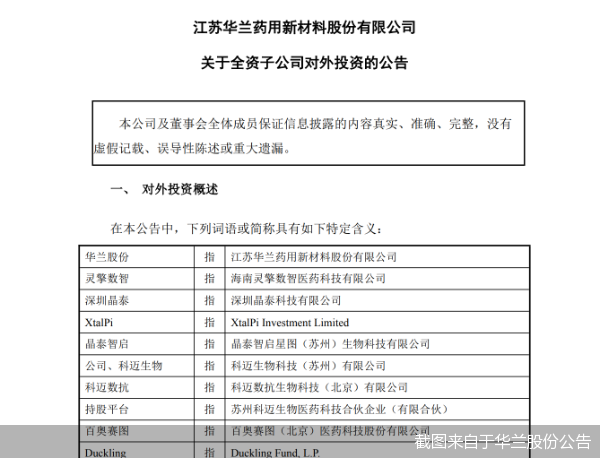
投资科迈生物,华兰股份押宝AI创新药
Bei Jing Shang Bao· 2025-11-16 10:06
Core Viewpoint - The company Hualan Co., Ltd. is entering the AI innovative drug development sector through its subsidiary Lingqing Zhizhi, aiming to leverage its existing client base in pharmaceutical packaging to create synergies and explore new growth opportunities [1][5]. Group 1: Investment and Partnerships - Lingqing Zhizhi has signed a capital increase agreement with several companies, including Shenzhen Jingtai and XtalPi, to invest in Kema Biotechnology [1][4]. - The company plans to invest 20 million yuan to acquire a 9.53% stake in Kema Biotechnology, which will also grant it a board seat and priority acquisition rights [3][4]. Group 2: Industry Context - Kema Biotechnology, founded in 2021, focuses on antibody design using generative AI models, aiming to innovate the traditional methods of antibody discovery [4]. - The AI innovative drug development sector is gaining attention as it offers a potential solution to the lengthy and costly traditional drug development process, which typically requires ten years and one billion dollars to develop a new drug [4]. Group 3: Business Strategy and Performance - Hualan Co., Ltd. is committed to enhancing its capabilities in AI innovative drug development by attracting top industry experts and building a diverse business team [4]. - In the first three quarters of the year, the company reported a revenue of 441 million yuan, a year-on-year increase of 4.36%, but experienced a decline in revenue and net profit in the third quarter [7].

院士擎舵 科创逐浪破局——2025华夏大健康产业发展暨康复服务大会即将重磅启幕
Hua Xia Shi Bao· 2025-11-14 13:40
Core Insights - The "2025 China Health Industry Development and Rehabilitation Service Conference" will focus on technological innovation in the health sector, aligning with the "14th Five-Year Plan" to enhance self-reliance in health technology [2][5] - The health industry in China has seen significant growth, expanding from 7.4 trillion yuan to 12.3 trillion yuan over five years, with advancements in AI medical applications and CAR-T therapies [2][5] Academic Leadership - The conference will feature prominent academic figures, including academician Fan Daiming, who will discuss integrated medicine and its relevance to the "14th Five-Year Plan" [5][6] - Fan's presentation will focus on breakthroughs in the diagnosis and treatment of digestive diseases, emphasizing the importance of integrated prevention and management [5][6] Industry Practices - Over 50 leading companies from various sectors of the health industry will participate, covering innovative drug development, medical devices, healthcare services, health management, and digital health [8][9] - The conference will include roundtable discussions addressing key industry issues, such as investment opportunities in innovative drugs and the commercialization of brain-computer interfaces [9][10] Innovation and Collaboration - The event will facilitate direct interactions between experts and companies to address technological challenges and foster collaboration [6][12] - A showcase area will feature over 20 representative companies displaying their latest technologies and core products, enhancing visibility for industry innovations [12][13] Authoritative Results and Reports - The conference will release significant reports, including the "2025 China Health Industry White Paper" and the "Hua Xia ESG Dandelion 50-30 Index 2025 Annual Report," providing valuable insights and benchmarks for the industry [13][15] - The ESG report will evaluate 50 A-share companies and 30 H-share growth companies based on environmental, social, and governance criteria, supporting sustainable development in the health sector [13][15] Future Directions - The conference aims to create a continuous service platform for the health industry, ensuring that innovative practices and authoritative findings are effectively implemented [16][17] - The event will gather experts, industry leaders, and investment representatives to collaboratively shape the future of the health industry in China [16][17]



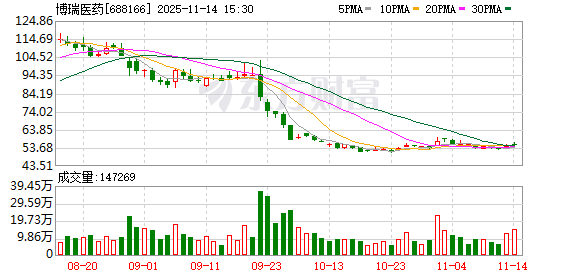
博瑞医药拟以5000万元增资极客基因
Bei Jing Shang Bao· 2025-11-14 12:08
Core Viewpoint - The company, Borui Pharmaceutical, announced an investment of 50 million yuan in Suzhou Geek Gene Technology, increasing its stake from 4.0816% to 12.8015% [2] Group 1: Investment Details - The investment includes a subscription to the new registered capital of 437,100 yuan, with the remaining amount allocated to the capital reserve of Geek Gene [2] - This investment aligns with the company's innovation-driven development strategy [2] Group 2: Strategic Implications - The collaboration is expected to leverage both companies' strengths in innovative drug development and cell therapy technology [2] - Geek Gene possesses unique technological advantages in areas such as cell fate reprogramming and low-cost high-throughput omics technology, which may create potential synergies with the company's product development [2]

华兰股份子公司灵擎数智拟投资科迈生物 进入AI创新药研发领域
Zhi Tong Cai Jing· 2025-11-14 08:36
Group 1 - Hualan Co., Ltd. announced that its wholly-owned subsidiary, Lingqing Zhizhi, has signed a capital increase agreement with several companies, including Shenzhen Jingtai and XtalPi [1] - Lingqing Zhizhi plans to invest RMB 20 million to acquire a 9.53% equity stake in Kema Biotechnology after the capital increase [2] - Kema Biotechnology, established in 2021, focuses on antibody design using generative AI models and aims to innovate antibody drug development [1][2] Group 2 - The global AI-driven drug development sector is rapidly growing, and there is a need for local Chinese companies to enhance their international competitiveness in this field [2] - The investment aligns with national strategies to promote digital China and implement the "AI+" initiative as outlined in the 15th Five-Year Plan [2]
华兰股份(301093.SZ)子公司灵擎数智拟投资科迈生物 进入AI创新药研发领域
智通财经网· 2025-11-14 08:36
Group 1 - Hualan Co., Ltd. announced that its wholly-owned subsidiary, Lingqing Zhizhi, has signed a capital increase agreement with several companies, including Shenzhen Jingtai and Kema Biotechnology [1] - Lingqing Zhizhi plans to invest RMB 20 million to acquire a 9.53% stake in Kema Biotechnology after the capital increase, which will increase Kema's registered capital to RMB 296,296 [2] - Kema Biotechnology, established in 2021, focuses on antibody design using generative AI models and aims to innovate antibody drug development [1][2] Group 2 - The global AI-driven drug development sector is rapidly growing, and there is a need for local Chinese companies to enhance their international competitiveness in this field [2] - The investment aligns with national strategies to promote digital development and the "AI+" initiative as outlined in the 15th Five-Year Plan [2]
谈AI 谋出海 话未来 近90家上海辖区上市公司与投资者“热聊”
Shang Hai Zheng Quan Bao· 2025-11-13 17:57
Core Insights - The event highlighted the integration of AI technology in innovative drug development services, with companies like Medici focusing on building an AI-based preclinical research platform [1][2] - There is a strong emphasis on international market expansion among Shanghai-listed companies, with many exploring overseas manufacturing and localized operations to seek new growth [4][5] Group 1: AI and Robotics Developments - Medici's CEO emphasized the importance of AI in drug development, aiming to enhance their one-stop innovative drug research platform [2] - Cambridge Technology has begun small-scale supply of its 1.6T optical modules, with expectations for mass shipments by Q1 2026 [2] - Yongmaotai is collaborating with a leading humanoid robotics company to innovate in robotics technology and commercial applications [2][3] Group 2: International Market Expansion - Companies are actively pursuing internationalization strategies, with Ailis focusing on global clinical trials for its drug, Vomeletinib, in collaboration with ArriVent [4] - Zijiang Enterprises has operational overseas factories, including a 49% stake in an Ethiopian company and a fully-owned subsidiary in Vietnam [5] - Light Dairy is enhancing its international business through its New Zealand subsidiary, focusing on high-nutrition products for the Chinese and Southeast Asian markets [5] Group 3: Future Technology and Product Development - Yongmaotai plans to develop core components for robots and electric drive systems, leveraging technological innovation for product upgrades [3] - Companies are exploring the application of AI in their business operations, with Zhonggu Logistics actively seeking to implement smart technologies [3] - Pioneering companies like Pioneering Technology are enhancing their global market share in home energy storage by leveraging their brand reputation in Europe [6]
从突围到引领 18A第一股歌礼制药开启发展2.0时代
Zheng Quan Shi Bao Wang· 2025-11-10 10:18
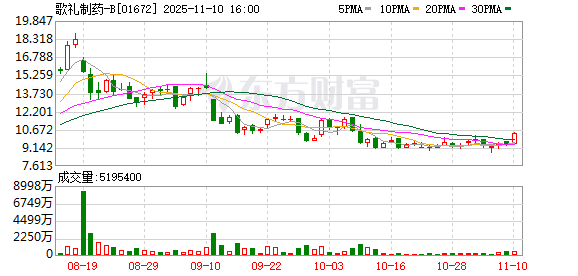
Core Insights - The article highlights the transformative journey of Gilead Sciences (1672.HK) in the Chinese biotech industry, showcasing its resilience and strategic decision-making in the face of challenges [2][11] - Gilead's shift towards a differentiated pipeline in weight loss drugs has led to a significant market re-evaluation and recovery in its stock price [4][9] Group 1: Company Development - Gilead Sciences was listed on the Hong Kong Stock Exchange in August 2018 at an initial price of 14 HKD, reaching a market capitalization of 16 billion HKD, but faced a decline due to setbacks in its core hepatitis C drug [3][4] - By August 2024, the company's stock price had plummeted to 0.76 HKD, resulting in a market value reduction of over 95% [3][4] - The founder, Dr. Wu Jinzi, demonstrated strategic foresight by pivoting the company's focus to the metabolic disease sector, particularly the weight loss drug market, starting in 2022 [3][5] Group 2: Strategic Shift and Market Response - Following the strategic shift, Gilead's stock price surged from 0.76 HKD in August 2024 to 18.75 HKD by August 2025, representing an increase of over 20 times and restoring its market capitalization to the billion HKD level [4][9] - The market's positive response reflects recognition of Gilead's research team's capabilities and strategic execution [4][9] Group 3: R&D and Competitive Advantage - Gilead has adopted a differentiated approach in drug development, focusing on oral small molecule GLP-1 receptor agonists and ultra-long-acting formulations, rather than following mainstream peptide drug development paths [5][8] - The core pipeline, ASC30, has shown promising clinical results, with a maximum weight reduction of 6.5% in U.S. Phase Ib trials, and is expected to complete Phase IIa trials by the end of the year [5][6] - Gilead is also developing ASC35 and ASC36, which are expected to provide significant advantages in terms of dosing frequency and efficacy compared to existing treatments [6][7] Group 4: Global Competitiveness and Valuation - Despite the stock price recovery, Gilead's current market capitalization is still considered undervalued compared to global peers, as evidenced by recent acquisition bids for similar companies [9][10] - Gilead's diverse pipeline, including multiple formulations with the potential for monthly and quarterly dosing, positions it favorably in the competitive landscape [9][10] Group 5: Lessons and Implications for the Industry - Gilead's successful transformation underscores the importance of strong R&D leadership and strategic vision in navigating industry challenges [11] - The case of Gilead serves as a valuable reference for other Chinese biotech companies seeking to innovate and compete on a global scale [11]
百诚医药:创新药BIOS-0625片获得临床试验批准通知书 该药品属于“境内外均未上市的创新药”
Mei Ri Jing Ji Xin Wen· 2025-11-07 12:36
Core Viewpoint - The company, Baicheng Pharmaceutical, has received clinical trial approval from the National Medical Products Administration for its innovative drug BIOS-0625 tablets, aimed at treating ulcerative colitis, marking a significant step in its drug development pipeline [1] Group 1: Drug Development - BIOS-0625 tablets are a novel drug developed by the company, targeting a new mechanism for the treatment of ulcerative colitis, with no similar indication drugs currently available on the market [1] - The drug is classified as a Class 1 chemical drug, indicating it is an innovative drug that has not been marketed domestically or internationally [1] Group 2: Regulatory Approval - The approval notification for clinical trials signifies a critical milestone in the drug's development process, although it comes with inherent uncertainties regarding the progress and outcomes of the clinical trials [1] - The company faces risks related to the clinical trial timeline and the potential for the product to receive market approval [1]
【财经分析】港交所“四新”齐发 多元产业共振折射香港资本市场新动能
Xin Hua Cai Jing· 2025-11-06 14:01
Core Insights - The Hong Kong Stock Exchange (HKEX) witnessed a record number of IPOs in a single day with four companies, including autonomous driving firms and a biopharmaceutical company, marking a significant event in the IPO market for 2023 [1][6] Group 1: Autonomous Driving Sector - Pony.ai and WeRide, both prominent players in China's autonomous driving sector, went public simultaneously, attracting market attention. Pony.ai raised approximately HKD 770 million by issuing around 48.25 million shares, while WeRide raised about HKD 240 million by issuing 88.25 million shares [2] - The dual listing of these companies in Hong Kong reflects the ongoing trend of Chinese companies seeking diversified capital market options, highlighting Hong Kong's role as an international financing platform [2] - Despite initial stock price declines on their first trading day, analysts view this as short-term valuation pressure rather than a negative outlook for the market [2] Group 2: Biopharmaceutical Sector - The company Wangshan Wangshui saw its stock price surge nearly 191% on its debut, indicating strong market interest in innovative drugs and biotechnology. The company raised approximately HKD 590 million to accelerate clinical trials and global market expansion [4] - The biopharmaceutical sector is recognized as a key growth area in the Hong Kong stock market, with expectations for continued strong capital attraction over the next two years [4][5] Group 3: Manufacturing Sector - Junsheng Electronics, a leading supplier of automotive safety and intelligent electronic systems, raised about HKD 3.4 billion in its H-share issuance, aiming to expand its smart cockpit and safety systems business [4][5] - The successful listing of Junsheng Electronics signifies the acceleration of high-quality manufacturing companies from mainland China in their international capital strategies [5] Group 4: Market Trends and Future Outlook - The overall IPO market in Hong Kong has shown signs of recovery, with a total IPO scale reaching HKD 216.47 billion, benefiting from strong listing and trading activities [6] - The concentration of new listings in the fields of autonomous driving and biotechnology underscores HKEX's attractiveness in "hard technology" and new economy sectors [6] - There is a growing trend of mainland Chinese companies listing in Hong Kong, with significant participation from international long-term investors, indicating a robust demand for high-growth enterprises [6][7]
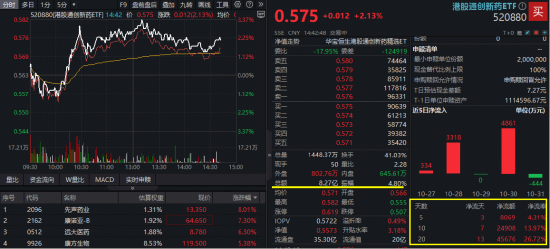
人气飙升!港股通创新药ETF(520880)实时成交超8亿元,创一个月新高!场内高频溢价!
Xin Lang Ji Jin· 2025-11-03 06:57
Core Viewpoint - The popularity of innovative drugs is rapidly recovering, as evidenced by the significant trading volume and performance of the Hong Kong Stock Connect Innovative Drug ETF (520880) [1][3]. Group 1: Market Performance - On November 3, the trading volume of the Hong Kong Stock Connect Innovative Drug ETF (520880) exceeded 800 million yuan, surpassing the previous day's total and reaching a new high since September 12 [1]. - The ETF covers 37 innovative drug companies, with over 30 stocks showing gains, including leading performers such as Sihuan Pharmaceutical, CanSino Biologics, and Innovent Biologics [1]. - The ETF has attracted over 456 million yuan in October alone, indicating strong investor interest [1]. Group 2: Industry Developments - The innovative drug sector has seen positive developments, with 35 research projects selected for oral presentations at the ESMO 2025 conference, setting a new record [3]. - Significant collaborations, such as the 11.4 billion USD partnership between Innovent Biologics and Takeda, highlight the global market's recognition of the value of Chinese innovative drugs [3]. - The upcoming conclusion of the national medical insurance negotiations is expected to yield results in December, with the introduction of a "commercial insurance innovative drug directory" mechanism [3]. Group 3: ETF Characteristics - The Hong Kong Stock Connect Innovative Drug ETF (520880) passively tracks the Hang Seng Hong Kong Stock Connect Innovative Drug Select Index, which exclusively includes innovative drug companies and has a significant focus on large-cap leaders [3][4]. - The top ten holdings of the ETF account for 71.63% of its weight, showcasing a strong concentration in leading companies [4]. - As of the end of September, the ETF has achieved a year-to-date increase of 108.14%, outperforming other innovative drug indices [4][5].