母婴用品

Search documents
好奇47年坚持用户共创,以匠心与创新呵护宝宝健康
Qi Lu Wan Bao· 2025-08-06 09:57
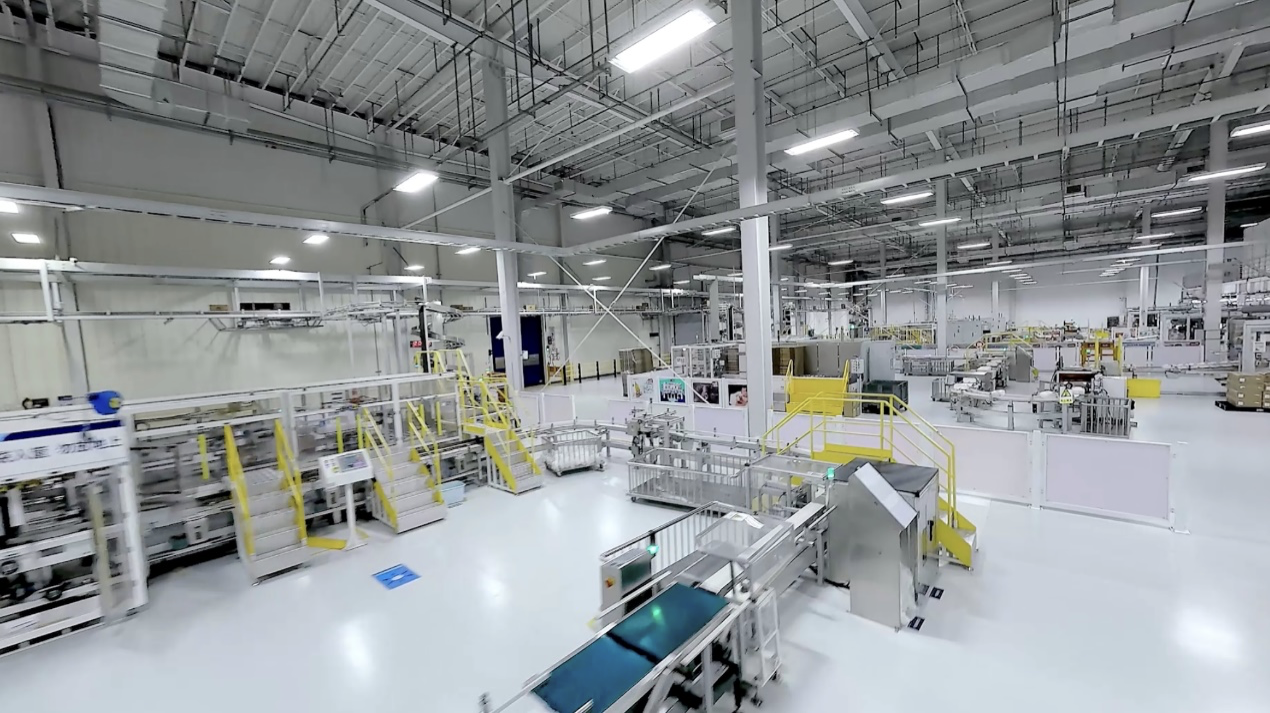
Core Insights - The article emphasizes the increasing consumer focus on product quality and safety, particularly in the production of baby products like diapers, highlighting the importance of technology and innovation in meeting personalized needs [1][15] Group 1: Production Process - The production process of diapers at the Huggies factory is highly automated, featuring a closed-loop system and stringent quality control measures, ensuring safety and reliability [1][2] - Huggies employs a three-tier traceability mechanism for raw materials, allowing for comprehensive tracking of over 300 components in each diaper, with a rigorous testing process lasting 3-6 months [3] - The factory utilizes advanced technology, including AI Vision devices for real-time scanning, ensuring that even minute defects are detected, with a production cycle time of just 0.05 seconds per diaper [3][4] Group 2: Quality Control and Standards - Huggies has established internal standards that exceed national regulations, with 242 additional testing procedures beyond the national standard, ensuring superior product quality [3] - The company has implemented a zero-contact production line to eliminate contamination risks, with mothers being the first to touch the finished product [3][4] Group 3: Innovation and R&D - Huggies continuously integrates high-tech innovations into product development, such as using military-grade thermal imaging to enhance diaper breathability and comfort [5][7] - The company has developed a unique six-zone elastic design to prevent red marks on babies, based on extensive testing and data analysis [9][11] - Huggies has introduced clinical testing methods from skincare into the diaper industry, significantly improving skin barrier repair and reducing rash rates [11] Group 4: Consumer Engagement - Huggies actively involves mothers in the product development process, conducting monthly interviews and utilizing feedback from over 20,000 babies annually to refine their products [12] - The company has a strong commitment to scientific research, collaborating with top institutions and publishing numerous studies on skin health, which reinforces its reputation for professionalism [12][15] Group 5: Industry Trends - The trend of transparency in manufacturing is growing, with companies like Huggies leading the way in quality assurance and consumer trust, demonstrating that true industry leadership comes from meticulous attention to detail rather than mere marketing [15]

从三家外贸企业看发展韧性
Ren Min Ri Bao· 2025-08-05 06:15
Core Viewpoint - The article highlights the resilience of China's foreign trade in the first half of the year, with a focus on companies adapting to market changes through strategies like domestic sales, AI tools, and exploring new overseas markets [1][2][3]. Group 1: Foreign Trade Performance - In the first half of the year, China's total goods trade reached 21.79 trillion yuan, a historical high for the same period, with a year-on-year growth of 2.9% [1]. - Exports amounted to 13 trillion yuan, reflecting a growth of 7.2% [1]. Group 2: Company Strategies - Baby乐, a Guangzhou-based baby products company, has shifted focus from foreign trade to domestic sales, achieving a 20% year-on-year increase in domestic sales in the first half of the year [2][3]. - The company has leveraged its strong R&D capabilities and modern production facilities to respond quickly to large orders [2]. - The company has also benefited from government initiatives that support foreign trade enterprises transitioning to domestic sales [2]. Group 3: AI Integration - In Yiwu, a bathroom products company has utilized AI tools to enhance customer engagement and streamline operations, resulting in significant order growth [5][6]. - The AI platform supports multiple languages and various translation functions, facilitating international communication and market analysis [5][6]. - The company has integrated AI into product design and marketing, significantly reducing the time required for product development [6]. Group 4: New Market Exploration - 隆鑫机车, a motorcycle manufacturer in Henan, is expanding into Southeast Asian markets, responding to increasing demand for electric vehicles [7][8]. - The company has successfully navigated new technical standards and certification requirements in these markets, aided by local customs support [8][9]. - The company has also benefited from the Regional Comprehensive Economic Partnership (RCEP), which has reduced tariffs on exports to the Philippines [9].
A股三大指数开盘集体上涨,创业板指高开0.65%
Feng Huang Wang Cai Jing· 2025-08-05 01:41
Group 1 - A-shares opened collectively higher with the Shanghai Composite Index up 0.15%, Shenzhen Component Index up 0.34%, and ChiNext Index up 0.65% [1] - CPO, HBM, and Zhongbing system sectors showed significant gains [1] Group 2 - CITIC Securities interprets the recently issued "Implementation Plan for the Childcare Subsidy System" as a measure to support families in raising infants and toddlers, which may help improve birth rates [2] - The market showed cautious expectations regarding the effectiveness of the subsidy policy, with related sectors such as dairy, maternal and infant products, and toys experiencing initial gains followed by slight declines [2] Group 3 - Huatai Securities expresses optimism about the commercial real estate sector under a value reassessment logic, noting that leading operators' shopping center assets exceed their book value [3] - The C-REITs channel facilitates the realization of this value, enhancing liquidity and making valuations more meaningful [3] Group 4 - CICC highlights multiple macroeconomic factors supporting the performance of the Chinese stock market despite the need for improvement in economic indicators [4] - Confidence in China's medium to long-term economic outlook has improved since last year's fourth quarter, particularly due to positive effects from DeepSeek [4] - The declining proportion of real estate in the economy has reduced its negative impact, and policymakers are increasingly focused on the economy, stock market, and real estate market [4] - There is a rising motivation among residents to allocate to risk assets, especially equities, due to limited returns on safe assets [4] - Future policies addressing debt issues are crucial for enhancing economic vitality and capital market significance [4]

从三家外贸企业看发展韧性(经济聚焦)
Ren Min Ri Bao· 2025-08-04 21:56
Core Viewpoint - The article emphasizes the resilience of China's foreign trade, highlighting a 2.9% year-on-year growth in goods trade in the first half of the year, with exports reaching 13 trillion yuan, a 7.2% increase [1] Group 1: Guangdong Baby Products Company - The company has shifted from export to domestic sales, achieving a 20% year-on-year increase in domestic sales in the first half of the year [3] - The company has a strong R&D capability and modern production facilities, leveraging the Pearl River Delta supply chain advantages to respond quickly to large orders [2] - The company faced challenges from U.S. tariffs but has successfully established partnerships with domestic retailers [2][3] Group 2: Zhejiang Bathroom Products Company - The company utilizes AI tools for real-time translation and market analysis, enhancing customer engagement and order acquisition [5][7] - AI has significantly reduced product design time, allowing the company to produce multiple designs in a single day [6] - The company has opened 68 brand stores globally, with AI contributing to a 20% increase in orders for deep users of AI tools [7] Group 3: Henan Motorcycle Manufacturing Company - The company has expanded its market focus to Southeast Asia, responding to increasing demand for electric vehicles [8] - It has successfully navigated new market challenges by adapting to local technical standards and obtaining necessary certifications [9][10] - The company reported a 101.6% year-on-year increase in export value, benefiting from RCEP tariff reductions [10]
政策半月观:四大主线、四大机会
GOLDEN SUN SECURITIES· 2025-08-03 11:47
Policy Focus - Recent policies continue to emphasize stabilizing growth, expanding domestic demand, and combating "involution" in various sectors[2] - The Politburo meeting on July 30 confirmed the Fourth Plenary Session of the 20th Central Committee will be held in October to review the "14th Five-Year Plan" proposals[2] - The Ministry of Finance announced a new tax policy on bond interest income, effective August 8, aimed at alleviating fiscal pressure and preventing excessive capital accumulation in interest-bearing bonds[6] Social and Economic Initiatives - The implementation of a childcare subsidy program was announced, providing 3,600 yuan per child per year until the age of three, aimed at boosting birth rates[7] - The State Council is promoting free preschool education to reduce childcare costs, with a focus on enhancing support for families with multiple children[3] Industry and Trade Policies - The introduction of "zero tariff" policies and relaxed trade management measures for the Hainan Free Trade Port aims to enhance trade efficiency and attract investment[8] - A new round of US-China trade talks has been initiated, with both sides agreeing to extend previously suspended tariffs for 90 days[5] Local Government Actions - Local governments are focusing on economic stabilization through measures such as urban renewal and artificial intelligence initiatives, with Shanghai planning a city renewal action plan for 2026-2028[9] - Beijing has allocated 10 million yuan for film viewing subsidies and is implementing various measures to support families with multiple children[10] Market Implications - The new tax on bond interest is expected to lead to a short-term decline in interest rates and create pricing discrepancies between new and existing bonds, potentially impacting the bond market negatively in the long term[6] - The emphasis on stabilizing the capital market and promoting service consumption indicates a cautious approach to economic stimulus, focusing on gradual recovery rather than aggressive measures[4]
揭秘涨停丨医药板块多股涨停
Zheng Quan Shi Bao Wang· 2025-07-30 11:11
Market Overview - On July 30, the A-share market closed with a total of 55 stocks hitting the daily limit, with 48 stocks after excluding 7 ST stocks, and an overall limit-up rate of 73.33% [1] Top Gainers - Wangli Anfang had the highest limit-up order volume with over 4.5 billion yuan, followed by Baogang Co., Xining Special Steel, and Antai Group with limit-up orders of 4.51 billion yuan, 4.1 billion yuan, and 1.96 billion yuan respectively [2] - Tibet Tourism achieved an 8-day consecutive limit-up, while several other companies like Chenxin Pharmaceutical and Huaci Co. had 3 consecutive limit-ups [2] Industry Highlights Film Industry - The film "Nanjing Photo Studio" has grossed over 700 million yuan, ranking among the top five in the 2025 box office list [3] - Companies involved in the film include Xingfu Blue Ocean, Jinyi Film, and Ciweng Media, with Xingfu Blue Ocean participating in the production of "Nanjing Photo Studio" [4] Pharmaceutical Industry - Notable limit-up stocks include Chenxin Pharmaceutical, Foci Pharmaceutical, Dongcheng Pharmaceutical, Guobang Pharmaceutical, and Qizheng Tibetan Medicine [5] - Chenxin Pharmaceutical offers a comprehensive health management solution covering various treatment areas, while Foci Pharmaceutical is advancing the development of traditional Chinese medicine new drugs [5] Maternal and Infant Products - Limit-up stocks include Anzheng Fashion, Beingmate, and Taimushi [6] - Beingmate has a diverse product line including infant formula and adult nutrition products, while Taimushi expects 310 million yuan in revenue from children's clothing in 2024 [6] Stock Market Activity - The top net purchases on the Dragon and Tiger list included Yingweike, Baogang Co., and Xizang Tianlu, with net purchases of 5.74 billion yuan, 3.74 billion yuan, and 2.18 billion yuan respectively [7] - Institutional net purchases were led by Yingweike and Dongxin Co., with amounts of 843.67 million yuan and 561.28 million yuan respectively [7]


熊园:育儿补贴落地影响几何?
Di Yi Cai Jing· 2025-07-30 06:57
Group 1: Policy Overview - The newly released "Childcare Subsidy Implementation Plan" provides an annual subsidy of 3,600 yuan per child until the age of three, with an expected total subsidy of approximately 120 billion yuan by 2025, potentially boosting consumption by about 0.16 percentage points [1][15] - The shift in policy from "relaxing childbirth" to "promoting childbirth" is evident, with various subsidies and support services being introduced at both central and local levels [6][15] - Local subsidies typically range from 3,000 to 4,000 yuan per child per year, with some cities offering higher amounts for multiple children [6][7] Group 2: Historical Context - Historical data indicates that local subsidy policies have led to a temporary increase in birth rates, particularly in areas where subsidies cover first or second children [9] - Cities implementing broader subsidy policies have seen more significant increases in birth rates compared to those only supporting third children [9] - The impact of these subsidies on consumer spending has been limited, suggesting that the marginal improvement in disposable income may not significantly boost consumption [9] Group 3: International Comparisons - Japan's early subsidy policies initially helped stabilize birth rates, but they have since declined again, indicating that short-term gains may not lead to long-term improvements [12] - South Korea experienced a similar pattern, where subsidies helped stabilize birth rates for a time but have not prevented a subsequent decline [13] Group 4: Market Impact - The implementation of the childcare subsidy is expected to benefit sectors such as maternal and infant products and milk powder in the short term, while education and toy industries may see longer-term benefits [17] - The overall impact on consumption is expected to be moderate and gradual, with the need for additional direct policy support to stimulate consumer spending amid economic pressures [15][16]
熊园:育儿补贴落地影响几何
Di Yi Cai Jing· 2025-07-30 03:33
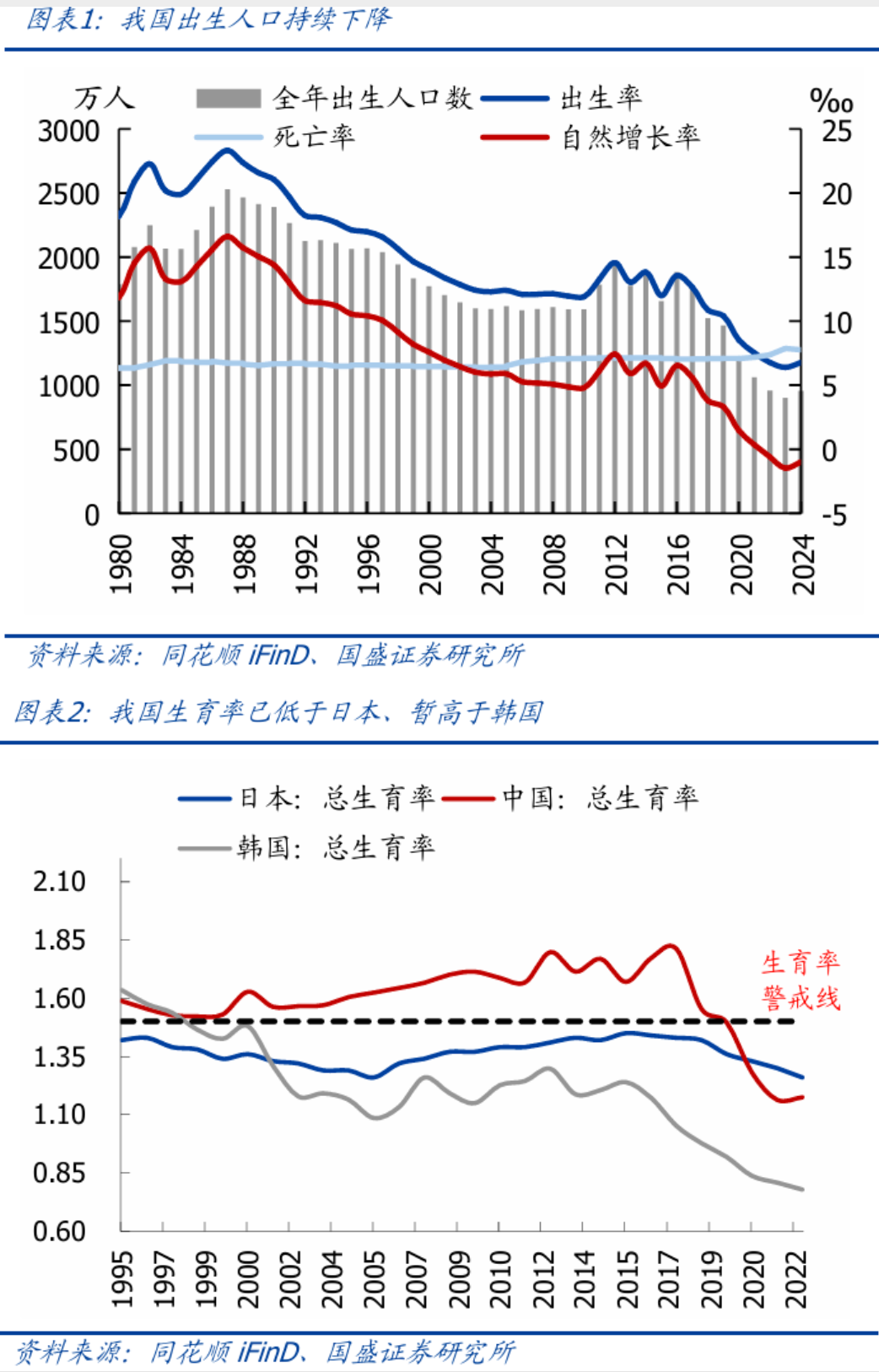
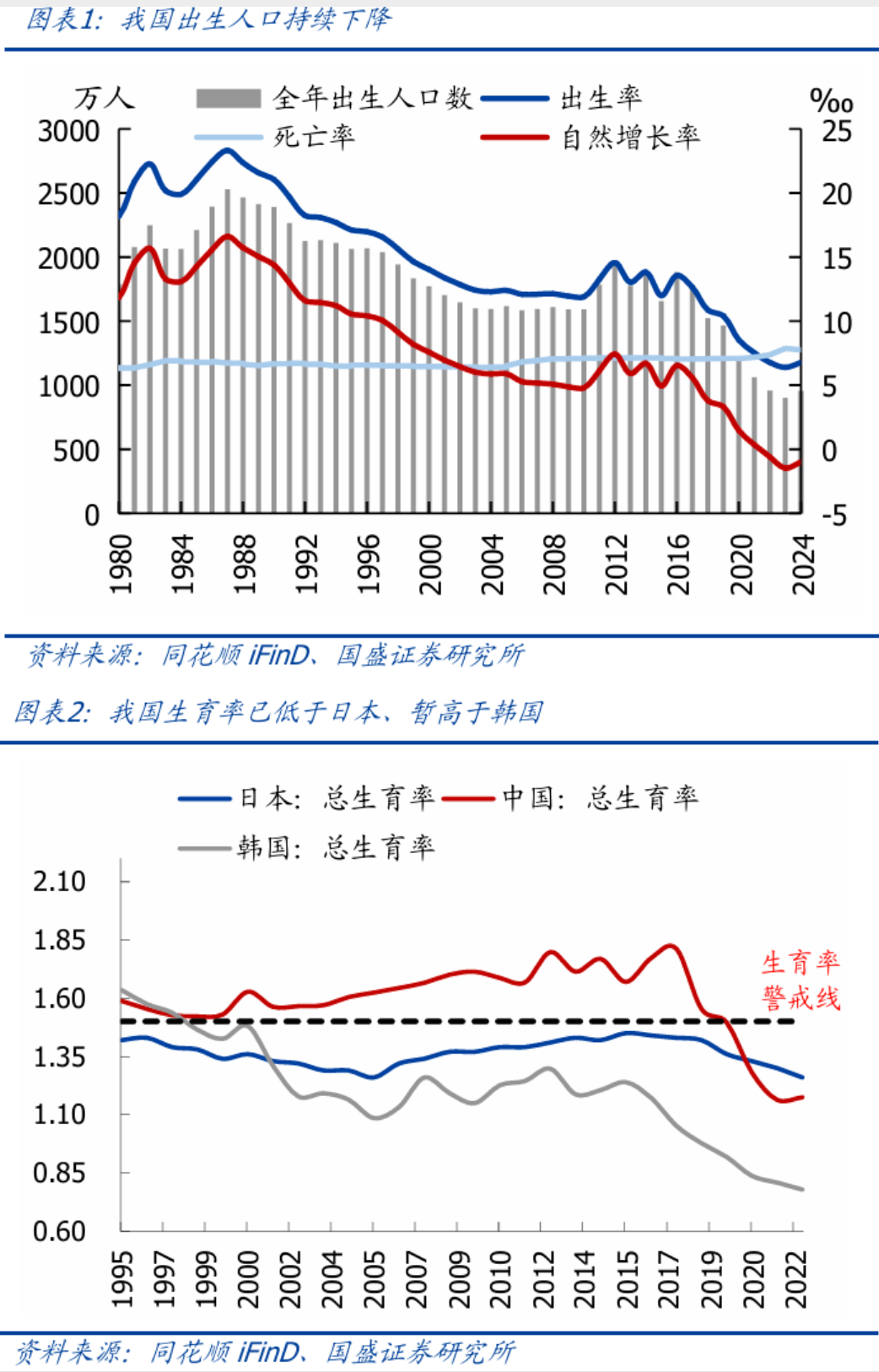
Group 1: Core Insights - The newly implemented childcare subsidy of 3,600 yuan per child per year is expected to stabilize and potentially increase the birth rate in the coming years, although long-term downward pressure on population remains, indicating the need for more comprehensive policies [1][5] - The total amount of birth subsidies is projected to reach approximately 120 billion yuan by 2025, which could boost consumption by about 0.16 percentage points [1][14] - The current birth rate in China has fallen below Japan's and is temporarily higher than South Korea's, with the total fertility rate consistently below the critical threshold of 1.5 [1][5] Group 2: Policy Developments - The shift from "relaxing birth policies" to "promoting childbirth" has led to the introduction of various subsidy policies at both central and local levels, including direct financial support and enhanced childcare services [5][10] - Local governments have implemented varying subsidy amounts, typically ranging from 3,000 to 4,000 yuan per child per year, with some cities offering significantly higher amounts [6][8] - The government has emphasized the need for supportive measures in education, healthcare, housing, and employment to complement the financial subsidies [15] Group 3: Historical Context - Historical data indicates that local birth subsidy policies have had a short-term positive effect on birth rates, particularly in areas where subsidies cover first or second children [8][10] - Cities that implemented broader subsidy policies saw more significant increases in birth rates compared to those that only subsidized third children [8][10] - The impact of these subsidies on consumer spending has been limited, suggesting that the financial support may not significantly enhance disposable income or consumption levels [8][14] Group 4: International Comparisons - Japan's early subsidy policies initially helped to stabilize birth rates, but they have since declined again, highlighting the challenges of sustaining such initiatives [10][11] - South Korea experienced a similar pattern, where subsidies temporarily improved birth rates but have not prevented a subsequent decline [11][15] - The experiences of Japan and South Korea suggest that while subsidies can provide short-term relief, they may not be sufficient to address long-term demographic challenges [10][11] Group 5: Market Implications - Short-term beneficiaries of the subsidy policy are expected to be industries related to maternal and infant products, such as baby supplies and formula [16] - In the medium to long term, the subsidy may also positively impact sectors like education and toys, as increased birth rates lead to higher demand in these areas [16]
育儿补贴政策落地 婴童概念表现活跃 七大概念股盘点(名单)
Zheng Quan Zhi Xing· 2025-07-29 07:56
Group 1: Policy Impact on Industry - The implementation of the child-rearing subsidy policy is expected to significantly lower family child-rearing costs and enhance birth intentions, particularly benefiting the maternal and infant industry and dairy sectors [2][3] - The national child-rearing subsidy will provide annual cash support of 3,600 yuan per child for families with children under three years old, starting from January 1, 2025, which is projected to benefit over 20 million families annually [1][2] Group 2: Market Growth Projections - The Chinese baby and toddler market is currently in a "golden period" of growth, with a market size expected to reach 4.2 trillion yuan in 2024, surpassing 5 trillion yuan by 2025, and potentially reaching 10 trillion yuan by 2030 [2] - The policy and consumption upgrades are anticipated to drive the industry into becoming the next trillion-level blue ocean market [2] Group 3: Key Companies in the Sector - Aiyingshi focuses on providing maternal and infant products for families with children aged 0-6, with a strong market presence in East China [3] - Haiziwang is a leading retailer in the maternal and infant goods sector, offering a wide range of products for families with children up to 6 years old [3] - Beingmate is a domestic leader in infant formula, recognized for its safety traceability system [3] - Huhulawa specializes in pediatric respiratory treatments and has a high market share in children's medication [4] - Xibu Muye operates in one of China's major pastoral areas and produces infant formula [3] - Huangshi Group is a champion in the water buffalo milk segment, developing specialized milk products for children [4] - David Medical is a leading company in infant care equipment, focusing on the development and production of essential medical devices for newborns [4]


多行业联合解读国家育儿补贴新政
2025-07-29 02:10
Summary of Conference Call on National Childcare Subsidy Policy Industry Overview - The conference call discusses the impact of the national childcare subsidy policy on various industries, particularly focusing on the maternal and infant products market, including companies like Feihe, Jianhe International, Aoyou Dairy, and Mengniu Dairy [1][3][5]. Key Points and Arguments 1. **Childcare Subsidy Policy Implementation**: Starting January 1, 2025, the government will provide a monthly subsidy of 300 yuan for children under three years old, applicable to those born after January 1, 2022 [2][6]. 2. **Impact on Maternal and Infant Products Market**: The subsidy is expected to enhance family consumption capacity, benefiting retail companies like Aiyingshi and Haiziwang significantly [1][5]. 3. **Feihe's Financial Performance**: Feihe anticipates a revenue of 20.7 billion yuan in 2024, a 6.2% increase year-on-year, with a net profit of 3.65 billion yuan, up 11% [1][3]. 4. **Jianhe International's Strategy**: The company has diversified its product offerings, with infant nutrition accounting for about half of its revenue. It has expanded its market presence, particularly in lower-tier cities, and aims to increase customer acquisition through promotional events [7][10]. 5. **Aoyou Dairy's Market Position**: Aoyou Dairy leads in the goat milk powder segment and has secured 70% of its raw milk costs, ensuring stable profit margins amid the new policy [8][4]. 6. **Mengniu Dairy's Growth Potential**: Although Mengniu's infant formula business is relatively small, its organic milk powder products are expected to benefit from the subsidy, potentially increasing sales and profitability [9][4]. 7. **Retail Sector Dynamics**: The retail sector, especially maternal and infant products, is poised for growth due to the subsidy, with companies like Aiyingshi and Haiziwang expanding their store networks and product offerings [10][5]. 8. **Consumer Electronics Impact**: Companies like Bear Electric are expected to benefit from the subsidy, with significant growth in maternal and infant appliances, projecting over 40% growth in related product sales [18][3]. 9. **Clothing Market Influence**: The subsidy is likely to boost clothing consumption, particularly in the children's apparel sector, with an estimated increase in spending on children's clothing due to the financial support [19][20]. 10. **Healthcare and Medical Products**: The conference also highlights the potential benefits for healthcare products related to infants, including vaccines and medical services, as the demand for these products is expected to rise with the increase in newborns [16][17]. Other Important Insights - The national subsidy policy represents a significant shift from previous local pilot programs, providing a more inclusive and direct financial support mechanism for families [6][12]. - The policy is expected to stimulate demand across various sectors, including retail, healthcare, and consumer electronics, creating a ripple effect in the economy [12][18]. - Companies are adapting their strategies to leverage the new policy, focusing on expanding product lines and enhancing customer engagement through innovative marketing approaches [7][10]. This summary encapsulates the key discussions and insights from the conference call regarding the national childcare subsidy policy and its implications across various industries.