电子设计自动化(EDA)

Search documents
国资背景基金拟6.13亿元入股概伦电子 持续做强产业链生态
Zheng Quan Ri Bao Wang· 2025-07-16 11:43
Core Viewpoint - The announcement indicates that several shareholders of Gaialun Electronics have signed a share transfer agreement with Shanghai Xinhua Investment Fund, transferring a total of 21.758893 million shares, which represents 5.00% of the company's total share capital, to the fund, which has a strong state-owned background [1][3]. Group 1: Share Transfer Details - The transfer involves multiple shareholders, including KLProTech H.K. Limited and several investment partnerships, with a total transfer price of 613 million yuan, equating to 28.16 yuan per share [2][3]. - After the transfer, the transferring parties will still hold a combined total of 165 million shares, representing 37.90% of Gaialun Electronics' total share capital [3]. Group 2: Strategic Implications - The entry of Shanghai Xinhua, a state-owned fund, is expected to provide financial support and policy advantages, which may enhance the development of Gaialun Electronics' core business in EDA (Electronic Design Automation) solutions [1][4]. - The investment is anticipated to improve the company's market position and facilitate mergers and acquisitions in the EDA sector, leveraging the advantages of state capital to support high R&D investments [4]. - The partnership is expected to strengthen the integration of domestic EDA tools with Shanghai's robust integrated circuit ecosystem, accelerating the development of domestic EDA tools [4].

华大九天“买买买”遇阻,芯和半导体IPO梦回
2 1 Shi Ji Jing Ji Bao Dao· 2025-07-11 13:30
Core Viewpoint - The acquisition of Chip and Semiconductor by Huada Jiutian has failed, leading to a renewed focus on independent IPOs and the development of comprehensive EDA capabilities [2][4][10]. Group 1: Acquisition and IPO Dynamics - Huada Jiutian's attempt to acquire Chip and Semiconductor was announced in March, but the deal fell through due to disagreements on core terms [2][10]. - The initial acquisition plan was seen as a rational compromise in a challenging market environment, with Chip and Semiconductor previously pursuing an IPO [3][8]. - The recent policy changes in the Sci-Tech Innovation Board have increased the attractiveness of independent IPOs for Chip and Semiconductor, which is now reconsidering its strategic options [4][13]. Group 2: Financial Performance and Market Position - Chip and Semiconductor reported revenues of 106 million yuan and 265 million yuan for 2023 and 2024, respectively, with a net profit of -89.93 million yuan in 2023 and 48.13 million yuan in 2024 [5]. - Huada Jiutian is the largest domestic EDA company, with a comprehensive product line and a focus on developing its capabilities in digital design and wafer manufacturing [15][16]. Group 3: Industry Trends and Future Plans - The EDA industry is experiencing accelerated consolidation, with significant investments from the National Integrated Circuit Industry Investment Fund (Big Fund) expected to benefit the sector [4][21]. - Huada Jiutian plans to continue its investment strategy in the EDA field, focusing on both independent research and acquisitions to enhance its market position [19][24]. - The company has established two industry funds to support its acquisition strategy, indicating a proactive approach to capturing quality targets in the EDA market [23][24].

华大九天研发费率超70%致净利降45% 重组芯和半导体折戟市值单日蒸发32.8亿
Chang Jiang Shang Bao· 2025-07-10 23:32
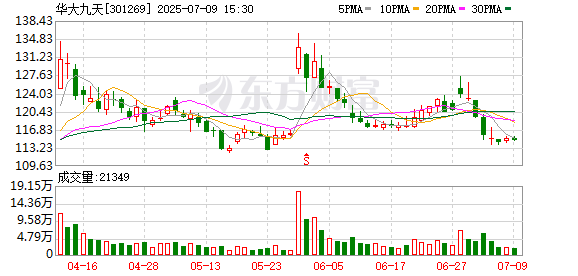
Core Viewpoint - The restructuring plan of Huada Jiutian (301269.SZ) has failed after three and a half months, leading to a significant drop in its stock price and market value [1][6]. Group 1: Restructuring Details - Huada Jiutian announced the termination of its major asset restructuring on July 9, 2025, which aimed to acquire 100% of Chip and Semiconductor Technology (Shanghai) Co., Ltd. [1][3]. - The restructuring was intended to enhance Huada Jiutian's capabilities in the electronic design automation (EDA) industry, following its change of control to China Electronics Corporation in December 2024 [1][4]. - The termination of the restructuring also halted Chip and Semiconductor's plans for an independent IPO, which had been initiated in February 2025 [4][5]. Group 2: Financial Performance - In 2024, Huada Jiutian reported revenue of 1.22 billion yuan, a year-on-year increase of 20.98%, but its net profit fell by 45.46% to 109 million yuan [2][8]. - The company's R&D expenses reached 868 million yuan, accounting for 71.02% of its revenue, reflecting a 26.77% increase from the previous year [2][8]. - In the first quarter of 2025, Huada Jiutian achieved revenue of 234 million yuan, a 9.77% increase, while its net profit was 9.71 million yuan, showing a 26.72% year-on-year growth [8]. Group 3: Market Impact - Following the announcement of the restructuring termination, Huada Jiutian's stock price dropped by 5.27% to 108.64 yuan per share, resulting in a market value loss of 3.28 billion yuan [1][6]. - The company's international revenue decreased by 13.32% in 2024, amounting to 57.74 million yuan, which constituted 4.72% of its total revenue [8].
301269,终止重大资产重组!并购半导体公司,按下暂停键!
Zheng Quan Shi Bao Wang· 2025-07-09 14:59
Core Viewpoint - The major asset restructuring plan of Huada Jiutian has been terminated due to a lack of consensus on key transaction terms among parties involved [2][4]. Group 1: Termination of Restructuring - Huada Jiutian announced the termination of its plan to acquire 100% of Chip and Semiconductor Technology (Shanghai) Co., Ltd. and raise supporting funds [2][4]. - The decision to terminate was made after thorough communication and friendly negotiations with relevant parties, and it is stated that this will not adversely affect the company's current operations and strategic development [4]. Group 2: Financial and Operational Context - The company committed to not planning any major asset restructuring for one month following the termination [4]. - The acquisition plan was first announced on March 17, with a transaction proposal released on March 30, aiming to purchase the entire equity of Chip and Semiconductor from 35 shareholders [4]. - Chip and Semiconductor had initiated an IPO counseling process earlier this year, with CITIC Securities as the counseling agency, but the progress has not been updated since April [4][5]. Group 3: Business and Market Implications - Chip and Semiconductor specializes in Electronic Design Automation (EDA) tools, providing comprehensive solutions from chip design to cloud systems, and has applications in various fields including 5G and AI [5]. - Financial projections for Chip and Semiconductor indicate revenues of 106 million yuan and 265 million yuan for 2023 and 2024, respectively, with net profits of -89.93 million yuan and 48.13 million yuan for the same years [5]. - Despite the termination of this acquisition, Huada Jiutian remains committed to mergers and acquisitions as a strategy for growth in the EDA sector, planning to combine self-development, cooperative development, and mergers to enhance its capabilities [6].

欧美的初创EDA公司
半导体芯闻· 2025-07-09 10:07
Core Viewpoint - The 62nd DAC showcased numerous new exhibitors for 2025, particularly emerging EDA startups that are addressing the complexities of modern chip design through innovative methods, with a strong emphasis on artificial intelligence to enhance design and verification efficiency [1][2]. Group 1: AI in Design Verification - Bronco AI focuses on AI for design verification regression analysis, automating repetitive tasks and generating detailed scripts for debugging processes, which helps reduce organizational friction and improves onboarding for new team members [3]. - ChipAgents claims that their AI-driven chip design environment can enhance RTL design, debugging, and verification efficiency by tenfold, allowing designers to convert concepts into precise specifications using simple language prompts [4][5]. Group 2: Project Management and Collaboration - DSM Pro Engineering is developing a comprehensive RTL-to-GDSII chip design project management system that centralizes project metadata in a programmable SQL database, facilitating collaboration between project managers and engineers [6]. - ITDA Semiconductor offers a drag-and-drop visual designer for SoC systems, enabling users to create and optimize designs quickly, with a focus on power control and clock management [7]. Group 3: Accelerating Verification and Design - MooresLabAI is creating a proxy AI framework to accelerate verification processes, significantly reducing verification time and overall time-to-market [8][9]. - Rise Design Automation aims to enhance RTL design and verification, providing a multi-language toolset that allows users to start from high-level designs and optimize them into RTL, improving simulation speed and design iteration [9][10].

EDA对华出口管制解除 全球三大厂商恢复供应
Zheng Quan Shi Bao· 2025-07-03 21:55
Core Viewpoint - The U.S. has lifted export restrictions on Electronic Design Automation (EDA) software to China, allowing major companies like Siemens and Synopsys to resume supply, while Cadence has not yet officially responded [1][2]. Group 1: Company Responses - Siemens confirmed the restoration of access to previously restricted EDA software and technology for Chinese customers, following a notification from the U.S. Department of Commerce [1]. - Synopsys announced the immediate resumption of supply and full customer support for its products in China, effective from July 2 [1]. - Cadence has not yet provided an official response regarding the restoration of its EDA software supply to China [2]. Group 2: Market Dynamics - Prior to the lifting of restrictions, the three major EDA companies faced limitations on software key renewals and IP updates, which affected their operations in China [3]. - Despite the restrictions, EDA tools remained usable under existing licenses, but additional services and new orders were not supported until late June when restrictions began to ease [3]. - The high market concentration in the EDA industry is evident, with Synopsys, Cadence, and Siemens collectively holding over 70% market share according to TrendForce [4]. Group 3: Domestic Industry Response - In response to the international EDA supply limitations, domestic EDA companies have initiated free trials of their products to capture market share [4]. - The Chinese semiconductor industry is encouraged to actively adopt domestic EDA tools, as the U.S. restrictions present an opportunity for integration and development within the local market [4].


美国解禁EDA,国产加速“合纵连横”
2 1 Shi Ji Jing Ji Bao Dao· 2025-07-03 12:41
Core Viewpoint - The recent U.S. policy shift to lift export restrictions on EDA software to China is seen as a strategic move rather than a benevolent gesture, aiming to maintain control over the EDA market while allowing U.S. companies to compete in China [2][8]. Industry Overview - The EDA industry is highly concentrated, dominated by three major players: Synopsys, Cadence, and Siemens, which together hold 74% of the global market share, with Synopsys at 32%, Cadence at 29%, and Siemens at 13% [4]. - The global EDA market is projected to reach $19.246 billion in 2024, with the Chinese market expected to grow significantly, reaching 18.1% of the global market by 2025 [9]. Financial Performance - Synopsys is expected to generate $6.105 billion in revenue for the 2024 fiscal year, while Cadence's revenue is projected to be approximately $4.641 billion [5]. Market Dynamics - The lifting of restrictions allows the three major EDA companies to resume providing software and technical services to Chinese clients without additional export licenses [6]. - The Chinese EDA industry has been growing rapidly, with a compound annual growth rate of 15.64% expected from 2021 to 2025 [9]. Challenges and Opportunities - Despite the recent policy changes, the Chinese EDA industry still faces challenges in technology and ecosystem development, requiring closer collaboration among chip design companies and foundries [10]. - Domestic EDA firms are pursuing mergers and acquisitions to enhance their capabilities and address market needs, which could lead to a more integrated industry [11]. - The increasing user base for domestic EDA tools is expected to create a substantial feedback loop, aiding in the optimization and iteration of these tools [11]. Future Outlook - The demand for EDA solutions in China is anticipated to grow, presenting opportunities for local companies to expand their market share, albeit in a competitive global landscape [12].
新思科技、西门子证实美国撤销对华EDA软件出口限制 华大九天等3家国内厂商股价走低
Mei Ri Jing Ji Xin Wen· 2025-07-03 10:52
Group 1 - The U.S. government has lifted certain export licensing requirements for chip design software to China, allowing companies like Siemens and Synopsys to resume sales and support for their products in the Chinese market [1][2] - Siemens confirmed that it has regained full access to export-controlled software and technology, specifically under ECCNs 3D991 and 3E991, and has resumed sales and technical support to Chinese customers [2][3] - The global EDA market reached $14.53 billion in 2023, which, while relatively small, plays a crucial role in supporting the trillion-dollar electronics industry [2][3] Group 2 - EDA tools are essential for reducing design complexity, minimizing errors, and improving the success rate of integrated circuit (IC) production, thus significantly impacting the efficiency and quality of the entire industry [3] - The majority of the EDA market is dominated by three major international players: Synopsys, Cadence, and Siemens EDA, which together hold nearly 80% market share, while domestic companies account for less than 2% [3][4] - Despite the dominance of international EDA firms, domestic EDA companies are making progress, with a growing number of high-quality local enterprises emerging in China [4][5] Group 3 - Domestic EDA firms like Huada Jiutian, Gai Lun Electronics, and Guangli Micro have seen slight declines in stock prices following the resumption of supply from international EDA companies [4] - Huada Jiutian offers a comprehensive simulation circuit design EDA tool system, while Gai Lun Electronics combines semiconductor device testing systems with EDA software for differentiated solutions [5] - Guangli Micro is one of the few companies capable of providing full-process coverage products and services in yield enhancement and electrical monitoring [5]
EDA:断供背景下国产替代曙光已现
Lai Mi Yan Jiu Yuan· 2025-06-11 07:43
Investment Rating - The report indicates a positive outlook for the domestic EDA industry, highlighting the potential for domestic substitution in the context of recent export controls from the US [3][20]. Core Insights - The EDA tools are critical for the semiconductor industry, encompassing the entire design process from chip functionality to physical realization, and the recent US export controls have intensified the focus on domestic alternatives [3][4][10]. - The domestic EDA market is experiencing rapid growth, with a market size projected to reach approximately 120 billion RMB in 2024, but the domestic substitution rate remains low at under 15% [17][19]. - The report emphasizes the importance of both technological advancements and ecosystem restructuring in the domestic EDA sector to reduce reliance on foreign tools and enhance competitiveness [20][21]. Summary by Sections EDA Supply Chain and Export Controls - The US has implemented a series of export controls on EDA tools, starting with Huawei in 2019 and expanding to cover advanced process design capabilities below 14nm as of May 2025 [4][5]. - Major EDA companies like Synopsys and Cadence have confirmed the suspension of operations in China, affecting a significant number of employees and clients [5][10]. Current State of Domestic EDA Tools - The domestic EDA industry is in a rapid development phase, with notable achievements in specific areas like analog circuit design, but still lacking in comprehensive solutions compared to international leaders [13][14]. - The report highlights that while some domestic tools have achieved significant milestones, the overall market remains heavily reliant on imports, particularly for advanced process technologies [10][17]. Investment and Policy Support - The report notes a substantial increase in investment in the EDA sector, with financing exceeding 80 billion RMB in 2022, reflecting the government's commitment to supporting this strategic industry [21][22]. - Various policies have been introduced to foster the growth of domestic EDA tools, including tax incentives and direct investments from national funds [15][16]. Future Outlook and Challenges - The report suggests that the domestic EDA industry must focus on both technological innovation and ecosystem collaboration to effectively compete with established international players [20][21]. - There is a significant talent gap in the EDA field, with a shortage of high-level professionals hindering the progress of domestic companies [20].
美国断供“芯片之母” 国产厂商加速突围
Jing Ji Guan Cha Bao· 2025-06-06 08:15
Core Viewpoint - The U.S. Department of Commerce's Bureau of Industry and Security (BIS) has notified major global EDA software suppliers, including Synopsys, Cadence, and Siemens EDA, to cease sales and technical support to China without permission, creating a significant opportunity for domestic EDA companies in China [2][3]. Group 1: Market Impact - The three major EDA firms hold approximately 80% market share in China, with Synopsys generating $1 billion in revenue from China, accounting for 16% of its total revenue, and Cadence generating $550 million, accounting for 12% [3]. - Following the BIS directive, Synopsys suspended its financial guidance for the third quarter and full year of fiscal 2025, halted sales and service activities in China, and prohibited Chinese customers from accessing its online support portal, resulting in a stock price drop of over 9.6% in two days [3][4]. Group 2: Domestic EDA Opportunities - Domestic EDA companies are expected to benefit from the situation due to their flexible pricing and strong policy support for domestic alternatives, leading to optimistic future development prospects [2][11]. - The integration of AI with EDA tools is seen as a potential path for domestic companies to "leapfrog" international competitors, as they can better adapt to new software and hardware frameworks without the burden of legacy technologies [9]. Group 3: Financial Performance of Domestic EDA Companies - Huada Jiutian reported a revenue of 1.222 billion yuan in 2024, a year-on-year increase of 20.98%, but its net profit dropped by 45.46% to 109 million yuan [7]. - Gekun Electronics achieved a total revenue of 419 million yuan in 2024, a year-on-year increase of 27.42%, but reported a net loss of 96 million yuan [7]. Group 4: Strategic Moves and Future Plans - Huada Jiutian is actively pursuing the acquisition of Chip and Semiconductor Technology to enhance its capabilities in advanced packaging and system-level design EDA [10]. - The company aims to complete the development and market promotion of integrated circuit design tools within three years and achieve full domestic replacement of EDA tools in the design, manufacturing, and testing sectors within five years [10].