医疗服务

Search documents
股票行情快报:通策医疗(600763)1月22日主力资金净卖出2035.05万元
Sou Hu Cai Jing· 2026-01-22 11:43
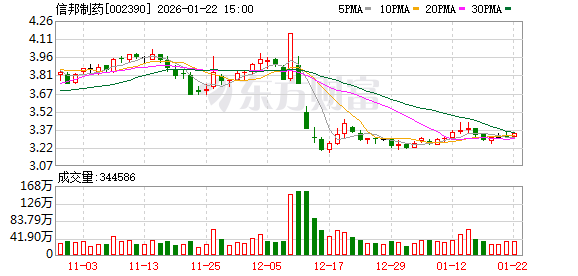
Core Viewpoint - Tongce Medical (600763) shows a slight increase in stock price and mixed capital flow, indicating potential investor interest despite some net outflows from major and retail investors [1][2]. Group 1: Stock Performance - As of January 22, 2026, Tongce Medical closed at 46.58 yuan, up by 0.15% with a turnover rate of 2.37% and a trading volume of 106,000 hands, resulting in a transaction amount of 493 million yuan [1]. - In the last five days, the stock experienced fluctuations, with a peak increase of 4.99% on January 21, 2026, and a decrease of 1.77% on January 20, 2026 [2]. Group 2: Capital Flow Analysis - On January 22, 2026, the net outflow of major funds was 20.35 million yuan, accounting for 4.13% of the total transaction amount, while retail investors saw a net inflow of 37.44 million yuan, representing 7.6% of the total [1][2]. - Over the past five days, major funds had a net inflow on January 21, 2026, of 83.46 million yuan, which was a significant contrast to the net outflows observed on other days [2]. Group 3: Company Financials and Industry Comparison - Tongce Medical's total market value is 20.835 billion yuan, with a net asset of 4.703 billion yuan and a net profit of 514 million yuan, ranking 9th, 12th, and 6th respectively in the medical services industry [3]. - The company reported a gross margin of 41.69% and a net margin of 26.91%, significantly higher than the industry averages of 36.47% and 4.61% respectively [3]. - For the first three quarters of 2025, the company achieved a main business revenue of 2.29 billion yuan, a year-on-year increase of 2.56%, and a net profit of 514 million yuan, up by 3.16% [3]. Group 4: Analyst Ratings - In the last 90 days, seven institutions provided ratings for Tongce Medical, with four buy ratings and three hold ratings, indicating a generally positive outlook [4]. - The average target price set by institutions over the past 90 days is 52.88 yuan, suggesting potential upside from the current trading price [4].


信邦制药:公司下属贵州医科大学附属乌当医院设有整形科
Zheng Quan Ri Bao· 2026-01-22 10:09
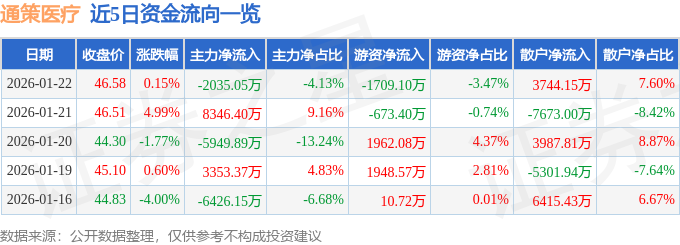
(文章来源:证券日报) 证券日报网讯 1月22日,信邦制药在互动平台回答投资者提问时表示,公司下属贵州医科大学附属乌当 医院设有整形科,目前开展有眼鼻整形、注射微整形、注射水光针、光子嫩肤等项目;下属仁怀新朝阳 医院有限公司设有医美科,科室以整形美容与皮肤美容为特色构建一体化诊治体系,目前开展有面部整 形、皮肤管理等项目。 ...

三星医疗:截至目前,公司下属医院共38家,其中康复医院32家,总床位数已超万张
Mei Ri Jing Ji Xin Wen· 2026-01-22 10:01
Core Viewpoint - The company, Samsung Medical, is primarily focused on its smart power distribution business, which has accounted for over 75% of its revenue in recent years, raising questions about its alignment with its name and potential plans for enhancing its medical services business [1] Group 1: Business Focus - Samsung Medical has been deeply involved in the medical services sector for many years, focusing on the construction, operation, and investment in physical medical institutions [1] - The company is actively developing high-quality rehabilitation specialty chains, emphasizing critical rehabilitation, neurological rehabilitation, and functional rehabilitation, with a foundation in elderly rehabilitation [1] Group 2: Operational Scale - As of now, the company operates 38 hospitals, including 32 rehabilitation hospitals, with a total bed capacity exceeding 10,000 [1] Group 3: Future Plans - The company expressed gratitude for investor suggestions and indicated that if there are plans for further asset integration or acquisitions to enhance the revenue and profit contribution from its medical services, it will comply with relevant laws and regulations for timely information disclosure [1]

又一例“人工心脏”植入手术在合肥京东方医院完成
Ke Ji Ri Bao· 2026-01-22 09:47
据介绍,"人工心脏"即左心辅助装置,是一种尖端生命支持系统。整个装置系统分为体内和体外两部 分,体内的血泵和管道与心脏精密连接,体外的控制器和电池组让患者能够自由活动。此次接受"人工 心脏"植入的患者患有扩张型心肌病,其左室射血分数(LVEF)仅为15%,远低于55%的正常标准。该 疾病是一种遗传性疾病,目前尚无根治方案,随着病情进展,患者心脏功能逐年衰退。 合肥京东方医院心脏中心团队经过全面评估与审慎研讨,迅速组建由心脏外科、心血管内科、麻醉科、 体外循环科、重症监护室、超声科等多领域专家构成的诊疗团队。术中,团队默契配合、精准操作,成 功将"人工心脏"植入患者体内。装置启动后运行平稳,即刻承担起左心室泵血功能,患者全身血液循环 得到显著改善。 姚建民介绍,"人工心脏"是救治终末期心衰的关键手段,与心脏移植相比,术后不用终身服用抗排异 药。此外,该技术也为稀有血型、体重较大或65岁以上等难以接受心脏移植的患者,提供了新的治疗希 望。 近日,又一例"人工心脏"植入手术在合肥京东方医院成功开展。合肥京东方医院心胸外科主任姚建民表 示,植入的"人工心脏"仅90克,是由新型材料制成的一个很轻很小的机械装置。它协助心 ...

菏泽单县:系统推动医务社工高质量发展的“县域实践”
Qi Lu Wan Bao· 2026-01-22 09:20
2025年,单县坚持把党的领导贯穿医务社会工作发展全过程,以"党建+医务社工"模式破解行业发展瓶 颈。通过统筹组织、财政、人社等16个部门组建联动矩阵,创新建立"双轨制"组织架构,在县卫健局增 设社会工作办公室,配备专职干部统筹全县资源;推动中心医院等7家医院挂牌成立社会工作办公室, 配备专职医务社工9名,实现"一院一办一团队"实体化运行,并提供政策咨询、资源链接、纠纷调解 等"一站式"服务。截至2025年12月,已为困难患者申请医疗救助127人次,链接慈善资源14300元,协调 解决医患矛盾36起,群众就医满意度提升至98.6%。 通讯员 谢丽 在健康中国战略深入实施的背景下,山东省单县坚持"党建领航、专业筑基、服务惠民"理念,创新构 建"县级统筹—部门联动—机构主责—社会参与"的医务社会工作全链条服务体系,推动医疗服务从"单 一治疗"向"身心社灵"全人关怀转型,为基层医疗治理注入新动能。 "我们以体制机制破题为突破口,通过建机构、定标准、育人才,将医务社工服务嵌入医疗体系,有效 破解了医患沟通难、资源整合弱、人文关怀缺等痛点。"单县卫生健康局党组书记、局长张忠瑞介绍 道。 党建领航,构建"双轨制"组织体系 ...
医疗服务板块1月22日跌0.25%,诚达药业领跌,主力资金净流出3.13亿元
Zheng Xing Xing Ye Ri Bao· 2026-01-22 09:01
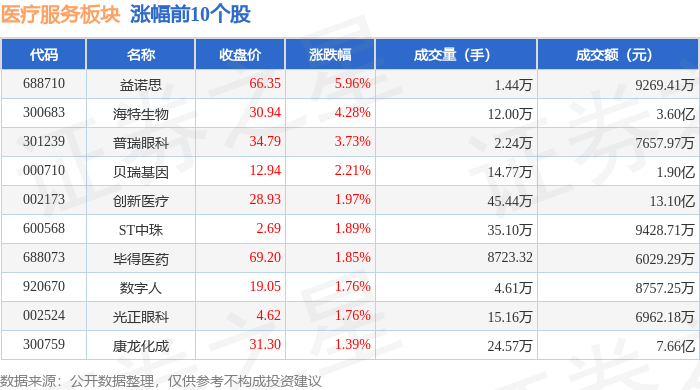
Market Overview - The medical services sector experienced a decline of 0.25% on January 22, with Chengda Pharmaceutical leading the drop [1] - The Shanghai Composite Index closed at 4122.58, up 0.14%, while the Shenzhen Component Index closed at 14327.05, up 0.5% [1] Stock Performance - Notable gainers in the medical services sector included: - Yinos (688710) with a closing price of 66.35, up 5.96% [1] - Hite Bio (300683) at 30.94, up 4.28% [1] - Puri Eye (301239) at 34.79, up 3.73% [1] - Conversely, significant decliners included: - Chengda Pharmaceutical (301201) at 39.67, down 4.16% [2] - Nanmo Bio (688265) at 48.21, down 3.17% [2] - Pruis (301257) at 66.99, down 2.63% [2] Capital Flow - The medical services sector saw a net outflow of 313 million yuan from institutional investors, while retail investors experienced a net inflow of 89.45 million yuan [2] - The capital flow for specific stocks showed: - Innovation Medical (002173) had a net inflow of 89.74 million yuan from institutional investors [3] - Kanglong Chemical (300759) saw a net inflow of 44.95 million yuan from institutional investors [3] - Chengda Pharmaceutical (301201) had a net outflow of 20.46 million yuan from retail investors [3]



瑛泰医疗完成配售合共3520万股 净筹约8.84亿港元
Zhi Tong Cai Jing· 2026-01-22 08:41
瑛泰医疗(01501)发布公告,配售协议所载的所有条件已达成,而交割已根据配售协议的条款及条件于 2026年1月22日落实。根据配售协议的条款及条件,配售代理已成功按配售价每股配售股份26.00港元向 不少于6名承配人配售合共3520万股配售股份,相当于紧接交割前现有已发行H股数目的约33.78%及现 有已发行股份数目的20.00%;及于本公告日期紧随交割后已发行H股数目的约25.25%及已发行股份数目 的约16.67%。配售事项所得款项总额及所得款项净额分别约为9.15亿港元及8.84亿港元,相当于净发行 价为每股配售股份25.12港元。 ...
上海一医生泄露逝者及其亲属信息,被暂停执业活动和罚款
Xin Jing Bao· 2026-01-22 08:23
Core Viewpoint - The article highlights a case of personal information violation in a healthcare setting, where medical personnel illegally collected and provided personal information of deceased individuals and their relatives for commercial purposes, leading to legal actions and penalties against the involved parties [1][2]. Group 1: Case Details - A hospital in Minhang District, Shanghai, and emergency personnel misused their access to personal information, collecting over 800 pieces of data including addresses, death times, causes, and contact details of deceased individuals and their relatives from the city's disease control information management system [1]. - The involved hospital has been ordered to rectify its illegal actions, received a warning, and was fined, while the implicated doctor faced a suspension of practice and penalties [2]. Group 2: Legal Framework and Consequences - The actions of the healthcare personnel violated the Personal Information Protection Law and the Data Security Law of the People's Republic of China, which mandate strict regulations on the handling of personal information [2]. - Following a recommendation from the Minhang District People's Procuratorate, the local health commission took administrative actions against the hospital and personnel, including fines and the termination of contracts with involved emergency staff [2].
12字8年未变!执着的世博高新医院给出新宣言
Qi Lu Wan Bao· 2026-01-22 08:01
Core Insights - The speech by Yan Jingwu, the founding director of Shibo Gaoxin Hospital, serves as a strategic declaration for the hospital's future in the evolving healthcare landscape of Zibo, China [2][12] - The Chinese healthcare industry is undergoing significant changes, with declining treatment volumes and some hospitals facing closure, while healthcare reforms and new drug developments present new opportunities [2][3] Industry Context - The current healthcare environment in China is characterized by a complex mix of challenges and opportunities, necessitating healthcare institutions to adapt their development paths [4] - The goal of "no need to leave Zibo for treatment, and no need to leave Shibo for major illnesses" reflects the hospital's commitment to addressing local healthcare needs [3][5] Hospital Development Strategy - Shibo Gaoxin Hospital aims to integrate high-quality medical resources into the Zibo region, alleviating the burden on local residents and enhancing the healthcare service system [5][6] - The hospital has established itself as a key player in the regional healthcare landscape since its inception in 2017, focusing on differentiated development in key disciplines such as oncology, orthopedics, and traditional Chinese medicine rehabilitation [6][7] Collaborative Efforts - The hospital has formed strategic partnerships with reputable institutions, such as the PLA 960 Hospital, to enhance its orthopedic capabilities and overall service quality [7][8] - The establishment of a tumor diagnosis and treatment center, equipped with advanced technologies like the first domestic CyberKnife and PET-CT, signifies the hospital's commitment to providing cutting-edge cancer care [8] Technological Advancements - The construction of a smart hospital is a key focus for 2026, aiming to improve patient experience through data-driven services and efficient healthcare delivery [9][10] - The hospital's smart hospital initiative leverages technologies such as 5G, AI, and big data to facilitate remote diagnosis, intelligent guidance, and shared electronic medical records [11][12] Regional Healthcare Transformation - The hospital's vision aligns with Zibo's efforts to enhance local healthcare services, addressing issues like accessibility and quality of care for residents [5][12] - The establishment of a four-tier management model aims to integrate various resources and create a comprehensive healthcare network, ensuring that minor ailments are treated locally while more serious conditions are referred to specialized facilities [11][12]
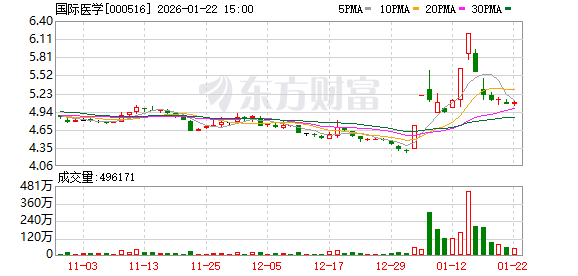
国际医学:平阳融泰高德股权投资合伙企业持有蓝箭航天0.6889%的股份
Mei Ri Jing Ji Xin Wen· 2026-01-22 07:52
国际医学(000516.SZ)1月22日在投资者互动平台表示,您好,感谢您对公司的关注。公司持有平阳融 泰高德股权投资合伙企业17.5439%的股权,平阳融泰高德股权投资合伙企业持有蓝箭航天0.6889%的股 份。公司目前尚无在太空中研发医疗药品的计划。谢谢! (文章来源:每日经济新闻) 每经AI快讯,有投资者在投资者互动平台提问:蓝箭航天是中国领先的商业航天企业,启动科创板IPO 冲刺"商业航天第一股" 传闻国际医学是否通过平阳融泰高德股权投资合伙企业(有限合伙)持有蓝箭 航天的股份,正式进入商业航天领域,后期是否有在太空研发医疗药品的计划? ...