
采矿业

Search documents
【数据发布】2025年1—7月份全国规模以上工业企业利润下降1.7%
中汽协会数据· 2025-08-27 09:23
Core Viewpoint - In the first seven months of the year, the total profit of industrial enterprises above designated size in China decreased by 1.7% year-on-year, indicating a challenging economic environment for the industrial sector [1]. Group 1: Profit Performance - From January to July, state-owned enterprises reported a profit of 12,823.4 billion yuan, down 7.5% year-on-year, while joint-stock enterprises saw a profit of 29,742.5 billion yuan, a decline of 2.8% [1]. - Foreign and Hong Kong, Macao, and Taiwan-invested enterprises achieved a profit of 10,216.7 billion yuan, an increase of 1.8%, and private enterprises reported a profit of 11,183.7 billion yuan, also up by 1.8% [1]. - The mining industry experienced a significant profit drop of 31.6%, while the manufacturing sector saw a profit increase of 4.8% [1][2]. Group 2: Revenue and Cost Analysis - In the first seven months, the total operating revenue of industrial enterprises reached 78.07 trillion yuan, a year-on-year increase of 2.3%, with operating costs rising by 2.5% to 66.80 trillion yuan [2]. - The operating profit margin was recorded at 5.15%, reflecting a decrease of 0.21 percentage points compared to the previous year [2]. - By the end of July, total assets of these enterprises amounted to 183.67 trillion yuan, up 4.9% year-on-year, while total liabilities increased by 5.1% to 106.26 trillion yuan [2]. Group 3: Efficiency Metrics - The cost per 100 yuan of operating revenue was 85.57 yuan, an increase of 0.24 yuan year-on-year, while expenses per 100 yuan of operating revenue decreased by 0.08 yuan to 8.38 yuan [3]. - The average revenue per 100 yuan of assets was 74.0 yuan, down by 1.9 yuan year-on-year, indicating a decline in asset efficiency [3]. - The average collection period for accounts receivable increased to 69.8 days, up by 3.7 days year-on-year, suggesting a slowdown in cash flow [3].

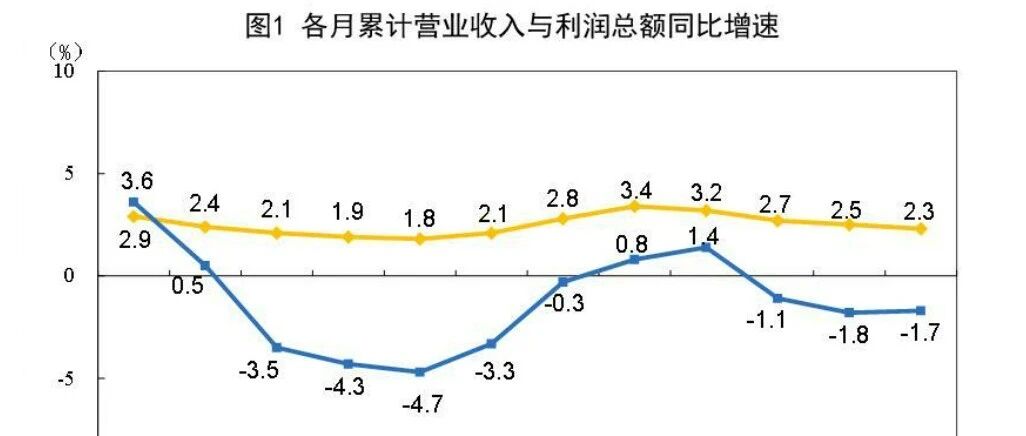
前7月规上工业企业利润总额4.02万亿元,高技术制造业领跑
2 1 Shi Ji Jing Ji Bao Dao· 2025-08-27 08:02
Core Insights - In the first seven months of the year, the total profit of industrial enterprises above designated size in China reached 40,203.5 billion yuan, a year-on-year decrease of 1.7% [5] - The manufacturing sector achieved a profit of 30,235.8 billion yuan, marking a growth of 4.8% [5] - In July, manufacturing profits increased by 6.8%, with high-tech manufacturing profits rebounding from a decline of 0.9% in June to a growth of 18.9% [10] Industrial Profit Trends - The profit decline for industrial enterprises has been narrowing, with July showing a year-on-year decrease of 1.5%, an improvement of 2.8 percentage points from June [6] - The profit margins for industrial enterprises have improved, with gross profit turning from a decline of 1.3% in June to a growth of 0.1% in July [6] - The operating income for industrial enterprises in the first seven months was 78.07 trillion yuan, reflecting a year-on-year growth of 2.3% [5] Sector Performance - Among various sectors, the mining industry saw a significant profit decline of 31.6%, while the manufacturing sector's profit growth of 4.8% was notable [8] - Specific industries within manufacturing showed strong profit growth, such as the agricultural and food processing industry at 14.5%, and electrical machinery manufacturing at 11.7% [8] - High-tech manufacturing sectors, particularly in aerospace and semiconductor industries, demonstrated remarkable profit increases, with profits growing by 40.9% and 176.1% respectively [10] Policy Impact - The implementation of "two new" policies has positively influenced profit growth in related industries, with significant increases in sectors like electronic and electrical machinery manufacturing [9] - The government's focus on expanding domestic demand and promoting innovation is expected to support the ongoing recovery of industrial profits [10]
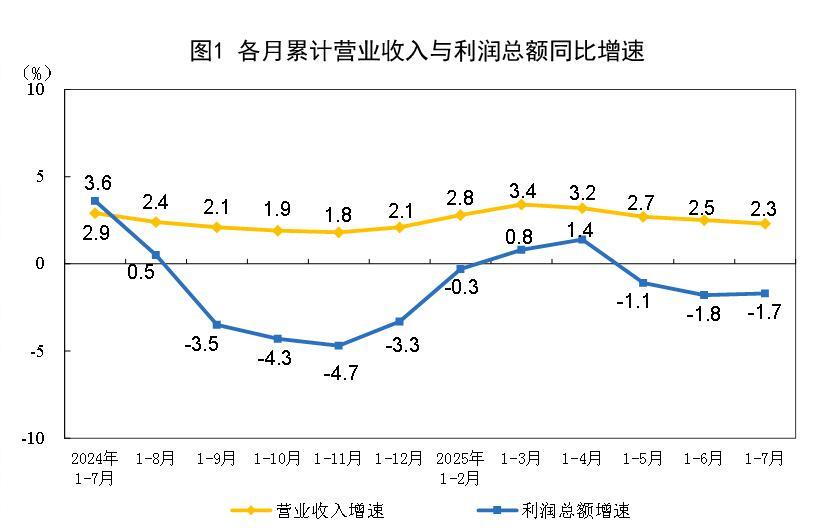
前7月私营企业利润总额增长1.8%|数据看板
Sou Hu Cai Jing· 2025-08-27 05:04
Core Insights - In the first seven months of the year, the total profit of industrial enterprises above designated size in China reached 40,203.5 billion yuan, representing a year-on-year decline of 1.7% [1] Group 1: Profit by Ownership Type - State-controlled enterprises reported a total profit of 12,823.4 billion yuan, down 7.5% year-on-year [1] - Shareholding enterprises achieved a total profit of 29,742.5 billion yuan, a decrease of 2.8% [1] - Foreign and Hong Kong, Macao, and Taiwan-invested enterprises saw profits of 10,216.7 billion yuan, an increase of 1.8% [1] - Private enterprises reported profits of 11,183.7 billion yuan, also up by 1.8% [1] Group 2: Profit by Industry - The mining industry experienced a profit of 4,930.9 billion yuan, down 31.6% year-on-year [1] - The manufacturing sector generated profits of 30,235.8 billion yuan, reflecting a growth of 4.8% [1] - The electricity, heat, gas, and water production and supply industry reported profits of 5,036.8 billion yuan, an increase of 3.9% [1] - Specific industries with notable profit changes include: - Agricultural and sideline food processing industry: profit growth of 14.5% [2] - Electrical machinery and equipment manufacturing: profit growth of 11.7% [2] - Non-metallic mineral products industry: profit decline of 5.6% [2] - Coal mining and washing industry: profit decline of 55.2% [2] Group 3: Financial Metrics - In the first seven months, the total operating revenue of industrial enterprises above designated size was 78.07 trillion yuan, a year-on-year increase of 2.3% [2] - Operating costs amounted to 66.80 trillion yuan, up 2.5% [2] - The operating profit margin was 5.15%, a decrease of 0.21 percentage points year-on-year [2] - As of the end of July, total assets of these enterprises reached 183.67 trillion yuan, a year-on-year growth of 4.9% [2] - Total liabilities were 106.26 trillion yuan, increasing by 5.1% [2] - The asset-liability ratio stood at 57.9%, up 0.2 percentage points year-on-year [2] Group 4: Accounts Receivable and Inventory - As of the end of July, accounts receivable totaled 26.84 trillion yuan, a year-on-year increase of 6.8% [3] - Finished goods inventory was 6.67 trillion yuan, up 2.4% [3] - The average collection period for accounts receivable was 69.8 days, an increase of 3.7 days year-on-year [3]
国家统计局:2025年1-7月份全国规模以上工业企业利润下降1.7%
Xin Hua Cai Jing· 2025-08-27 03:09
Core Insights - The total profit of industrial enterprises above designated size in China for the first seven months of 2025 was 40,203.5 billion yuan, a year-on-year decrease of 1.7% [2][10] - State-owned enterprises saw a profit of 12,823.4 billion yuan, down 7.5%, while private enterprises and foreign-invested enterprises both experienced a profit increase of 1.8% [2][10] - The mining industry faced a significant profit decline of 31.6%, while the manufacturing sector reported a profit growth of 4.8% [2][10] Profit and Revenue Analysis - From January to July, the total revenue of industrial enterprises was 780,703.3 billion yuan, reflecting a year-on-year growth of 2.3% [3][10] - The cost of operations increased by 2.5% to 668,042.1 billion yuan, leading to a profit margin of 5.15%, which is a decrease of 0.21 percentage points compared to the previous year [3][10] - The mining sector's revenue dropped by 13.6%, while the manufacturing sector's revenue grew by 3.3% [10][14] Sector Performance - Key sectors with notable profit growth include the agricultural and food processing industry (14.5%), electrical machinery manufacturing (11.7%), and non-ferrous metal smelting (6.9%) [3][10] - Conversely, sectors such as coal mining and washing saw a dramatic profit decline of 55.2%, and the chemical raw materials and products manufacturing sector experienced an 8.0% decrease [3][10] - The automotive manufacturing sector reported a modest profit growth of 0.9% [3][10] Financial Metrics - As of the end of July, total assets of industrial enterprises amounted to 183.67 trillion yuan, a year-on-year increase of 4.9%, while total liabilities reached 106.26 trillion yuan, up 5.1% [4][10] - The average accounts receivable period increased to 69.8 days, up 3.7 days from the previous year, indicating a potential liquidity concern [4][10] - The inventory turnover days for finished goods stood at 20.5 days, reflecting a slight increase of 0.2 days year-on-year [4][10]
1—7月份全国规模以上工业企业实现营收78.07万亿元,同比增长2.3%
Bei Jing Shang Bao· 2025-08-27 02:25
Core Insights - In the first seven months of the year, China's industrial enterprises above designated size achieved operating income of 78.07 trillion yuan, a year-on-year increase of 2.3% [1] - The total profit of these enterprises was 40,203.5 billion yuan, reflecting a year-on-year decline of 1.7% [1] - The profit margin for operating income was 5.15%, down by 0.21 percentage points compared to the previous year [1] Industry Performance - State-owned enterprises reported a total profit of 12,823.4 billion yuan, down 7.5% year-on-year [1] - Joint-stock enterprises saw profits of 29,742.5 billion yuan, a decrease of 2.8% [1] - Foreign and Hong Kong, Macao, and Taiwan-invested enterprises achieved profits of 10,216.7 billion yuan, an increase of 1.8% [1] - Private enterprises reported profits of 11,183.7 billion yuan, also up by 1.8% [1] Sector-Specific Profit Trends - The mining industry experienced a significant profit decline of 31.6%, totaling 4,930.9 billion yuan [1] - The manufacturing sector saw a profit increase of 4.8%, amounting to 30,235.8 billion yuan [1] - The electricity, heat, gas, and water production and supply sector reported a profit of 5,036.8 billion yuan, up 3.9% [1] Major Industry Profit Changes - The agricultural and sideline food processing industry profits grew by 14.5% [2] - The electrical machinery and equipment manufacturing industry profits increased by 11.7% [2] - The non-metallic mineral products industry saw a profit decline of 5.6% [2] - The coal mining and washing industry experienced a drastic profit drop of 55.2% [2] Financial Health of Industrial Enterprises - By the end of July, total assets of industrial enterprises above designated size reached 183.67 trillion yuan, a year-on-year increase of 4.9% [2] - Total liabilities amounted to 106.26 trillion yuan, reflecting a growth of 5.1% [2] - The equity of these enterprises totaled 77.41 trillion yuan, up 4.6% [2] - The asset-liability ratio stood at 57.9%, an increase of 0.2 percentage points year-on-year [2] Cost and Expense Analysis - The cost per 100 yuan of operating income was 85.57 yuan, an increase of 0.24 yuan year-on-year [2] - Expenses per 100 yuan of operating income were 8.38 yuan, a decrease of 0.08 yuan year-on-year [2]
1-7月钢铁行业利润同比增5175%
Guo Jia Tong Ji Ju· 2025-08-27 02:11
Core Insights - From January to July, the total profit of industrial enterprises above designated size in China reached 40,203.5 billion yuan, a year-on-year decrease of 1.7% [1] - Among these enterprises, state-controlled enterprises reported a profit of 12,823.4 billion yuan, down 7.5% year-on-year; joint-stock enterprises achieved a profit of 29,742.5 billion yuan, down 2.8%; foreign and Hong Kong, Macao, and Taiwan-invested enterprises saw a profit of 10,216.7 billion yuan, an increase of 1.8%; private enterprises reported a profit of 11,183.7 billion yuan, also up 1.8% [1] - The mining industry experienced a profit of 4,930.9 billion yuan, a significant decline of 31.6%; the manufacturing sector achieved a profit of 30,235.8 billion yuan, an increase of 4.8%; and the electricity, heat, gas, and water production and supply industry reported a profit of 5,036.8 billion yuan, up 3.9% [1] Industry Performance - In the first seven months, the profit situation of major industries is as follows: the agricultural and sideline food processing industry saw a profit increase of 14.5%; electrical machinery and equipment manufacturing grew by 11.7%; non-ferrous metal smelting and rolling processing increased by 6.9%; computer, communication, and other electronic equipment manufacturing rose by 6.7%; general equipment manufacturing grew by 6.4%; electricity and heat production and supply increased by 6.3%; specialized equipment manufacturing rose by 3.2%; automotive manufacturing grew by 0.9% [2] - Conversely, the non-metallic mineral products industry declined by 5.6%; the textile industry decreased by 6.5%; the chemical raw materials and chemical products manufacturing industry fell by 8.0%; the oil and natural gas extraction industry dropped by 12.6%; and the coal mining and washing industry saw a dramatic decline of 55.2% [2] - The black metal smelting and rolling processing industry reported a total profit of 643.6 billion yuan, a staggering year-on-year increase of 5,175.4% [2] - For the first six months, the profit of the black metal smelting and rolling processing industry was 462.8 billion yuan, reflecting a year-on-year increase of 13.7 times, the highest growth rate among all 31 industrial categories [2][3]
1—7月份全国规上工业企业实现利润总额40203.5亿元
Sou Hu Cai Jing· 2025-08-27 02:06
Core Insights - In the first seven months of the year, the total profit of large-scale industrial enterprises in China reached 40,203.5 billion yuan, a year-on-year decrease of 1.7% [1] - State-owned enterprises saw a profit of 12,823.4 billion yuan, down 7.5%, while private enterprises reported a profit of 11,183.7 billion yuan, an increase of 1.8% [1] - The mining industry experienced a significant profit decline of 31.6%, while the manufacturing sector saw a profit increase of 4.8% [1] Industry Performance - The agricultural and sideline food processing industry had a profit growth of 14.5%, while the automotive manufacturing industry only grew by 0.9% [2] - The non-metallic mineral products industry and textile industry faced declines of 5.6% and 6.5%, respectively [2] - The coal mining and washing industry suffered the most, with a profit decrease of 55.2% [2] Financial Metrics - The total operating revenue for large-scale industrial enterprises was 78.07 trillion yuan, a year-on-year increase of 2.3%, with operating costs rising by 2.5% to 66.80 trillion yuan [2] - The operating profit margin was 5.15%, down 0.21 percentage points from the previous year [2] - As of the end of July, total assets amounted to 183.67 trillion yuan, with a debt of 106.26 trillion yuan, resulting in a debt-to-asset ratio of 57.9%, an increase of 0.2 percentage points [2][3] Accounts and Inventory - Accounts receivable reached 26.84 trillion yuan, up 6.8%, while finished goods inventory was 6.67 trillion yuan, increasing by 2.4% [3] - The cost per 100 yuan of operating revenue was 85.57 yuan, an increase of 0.24 yuan year-on-year [3] - The average collection period for accounts receivable was 69.8 days, an increase of 3.7 days compared to the previous year [3]
国家统计局:1-7月份全国规模以上工业企业利润下降1.7%
Sou Hu Cai Jing· 2025-08-27 02:00
Core Insights - In the first seven months of the year, the total profit of large-scale industrial enterprises in China reached 40,203.5 billion yuan, a year-on-year decrease of 1.7% [1] Group 1: Profit by Ownership Type - State-owned enterprises reported a total profit of 12,823.4 billion yuan, down 7.5% year-on-year [1] - Shareholding enterprises achieved a total profit of 29,742.5 billion yuan, a decline of 2.8% [1] - Foreign and Hong Kong, Macao, and Taiwan-invested enterprises saw a profit of 10,216.7 billion yuan, an increase of 1.8% [1] - Private enterprises reported a profit of 11,183.7 billion yuan, also up by 1.8% [1] Group 2: Profit by Industry - The mining industry experienced a profit of 4,930.9 billion yuan, down 31.6% year-on-year [1] - The manufacturing sector achieved a profit of 30,235.8 billion yuan, an increase of 4.8% [1] - The electricity, heat, gas, and water production and supply industry reported a profit of 5,036.8 billion yuan, up 3.9% [1] - Specific industries with notable profit growth include: - Agricultural and sideline food processing industry: up 14.5% [2] - Electrical machinery and equipment manufacturing: up 11.7% [2] - Non-ferrous metal smelting and rolling processing: up 6.9% [2] - Computer, communication, and other electronic equipment manufacturing: up 6.7% [2] - Industries with profit declines include: - Coal mining and washing: down 55.2% [2] - Oil and natural gas extraction: down 12.6% [2] - Chemical raw materials and products manufacturing: down 8.0% [2] Group 3: Financial Metrics - The total operating revenue of large-scale industrial enterprises reached 78.07 trillion yuan, a year-on-year increase of 2.3% [2] - Operating costs amounted to 66.80 trillion yuan, up 2.5% [2] - The operating revenue profit margin was 5.15%, a decrease of 0.21 percentage points year-on-year [2] - As of the end of July, total assets of large-scale industrial enterprises were 183.67 trillion yuan, a year-on-year increase of 4.9% [2] - Total liabilities reached 106.26 trillion yuan, up 5.1% [2] - Owner's equity totaled 77.41 trillion yuan, an increase of 4.6% [2] - The asset-liability ratio stood at 57.9%, an increase of 0.2 percentage points year-on-year [2] Group 4: Efficiency Metrics - The cost per 100 yuan of operating revenue was 85.57 yuan, an increase of 0.24 yuan year-on-year [3] - The average collection period for accounts receivable was 69.8 days, an increase of 3.7 days year-on-year [3] - The turnover days for finished goods inventory were 20.5 days, an increase of 0.2 days year-on-year [3]
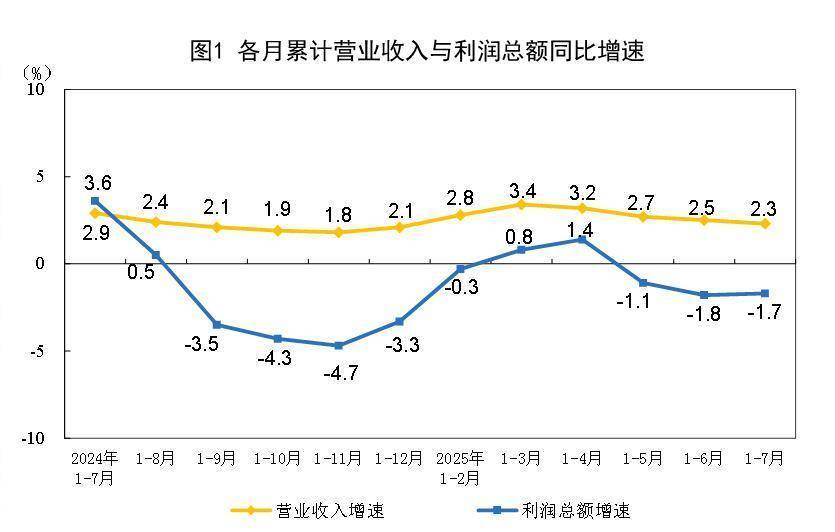
前7月全国规模以上工业企业实现利润总额40203.5亿元
Xin Jing Bao· 2025-08-27 01:59
Core Insights - In the first seven months of 2025, the total profit of industrial enterprises above designated size in China reached 40,203.5 billion yuan, a year-on-year decrease of 1.7% [1][4] Summary by Category Profit by Ownership Type - State-owned enterprises reported a total profit of 12,823.4 billion yuan, down 7.5% year-on-year - Shareholding enterprises achieved a profit of 29,742.5 billion yuan, a decline of 2.8% - Foreign and Hong Kong, Macao, and Taiwan-invested enterprises saw profits increase by 1.8% to 10,216.7 billion yuan - Private enterprises also experienced a profit growth of 1.8%, totaling 11,183.7 billion yuan [1][8] Profit by Industry - The mining industry recorded a profit of 4,930.9 billion yuan, down 31.6% - The manufacturing sector achieved a profit of 30,235.8 billion yuan, an increase of 4.8% - The electricity, heat, gas, and water production and supply industry reported a profit of 5,036.8 billion yuan, up 3.9% [1][2] Revenue and Cost Analysis - Total operating revenue for industrial enterprises was 78.07 trillion yuan, a year-on-year increase of 2.3% - Operating costs amounted to 66.80 trillion yuan, rising by 2.5% - The operating profit margin was 5.15%, a decrease of 0.21 percentage points year-on-year [2][9] Financial Ratios - As of the end of July, total assets of industrial enterprises reached 183.67 trillion yuan, up 4.9% year-on-year - Total liabilities were 106.26 trillion yuan, increasing by 5.1% - The equity totaled 77.41 trillion yuan, a growth of 4.6% - The asset-liability ratio stood at 57.9%, up 0.2 percentage points year-on-year [2][3] Accounts Receivable and Inventory - Accounts receivable amounted to 26.84 trillion yuan, a year-on-year increase of 6.8% - Finished goods inventory was 6.67 trillion yuan, up 2.4% - The average collection period for accounts receivable was 69.8 days, an increase of 3.7 days year-on-year [3][12]
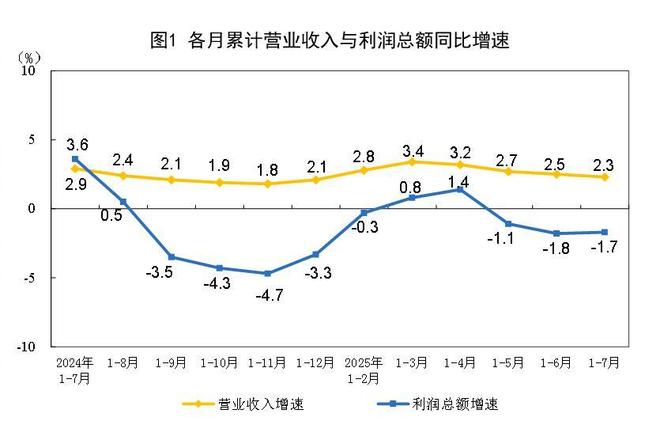
1-7月份全国规上工业企业实现利润总额40203.5亿元
Zhong Guo Xin Wen Wang· 2025-08-27 01:49
Core Insights - In the first seven months of the year, the total profit of large-scale industrial enterprises in China reached 40,203.5 billion yuan, a year-on-year decrease of 1.7% [1] Group 1: Profit by Ownership Type - State-controlled enterprises reported a total profit of 12,823.4 billion yuan, down 7.5% year-on-year [1] - Joint-stock enterprises achieved a total profit of 29,742.5 billion yuan, a decline of 2.8% [1] - Foreign and Hong Kong, Macao, and Taiwan-invested enterprises saw profits of 10,216.7 billion yuan, an increase of 1.8% [1] - Private enterprises reported a profit of 11,183.7 billion yuan, also up by 1.8% [1] Group 2: Profit by Industry - The mining industry experienced a profit of 4,930.9 billion yuan, down 31.6% year-on-year [2] - The manufacturing sector achieved a profit of 30,235.8 billion yuan, an increase of 4.8% [2] - The electricity, heat, gas, and water production and supply industry reported a profit of 5,036.8 billion yuan, up 3.9% [2] Group 3: Revenue and Costs - Large-scale industrial enterprises generated operating revenue of 78.07 trillion yuan, a year-on-year increase of 2.3% [2] - Operating costs amounted to 66.80 trillion yuan, reflecting a growth of 2.5% [2] - The operating profit margin was 5.15%, a decrease of 0.21 percentage points year-on-year [2] Group 4: Financial Ratios and Metrics - As of the end of July, total assets of large-scale industrial enterprises reached 183.67 trillion yuan, a year-on-year increase of 4.9% [2] - Total liabilities were 106.26 trillion yuan, up 5.1% [2] - The equity totaled 77.41 trillion yuan, reflecting a growth of 4.6% [2] - The asset-liability ratio stood at 57.9%, an increase of 0.2 percentage points year-on-year [2] Group 5: Accounts Receivable and Inventory - Accounts receivable amounted to 26.84 trillion yuan, a year-on-year increase of 6.8% [3] - Finished goods inventory was 6.67 trillion yuan, up 2.4% [3] - The average collection period for accounts receivable was 69.8 days, an increase of 3.7 days year-on-year [3]