
高等教育

Search documents
编校本教材,搭家校平台——山东高校精细就业服务一线见闻
Xin Hua Wang· 2025-10-30 10:41
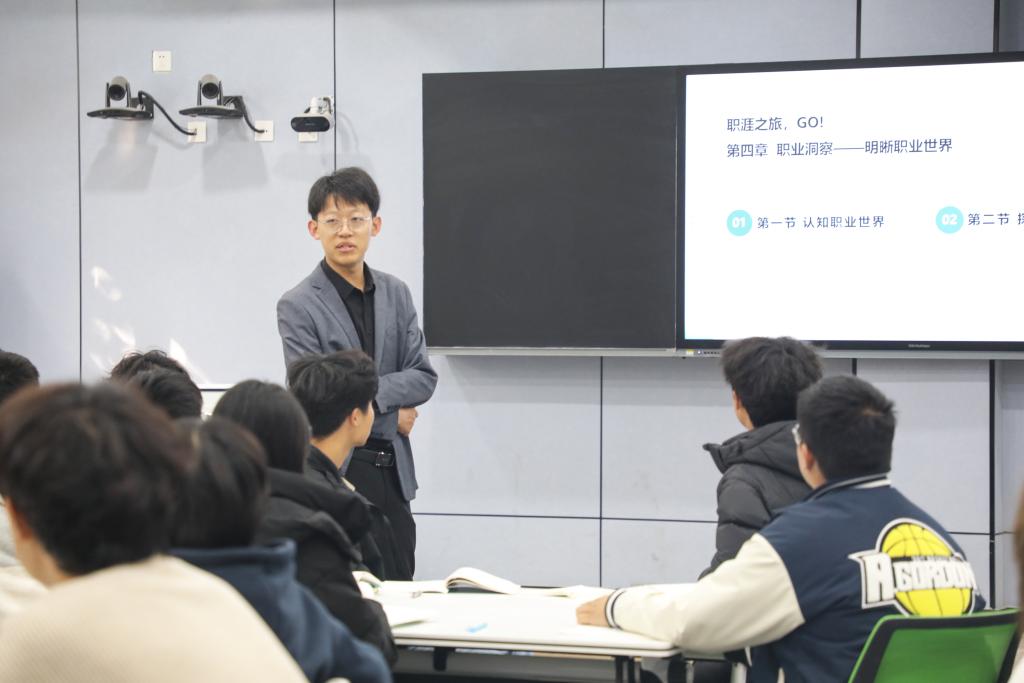
新华社济南10月30日电 题:编校本教材,搭家校平台——山东高校精细就业服务一线见闻 新华社记者张力元 青岛科技大学学生工作处处长王丽介绍,近3年,学校与企业共建实习实训基地超400个,累计组织学生实习实训2万余人次,形成从"人才培 养"到"人才输送"的有效衔接;聘请50余名优秀校友担任"引才推荐大使",使"校友反哺"发挥作用。 记者从山东省教育厅高校学生处了解到,自2024年秋季学期以来,山东高校共举办线下校园招聘活动1500余场,常态化举办线上"双选"会,加强 供需对接。山东省教育厅高校学生处处长梁立波说:"除引导毕业生市场化、社会化就业外,我们鼓励高校多渠道、多形式开发一批辅助类就业岗 位,如管理助理、教学助理、科研助理等,为推动毕业生就业开辟更广阔的空间、提供更有力的支撑。" "让身边人讲述身边事,可以提升学生对这门课的兴趣,更好地发挥案例指导作用和朋辈引领力量。"贾云超说。 教材主编、学生工作处学生职业发展中心副主任陶珊珊介绍,平日里,常有学生问"创业失败了怎么办""在基层工作会遇到哪些困难"等问题,老 师难以回答。为做好精细化服务、助力学子高质量充分就业,2024年,聊城大学9名教师开始自编教材, ...

“十四五”首都高校答卷|北京联大:走应用型大学特色发展之路
Xin Jing Bao· 2025-10-30 10:25
Core Insights - Beijing Union University is focusing on high-quality development during the "14th Five-Year Plan" period, emphasizing the cultivation of applied talents and the integration of technology and industry [1][4]. Group 1: Talent Development - The university has established a comprehensive talent cultivation system from associate degree to doctoral level, marking a significant milestone with the approval of two new doctoral programs [2]. - The university has seen an increase in graduate students, surpassing 1,500, and has been recognized as a recommended institution for outstanding undergraduate students to pursue master's degrees without examination [2]. - Interdisciplinary collaboration is evident in projects like the "Beijing Community Elderly Care Resource Optimization Platform," showcasing the university's commitment to solving social issues through technology [2][3]. Group 2: Academic and Research Achievements - Over the past five years, the university has added 17 national and municipal first-class undergraduate programs and established 26 micro-specialties, aligning closely with Beijing's development needs [3]. - The university's research funding has reached 850 million yuan, with 54 major national and provincial projects undertaken, reflecting a shift from quantity to practical value in research output [4]. - The transformation of scientific achievements has resulted in a 60% increase in the amount of technology transfer and service, demonstrating the university's impact on the capital's development [4]. Group 3: Community and International Engagement - The university has signed cooperation agreements with 8 local governments and 43 enterprises, positioning itself as a strategic partner in the development of the capital [5]. - In terms of internationalization, the university has established 41 new inter-institutional agreements and has over 100 student exchange programs [6]. - Governance modernization efforts have improved administrative efficiency, allowing faculty to focus more on teaching and research [6].
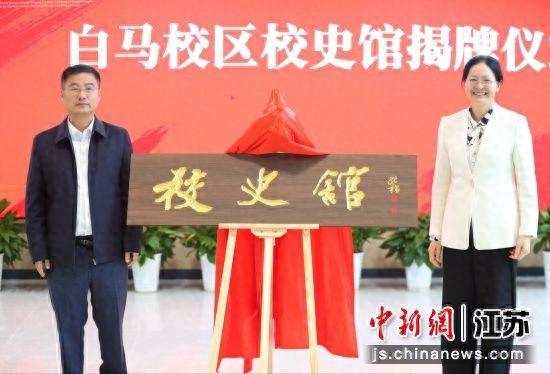
南林白马校区校史馆开馆 林业史料展银杏邮票展启幕
Zhong Guo Xin Wen Wang· 2025-10-30 10:17
Core Points - Nanjing Forestry University held the opening ceremony of its history museum and launched two exhibitions on modern forestry history and ginkgo postage stamps [1][5][6] Group 1: Event Overview - The opening ceremony took place at the Baima campus library, featuring the unveiling of the history museum and the initiation of two thematic exhibitions [1][3] - Vice President Zhang Xiaoqin and Tang Jinhui jointly unveiled the history museum, emphasizing the university's long-standing heritage and the importance of integrating historical spirit into personal and institutional development [3][5] Group 2: Exhibitions and Contributions - The exhibitions include a comprehensive display of China's forestry development history and a collection of ginkgo-themed postage stamps donated by researcher Wang Xiqun [5][6] - The university's library, museum, and archives presented valuable books such as the inaugural issues of "Forest" and "Forestry" to the Baima campus [5][6] - A performance titled "Green Symphony Across Time and Space" was presented by students from the university's drama club during the ceremony [5]
优质本科持续扩招,多所双一流高校建设新校区
Di Yi Cai Jing· 2025-10-30 07:19
Core Insights - The Chinese government aims to enhance the quality and expand the scale of undergraduate education, with a focus on increasing enrollment in high-quality institutions [2][3] Group 1: Expansion of Quality Undergraduate Education - The government plans to continue expanding the enrollment scale of quality undergraduate programs, targeting an increase of 20,000 students this year following last year's increase of 16,000 [2][3] - Major universities, including Tsinghua University, Peking University, and Shanghai Jiao Tong University, have announced plans to increase their undergraduate enrollment by 150 students each [3] Group 2: Focus on Strategic Fields - The expansion of quality undergraduate programs will prioritize fields aligned with national strategic needs, particularly in emerging technologies such as artificial intelligence, integrated circuits, and biomedicine [3][5] - New research-oriented universities are emerging, attracting high-scoring students and competing with traditional prestigious institutions [4] Group 3: Curriculum and Professional Development - The Ministry of Education has issued guidelines to optimize professional settings based on national strategies and market demands, emphasizing the need for interdisciplinary and emerging professional fields [5] - Universities are encouraged to develop programs in strategic emerging industries, including AI, biotechnology, and renewable energy, to meet national talent needs [5] Group 4: New Campuses and Facilities - Several top-tier universities are establishing new campuses to accommodate the growing enrollment and focus on interdisciplinary studies [6] - For instance, Huazhong Normal University is developing a new campus that will focus on key areas such as AI and integrated circuits, aiming to cultivate innovative talent [6]
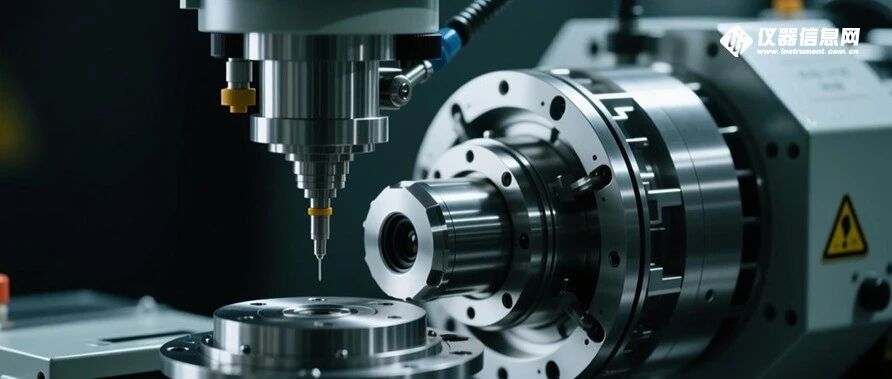
1.05亿元!重庆工商大学采购大批仪器(含设备更新)
仪器信息网· 2025-10-30 03:57
Core Insights - Chongqing Technology and Business University has announced procurement intentions for 18 types of laboratory instruments, with a total budget of 105 million yuan [2][3]. Instrument Procurement Overview - The procurement includes advanced instruments such as: - Full-function stability analyzers - TGA-DSC synchronous thermal analyzers - X-ray diffraction equipment - Atomic absorption spectrophotometers - High-resolution gas chromatography-mass spectrometry (GC-MS) - Liquid chromatography-inductively coupled plasma mass spectrometry (LC-ICP-MS) [3][4][5][6]. Instrument Descriptions - **TGA-DSC Synchronous Thermal Analyzer**: This device measures changes in mass and heat flow simultaneously, allowing for precise analysis of material properties during thermal processes [4]. - **LC-ICP-MS**: Recognized as the gold standard for elemental speciation analysis, it enables the differentiation between toxic and non-toxic forms of elements, crucial for food safety and environmental monitoring [5]. - **Full-function Stability Analyzer**: Designed for stability testing of liquid samples, it provides early qualitative and quantitative analysis of instability phenomena, significantly reducing experimental time [7]. Related Procurement Projects - The university plans to procure a range of instruments to support various academic programs, including: - Food safety and detection platforms - Food processing and analysis teaching platforms - Waste oil resource recovery technology platforms [8][10][11]. Research and Development Focus - Chongqing Technology and Business University emphasizes interdisciplinary collaboration and innovation in fields such as catalysis, environmental materials, and low-carbon molecular transformation, supported by high-level research platforms [21].
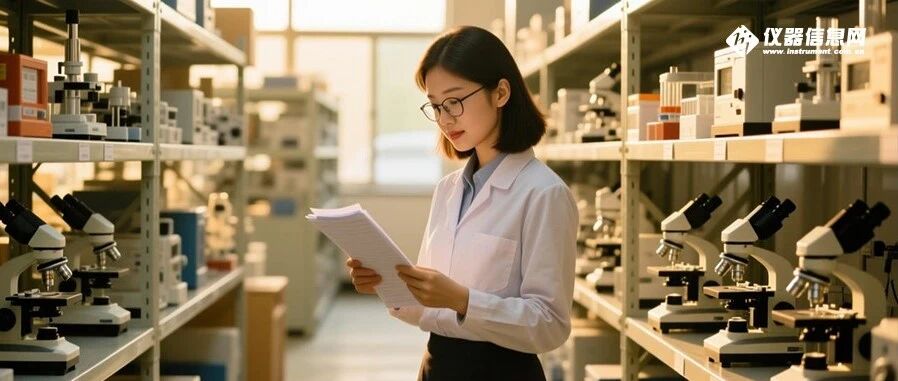
1.11亿元!重庆大学采购大批仪器(含国家级项目)
仪器信息网· 2025-10-30 03:57
Core Insights - Chongqing University has announced 25 procurement intentions for laboratory instruments and equipment, with a total budget of 111 million yuan [2][3] - The procurement includes advanced systems for monitoring geological disasters, biochemical analysis, and molecular interaction analysis, indicating a focus on enhancing research capabilities in various scientific fields [2][3][4] Procurement Overview - The total budget for the procurement is 111 million yuan, covering various high-tech instruments such as: - Multi-parameter fiber optic monitoring systems for mining disaster dynamics - Automated biochemical analyzers capable of processing 200-400 samples per hour [2][3] - Surface plasmon resonance (SPR) analyzers for real-time monitoring of molecular interactions [6][7] Instrument Descriptions - **Automated Biochemical Analyzer**: Core device in clinical testing, capable of detecting over 100 biochemical indicators with high throughput and precision [3] - **Laser Scanning Confocal Microscope**: High-resolution imaging technology for precise observation of microscopic structures, widely used in biomedical research [4] - **SPR Molecular Interaction Analyzer**: Cutting-edge equipment for real-time, label-free detection of biomolecular interactions, crucial for drug development [6] Specific Procurement Items - **Geological Monitoring Systems**: Includes dynamic strain monitoring and fluid flow monitoring systems, aimed at enhancing safety in mining operations [8] - **Complex Condition Drilling Simulation Systems**: Designed to simulate drilling parameters and responses to geological anomalies [8] - **Integrated CO2 Fracturing and Sequestration Simulation Systems**: Capable of simulating deep geological environments and studying CO2 injection processes [9] Research and Development Focus - Chongqing University is recognized for its strong engineering programs and research capabilities, with significant funding and a high employment rate for graduates [17] - The university aims to enhance its research infrastructure through these procurements, supporting advancements in high-end manufacturing and information technology sectors [17]
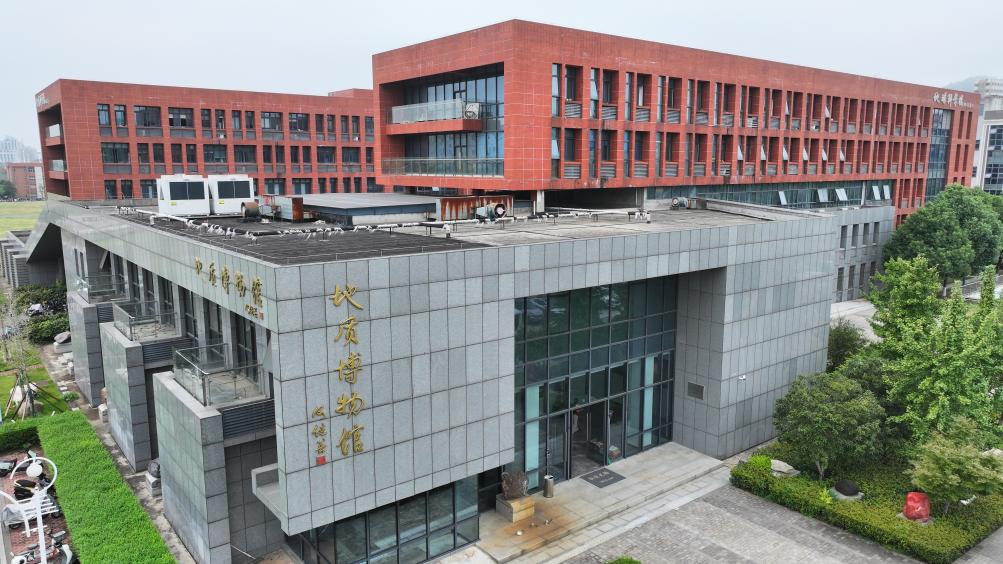
校馆弦歌丨中南大学地质博物馆:追寻地质报国足迹
Xin Hua Wang· 2025-10-30 02:46
Core Viewpoint - The article highlights the significance of the Central South University Geological Museum as a representation of China's geological and mineral resource development, emphasizing the spirit of dedication to the nation that has been passed down through generations [1][3]. Group 1: Museum Overview - The Central South University Geological Museum was established in 1952, originally as the Geological Exhibition Hall of the Central South Mining and Metallurgy Institute [5]. - The museum features a "Mineral and Ore Deposits Hall" that showcases various typical mineral deposits, reflecting the efforts of Chinese geologists in searching for mineral resources under challenging conditions [5]. Group 2: Educational and Cultural Significance - The museum serves as a "time tunnel" that encapsulates the development of China's geological and mineral industries, embodying the university's philosophy of "unity of knowledge and action" [3]. - The exhibits in the museum are designed to educate visitors about the historical and ongoing contributions of geologists to the nation's resource exploration [5].
江苏—非洲高校合作联盟成立
Ren Min Ri Bao· 2025-10-29 22:54
Group 1 - The Jiangsu-Africa Higher Education Cooperation Alliance was established, marking a new phase of systematic and scaled development in higher education collaboration between Jiangsu and Africa [1] - Since 2023, Jiangsu's International Industry-Academia-Research Cooperation Week has successfully held two sessions, resulting in over 100 international cooperation agreements and the involvement of more than 300 outstanding foreign industry mentors [1] - The alliance includes 13 universities from Jiangsu and 23 universities from 13 African countries, focusing on joint talent cultivation, technological innovation cooperation, and cultural exchanges [1] Group 2 - The "Top Ten Cooperation Achievements of Jiangsu Universities in Industry-Academia-Research" were announced during the opening ceremony, highlighting significant collaborative efforts [2] - The China-Portugal Cultural Heritage Protection Science "Belt and Road" Joint Laboratory, led by Suzhou University, is the only national-level joint laboratory in the field of architectural cultural heritage protection in China [2] - Since its establishment, the laboratory has implemented 16 projects related to world heritage and key building renovations, and has developed 26 patents in the area of new materials for heritage protection [2]
博通股份(600455)2025年三季报点评:二期项目进展顺利 业绩释放明显提速
Xin Lang Cai Jing· 2025-10-29 12:23
Core Viewpoint - The company, recognized as the "first stock in higher education" in the A-share market, has demonstrated steady growth and accelerated performance release in its core higher education business, driven by an increase in student enrollment [1] Financial Performance - For the period of January to September 2025, the company achieved operating revenue of 224 million yuan, a year-on-year increase of 6.01%, and a net profit attributable to shareholders of 29 million yuan, up 25.63% year-on-year [1] - Earnings per share (EPS) for the same period was 0.46 yuan, reflecting a year-on-year growth of 25.64% [1] - The operating revenue for the years 2023 to 2025 (January to September) was 263 million yuan, 287 million yuan, and 224 million yuan, with respective year-on-year growth rates of 10.71%, 9.15%, and 6.01% [1] - The net profit attributable to shareholders for the same years was 41 million yuan, 46 million yuan, and 29 million yuan, with year-on-year growth rates of 5.69%, 15.68%, and 25.63% [1] Profitability and Cost Control - The company's gross profit margin for January to September 2025 was 53.13%, an increase of 2 percentage points year-on-year, and a quarter-on-quarter increase of 1.27 percentage points [2] - The net profit margin was 12.85%, up 2.01 percentage points year-on-year and 1.41 percentage points quarter-on-quarter [2] - The company effectively controlled expenses, with a total expense ratio of 35.26%, down 1.31 percentage points year-on-year and 0.71 percentage points quarter-on-quarter [2] - Management expenses (including R&D) accounted for 33.16% of revenue, decreasing by 1.09 percentage points year-on-year and 0.51 percentage points quarter-on-quarter [2] Project Development and Financial Position - The company is actively advancing the construction of its second phase project for the urban college, with construction in progress increasing significantly [2] - As of September 2025, the balance of construction in progress was 461 million yuan, a year-on-year increase of 61.78% [2] - Long-term borrowings increased significantly to 141 million yuan, a year-on-year increase of 225.66%, leading to a notable rise in the company's debt-to-asset ratio [2] - The debt-to-asset ratio as of September 2025 was 67.42%, up 3.36 percentage points year-on-year and 3.48 percentage points quarter-on-quarter [2] Cash Flow and Future Growth - The company's cash flow remains strong, supported by a prepayment system in its core higher education business [3] - The cash collection ratio for January to September 2025 was 113.61%, a decrease of 5.15 percentage points year-on-year but an increase of 10.68 percentage points quarter-on-quarter [3] - Contract liabilities grew steadily, reaching 223 million yuan as of September 2025, a year-on-year increase of 0.45% and a quarter-on-quarter increase of 16.75%, enhancing the certainty of future performance [3] Investment Outlook - Revenue projections for 2025 to 2027 are estimated at 313 million yuan, 338 million yuan, and 361 million yuan, with EPS expected to be 0.54 yuan, 0.63 yuan, and 0.69 yuan, respectively [3] - The company is well-positioned for future growth, leveraging its strategic partnership with Xi'an Jiaotong University and the rapid progress of its urban college phase two project [3]

博通股份(600455):二期项目进展顺利,业绩释放明显提速
Minsheng Securities· 2025-10-29 08:24
Investment Rating - The report maintains a "Cautious Recommendation" rating for the company [7]. Core Views - The company has shown steady growth in its core higher education business, with significant performance acceleration in recent quarters. For the first nine months of 2025, the company achieved revenue of 224 million yuan, a year-on-year increase of 6.01%, and a net profit of 29 million yuan, up 25.63% year-on-year [1][4]. - The company's profitability has improved significantly, with a gross margin of 53.13%, up 2 percentage points year-on-year, and a net profit margin of 12.85%, an increase of 2.01 percentage points year-on-year [2]. - The second phase of the urban college project is progressing rapidly, with construction in progress increasing by 61.78% year-on-year, leading to a significant rise in the company's debt levels [3]. - The company's cash flow remains strong, supported by a prepayment system in its higher education business, with a cash collection ratio of 113.61% for the first nine months of 2025 [4]. Summary by Sections Financial Performance - For the first nine months of 2025, the company reported revenues of 224 million yuan, with a year-on-year growth of 6.01%. The net profit was 29 million yuan, reflecting a 25.63% increase year-on-year. The earnings per share (EPS) reached 0.46 yuan, up 25.64% [1]. - The gross margin improved to 53.13%, and the net profit margin reached 12.85%, indicating better cost control and profitability [2]. Project Development - The second phase of the urban college project is advancing quickly, with construction in progress valued at 461 million yuan, a 61.78% increase year-on-year. Long-term borrowings have surged by 225.66% to 141 million yuan due to project financing needs [3]. Cash Flow and Liabilities - The company maintains a healthy cash flow, with a cash collection ratio of 113.61%. Contract liabilities have also grown, reaching 223 million yuan, which enhances future revenue certainty [4]. Future Outlook - Revenue projections for 2025-2027 are estimated at 313 million yuan, 338 million yuan, and 361 million yuan, respectively, with EPS expected to grow to 0.54 yuan, 0.63 yuan, and 0.69 yuan. The dynamic price-to-earnings (PE) ratios are forecasted to be 52, 45, and 40 [6][4].