
养老服务

Search documents
注入“金融活水”,守护“沂蒙夕阳红”! 临沂:做好养老金融大文章,打造银发经济新高地
Qi Lu Wan Bao· 2025-09-27 03:21
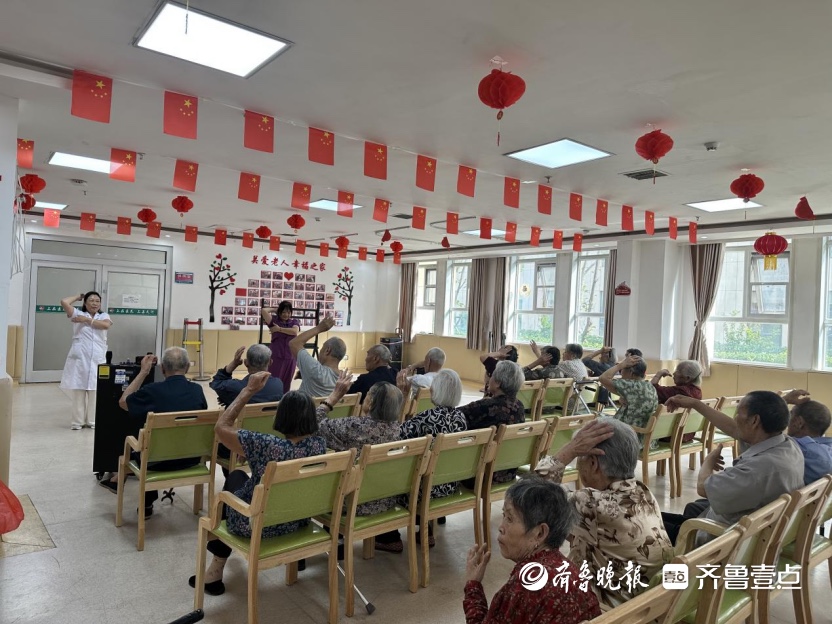
Group 1 - The aging population in Shandong, particularly in Linyi, is a significant concern, with 2.6335 million elderly people aged 60 and above, accounting for 1/9 of the province's elderly population [1] - Financial services are playing a crucial role in supporting the elderly care system, providing essential resources to ensure the well-being of the aging population [1] Group 2 - The Tianhe Elderly Care Service Center in Yinan County provides care for over 770 underprivileged elderly individuals, including veterans and elderly party members, and offers various services such as meal assistance and health recovery [2][3] - The center has received a 10 million yuan preferential loan from a local bank, which has helped address funding challenges for facility improvements [3] Group 3 - The Linyi City Investment Nursing Home has 1,020 beds and offers comprehensive medical and nursing services for elderly individuals with disabilities and chronic illnesses, supported by an 850 million yuan loan from the Industrial and Commercial Bank of China [4] Group 4 - The Shandong Puzhe (Menglianggu) Health Industry Park is showcasing various elder-friendly products, with initial funding of 100 million yuan from the Agricultural Development Bank to support its development [7][9] - The park aims to promote the health and elderly care industry, creating job opportunities and enhancing rural living standards [9] Group 5 - Financial institutions are actively engaging in the elderly care sector, with the Agricultural Bank of China in Linyi promoting personal pension accounts and providing loans totaling 329 million yuan for elderly care services [11] - The bank has also introduced innovative financial products to meet the diverse needs of elderly clients [11] Group 6 - The People's Bank of China in Linyi is focusing on three main lines of financial services: pension finance, elderly care industry finance, and elderly service finance, with a total loan balance of 1.21 billion yuan for the elderly care industry, reflecting a 24.7% year-on-year increase [13]

专家:银发经济为青年就业提供“新风口”
Zhong Guo Xin Wen Wang· 2025-09-26 15:32
Core Insights - The silver economy is transitioning from traditional "basic保障型" services to "quality, diversified, and digital" services, driven by accelerated aging and consumption upgrades, becoming a significant engine for domestic demand and creating new career opportunities for youth [1][2] Demographic Trends - By the end of 2024, the elderly population aged 60 and above in China is projected to reach 310 million, accounting for 22.0% of the total population, with those aged 65 and above reaching 220 million, or 15.6% of the total [1] Industry Growth - The large elderly demographic is shifting consumption from "survival" to "development," leading to explosive growth in industries such as elderly care services, health management, senior cultural tourism, and age-friendly technology [1] Policy Support - In 2024, the State Council will issue opinions on developing the silver economy to enhance the well-being of the elderly, with various departments collaborating to introduce new professions, including elderly care service providers, and actively cultivating talent [1] Youth Involvement - New services and positions are emerging, attracting a significant number of young people into the sector, with over 80% of employees in some organizations being born after 1995 [2] Professional Advantages - Young professionals bring several advantages to the elderly care industry, including higher educational levels, the ability to adopt new knowledge and technologies, and a vibrant approach that helps alleviate loneliness among the elderly [2][3] Employment Opportunities - The silver economy is not only a strategy to address demographic changes but also an opportunity for optimizing employment structures and upgrading industries, with youth playing a crucial role in enhancing service levels through innovation [3]
济南工行以“普惠+养老”服务范式赋能银发经济
Qi Lu Wan Bao· 2025-09-26 07:26
Group 1 - The article emphasizes the importance of developing the elderly care industry for national economic stability, social security, and public welfare [1] - Jinan's Industrial and Commercial Bank (ICBC) is expanding its cooperation with government data to support the elderly care sector through innovative financial models [1][4] - Jinan Qingzhao Medical Care Co., Ltd. operates a comprehensive elderly care facility with 700 beds, focusing on integrated medical and elderly care services [1] Group 2 - Qingzhao Medical Care faced a temporary funding issue for purchasing medical equipment but received a quick response from ICBC, which provided a 3 million yuan credit loan [1][4] - The "Qianrong e-loan" product is an online, intelligent financing solution that allows eligible clients to receive loans instantly without collateral [4] - ICBC plans to continue enhancing its financial services to support the high-quality development of the elderly care industry and promote an age-friendly society in Jinan [4]

20万亿的银发经济,为何跑不出一个“阳光下的巨头”?
Xin Lang Cai Jing· 2025-09-26 05:24
Group 1: Company Overview - The company "足力健" (Zulijian) transitioned from a focus on elderly shoes to organic food, opening over 30 organic food member stores in Zhengzhou since May 2023 [1] - The brand was founded in 2014 by Zhang Jingkang, who identified a gap in the market for shoes suitable for the elderly, leading to the development of specialized footwear [2][3] - By 2018, the company's revenue reached 1.8 billion yuan, a 30-fold increase from the previous year, and by 2019, revenue hit 4 billion yuan with around 5,000 stores nationwide [3][4] Group 2: Challenges and Decline - The company faced significant challenges starting in 2019, including product quality issues that led to regulatory scrutiny and a decline in consumer trust [4][5] - The COVID-19 pandemic severely impacted sales, resulting in many store closures and financial difficulties, with the company reportedly using 70%-80% of its annual revenue to pay off debts [4][5] - As of 2024, the company still has approximately 700 million yuan in debt, and its reputation has suffered due to past quality control failures [4][5] Group 3: Market Context - The silver economy in China is expanding, with over 300 million people aged 60 and above, representing 22% of the population, and the market size estimated at around 7 trillion yuan [6][7] - Despite the growth potential, the market is fragmented, with significant disparities in income among the elderly population, complicating the landscape for companies targeting this demographic [8][9] - The elderly consumer market is characterized by a high savings rate but also a significant portion of low-income individuals, leading to mismatches in supply and demand for products and services [8][9] Group 4: Industry Trends - The rapid growth of the elderly population has led to increased interest in the silver economy, but the market lacks dominant players, with many smaller companies emerging [6][7] - The healthcare and wellness sectors are seeing growth due to the aging population, but the market is also crowded with low-quality products and misleading marketing practices [10][11] - Complaints about health products targeting the elderly have surged, with over 70% of complaints related to false advertising, indicating a need for better regulation and consumer protection [12]
暖“夕阳”,护“朝阳”,一老一小消费忙
Sou Hu Cai Jing· 2025-09-26 00:15
Group 1: Silver Economy and Consumer Trends - The "silver economy" is a significant driver for improving livelihoods and transforming consumption patterns, with over 310 million people aged 60 and above in China, leading to a booming market for senior services [2] - The silver economy is projected to exceed 30 trillion yuan by 2035, indicating substantial growth potential in this sector [2] - Recent policies aim to enhance service supply for the elderly, focusing on training for caregivers and supporting the construction of facilities in culture, tourism, and healthcare [2] Group 2: Innovations in Elderly Services - Various regions are implementing tailored strategies to improve elderly service offerings, such as Zhejiang's encouragement of professional elderly care institutions and Henan's development of smart elderly service networks [2] - Private enterprises are also adapting to the needs of the elderly, with Didi Chuxing launching a "Didi Senior Version" app to facilitate easier transportation for older users [2][3] Group 3: Childcare Services and Market Potential - The childcare market is expanding, with nearly 30 million children under three years old in China, and policies are being introduced to strengthen the inclusive childcare service system [4] - Community-based childcare services are being developed, such as the "Baby House" initiative in Yinchuan, which provides embedded childcare services for families with young children [5] Group 4: Policy Support and Future Directions - The government is focusing on enhancing both supply and demand for childcare services, promoting community-based and family-oriented childcare solutions [6] - Recent initiatives aim to create a comprehensive "15-minute convenience living circle" that caters to both elderly and childcare services, reflecting a shift towards a more inclusive consumer landscape [6]

悦心健康:上海奉贤金海悦心颐养院核定床位数约310张
Zheng Quan Ri Bao Zhi Sheng· 2025-09-25 11:17
Core Viewpoint - Yueshen Health announced the establishment of multiple healthcare facilities with a total of approximately 2,160 beds across different locations in China, indicating a significant expansion in the elder care sector [1] Group 1: Facility Details - Shanghai Fengxian Jinhai Yueshen Nursing Home has a confirmed capacity of about 310 beds [1] - Jiangsu Suqian Yueshen·Sihong Health Center has opened 220 beds under a universal pension scheme [1] - Zhejiang Wenzhou Longgang Medical and Health Education Demonstration Park features 610 beds, comprising 350 beds for elderly care and 260 beds for nursing care [1] - Zhejiang Kangrui Jia Health Management Co., Ltd. operates a total of 1,000 beds [1]

悦心健康:公司计划通过技术创新和合作进一步拓展智慧养老场景
Zheng Quan Ri Bao Wang· 2025-09-25 11:11
Core Viewpoint - The company plans to expand its smart elderly care scenarios through technological innovation and collaboration [1] Group 1: Company Strategy - The company aims to enhance service quality and reduce management costs by utilizing intelligent devices focused on elderly care service applications [1]
悦心健康:养老机构业务收费主要包括床位费、护理费、餐费及增值服务费
Zheng Quan Ri Bao Wang· 2025-09-25 11:11
Core Insights - The company, Yuexin Health, announced on September 25 that its elderly care service fees primarily consist of bed fees, nursing fees, meal fees, and value-added service fees, which cater to the personalized needs of the elderly [1] - The Jin Hai Yuexin Nursing Home in Shanghai's Fengxian District charges an average monthly fee ranging from 4,000 to 8,000 yuan, adhering to government pricing standards [1] - The pricing for the Yuexin Sihong Health Center in Jiangsu and the Wenzhou Longgang Medical and Health Education Demonstration Park in Zhejiang is determined based on local government guidelines and economic conditions [1]
悦心健康:公司运营的养老机构入住率较高
Zheng Quan Ri Bao Wang· 2025-09-25 11:11
Group 1 - The core viewpoint of the article highlights the high occupancy rates of the elderly care facilities operated by the company, indicating strong demand and positive service reputation [1] Group 2 - The Shanghai Fengxian Jinhai Yueshin Nursing Home, which began operations in October 2021, has achieved an occupancy rate of over 95% [1] - The Zhejiang Wenzhou Longgang City Medical Care and Education Demonstration Park has been in operation for one and a half years, with an occupancy rate of over 60% [1]
悦心健康(002162) - 002162悦心健康调研活动信息20250925
2025-09-25 07:08
Group 1: Company Overview and Business Model - The company adopts a "medical care, health education, and research" integrated model for its health and wellness business, focusing on standardization and replicable light asset management [2] - Current operational projects include Shanghai Fengxian Jinhai Yuxin Nursing Home, Jiangsu Suqian Yuxin Sihong Health Center, and Zhejiang Wenzhou Longgang Medical and Health Education Research Demonstration Park [2][3] Group 2: Operational Capacity and Performance - The Shanghai Fengxian Jinhai Yuxin Nursing Home has approximately 310 approved beds, while the Jiangsu Suqian Yuxin Sihong Health Center has 220 beds, and the Zhejiang Wenzhou Longgang facility has 610 beds (350 for elderly care and 260 for nursing) [3] - The occupancy rate of the Shanghai Fengxian Jinhai Yuxin Nursing Home has reached over 95% since its operation began in October 2021, while the Zhejiang facility has achieved over 60% occupancy after one and a half years of operation [4] Group 3: Pricing Structure - The pricing for nursing institutions includes bed fees, nursing fees, meal fees, and value-added service fees, with the average monthly cost in Shanghai ranging from 4,000 to 8,000 RMB [5] Group 4: Technological Innovations - In April 2025, the company established a strategic partnership with Jinshi Robotics and Shanghai University to develop smart rehabilitation robots and enhance digital and intelligent services in elderly care [6] - The company is currently in the technology research and development phase, focusing on integrating smart technology into elderly care services [7] Group 5: Impact of Smart Technology - The introduction of smart devices aims to enhance service quality and reduce management costs in elderly care settings [8]