啤酒

Search documents
占据40%市场,日本朝日集团终于道歉:大批客户信息泄露,股价竟反弹创新高
Sou Hu Cai Jing· 2025-11-27 21:22
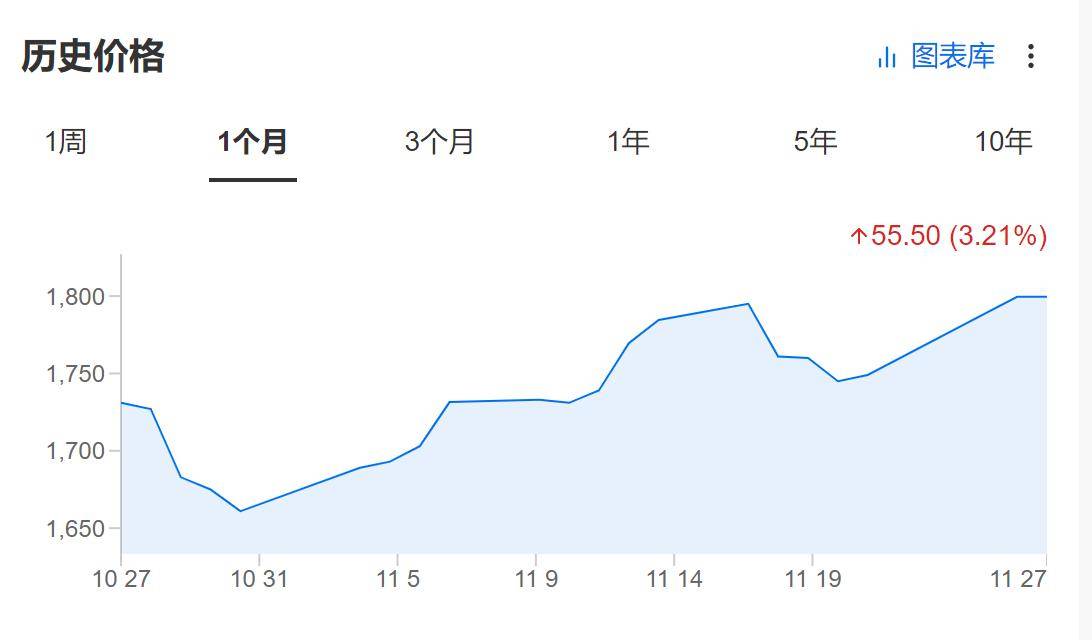
Core Points - Asahi Group apologized for a cyber attack that led to the leakage of 1.914 million personal information records of customers and employees [1] - The company’s president publicly addressed the situation for the first time since the system failure on September 29 [1] - The leaked information includes 1.525 million customer-related records, containing names, addresses, and phone numbers [1] - The hacker group "Qilin" claimed responsibility, stating they stole approximately 9,300 internal documents and released images of employee personal information [1] - Asahi Group holds about 40% market share in the Japanese beer market, leading competitors such as Kirin, Suntory, and Sapporo [1] - Following the incident, Asahi Group's stock price initially dropped but has since recovered, reaching a new high in the rebound phase [1]

日本朝日集团道歉
第一财经· 2025-11-27 15:03
Group 1 - The core issue is a data breach at Asahi Group, affecting 1.914 million personal information records due to a cyber attack, with the company’s president publicly apologizing for the incident [3][4]. - Among the leaked information, 1.525 million records pertain to customers, including names, addresses, and phone numbers [4]. - The hacker group "Qilin" claimed responsibility, stating they stole approximately 9,300 internal documents and released images of employee personal information [4]. Group 2 - The incident marks the first public acknowledgment from Asahi Group's management since the system failure began on September 29 [3].

百威中国荣获“2025年度卓越品质引领奖”
Jing Ji Guan Cha Wang· 2025-11-27 12:09
Core Viewpoint - The "2025 New Consumption Summit Forum" successfully concluded in Beijing, highlighting the importance of quality and sustainable development in the consumer industry [1] Group 1 - Budweiser Investment (China) Co., Ltd. was awarded the "Excellence Quality Leading Award" at the forum for its outstanding quality and sustainable development practices [1]

青岛啤酒:关于使用自有资金认购理财产品的公告
Zheng Quan Ri Bao Zhi Sheng· 2025-11-27 12:09
Core Viewpoint - Qingdao Beer announced plans to invest idle funds in financial products, with a maximum daily balance of up to RMB 10 billion, from December 1, 2025, to November 30, 2026, allowing for fund recycling [1] Summary by Category - **Investment Plans** - The company intends to utilize idle self-owned funds for financial investments [1] - The maximum daily balance for these investments is set at RMB 10 billion [1] - The investment period is from December 1, 2025, to November 30, 2026, with the funds being recyclable [1]
青岛啤酒股份(00168)拟开展理财投资业务
智通财经网· 2025-11-27 09:19
Core Viewpoint - Qingdao Beer Co., Ltd. plans to engage in wealth management investment activities over the next 12 months, selecting reputable financial institutions as trustees [1] Summary by Categories Investment Plans - The company intends to conduct wealth management investment activities from December 1, 2025, to November 30, 2026 [1] - The maximum daily balance for these investment activities will not exceed RMB 10 billion, and the subscribed funds can be recycled [1]
青岛啤酒股份拟开展理财投资业务
Zhi Tong Cai Jing· 2025-11-27 09:19
Core Viewpoint - Qingdao Beer (600600) plans to engage in wealth management investment activities over the next 12 months, selecting reputable financial institutions as trustees [1] Group 1 - The investment period is set from December 1, 2025, to November 30, 2026 [1] - The company will consider various types of financial institutions, including commercial banks, securities firms, fund companies, and asset management companies [1] - The maximum daily balance for wealth management investment activities will not exceed RMB 10 billion, with subscription funds being reusable [1]
青岛啤酒:拟使用不超过100亿元进行理财投资业务
Mei Ri Jing Ji Xin Wen· 2025-11-27 09:12
Core Viewpoint - Qingdao Beer has approved a financial investment plan allowing the use of idle funds for investment activities over the next 12 months, with a maximum daily balance of 10 billion RMB [1] Company Summary - Qingdao Beer announced that its revenue composition for 2024 will be 98.26% from beer sales and 1.74% from other businesses [1] - The company's market capitalization is currently 87.6 billion RMB [1] Financial Strategy - The board approved a plan to utilize idle self-owned funds for financial investments, ensuring liquidity and safety, with the investment period from December 1, 2025, to November 30, 2026 [1] - The approved investment plan does not require shareholder meeting approval [1]
第五届中国新潮品牌大会在上海举行 共探AI与即时零售时代品牌增长新路径
Zheng Quan Ri Bao Wang· 2025-11-27 06:41
Core Insights - The fifth China New Wave Brand Conference, hosted by Chengdu New Wave Media Group, focuses on "AI and the Survival and Growth of Brands in the Instant Retail Era" [1] Group 1: Industry Trends - The consumer goods industry is experiencing innovation driven by digital transformation, new demographics, and new scenarios, leading to the rise of health-oriented and personalized products [1] - Instant retail in China has reached a scale of over 1 trillion, with the potential to capture 20%-25% of the retail market in the future [2] - The shift from "human decision-making" to "AI agent decision-making" is transforming customer acquisition strategies, with blockchain technology reducing traffic costs to nearly zero [2] Group 2: Company Developments - New Wave Media's founder, Zhang Jixue, highlighted the ongoing merger discussions with Focus Media, emphasizing the need for regulatory approval and the company's commitment to independent operations until the merger is finalized [2] - New Wave Media has established a community media network with 700,000 smart elevator screens across over 200 cities, positioning itself as a leader in community media [2] - The company has launched digital product upgrades, focusing on community marketing strategies and a comprehensive digital advertising system that includes user insights, strategy optimization, and performance attribution [3]
在数千家企业中 寻找穿越周期的商业力量
Jing Ji Guan Cha Bao· 2025-11-27 03:31
Core Insights - The conference held by Economic Observer focused on how Chinese enterprises can align with national strategies and innovate to overcome challenges in the digital economy and new production forces [1][2] - The honored companies were selected based on extensive research across thousands of enterprises and key industries, emphasizing their significant impact on China's economy and society [1] - The event highlighted the importance of high-quality development and the role of respected enterprises in driving growth across various sectors, particularly in high-end manufacturing and hard technology [1][2] Group 1: Respected Enterprises - The "2024-2025 Respected Enterprises" and "Respected Leading Enterprises" were recognized for their contributions to the economy, social trust, and innovation [1] - Notable companies included Anta, BYD, Huawei, JD.com, Meituan, Qingdao Beer, China Ping An, and China Feihe, reflecting a diverse range of industries from consumer goods to technology [1] - Companies like Haier Smart Home, Tianqi Lithium, and Prologis China were acknowledged for their special contributions in their respective fields [1] Group 2: Role of Enterprises in Society - Enterprises are seen as vital components of the market economy, contributing not only to economic growth but also to addressing social issues and creating value [2] - The concept of "respected" enterprises now includes a focus on long-termism and the overall welfare of stakeholders, beyond just shareholder returns [2] Group 3: Innovation and Quality - High-quality products and services are fundamental to the reputation of respected enterprises, reflecting their management capabilities and ethical standards [6] - The need for a supportive environment for innovation, including tolerance for failure and encouragement of strategic investments, is emphasized [5] Group 4: Financial Sector Insights - Beijing Bank reported significant growth in technology and green loans, indicating a commitment to supporting the real economy [8] - China Ping An highlighted the transformative potential of AI in the financial sector, focusing on customer-oriented strategies and the integration of advanced technologies [12] Group 5: Regulatory Environment - The importance of antitrust compliance in enhancing product quality and driving industries towards higher standards was discussed [13] - Antitrust laws are seen as catalysts for innovation and quality improvement, helping to eliminate market stagnation caused by monopolistic practices [13] Group 6: Future Outlook - The development of new productive forces through technological self-reliance and innovation is identified as a strategic foundation for enterprises [18] - China's advancements in computing infrastructure and AI technology are expected to disrupt various industries and create new growth opportunities [18]




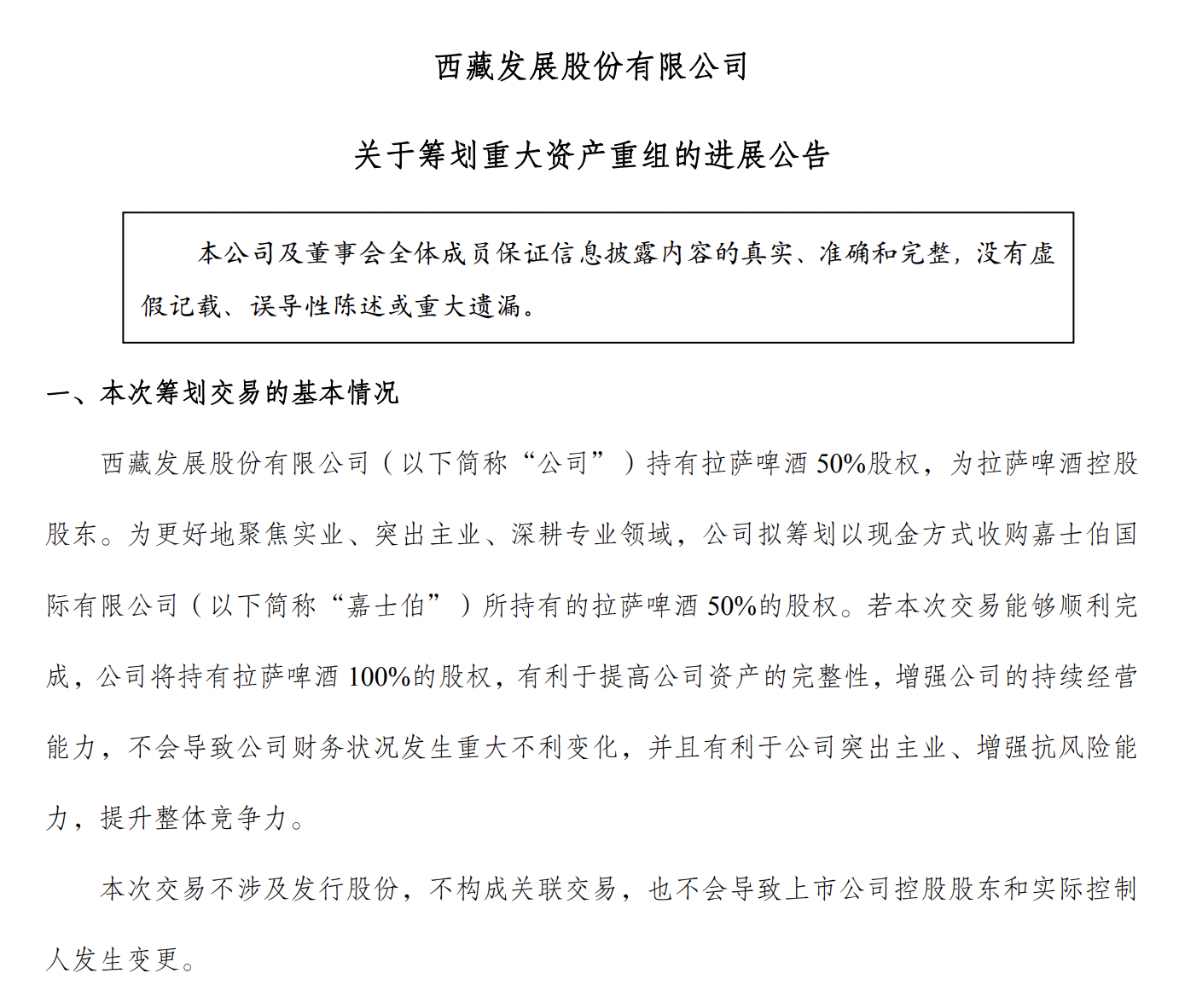
长达近十年,嘉士伯还未甩掉“烫手山芋”拉萨啤酒
Xin Lang Cai Jing· 2025-11-27 01:10
Core Viewpoint - The long-standing equity dispute between Tibet Development (ST Xifa) and Carlsberg over Lhasa Beer is approaching a critical juncture by the end of 2025, with Tibet Development planning to acquire the remaining 50% stake from Carlsberg to achieve full control of Lhasa Beer, enhancing its core business and overall competitiveness [1][4]. Group 1: Background of the Dispute - Lhasa Beer was established in 2004 as a joint venture between Tibet Development and Carlsberg, each holding a 50% stake, with Tibet Development retaining operational control [4]. - The partnership was influenced by the booming Chinese beer market and Carlsberg's strategic shift to invest in western China after 2003 [4]. - Despite initial ambitions, Lhasa Beer has struggled to become an international brand, with Carlsberg expressing intentions to exit as early as 2016 due to unsatisfactory performance and lack of control [5][6]. Group 2: Financial Performance and Challenges - Lhasa Beer experienced declining revenues from 2013 to 2015, with revenues of 447 million, 398 million, and 391 million yuan, and net profits also decreasing during the same period [6]. - In 2022, Lhasa Beer reported a revenue of 337 million yuan, a 21.64% increase year-on-year, and in 2024, revenue reached 421 million yuan, growing by 25.11% [8][9]. - The company has shifted towards high-end products, with the "3650" small bottle beer achieving a revenue increase of 296.50% in 2024 [9]. Group 3: Recent Developments and Future Prospects - The negotiations between Tibet Development and Carlsberg have shifted from confrontation to collaboration, with Tibet Development's board approving the terms for the 50% stake acquisition on July 21, 2025 [11]. - The ongoing restructuring phase for Tibet Development poses risks, including potential bankruptcy, which could affect the planned equity transfer [12]. - The successful acquisition of Lhasa Beer would be crucial for Tibet Development, as it represents a significant portion of its revenue and could enhance market confidence [11].