
Robotics

Search documents
未知机构:中国人形机器人从伟创电气看行业进展CITI的观点-20260121
未知机构· 2026-01-21 02:00
Summary of Key Points from the Conference Call Industry Overview - The focus is on the humanoid robot industry, specifically developments related to Weichuang Electric (688698.SS) and its supply chain involvement with U.S. humanoid robot manufacturers [1][1]. Company Insights - Weichuang Electric is a supplier of variable frequency drives, servo motors, and programmable logic controllers (PLCs) [1][1]. - The company has recently supplied various components such as rotary joint modules, coreless motors, frameless motors, and dexterous hand components to Chinese humanoid robot manufacturers [1][1]. - Weichuang Electric has successfully entered the supply chain of leading U.S. humanoid robot manufacturers by providing micro motors for dexterous hands [1][1]. Management's Key Points - Management expressed greater confidence in the mass production progress of U.S. humanoid robot manufacturers compared to Chinese clients, citing a more rigorous product development process [1][1]. - The capacity demand from the U.S. client is expected to increase tenfold by 2027, from 1,000 units per week in 2026 [1][1]. Strategic Partnerships - Weichuang Electric is collaborating with Rongtai Electric (603119.SS) to develop dexterous hand solutions for U.S. clients [4][4]. - Due to client requirements for all components to be produced outside of China, Weichuang announced plans to establish a joint venture with Rongtai in Thailand [5][5]. Production Requirements - The latest version of the humanoid robot requires each hand to have 22 degrees of freedom (DoF), totaling 44 micro motors for both hands [5][5]. - The U.S. client has requested that Weichuang prepare production capacity by the first half of 2026, aligning with recent industry research findings [5][5]. - Initial production targets are set to support the manufacturing of 1,000 humanoid robots per week, with potential demand increasing to 10,000 units per week by 2027 [5][5]. Valuation Insights - The target price for Hengli Hydraulic (601100.SS) is set at 135.0 CNY, based on a 52x expected P/E ratio for 2026, which is 2.0 standard deviations above its average P/E since 2021 [5][5]. - The target price for Railway Drive (688017.SS) is set at 233 CNY, based on a 233x expected P/E ratio for 2026, reflecting a stronger-than-expected profit recovery and increasing exposure to the humanoid robot business [8][8]. Risks - Key downside risks for Hengli Hydraulic include weak demand for excavator and non-excavator components, reduced profitability due to diminished economies of scale at the ball screw and Mexico plant, and lower-than-expected gross margin improvements from favorable product mix changes [6][6][7]. - For Railway Drive, risks include a slowdown in automation market growth, intensified competition from both domestic and international brands due to industry consolidation, rising raw material costs eroding gross margins, and lower-than-expected contributions from humanoid robots and other emerging applications [9][9].

最近具身求职的同学越来越多了......
具身智能之心· 2026-01-21 00:33
数采方案也从仿真优先慢慢到UMI和更加拟人的方案演变,让数据能够规模化和好用,是各家公司一直探索 的。任务的差异化,也对数据的生产方式有一定的要求。 相比于传统机器人,具身领域的算法则更AI,从VLA、VLN到交互大模型,从强化学习到世界模型。基于 模仿学习和强化学习的方案,正在让模型变得更加泛化。 最近越来越多的同学开始准备具身方向的求职,算法、开发、仿真、强化、市场、产品等。不约而同的都再 问一句话,有没有好的求职指南?这个行业是怎么样的? 这件事情,真的值得梳理一下。 2022年,当大多数人还没意识到"具身智能"即将爆发时,少数开拓者已经在悄悄地摸索着具身机器人的数 据、算法和推理。虽然没有达到那座山,但算法和硬件的高度一直在不断提升,场景也逐渐清晰。 本体层面的稳定性和实用性在陆续提升,从简单的双足、四足机器人,到更精美的人形和移动操作机器人。 场景一直决定着机器人的形态,各家零部件厂商也如雨后春笋般成长,强大的供应链让落地的成本不断下 降。 一个做算法的同学说,如果能把具身的上下游、开发流程、场景和商业化都过一遍就好了。开发的时候既知 道目的,又知道成本,游刃有余。不能管中窥豹,只见一斑。 一个想要 ...


为什么扩散策略在操作任务上表现良好,很难与在线RL结合?
具身智能之心· 2026-01-21 00:33
Core Insights - The article presents a comprehensive review of Online Diffusion Policy Reinforcement Learning (DPRL), highlighting its potential to enhance robotic control through a unified algorithm taxonomy and benchmarking system [2][30]. Group 1: Challenges in Online DPRL - The integration of diffusion strategies with online RL faces three core challenges: incompatibility of training objectives, high computational costs and gradient instability, and insufficient generalization and robustness [4][5]. - The training objective conflict arises from the inherent incompatibility between the denoising training objectives of diffusion models and the policy optimization mechanisms of online RL [5]. - The computational and gradient issues stem from the multi-step backpropagation required for diffusion models, leading to high computational costs and potential gradient vanishing or explosion [5]. Group 2: Algorithm Classification Framework - The paper proposes a classification framework for Online DPRL algorithms, categorizing them into four main families based on their policy improvement mechanisms [7]. - Action-Gradient methods optimize policies directly through action gradients, avoiding the complexities of diffusion chain backpropagation, with algorithms like DIPO and DDiffPG [9]. - Q-Weighting methods modulate diffusion loss using Q-value weights to guide policies towards high-reward areas, represented by algorithms such as QVPO and DPMD [10]. - Proximity-Based methods approximate the calculation of policy probability densities, enhancing performance in large-scale parallel environments, exemplified by algorithms like GenPO [11]. - BPTT-Based methods utilize end-to-end backpropagation through the entire diffusion process, with algorithms like DACER, but face scalability issues as diffusion steps increase [12]. Group 3: Empirical Analysis and Benchmarking - A unified benchmarking system was established on the NVIDIA Isaac Lab platform, covering 12 robotic tasks to systematically evaluate algorithm performance across five key dimensions [13][15]. - The analysis revealed that GenPO ranked first in 6 out of 12 tasks, while DIPO performed best in offline strategies with an average ranking of 3.58 [15]. - Performance in parallel environments showed that GenPO and PPO significantly improved in larger scales, while DIPO demonstrated robustness across varying parallelization scales [18]. Group 4: Performance and Generalization - The study assessed the impact of diffusion step expansion on performance and latency, finding that Action-Gradient and Q-Weighting methods improved with increased steps, while BPTT methods faced performance declines beyond 20 steps [21]. - Cross-robot generalization tests indicated that offline strategies like DIPO and QVPO exhibited stronger transfer robustness compared to online strategies, which struggled with significant hardware differences [23]. - The robustness of algorithms in out-of-distribution environments was evaluated, with GenPO showing excellent performance in certain scenarios but also a risk of overfitting to source environments [27]. Group 5: Conclusions and Future Directions - The review establishes a theoretical framework for Online DPRL, revealing trade-offs between sample efficiency and scalability, as well as performance and generalization [30]. - Recommendations for algorithm selection include prioritizing GenPO for large-scale simulations, DIPO for resource-constrained scenarios, and Action-Gradient or Q-Weighting methods for high-precision tasks [31]. - Future research directions include integrating safety constraints, exploring multi-agent DPRL, and developing hierarchical RL architectures to enhance exploration efficiency [31].

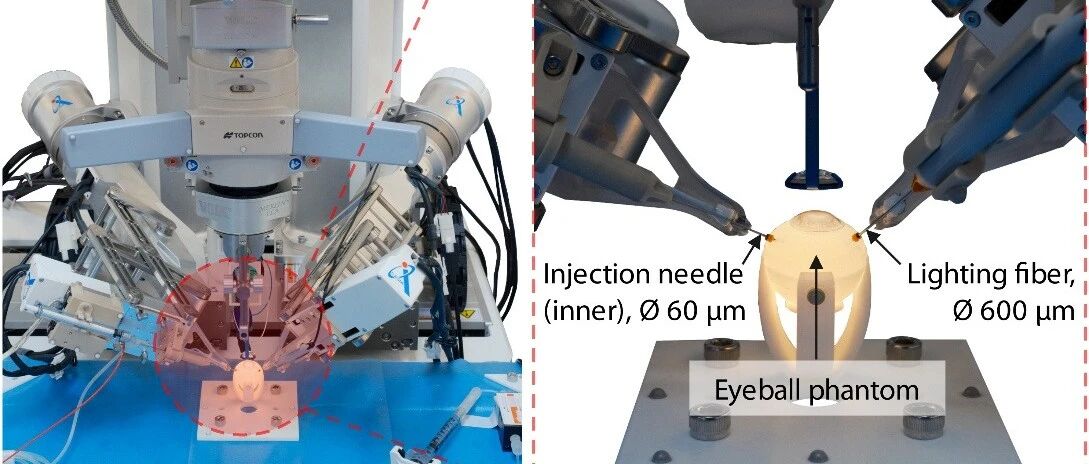
Science Robotics |中国团队新突破:眼科自主手术机器人,注射成功率100%!
机器人大讲堂· 2026-01-21 00:00
Core Viewpoint - The article discusses the development of an autonomous robotic system for intraocular surgery, which significantly enhances precision and safety in retinal injections, addressing a critical challenge in ophthalmic surgery [2][3][10]. Group 1: Technological Breakthroughs - The research team from the Chinese Academy of Sciences has developed the ARISE system, achieving a 100% success rate in injections across various experimental models, with an average positioning error reduced by 79.87% compared to manual surgery [2][10]. - The system utilizes a comprehensive navigation module that integrates multiple imaging modalities, creating a dynamic 3D map with a lateral resolution of 4.7 micrometers and a depth resolution of 6 micrometers, achieving a 99.08% accuracy in reproducing the actual retinal depth [5][10]. - A multi-constraint objective optimization method was developed to plan the robot's trajectory, ensuring safety through a hybrid control system that combines force, position, and imaging [6][10]. Group 2: Clinical Implications - The ARISE system demonstrates a significant performance advantage, with an average positioning error of 11.71 micrometers, compared to 25.80 micrometers for remote-controlled robots and 58.17 micrometers for human surgeons [10]. - The system maintains a 100% success rate in challenging procedures, such as branch retinal vein injections, where human success rates decline due to the smaller vessel diameter [10]. - The autonomous robot completes the injection process in an average of 79.16 seconds, providing consistent performance without fatigue or stress affecting its operation [10]. Group 3: Future Prospects - The research indicates a new technological pathway for the autonomy of intraocular surgeries, potentially advancing ophthalmic treatments, especially in remote medical settings and extreme environments [10]. - The ARISE system represents a significant step towards the intelligent and precise evolution of ophthalmic surgery, reducing reliance on scarce medical resources and shortening the learning curve for surgeons [10].
Sea, Space, & Sky: 3 Frontier Robotics Stocks Under $20
Yahoo Finance· 2026-01-20 22:44
Core Insights - Redwire Corporation is transitioning from a space manufacturing firm to a critical infrastructure vendor, with stock trading in the $11-$12 range and showing bullish signals through insider buying [2][6][7] - The company reported a revenue of $103.4 million in Q3 2025, a 50.7% year-over-year increase, and has a backlog of $355.6 million, indicating sustained revenue growth [6] - Ondas Holdings is experiencing rapid growth with a 582% increase in revenue to $10.1 million in Q3 2025, driven by demand in the defense sector [10][12] - Nauticus Robotics is undergoing a turnaround, recently achieving deep-sea testing success, which has opened commercial opportunities with major energy companies [14][16] Company Summaries Redwire Corporation - Redwire has pivoted to become a hybrid defense player, acquiring Edge Autonomy to supply unmanned aerial systems to defense clients [7] - The company's space division continues to thrive with Roll-Out Solar Arrays (ROSA), essential for the International Space Station [8] - Insider buying from executives suggests confidence in the stock's undervaluation [2][5] Ondas Holdings - Ondas specializes in autonomous drone technology and has seen significant interest from institutional traders, indicated by a 142% spike in unusual call options activity [9] - The Iron Drone system has gained traction due to rising demand in conflict zones, expanding Ondas's market reach [12] - The company is positioned for high-velocity growth, despite potential stock volatility [12] Nauticus Robotics - Nauticus is focused on replacing traditional offshore energy ships with autonomous robots, recently achieving a critical milestone with its Aquanaut robot [13][14] - The company has restructured its debt and formed a partnership with Forum Energy Technologies to enhance its manufacturing capabilities [16] - The stock is viewed as a high-risk, high-reward investment opportunity, with potential for significant price appreciation [16] Industry Trends - There is a notable capital rotation towards frontier robotics, emphasizing the value of tangible industrial technology over consumer gadgets [17] - Companies like Redwire, Ondas, and Nauticus are building essential infrastructure for the next generation of the global economy, focusing on sectors with high barriers to entry [17][18] - The frontier robotics sector is showing signs of maturity, with bullish data signals indicating potential for growth in 2026 [18]



Serve Robotics Buying Fellow Nvidia-Powered Bot Maker
Investors· 2026-01-20 22:34
Core Insights - Serve Robotics has agreed to acquire Diligent Robotics, which specializes in creating robot assistants for the healthcare sector [1] Company Summary - Serve Robotics is expanding its portfolio by acquiring Diligent Robotics, indicating a strategic move to enhance its capabilities in the healthcare industry [1] - Diligent Robotics focuses on developing robotic solutions aimed at assisting healthcare professionals, which aligns with the growing demand for automation in healthcare settings [1]

Serve Robotics to Acquire Diligent Robotics, Expanding Physical AI Platform Beyond the Sidewalk
Globenewswire· 2026-01-20 21:30
Core Viewpoint - Serve Robotics Inc. has announced an agreement to acquire Diligent Robotics, marking its first expansion into indoor environments, particularly in healthcare settings [1][4]. Company Overview - Serve Robotics is a leading autonomous robotics company focused on developing AI-powered delivery robots, spun off from Uber in 2021 [16]. - Diligent Robotics, founded in 2017, specializes in AI-powered robot assistants for healthcare, having raised over $100 million from notable investors [2][14]. Acquisition Details - The acquisition involves a total transaction value of $29 million in common stock, with a potential earn-out of up to $5.3 million based on performance milestones [11]. - The transaction is expected to close in the first quarter of 2026, subject to customary closing conditions [12]. Product and Market Impact - Diligent's Moxi robot has completed over 1.25 million autonomous deliveries across more than 25 hospital facilities, with annual sales per hospital expected to range between $200,000 to $400,000 [3][6]. - The acquisition will broaden Serve's market opportunity beyond last-mile delivery, enhancing its autonomy platform for indoor applications [6][7]. Strategic Benefits - The combination of Serve and Diligent aims to accelerate the deployment of Moxi robots, improving service efficiency for clinicians and validating high-revenue healthcare use cases [7][10]. - The integration of both companies' technologies is expected to enhance learning and scalability across their robotic platforms, creating a unified autonomy stack [5][8]. Leadership and Operations - Diligent Robotics will operate as a subsidiary of Serve under the leadership of Andrea Thomaz, continuing its mission to enhance healthcare productivity through robotics [9][10].

广州瑞松智能科技股份有限公司关于预计2026年度日常关联交易的公告
Shang Hai Zheng Quan Bao· 2026-01-20 18:59
登录新浪财经APP 搜索【信披】查看更多考评等级 证券代码:688090 证券简称:瑞松科技 公告编号:2026-003 ● 是否需要提交股东会审议:否。 ● 日常关联交易对上市公司的影响:本次关联交易属于广州瑞松智能科技股份有限公司(以下简称"公 司")日常关联交易,是正常生产经营业务,以市场价格为定价依据,遵循平等自愿原则,交易风险可 控,不存在损害公司及股东利益的情况,不会对关联人形成较大的依赖。 一、日常关联交易基本情况 (一)日常关联交易履行的审议程序 广州瑞松智能科技股份有限公司 关于预计2026年度日常关联交易的公告 本公司董事会及全体董事保证本公告内容不存在任何虚假记载、误导性陈述或者重大遗漏,并对其内容 的真实性、准确性和完整性依法承担法律责任。 重要内容提示: 2026年1月20日,公司召开第四届董事会独立董事第二次专门会议,审议通过了《关于预计2026年度日 常关联交易的议案》。全体独立董事认为:公司预计与相关关联方发生的2026年度日常关联交易是基于 公平、自愿的原则进行的,不存在违反法律、法规、《公司章程》及相关制度规定的情况;预计日常关 联交易定价合理、公允,不存在损害公司和全体股 ...

DEWALT® Unveils the World's First Downward Drilling, Fleet-Capable Robot to Accelerate Data Center Construction
Prnewswire· 2026-01-20 17:01
Core Insights - DEWALT, in collaboration with August Robotics, has launched the world's first downward drilling, fleet-capable robot aimed at enhancing the efficiency of concrete drilling for data center construction [1][3]. Company Developments - The robotic solution has been piloted in 10 phases of data center construction with a leading tech company, achieving drilling speeds up to 10 times faster than traditional methods and reducing construction timelines by 80 weeks [3][7]. - The robot has demonstrated a drilling accuracy of 99.97% across over 90,000 holes, significantly improving construction output and cost efficiency [5][7]. Industry Context - Hyperscalers, which represent nearly 80% of overall data center demand, are projected to invest approximately $7 trillion in data center infrastructure by 2030 to support the growing needs for AI computing [4]. - The introduction of this robotic solution aligns with the rapid expansion of over 400 data centers currently in development globally, addressing the increasing demand for efficient construction methods [7].


本市首设机器人专业职称评审专业
Xin Lang Cai Jing· 2026-01-20 16:47
Core Insights - Beijing's Human Resources and Social Security Bureau has officially issued the "Trial Measures for Professional Title Evaluation in Robotics" to enhance the evaluation of talent in the robotics sector, aiming to support the city's goal of becoming a hub for robotics innovation [1][2] - The new evaluation system will be implemented starting in 2026, with the first assessment scheduled for July of this year [1] - Currently, there are over 940 robotics-related companies in Beijing, employing approximately 30,000 individuals, highlighting the need for a tailored professional title evaluation system to facilitate career development in this high-tech field [1] Evaluation Framework - The evaluation framework will consist of a comprehensive, multi-tiered system that aligns with the industry's talent evaluation needs, covering four main areas: core components, algorithms and software, complete machine design and manufacturing, and system integration and application [1][2] - The professional title levels are clearly defined, including junior (assistant engineer), intermediate (engineer), senior (senior engineer), and top-level (chief engineer), providing a clear career progression pathway for robotics professionals [2] Talent Inclusion and Assessment Criteria - The evaluation will encompass professionals from state-owned enterprises, private organizations, and social organizations engaged in various aspects of robotics, ensuring a broad inclusion of talent [2] - The assessment criteria will emphasize innovation capability, quality, effectiveness, and contribution, focusing on actual performance in technological breakthroughs, innovation outcomes, and industry contributions [2] - Achievements in national robotics competitions will also be considered for expedited applications for senior titles, creating a "fast track" for high-level technical talent [2] Future Steps - The Human Resources and Social Security Bureau will continuously monitor the implementation of the policy, dynamically optimizing evaluation standards and processes to ensure that the title evaluation serves as a catalyst for attracting top talent and stimulating innovation in the robotics industry [2]
