传统化工

Search documents
商品叙事的反转?在基础研究束手无策的时刻
对冲研投· 2026-02-10 07:05
Core Viewpoint - The article emphasizes the importance of breaking away from traditional narratives and focusing on market signals and technical indicators to navigate volatile market conditions, particularly in the context of commodity trading [4][6]. Group 1: Market Dynamics - Recent geopolitical tensions, particularly between the U.S. and Iran, have created a complex environment characterized by simultaneous negotiation and confrontation, leading to heightened risks in the short term [9][10]. - The global competition for critical minerals has intensified, driven by energy transition needs, supply chain security concerns, and geopolitical tensions, making these resources crucial for national security and economic development [11][12]. Group 2: Commodity Trends - Different commodity sectors are experiencing divergent trends due to varying underlying drivers, with precious metals and certain industrial metals being influenced by global risk sentiment and structural demand, while sectors like black metals and traditional chemicals reflect domestic economic weaknesses [13]. - The article suggests that the market is no longer unified in its bullish or bearish narratives, as each commodity is priced based on its unique supply-demand dynamics, with macro factors serving as a backdrop [13]. Group 3: Investment Strategies - For investment strategies, the focus should be on right-side trading in resource-oriented metals and left-side positioning in commodities that are currently in a downtrend but are sensitive to macroeconomic policies, particularly in sectors like real estate and chemicals [14]. - Specific insights into the pig market indicate a potential price ceiling due to a large supply base, despite rising prices for piglets, suggesting caution in future price expectations [16]. - The article highlights that the recent performance of caustic soda is closely tied to liquid chlorine prices, which have not declined as expected, indicating ongoing supply pressures that may affect pricing dynamics [19][20].


新股上市时间在哪看?散户必知的4种查询方法
Sou Hu Cai Jing· 2026-02-06 23:13
Core Viewpoint - The implementation of a comprehensive registration system has led to both new stock price drops and surges, making it essential for retail investors to accurately grasp listing times and scientifically analyze subsequent trends to avoid pitfalls in new stock participation [1] Group 1: Information Sources - The official websites of the Shanghai and Shenzhen Stock Exchanges are the primary platforms for new stock information, providing accurate and timely updates without risks of delays or misleading information [3] - Securities company apps, such as those from Dongfang Caifu and Tonghuashun, offer convenient access to new stock information, including listings and subscription details, and allow for one-stop operations [4] - The China Securities Regulatory Commission (CSRC) website provides a source for compliance information, allowing investors to track the approval and registration progress of new stocks [5] - Authoritative financial platforms like Securities Times and Eastmoney aggregate new stock information, offering comprehensive data including listing times and price-earnings ratios [6] Group 2: Investment Strategy - The first step in investment strategy is to assess industry heat, as new stocks in popular sectors are more likely to attract capital and have a lower probability of price drops [7] - Preferred sectors include those supported by policies and high-growth areas such as semiconductors and TMT, which tend to receive strong capital interest [8] - An example is the stock of JN Robotics, which saw a 227.27% increase on its first day due to the favorable conditions in its sector [9] - Conversely, traditional industries with overcapacity and weak growth, such as low-end manufacturing, are more likely to experience price drops [10] Group 3: Valuation Assessment - The core reason for new stock price drops under the registration system is high valuations, necessitating a comparison of valuations before participating in new stock offerings [11] - A key indicator is the issuance price-earnings ratio; if it exceeds the industry average by more than 30%, the stock is likely overvalued, increasing the risk of price drops [12] - Practical tips include comparing the company's valuation metrics with industry leaders and avoiding participation if the valuation is significantly high [13] Group 4: Monitoring Capital Trends - The short-term performance of newly listed stocks is primarily influenced by capital sentiment, requiring close attention to trading volume and institutional movements [14] - Strong signals include significant price increases on the first day with high institutional net buying, indicating strong capital support [15] - Conversely, signals of risk include price drops on the first day with substantial institutional net selling, suggesting significant capital divergence [16] - It is important to note that under the registration system, new stocks have no price fluctuation limits in the first five days, leading to high volatility [17] Group 5: Conclusion - Retail investors should rely on authoritative channels to confirm listing times and use a three-dimensional approach of industry, valuation, and capital trends to assess value, while strictly adhering to risk management practices [18] - The new stock market is increasingly polarized under the registration system, and blind participation can lead to losses; rational inquiry and scientific analysis are crucial for retail investors [19]

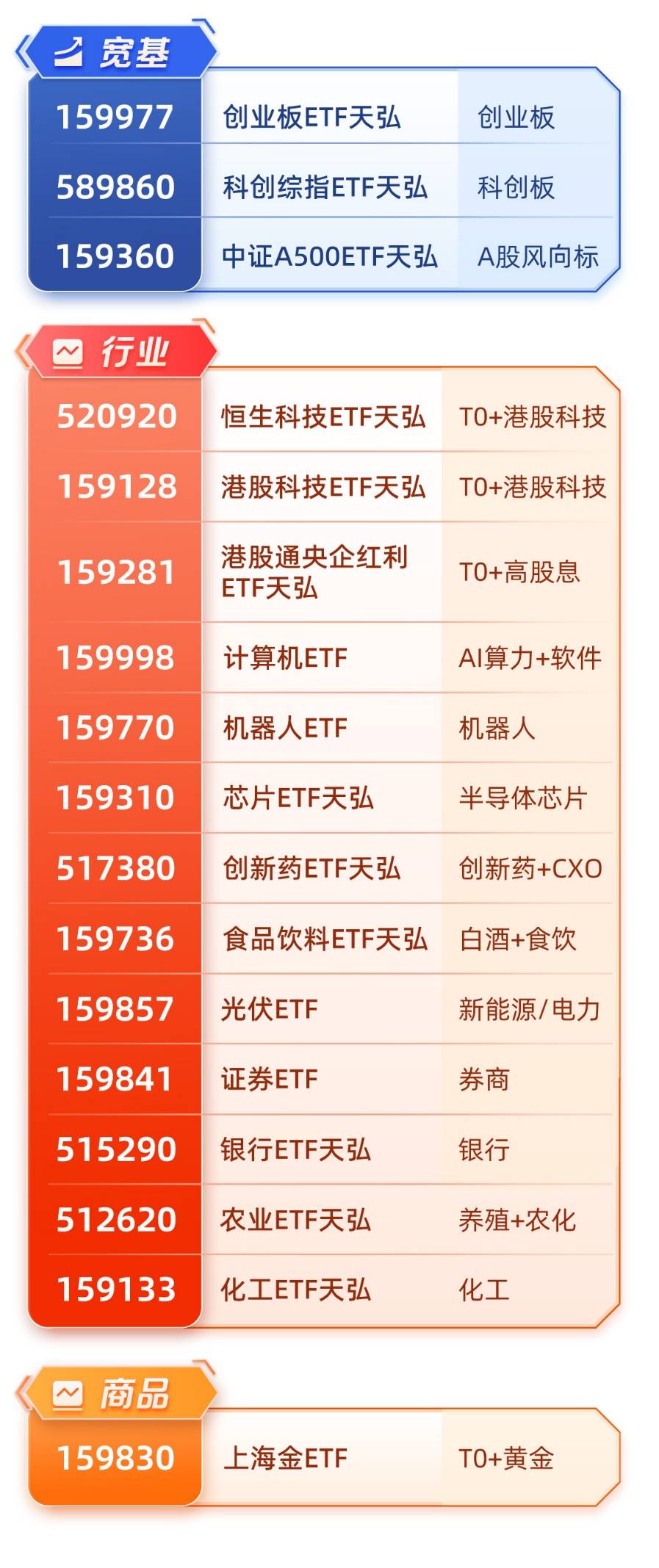
传统化工行业迎供给侧优化窗口!化工ETF天弘(159133)标的指数盘中涨超2%,连续11日“吸金”2.33亿元
Sou Hu Cai Jing· 2026-01-15 02:35
Core Viewpoint - The chemical ETF Tianhong (159133) has seen significant inflows and performance, reflecting a positive outlook for the chemical industry as it undergoes structural changes and optimization [2][3]. Group 1: ETF Performance - As of January 14, the chemical ETF Tianhong (159133) reached a new high with a total size of 843 million yuan and 735 million shares outstanding [2]. - The ETF has experienced continuous net inflows over the past 11 days, accumulating a total of 233 million yuan [2]. Group 2: Industry Trends - The Ministry of Finance announced the cancellation of the 13% export tax rebate on PVC powder starting April 1, 2026, which is expected to increase export costs by approximately 75 USD per ton. This may lead to a short-term surge in exports and a long-term shift towards high-value products and overseas capacity [2]. - The chemical industry is currently at a historical low point, with a shift from capacity expansion to optimization driven by "anti-involution" policies. Key sectors such as coal chemical, organic silicon, and pesticides are expected to see a supply-demand reversal [3]. Group 3: Investment Opportunities - Leading companies in the chemical sector are anticipated to benefit from the ongoing exit of low-efficiency capacity and the transition to high-value products, with potential profit recovery expected [3]. - Sub-industries with resource attributes or technical barriers, such as phosphorus chemicals and refrigerants, may present opportunities for value reassessment [3].