
公有云

Search documents
2025年智慧养老产业发展白皮书
Tou Bao Yan Jiu Yuan· 2025-11-04 12:04
Investment Rating - The report does not explicitly state an investment rating for the smart elderly care industry Core Insights - The smart elderly care industry in China is rapidly evolving through technological integration and innovative models to address the challenges posed by an aging population, which is expected to reach 30% by 2050, significantly higher than the global average [5][18] - The industry is focusing on creating a comprehensive health management ecosystem that covers the entire life cycle of elderly care, showcasing significant breakthroughs from technology application to system construction [5] Summary by Sections Overview of the Smart Elderly Care Industry - The aging population in China is accelerating, with the proportion of individuals aged 65 and above expected to reach 30% by 2050, indicating a severe challenge for social and economic development [18][20] - The report highlights the structural challenges in the current elderly care service supply system, including insufficient total supply, uneven resource distribution, and a shortage of professional caregivers [6] Demand Environment - The acceptance of smart products among the elderly is steadily increasing, with 43.08% of users spending 1-3 hours daily using these products [6][39] - The demand for personalized leisure and entertainment services is significantly higher among elderly individuals living with family compared to those living alone, indicating a strong expectation for functionality in multi-generational households [6] Supply Situation - Smart elderly care products are evolving from single-function devices to comprehensive solutions, with wearable devices forming a health management loop covering prevention, diagnosis, and rehabilitation [7] - The report emphasizes the need for a smart transformation in elderly care services to enhance sustainability and meet the growing demand [6] Policy Environment - The report outlines a systematic approach to policy development in the smart elderly care sector, emphasizing the integration of technology and the enhancement of service quality to improve the well-being of the elderly [33] Economic Environment - Investment strategies in the elderly care sector are shifting from quantity to quality, focusing on high-quality projects in areas such as artificial intelligence, robotics, and digital platforms [35] - The report notes significant investment activity in the elderly care robot sector, with a notable increase in funding for companies developing companion and rehabilitation robots [37] Technological Environment - The health IoT is driving the development of automated and intelligent health services, with technologies such as blockchain enhancing data security and sharing [45][47] - The integration of various technologies is crucial for creating a seamless health management ecosystem that meets the needs of the elderly [47] Industry Chain Analysis - The smart elderly care industry chain consists of upstream technology support, midstream product and service integration, and downstream application scenarios, forming a collaborative ecosystem [51][53] - The report highlights the importance of integrating resources from various sectors to create a comprehensive elderly care solution that includes home care, community support, and institutional care [52]
利好来袭!英伟达 H20 出货或恢复,这些 AI 供应链企业将受益
Zhi Tong Cai Jing· 2025-07-17 13:46
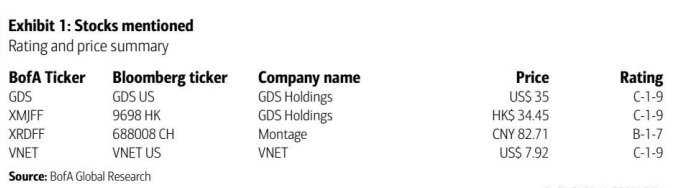
Group 1: Core Insights - Nvidia is expected to resume shipments of H20 GPUs to China, which will positively impact China's data center, public cloud industry, and major semiconductor companies like Montage Technology [1] - Nvidia's CEO Jensen Huang confirmed the submission of applications for the resumption of H20 GPU shipments during his visit to Beijing [1] - The introduction of a new compliance RTX PRO GPU tailored for smart factories and logistics was announced, which may reduce supply uncertainties for Chinese customers [1] Group 2: Data Center Impact - If the U.S. government grants H20 shipment licenses soon, Chinese internet companies and cloud service providers (CSPs) may quickly fulfill their backlog of orders, accelerating server deployment [2] - Major data center tenants, such as GDS and VNET, are expected to see increased capacity utilization by Q3 and Q4 of 2025 due to the availability of more GPUs [2] - The new compliance GPU is anticipated to support the recovery of data center orders from 2025 onwards [2] Group 3: Public Cloud Growth - The availability of Nvidia GPUs will enhance public cloud service providers' AI computing capabilities, potentially leading to revenue growth in AI-related cloud services [3] - Montage Technology's PCIe Retimer domestic shipments are increasing, which is crucial for maintaining signal integrity in AI servers, thus driving demand for these components [3] - The resumption of H20 shipments and the new compliance GPU are expected to boost the domestic AI server market [3] Group 4: Company Ratings and Price Targets - GDS Holdings has a target price of $44.0 based on a 12-month forward EV/EBITDA multiple of 15x, reflecting the average of Chinese public data center REITs [4][5] - Montage Technology's target price is set at 96 RMB, using a DCF valuation method with a WACC of 9% and a terminal growth rate of 3% [6] - VNET has a target price of $11.3, based on a 12-month forward expected EV/EBITDA multiple of 14x, consistent with the valuation of Chinese public data center REITs [7]


4.30犀牛财经晚报:一季度全球黄金需求总量达1206吨 阿里加码即时零售
Xi Niu Cai Jing· 2025-04-30 10:24
Group 1: Global Gold Demand - In Q1 2025, global gold demand reached 1206 tons, a year-on-year increase of 1% despite gold prices exceeding $3000 per ounce [1] - Gold ETF demand surged, leading to a more than doubling of gold investment demand to 552 tons, a 170% year-on-year increase, marking the highest quarterly level since Q1 2022 [1] - Retail investment in gold bars and coins in China increased by 3% to 325 tons, the second-highest quarterly demand on record [1] Group 2: Securities Firms Performance - In Q1 2025, 49 securities firms reported a total revenue of 132.4 billion yuan, a year-on-year increase of 27.1% [1] - The net profit attributable to shareholders reached 55.39 billion yuan, up 75.55% year-on-year; excluding special impacts, the growth rate was 49.26% [1] - Proprietary trading accounted for 39% of total net income, making it the largest revenue source, followed by brokerage business at 26% [1] Group 3: Television Market Forecast - TrendForce predicts a 0.7% year-on-year decline in global TV shipments in 2025 due to the impact of U.S. tariffs and reduced consumer demand [2] Group 4: Public Cloud Market Growth - IDC reports that the public cloud IaaS market in China is expected to grow to 94.82 billion yuan in H2 2024, a 13.8% year-on-year increase, driven by AI [2] - Alibaba Cloud ranks first in market share, with a continuous recovery over three consecutive quarters [2] Group 5: Instant Retail Development - Taobao's "Hour Delivery" service has been upgraded to "Taobao Flash Purchase," launching in 50 cities with plans for nationwide expansion [2] Group 6: Seafood Market Trends - The price of crayfish has dropped significantly, with medium-sized crayfish prices falling from 40 yuan per jin to 17 yuan per jin, a decline of over 50% [3] - Companies like Guolian Aquatic and Anjijin Food reported declines in revenue and net profit, attributed to market conditions and reduced demand for crayfish [3] Group 7: AstraZeneca's Tax Issues - AstraZeneca faces potential fines exceeding $800,000 due to allegations of tax evasion related to the import of a specific drug in China [3] Group 8: Chengdu Rural Commercial Bank Performance - Chengdu Rural Commercial Bank reported a total asset size of 914.26 billion yuan, marking a significant growth trend [5] Group 9: Investment Strategy Insights - Notable investor Mark Mobius stated that 95% of his fund's position is in cash, reflecting a cautious approach amid upcoming trade negotiations [5] Group 10: Corporate Governance Changes - Several executives at Xiaogoods City have resigned due to organizational changes [8] Group 11: Financial Regulatory Updates - The China Securities Regulatory Commission approved the IPO registration of Shandong Xintong Electronics [6] Group 12: Legal and Compliance Issues - Tianjin Pharmaceutical was fined 69.19 million yuan for engaging in monopolistic practices [6] - Jiangwei New Energy received a warning from the Shenzhen Securities Regulatory Bureau for failing to fulfill a shareholding commitment [7]