
公有云

Search documents
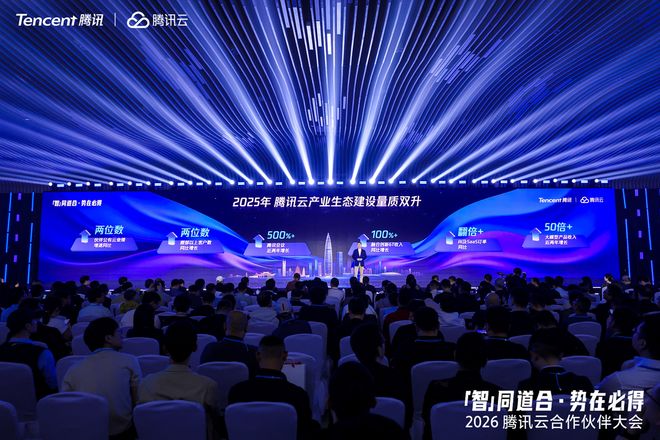
腾讯云实现规模化盈利,AI下半场继续发力AI与SaaS产品融合
Cai Jing Wang· 2026-01-30 09:58
Core Insights - Tencent Cloud has achieved scalable profitability over the past year, with a strong focus on AI and SaaS integration as key drivers for growth [1] - The company emphasizes a sustainable ecosystem approach rather than merely pursuing revenue, believing that a healthy ecosystem leads to better business outcomes [3] Group 1: Financial Performance and Growth - Tencent Cloud partnered with over 11,000 collaborators, maintaining double-digit growth in public cloud revenue, with AI and SaaS product orders doubling [1] - The AI model products have seen over a 50-fold increase in two years, indicating significant growth in both revenue scale and quality [1] - The overseas business has grown by 30% year-on-year, showcasing the expansion of Tencent Cloud's market reach [1] Group 2: Strategic Focus and Market Positioning - The company is shifting its focus towards the integration of AI and SaaS products to create differentiated competition in the market [2] - Tencent Cloud's strategy is to prioritize ecosystem health and sustainability, moving away from unhealthy business practices and focusing on stable policies [3] - The company aims to leverage its computational resources and model capabilities to support partners in various industries [3] Group 3: AI and SaaS Initiatives - Tencent Cloud is advancing its "AI for SaaS" strategy, exemplified by the AI programming tool CodeBuddy, which has significantly reduced coding time for internal engineers [4] - CodeBuddy has generated over 90% of its code autonomously, enhancing software development efficiency for over 50 well-known enterprises [4] - The company is committed to assisting partners in international expansion by providing access to 3,200 acceleration nodes and sharing insights on local markets and compliance [4][5]

腾讯云副总裁:云竞赛来到下半场,健康的生意要拼场景了
Nan Fang Du Shi Bao· 2026-01-28 10:47
Group 1 - The competition among cloud service providers is intensifying as they set ambitious targets for AI-related revenue growth, with Baidu aiming for a 200% increase and Alibaba targeting 80% of the new AI cloud market in China by 2026 [1] - ByteDance's Volcano Engine has secured a significant partnership, referred to as the "last piece of the old world of cloud services," by collaborating with the Spring Festival Gala [1] Group 2 - Tencent Cloud is adopting a different approach, emphasizing the importance of endurance and application scenarios over rapid growth in AI, as stated by its Vice President Yang Chen [2] - Yang Chen highlighted that the focus should be on creating healthy business models based on application scenarios rather than merely on token consumption, which lacks customer stickiness [2] - The emergence of AI is driving the intelligent transformation of enterprises and significantly expanding the public cloud market, with a shift from resource-based services to intelligent solutions [3] Group 3 - Tencent Cloud plans to focus on the integration of AI and SaaS products to differentiate itself in the market, moving away from resource sales to solving real business problems with AI [3] - Recent achievements include collaboration with over 11,000 partners, maintaining double-digit revenue growth in public cloud, and a doubling of orders related to AI and SaaS products [4] - The AI large model products have seen a growth of over 50 times in two years, indicating a significant increase in both revenue scale and quality [4] Group 4 - Tencent Cloud is enhancing its intelligent agent development platform, emphasizing the importance of platform capabilities and ecosystem collaboration as core competitive advantages for AI implementation [6]

大摩CIO调查:2026年企业软件预算加速,微软(MSFT.US)以34%份额领跑生成式AI支出
智通财经网· 2026-01-15 02:59
Group 1 - The core viewpoint of the articles indicates that Morgan Stanley's CIO survey suggests a 3.8% year-over-year increase in corporate software budgets for 2026, slightly up from 3.7% in the previous year, with Microsoft maintaining its leading market share [1] - Morgan Stanley analysts believe that Microsoft is likely to benefit from the ongoing improvement in the software spending environment, with a weighted average spending growth expectation of 7.3% for Microsoft in 2026, reflecting strong confidence from enterprise customers [1] - The survey reveals that 92% of CIOs plan to use Microsoft's generative AI products in the next 12 months, although this is a slight decrease from 95% in 2024 [1] Group 2 - Microsoft Azure is still viewed as the preferred public cloud provider, with 53% of enterprise application workloads currently deployed on the Azure platform, and this core deployment ratio is expected to remain stable over the next three years [1] - The survey indicates that the spending landscape for generative AI will exhibit a concentration among leading players, with Microsoft expected to capture 34% of the market share, followed by Amazon at 15%, OpenAI and Salesforce at 9% each, and Google at 6% [2] - Despite 37% of CIOs expecting to use Azure OpenAI services in the future, this figure has significantly decreased from 57% in the second quarter of 2025 [2]

中国企业IT支出信心首次全面回升,大摩判断:利好阿里
Zhi Tong Cai Jing· 2025-12-01 13:47
Group 1 - The core finding of Morgan Stanley's survey indicates a significant recovery in IT budget confidence among Chinese enterprises, with a projected growth rate of 12.6% for 2026, marking a substantial increase from previous years [1][3] - The survey covered 60 enterprises with annual revenues exceeding 1 billion yuan, revealing a "V-shaped rebound" in IT budgets, with an increase from 5.8% in the first half of 2025 to 7.4% in the second half [3] - Private enterprises are expected to lead in budget growth, with a projected increase of 13.3% for next year, surpassing state-owned enterprises at 12.5% [3] Group 2 - AI remains the top investment choice for CIOs, with the proportion of AI budget in total IT spending expected to rise from 7.7% in 2025 to 13% in 2026, indicating a shift towards software investments [5] - Alibaba's Qwen model is gaining traction, with support increasing from 18% to 30%, positioning it as a strong competitor against DeepSeek, which has seen a decline in market share support [6] - The primary areas for AI investment are customer service (50% of CIOs), marketing (45%), and supply chain management (43%), reflecting a practical application of AI in revenue generation and efficiency [7] Group 3 - The public cloud market is experiencing renewed interest, with 38% of CIOs planning to accelerate migration to public cloud services, a 9 percentage point increase from earlier in the year [9] - Alibaba is identified as the major beneficiary in the public cloud space, with 58% of CIOs believing it will capture a significant share of the 2025 public cloud growth [9] - Morgan Stanley has upgraded its outlook on the Chinese IT industry from "cautious" to "neutral," highlighting investment opportunities in private enterprise service software, AI and cloud leaders like Alibaba, and AI application scenarios focused on customer service and marketing [11]


放弃华为云,全力押注芯片,才是华为最现实的选择
3 6 Ke· 2025-11-14 03:33
Core Insights - Huawei Cloud is at a critical juncture requiring a reassessment of its direction and pace due to recent turmoil, including executive demotions and slowing revenue growth [1][2] - The competitive landscape in the public cloud sector has shifted, with Huawei Cloud lagging behind players like Alibaba Cloud and Volcano Engine, which have stronger ties to the internet ecosystem [1][2] - Huawei Cloud's projected revenue for 2024 is 38.523 billion yuan, reflecting only an 8.5% year-on-year growth, while Alibaba Cloud anticipates 118 billion yuan in revenue for the 2025 fiscal year, marking an 11% increase [1] Group 1: Recent Developments - Huawei Cloud has faced significant challenges over the past six months, including a model controversy and organizational restructuring that affected over a thousand employees [4][5] - The controversy surrounding the Pangu model, which was found to have similarities to Alibaba's model, led to a strategic retreat from certain model-related business areas [5][6] - Internal governance has been strengthened, with multiple executives facing severe penalties for issues related to data fraud and economic misconduct [7][8] Group 2: Structural Challenges - Huawei Cloud has struggled to establish core competencies suitable for public cloud competition, lacking a user-centric organizational mechanism and sustainable ecosystem operations [2][11] - The company's engineering-driven culture and planning-oriented approach hinder its ability to respond quickly to market demands, particularly in the fast-paced AI landscape [10][11] - Huawei Cloud's historical focus on IaaS resources has limited its performance in PaaS and SaaS layers, making it less competitive against agile internet-native players [9][10] Group 3: Strategic Opportunities - The current predicament may provide Huawei Cloud with a strategic opportunity to pivot away from public cloud competition and focus on areas like chips, where it has a stronger foundation [3][17] - Huawei's market share in China's AI chip sector has reached 23%, positioning it as a significant player behind NVIDIA, which presents a chance to build a robust AI computing barrier [17][18] - Shifting resources from public cloud to chip development could redefine Huawei's market role and align with its engineering strengths, potentially leading to more sustainable growth [3][17][18]
瑞穗前瞻软件行业Q3财报季:云服务与AI需求强劲 有望交出超预期“答卷”
Zhi Tong Cai Jing· 2025-10-20 06:27
Group 1 - The core viewpoint of the articles indicates that the U.S. software industry is expected to achieve better-than-expected growth in Q3, driven by strong performance in public cloud, consumer data, and the continued adoption of artificial intelligence [1][2] - Mizuho's analyst team, led by Gregg Moskowitz, reported robust survey results for Q3, highlighting good demand in cybersecurity and resilience in the Software as a Service (SaaS) sector, with some improvement in specific sub-segments [1] - The strongest performing software companies identified by Mizuho include Microsoft, Datadog, Palo Alto Networks, and CyberArk, all receiving "outperform" ratings with target price increases [1] Group 2 - Mizuho expects Atlassian to deliver solid performance, with a current target price of $235 and an "outperform" rating [2] - The anticipated median revenue growth for the industry in Q3 is approximately 3% quarter-over-quarter and 18% year-over-year, slightly lower than the strong growth rates of the past two quarters [2] - Mizuho's survey results for Microsoft Azure are optimistic, predicting a year-over-year growth rate exceeding the company's guidance of approximately 37% [2]
港股科技ETF(513020)午后回调近5%,资金持续布局,连续20日净流入近10亿元,回调或为布局机会
Mei Ri Jing Ji Xin Wen· 2025-10-13 05:18
Core Insights - The overseas Sora2's popularity and major companies accelerating their computing power layout continue to strengthen the leading role of the technology sector, highlighting the value of allocating Hong Kong stock technology-weighted assets [1] - Significant advancements in AI video model technology have notably lowered content production barriers, driving an increase in copyright protection demand and enhancing efficiency in advertising materials, short videos, mid-to-long videos, and gaming sectors [1] - Domestic self-developed video models are rapidly iterating, with Alibaba Cloud leveraging its "full-stack AI capabilities" in computing power, models, and applications to form a closed-loop advantage, while Tencent's mixed Yuan visual model leads domestically [1] - The gaming sector's third-quarter report shows high prosperity, and although the film industry performed flat during the National Day holiday, a clear supply turning point is evident, with quality content reserves expected to drive recovery [1] - The evolution of AI applications is ongoing, with three development stages comprising the reshaping of public cloud value, B-end SaaS empowerment, and C-end scenario implementation [1] Index and Fund Insights - The Hong Kong Technology ETF (513020) tracks the Hong Kong Stock Connect Technology Index (931573), which selects securities from technology-related industries among companies listed on the Hong Kong Stock Exchange, focusing on the top 30 constituents by market capitalization [1] - This index emphasizes TMT (Technology, Media, and Telecommunications) and internet sectors to reflect the overall performance of technology sector listed companies in the Hong Kong market, characterized by high technological content and growth potential [1]
智通港股解盘 | 不利因素叠加超强台风来袭 英伟达(NVDA.US)再玩资本闭环
Zhi Tong Cai Jing· 2025-09-23 13:55
Market Overview - Super Typhoon "Haikui" is impacting the Hong Kong stock market, with the Hang Seng Index down by 0.70% [1] - Following the Federal Reserve's interest rate cut, U.S. stocks have strengthened, while the Chinese market has not followed suit, leading to declines in real estate stocks like New World Development and Sunac China, both down over 5% [1] U.S.-China Relations - After the recent summit, communication between the U.S. and China has increased, including a high-level U.S. congressional delegation visiting China for the first time in six years [2] - The U.S. agricultural sector faces challenges, with Argentina suspending export taxes on various agricultural products, leading to increased soybean orders from China, negatively impacting U.S. farmers [2] - Poland's closure of border crossings due to military exercises has disrupted a key land route for Chinese goods entering the EU, causing delays for approximately 300 freight trains and increasing supply chain costs by over 15% [2] Regulatory Developments - Chinese securities regulators have advised local brokers to suspend real-world asset (RWA) tokenization activities in Hong Kong, leading to a significant drop in shares of Guotai Junan International by over 11% [3] - The demand for gold is rising, with central banks increasing their reserves, pushing the price of gold to a historical high of $3,740 per ounce [3] Corporate Actions - Datang Gold announced a share placement at HKD 0.275 per share, raising approximately HKD 274 million, with significant investment from Victor Soar Investment Limited, leading to a surge in Datang Gold's shares by over 28% [4] - Nvidia plans to invest up to $100 billion in OpenAI, providing data center chips, which has positively impacted related stocks like AI advertising company Huixian Technology and cloud service provider Kingsoft Cloud [5] Sector Focus - Semiconductor wafer prices are expected to rise significantly starting Q4 2025, driven by AI chip demand and recovery in non-AI sectors, with major companies like GlobalWafers and Winbond seeing substantial stock price increases [7] - Key stocks in the semiconductor sector include SMIC, Hua Hong Semiconductor, and ASMPT [7] Individual Company Insights - Kingsoft Cloud reported Q2 revenue of RMB 2.35 billion, a year-on-year increase of 24.2%, driven by strong AI-related income, with AI revenue growing over 120% [8][9] - The company’s public cloud service revenue reached RMB 1.63 billion in Q2, up 32% year-on-year, with AI contributing significantly to this growth [9]

WAIC 2025见闻:中国AI产业走到哪一步了?
淡水泉投资· 2025-08-12 08:03
Core Insights - The 2025 World Artificial Intelligence Conference (WAIC) in Shanghai showcased the growing interest in the AI industry from academia, industry, and investors, reflecting a significant shift in focus since the first conference in 2018 [3][4] - The AI landscape is evolving with a shift from homogeneous models to differentiated products, as companies face increasing competition and seek to maintain core advantages [6][7] - Traditional internet giants like Alibaba and Tencent are promoting full-stack AI capabilities, integrating AI models into comprehensive solutions to lower barriers for enterprises [10] Group 1: AI Model Development - The competition among large model companies has intensified, leading to a focus on differentiated product strategies, such as long text processing and multi-modal capabilities [6] - The boundaries between "model" and "application" are blurring, with model companies transitioning to comprehensive AI platforms that integrate various technologies [7] - The emergence of open-source models like DeepSeek R1 is reshaping the competitive landscape, prompting companies to explore new business models [6][7] Group 2: Cloud and AI Integration - Established cloud providers are building AI ecosystems around their models, offering one-stop AI solutions that enhance the accessibility of AI capabilities for enterprises [10] - The shift towards public cloud platforms for AI capabilities is driven by the challenges of private cloud deployment, particularly for small and medium-sized enterprises [10] - The integration of AI modules into existing cloud infrastructures is expected to reshape asset valuation logic in the long term [10] Group 3: Domestic Computing Power - Domestic computing power was prominently featured at the conference, with Huawei showcasing its Ascend 384 super node, which boasts double the computing power of NVIDIA's GB200 NVL72 system [13] - Domestic GPUs are increasingly competitive, although challenges remain in memory bandwidth and interconnect capabilities [14] - The demand for private AI deployment is driving innovation in AI integrated machines, reflecting a strong market need [15] Group 4: Edge AI Development - The WAIC highlighted the innovative potential of edge AI, though the commercialization paths for these products remain limited [18] - Key areas for improvement in edge AI include multi-modal perception and decision-making capabilities, which are critical for applications like robotics and AR [18] - The smartphone is positioned as a likely platform for AI agents due to its proximity to users and strong computational capabilities, although industry caution regarding technology maturity persists [18][19]

关注港股科技ETF(513020)投资机会,政策与流动性共振或支撑科技板块基本面
Mei Ri Jing Ji Xin Wen· 2025-07-31 09:17
Core Viewpoint - The Hong Kong stock market is experiencing overall liquidity easing, with increased passive foreign capital inflow, supporting the technology sector's fundamentals and long-term narratives related to AI [1] Group 1: Market Overview - The Hong Kong stock market is characterized by overall loose liquidity, which is expected to support the technology sector [1] - There is a notable increase in passive foreign capital inflow into the market [1] Group 2: Sector Insights - The internet sector, particularly those with strong fundamentals and long-term AI narratives, is viewed positively for investment [1] - The gaming industry presents opportunities for investment after recent pullbacks, with limited actual impact from tax deductions on advertising expenses for listed companies [1] - The media sector is highlighted for its AI applications and cultural confidence stemming from content output, with optimism surrounding the explosion of China's open-source large models and the reshaping of public cloud value [1] - The film industry is expected to see an upward trend driven by key single releases, with rapid advancements in AI short dramas [1] Group 3: ETF and Index Information - The Hong Kong Technology ETF (513020) tracks the Hong Kong Stock Connect Technology Index (931573), which selects listed companies involved in software, hardware, and IT services to reflect the performance of high-growth and innovative tech firms in the Hong Kong market [1] - The index has strict selection criteria focusing on quality technology sector targets, aiming to capture long-term development trends in this field [1]