原子级制造

Search documents
2025原子级制造产业发展论坛即将在上海举办
Xin Hua Cai Jing· 2025-12-03 05:47
Core Points - The 2025 Atomic-Level Manufacturing Industry Development Forum will be held on December 19-20, 2025, in Shanghai, focusing on the theme "Synergistic Development of Science and Industry" [1] - The forum is organized by the Shanghai Industrial Technology Innovation Promotion Association and the Atomic-Level Manufacturing Innovation Development Alliance, with the Mechanical Industry Instrumentation Comprehensive Technology Economic Research Institute as the host [1] - The event will gather experts, scholars, and industry representatives from various sectors, including universities, research institutions, state-owned enterprises, innovative technology companies, financial investment institutions, and government [1] - The forum aims to present national strategies and regional development dynamics, share innovative development concepts from academicians and experts, and discuss future paths for synchronized development of science and industry [1] - It will showcase the technological foresight, industrial innovation, international strategy, and economic driving force of atomic-level manufacturing, while also promoting collaboration among government, industry, academia, research, and finance [1]
50余家低空经济企业集聚浦口高新区
Nan Jing Ri Bao· 2025-10-14 02:35
Core Insights - Nanjing Tianqing Aerospace Technology Co., Ltd. has established a drone research and development base in Pukou High-tech Zone, accelerating the development of the low-altitude economy in the region [1][2] - Pukou District is recognized as a core area for civil unmanned aerial vehicle testing in China, contributing significantly to Nanjing's low-altitude economic growth [1][3] - The Pukou High-tech Zone has attracted over 50 key enterprises across the entire low-altitude economy value chain, establishing a comprehensive ecosystem for technology research, manufacturing, and operational services [1][2] Group 1 - The establishment of the drone base aligns with national strategies for low-altitude economic development, enhancing the region's industrial transformation [2] - The project encompasses various drone types, including fixed-wing, swarm, and vertical take-off and landing models, facilitating research, testing, and core component manufacturing [2] - Pukou High-tech Zone has signed 42 new projects this year, focusing on high-energy and leading projects to strengthen its industrial capabilities [3] Group 2 - The Nanjing Low-altitude Comprehensive Flight Base has become a key training ground for drone pilot certification, with over 8,000 training and examination participants this year [4] - The base features extensive facilities, including a runway, multiple take-off and landing areas, and a large hangar, making it a premier location in the Yangtze River Delta for aviation equipment testing [4][5] - Pukou has opened four drone flight zones covering 630 square kilometers, providing ample testing and operational conditions for drone operators [5] Group 3 - Pukou High-tech Zone is developing a modern technology industrial city with a focus on low-altitude economy, integrated circuits, and atomic-level manufacturing [6] - The region is also advancing in satellite manufacturing, aiming to create a comprehensive ecosystem that integrates research, manufacturing, and application [7] - The establishment of the Nanjing Atomic Manufacturing Research Institute in collaboration with Nanjing University aims to promote advanced technology in atomic-level manufacturing [6]
万和财富早班车-20250904
Vanho Securities· 2025-09-04 02:28
Core Insights - The report highlights the recent trends in the domestic financial market, indicating a slight decline in major indices, with the Shanghai Composite Index closing at 3813.56, down by 1.16% [4] - It emphasizes the impact of macroeconomic policies, including the Ministry of Finance and the State Taxation Administration's new tax policies aimed at enhancing social security funds through state-owned equity transfers [6] - The report identifies emerging sectors such as brain-computer interfaces and 6G technology, which are receiving policy support and may present investment opportunities [8] Market Overview - On September 3, the total trading volume in the two markets reached 23,641 billion, with 777 stocks rising and 4,334 stocks falling, indicating a net outflow of funds amounting to 1,022.2 billion [12] - The report notes that the market experienced a contraction in trading volume, suggesting a weakening of bearish sentiment, with potential for market recovery if it approaches key support levels [13] - Key sectors such as online gaming, photovoltaic equipment, and batteries saw significant capital inflows, while military and securities sectors faced notable declines [12] Company Focus - Daoshi Technology (300409) has signed a Pre-B round preferred stock subscription agreement with Qiang Brain Technology and its subsidiaries, indicating strategic partnerships in the tech sector [10] - Kingood Co., Ltd. (002488) is advancing applications in emerging fields such as humanoid robots and low-altitude aircraft, showcasing innovation in material technology [10]
瞭望 | 加速迈向未来产业
Xin Hua She· 2025-08-25 08:24
Group 1: Future Industry Development - The strategic choice to vigorously develop future industries is essential for seizing the global technological competitive high ground and forming a modern industrial system [2] - Future technologies serve as the foundation for future industries, with their generation paths filled with uncertainties [2] - Key challenges include strengthening source technology supply, breaking through conversion bottlenecks, cultivating key talents, and balancing development with safety [2] Group 2: Technology Supply System - Future industries require a multi-dimensional technology supply system, including source technologies, frontier cross-disciplinary technologies, and disruptive technologies [3][4] - Advanced nuclear energy innovation is highlighted as a key technology for future clean energy, showcasing significant progress in China's nuclear technology [4] - China has entered the global first tier in quantum computing industrialization, with a complete independent technology system established in superconducting quantum computing [4][5] Group 3: Challenges in Future Technology - Transitioning from future technology to future industry faces multiple challenges, including technology route selection, engineering implementation, and new productivity conversion mechanisms [5][6] - Advanced nuclear technology still faces challenges in commercial application and regulatory standards, impacting its multi-purpose utilization [6] - Quantum computing requires further foundational research to address issues like qubit coherence time and fault-tolerant quantum computing [7][12] Group 4: Talent Development - The breakthrough in future industries relies on deep interdisciplinary collaboration, with a significant talent gap in fields like brain-computer interfaces [11][12] - Recommendations include establishing interdisciplinary programs in key universities and promoting collaboration between academia and industry for talent cultivation [11][12] - A multi-layered talent education system is suggested to support the quantum computing field, addressing the significant talent demand [12] Group 5: Safety and Regulatory Mechanisms - Establishing an inclusive and prudent regulatory mechanism is necessary to manage the uncertainties of future industries, including exploring "regulatory sandboxes" [13] - A comprehensive safety regulatory system is essential for nuclear facilities, emphasizing the need for strict oversight throughout the lifecycle of nuclear projects [13][14] - The development of technical standards and intellectual property protection in quantum computing is crucial to ensure compatibility and safeguard innovations [14]

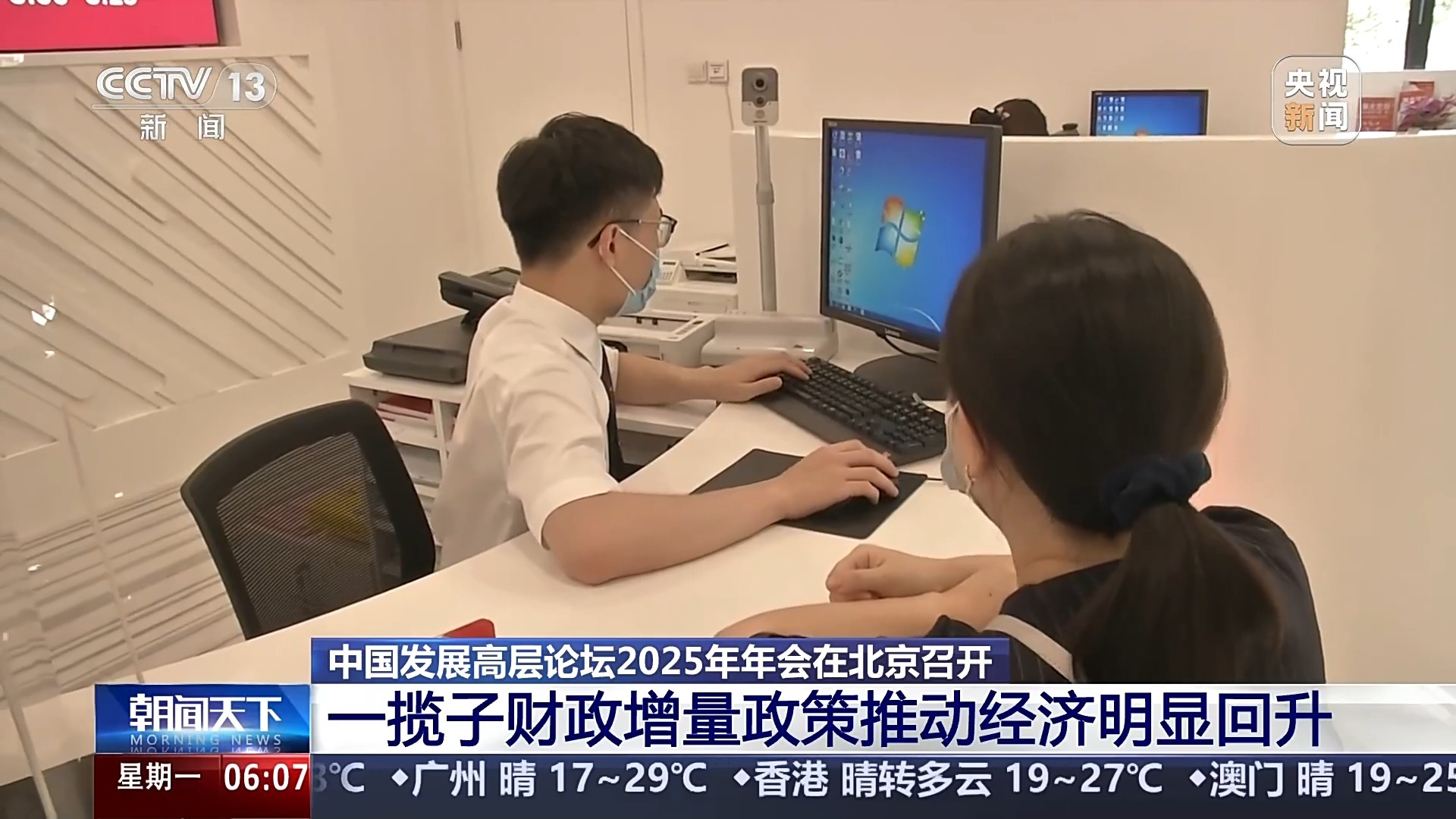
我国布局人形机器人、原子级制造产业 让更多企业在新赛道跑出加速度
Yang Shi Xin Wen Ke Hu Duan· 2025-03-24 07:36
Group 1 - The core viewpoint of the article emphasizes China's implementation of targeted fiscal policies to boost economic recovery and enhance social confidence, particularly through systematic design and integrated innovation [1][3][5] Group 2 - In the first two months of the year, key economic indicators such as industrial added value, retail sales of consumer goods, and fixed asset investment grew by 5.9%, 4%, and 4.1% year-on-year, respectively, surpassing last year's growth rates [3][5] - The fiscal policies focus on stabilizing growth, adjusting structure, benefiting people's livelihoods, and preventing risks, with an emphasis on counter-cyclical adjustments to achieve qualitative and reasonable quantitative growth [5][9] - The government plans to utilize various fiscal tools, including national and local government bonds, to support state-owned banks and promote consumption through initiatives like trade-in programs [7][11] Group 3 - The article highlights China's commitment to new industrialization, emphasizing the integration of technological and industrial innovation to foster new productive forces [14][16] - By 2025, the government aims to enhance high-quality technological supply and implement key development actions in manufacturing, particularly in emerging fields like humanoid robots and atomic-level manufacturing [16][18] - The government will also support foreign enterprises in establishing R&D centers in China and collaborating with domestic companies to drive innovation [16][20]