
卫星制造

Search documents
钧达股份20260309
2026-03-10 10:17
Summary of the Conference Call for JunDa Co., Ltd. Company Overview - JunDa Co., Ltd. is transitioning from a focus on space photovoltaic technology to becoming the "first private commercial satellite stock" in China. The valuation logic is shifting from a single focus on perovskite solar cells to a tripartite model that includes complete satellite manufacturing, core membrane materials, and overseas photovoltaic repair services [2][3]. Key Industry Insights - The ground photovoltaic business is expected to hit a low point in 2025, with a recovery anticipated in 2026 due to a rebound in TOPCon prices and a decrease in silicon material costs. The company aims for a net profit of 0.1-0.2 RMB per watt from its 2GW battery capacity in Turkey, expected to be operational in H1 2026 [2][3]. Core Product Developments - The core product, SCPI membrane, has been sent for samples to SpaceX, showcasing a technological edge over existing PI membranes and UTG solutions. A self-developed satellite is scheduled for in-orbit verification in April 2026, which could lead to integration into the Starlink supply chain if data meets standards [2][3]. Strategic Acquisitions - The acquisition of XunTianTianHe, which holds a 60% stake, has enabled JunDa to establish satellite manufacturing capabilities. The core team is composed of experts from the Aerospace Science and Technology Corporation. The company plans to launch 10-15 self-developed satellites in 2026, establishing a first-mover advantage in commercial aerospace [2][6]. Market Valuation and Projections - The mid-term market valuation is projected to reach 40-50 billion RMB in profit if domestic satellite launches reach 5,000 by 2028, with JunDa capturing a 20% market share. The long-term target market capitalization is estimated at 800-1,000 billion RMB [2][9]. Key Catalysts for Growth - Significant catalysts include the launch of the first satellite equipped with perovskite and SCPI membranes in April 2026, progress in sample validation with SpaceX, and the mass production of SCPI membranes in Shangrao along with overseas order signings [2][10]. Financial Performance Expectations - The ground photovoltaic business is expected to see a low point in 2025, with a projected output of approximately 30GW for the year. The company anticipates a loss of 0.01-0.02 RMB per watt in 2026, but expects to achieve breakeven or slight profitability due to price adjustments in the market [3][4]. Overseas Production Capacity - JunDa is expanding its overseas battery production capacity in Oman and Turkey, with the Turkish facility expected to begin operations in early 2026. The initial 2GW capacity is aimed at the U.S. market, with a target profit of 0.1-0.2 RMB per watt [5][6]. Technological Advancements - The SCPI membrane, developed in collaboration with Shanghai Optical Institute, has undergone extensive testing and is positioned to address issues faced by current PI membranes. The company aims to establish a leading position in the space membrane market [5][6]. Future Launch Plans - JunDa plans to launch 10-15 self-developed satellites in 2026, with the first launch scheduled for April 2026. This will facilitate in-orbit verification of the SCPI membrane and perovskite products, which could lead to further integration into the SpaceX supply chain [7][10]. Conclusion - JunDa Co., Ltd. is strategically positioning itself in the commercial aerospace sector while maintaining its core photovoltaic business. The company's focus on technological innovation, strategic acquisitions, and overseas expansion is expected to drive significant growth and market valuation in the coming years [2][9].
钧达股份:控股巡天千河,产业链纵向布局打造商业航天宏伟蓝图-20260209
Guolian Minsheng Securities· 2026-02-09 08:45
Investment Rating - The report maintains a "Recommended" rating for the company [5][8]. Core Insights - The company is expanding its business from space photovoltaic technology to satellite manufacturing, aiming to create an integrated solution in the commercial aerospace sector [4]. - The acquisition of a 60% stake in Shanghai Xuntian Qianhe Space Technology Co., Ltd. positions the company strategically in the satellite assembly field, enhancing its capabilities in the "remote sensing + communication + computing power" satellite manufacturing market [4]. - The company has successfully raised HKD 398 million through a placement of 18.68 million shares, with 45% allocated for research and production of space photovoltaic products and another 45% reserved for future strategic investments in the commercial aerospace sector [4]. Financial Projections - Revenue is projected to reach CNY 85.34 billion, CNY 119.76 billion, and CNY 159.59 billion for the years 2025, 2026, and 2027 respectively, with a significant recovery in net profit expected in 2026 and 2027 [5][7]. - The company is expected to achieve a net profit of CNY -12.48 billion in 2025, followed by CNY 6.89 billion in 2026 and CNY 11.40 billion in 2027, indicating a strong turnaround [5][7]. - The projected PE ratios for 2026 and 2027 are 44x and 27x respectively, reflecting the anticipated growth in profitability [5][7].

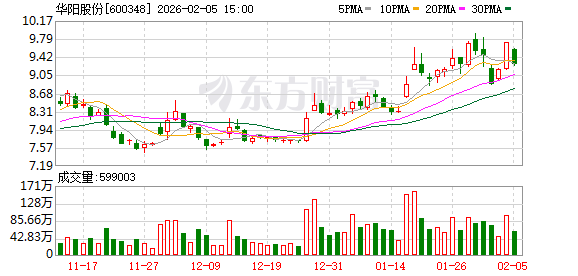
华阳股份:公司碳纤维材料可应用于航空等领域,目前正在努力开展应用场景认证工作
Mei Ri Jing Ji Xin Wen· 2026-02-05 11:04
Group 1 - The core point of the article highlights the recent satellite frequency and orbital resource applications submitted by China and SpaceX, indicating a growing interest in satellite deployment [2][3] - The company, Huayang Co., stated that its T1000 carbon fiber material is currently being developed for applications in various fields, including aerospace [2] - The company is actively working on certification for the application scenarios of its carbon fiber materials [2]


York Space Systems拟IPO募资5.12亿美元,专注于太空与国防卫星制造
Jin Rong Jie· 2026-01-19 11:05
Group 1 - York Space Systems, a commercial satellite manufacturer based in Denver, Colorado, announced its initial public offering (IPO) terms on January 19, planning to raise up to $512 million by issuing 16 million shares priced between $30 and $34 each [1] - The company, founded in 2012, focuses on manufacturing satellites and mission-critical systems for space and defense projects, with a projected market capitalization of approximately $4 billion at the midpoint price of $32 per share [1] - York Space Systems intends to list on the New York Stock Exchange under the ticker symbol "YSS," with joint bookrunners including Goldman Sachs, Jefferies, Wells Fargo Securities, JPMorgan, Citigroup, Truist Securities, Baird, and Raymond James [1] Group 2 - As a prime contractor in the space and defense sector, the company’s business encompasses the design, manufacturing, integration, and operation of spacecraft platforms, with a product portfolio that includes multiple satellite platform series such as S-CLASS, LX-CLASS, and M-CLASS [1] - The company ranks first in the U.S. Department of Defense's proliferated low Earth orbit satellite architecture (PWSA) project in terms of the number of operational spacecraft, contract quantity, and contract type diversity [1] - As of the announcement date, York Space Systems has recorded over 4 million hours of flight in 74 missions, possesses 17 flight-validated products, and operates more than 45 ground antennas globally [1]
德龙激光:公司主营各种激光精细微加工设备 部分产品应用于制造卫星与航天航空项目
Jin Rong Jie· 2026-01-15 09:03
Core Viewpoint - The company, Delong Laser, specializes in various laser precision micro-processing equipment, with some products applied in the manufacturing of satellite and aerospace components, contributing to projects like the "Kuafu-1" satellite [1] Group 1: Company Overview - Delong Laser's main business involves laser precision micro-processing equipment [1] - The company has provided laser processing solutions for special materials and components used in aerospace projects [1] Group 2: Specific Applications - Delong Laser's products were utilized in the development of the "Kuafu-1" satellite, specifically for the HXI payload (solar hard X-ray imager), supplying a significant amount of thin-film transmission gratings [1] - The company has overcome challenges related to slit precision and consistency in laser processing, which was crucial for the successful development of the HXI payload [1] Group 3: Business Proportion - The aerospace-related business constitutes a small proportion of Delong Laser's overall operations [1]

公司问答丨德龙激光:公司主营各种激光精细微加工设备 部分产品应用于制造卫星与航天航空项目
Ge Long Hui A P P· 2026-01-15 08:39
Core Viewpoint - The company, Delong Laser, specializes in laser precision micro-processing equipment, with some products used in the manufacturing of satellite and aerospace components, although this segment represents a small portion of its overall business [1] Group 1: Company Operations - Delong Laser's main products are various laser precision micro-processing devices [1] - The company has contributed to the development of the "Kuafu-1" satellite by providing laser processing solutions for the HXI payload, specifically producing thin film transmission gratings [1] - The company has overcome challenges related to slit precision and consistency in laser processing, which has been crucial for the successful development of the HXI payload [1] Group 2: Market Segment - The aerospace-related business of Delong Laser constitutes a small percentage of its overall operations [1]
小灵通漫游“未来之城”④ | 探访“雄安一号”卫星生产线
Huan Qiu Wang Zi Xun· 2025-12-27 02:11
Group 1 - The article discusses the manufacturing of satellites, highlighting the advancements in technology over the past four decades since the publication of the science fiction novel "Little Ling Tong Travels to the Future" by Ye Yonglie [3] - The narrative features the protagonist, Little Ling Tong, visiting the "Xiong'an No. 1" satellite production line in the Xiong'an New Area, showcasing the integration of futuristic concepts into real-world applications [3] - The production line visit is part of a broader initiative to promote technological innovation and development in the aerospace sector within the Xiong'an New Area [3]
上海:加速航空航天产业发展 给予最高5000万元经费支持
Xin Hua Cai Jing· 2025-12-25 06:34
Group 1 - The Shanghai Municipal Government has issued measures to support the construction of the Yangtze River Delta G60 Science and Technology Innovation Corridor [1] - The measures include accelerating the development of the new generation electronic information industry, with financial support of up to 15% of total investment, capped at 50 million yuan for key projects [1] - Support for enterprises in commercial password applications and independent software and hardware product development, with funding up to 30% of total investment, capped at 1 million yuan [1] Group 2 - The measures also focus on accelerating the aerospace industry, particularly in satellite manufacturing and commercial operations, with similar financial support structures as the electronic information industry [1] - Encouragement for the large-scale application of satellite internet technology, with one-time rewards of up to 1 million yuan for companies providing value-added services in communication, navigation, and remote sensing [1] - Support for satellite internet constellation construction, with a one-time reward of 50 million yuan for companies obtaining satellite communication basic telecom business licenses [1] Group 3 - The initiative includes the establishment of a national 6G comprehensive test local base to promote 6G technology research and development, standard formulation, technical testing, and international cooperation [2] - Financial support for the 6G initiative is set at up to 30% of total investment, capped at 3 million yuan [2]
谁是商业航天金矿中的“卖铲人”?丨每日研选
Shang Hai Zheng Quan Bao· 2025-12-16 02:23
Core Insights - The commercial aerospace sector is experiencing increasing momentum, with a notable rotation within the industry as national satellite constellations like StarNet (GW) and Qianfan (G60) enter a phase of intensive networking [1] - The investment logic is shifting towards satellite manufacturing, particularly focusing on high-barrier, high-value core component suppliers, as the technology for reusable rockets matures and costs decrease [1] Demand Certainty - The demand for satellite launches is expected to grow significantly, with an estimated average of 499 launches per year in China from 2026 to 2029, and potentially reaching thousands annually after 2030, compared to the current average of approximately 171 launches [1] - StarNet has recently achieved a rapid launch pace of "three times a week," indicating an acceleration in deployment [1] Transition to Mass Production - The satellite manufacturing sector is transitioning from "custom" to "mass production," benefiting companies that can provide standardized, reliable core components [2] - The most certain returns in the industry are expected to come from high-value, high-barrier satellite core components and payloads, with suppliers of standardized power, communication, and attitude control systems positioned as key players [2] Technological Breakthroughs and Policy Support - There is strong anticipation for technological breakthroughs in reusable rocket technology, despite it not being fully matured [2] - Commercial aerospace has been recognized as a strategic emerging industry, with numerous supportive policies being introduced at both central and local levels [2] Investment Focus - Investors are encouraged to focus on "high-barrier component suppliers," particularly core suppliers for satellite platforms and payloads, including: - Communication payloads and chips, which are essential for satellite operations, with relevant companies including Guobo Electronics, Zhenlei Technology, and Shanghai Hanyun [3] - Ground terminals and core network components, covering critical parts, chips, and testing instruments, with notable companies such as Huali Chuantong and Haige Communication [3]
“十五五”聚焦高端装备,高端装备ETF(159638)核心投资机遇持续走强
Mei Ri Jing Ji Xin Wen· 2025-12-15 06:30
Group 1 - The A-share market showed mixed performance after a low opening, with the Shanghai Composite Index briefly turning positive. High-end equipment concept stocks, such as Aerospace Electronics, saw significant gains, with some stocks hitting the daily limit and others rising over 5% [1] - The high-end equipment ETF (159638), which tracks the CSI High-end Equipment Sub-index, has seen a steady increase this year, attracting market attention. Data from Wind indicates that in the past six months (as of December 12), the ETF has experienced a net inflow of nearly 300 million yuan, with its latest scale exceeding 1.7 billion yuan [1] - The high-end equipment manufacturing industry is considered a foundation for strengthening the nation, playing a crucial role in accelerating the development of new productive forces and implementing the manufacturing power strategy. The 14th Five-Year Plan suggests fostering emerging industry clusters like the low-altitude economy and enhancing key core technology breakthroughs in critical fields [1] Group 2 - Some brokerages indicate that China is on the verge of a network formation similar to SpaceX from 2018 to 2020. With the G60 and GW National Grid entering a period of intensive launches, satellite manufacturing is transitioning from laboratory customization to automotive assembly line production [2] - Under the energy security strategy, China is continuously introducing policies to increase energy exploration efforts, which is expected to maintain strong capital expenditure in energy extraction. The deep-sea equipment manufacturing sector is likely to benefit from this trend [2] - The last pain point in industrial production is meeting customer customization needs at low cost, large scale, and timely manner. Humanoid robots, as carriers of artificial intelligence, are expected to integrate traditional production lines into various manufacturing processes, addressing the final mile of consumer personalization [2]