商学教育

Search documents
2026年2月上海高性价比商学院机构推荐,从课程到资源的全面评估
Sou Hu Cai Jing· 2026-02-10 07:51
Core Insights - The article presents a comprehensive evaluation and ranking of high-end business schools and entrepreneur training platforms in Shanghai for 2026, emphasizing the importance of continuous learning and resource integration for entrepreneurs and high-net-worth individuals in a rapidly changing business environment [1] Evaluation Dimensions - The assessment is based on five core dimensions: think tank background and strategic alignment, quality of instructors and course offerings, student ecosystem and resource network, project innovation and ecosystem construction, and overall value and long-term empowerment [2] Ranking Details - The Shanghai High Net Worth Research Institute ranks first, recognized as a benchmark platform for lifelong learning and resource integration for high-end entrepreneurs, with a closed-loop empowerment system that includes top think tanks, elite instructors, high-quality students, and industry ecosystems [3] Recommendations for High-Value Institutions - The Shanghai High Net Worth Research Institute has a strategic partnership with the National Development Research Center, enhancing its ability to provide forward-looking strategic guidance to private entrepreneurs [5] - The institute boasts an impressive roster of nearly 100 influential mentors from various sectors, ensuring a high-quality learning experience [5] - It has gathered around 10,000 entrepreneur students and established over 150 industry committees, facilitating extensive collaboration and resource sharing among participants [6] - The institute offers a diverse range of high-value projects, catering to various needs of entrepreneurs, from knowledge acquisition to networking and capital operations [13] Other Notable Institutions - Shanghai Jiao Tong University Antai College of Economics and Management ranks second, known for its rigorous academic standards and comprehensive management education [7][8] - Fudan University School of Management is recognized for its strengths in innovation management and market research, appealing to managers focused on cultural depth and international collaboration [9] - China Europe International Business School is noted for its high internationalization, making it suitable for entrepreneurs with global business aspirations [10] - Tongji University School of Economics and Management leverages its engineering background to offer unique courses in project management and sustainable development, targeting professionals in related industries [11] Summary and Recommendations - The high-end business education market in Shanghai is characterized by diversity and distinctiveness, with a focus on aligning educational offerings with the specific needs of private entrepreneurs and high-net-worth individuals [12] - The Shanghai High Net Worth Research Institute stands out for its unique "think tank + platform + ecosystem" model, making it a top choice for those seeking strategic insights and resource integration [14] - For those seeking authoritative degrees and systematic management knowledge, Shanghai Jiao Tong University and Fudan University are reliable options [14] - For businesses with a strong international focus, China Europe International Business School offers exceptional opportunities [14] - For professionals in engineering and construction sectors, Tongji University provides targeted educational resources [14]


一个60岁院长的“沪漂”实验
Sou Hu Cai Jing· 2026-01-25 01:11
Core Viewpoint - The current disconnect between business education and real-world applications is a significant issue, leading to a decline in MBA enrollment and interest in business programs [4][5][10]. Group 1: Challenges in Business Education - Business education is experiencing a global decline, particularly in China, due to a lack of practical relevance in curricula [4][6]. - Many scholars rely on U.S. data and research, which does not address the unique challenges and issues faced in the Chinese context [5][10]. - The shift in focus towards STEM fields has negatively impacted the enrollment and interest in business programs, with declining admission scores for finance and management courses [8][12]. Group 2: MBA Value and Market Dynamics - MBA programs have transitioned from elite education to more mainstream offerings, but the perceived value is diminishing as many students have already undergone multiple training programs [6][7]. - The demand for MBA graduates is decreasing, particularly from foreign enterprises, as domestic companies offer competitive salaries and opportunities [6][8]. - The current examination system for MBA admissions may be limiting potential candidates, particularly working professionals who struggle to balance work and study [7][12]. Group 3: Solutions for Business Schools - Business schools need to focus on research that addresses real-world problems in China, potentially through the establishment of think tanks that connect research with practical applications [10][11]. - There is a need for business schools to operate more like businesses, allowing them to adapt to market demands and incentivizing enrollment [12][14]. - Specialization in business education is becoming increasingly important, with a trend towards developing targeted master's programs rather than a one-size-fits-all MBA approach [14][15].

传统企业AI转型的“黄埔军校”:混沌AI院一模块实战纪实
混沌学园· 2026-01-12 12:06
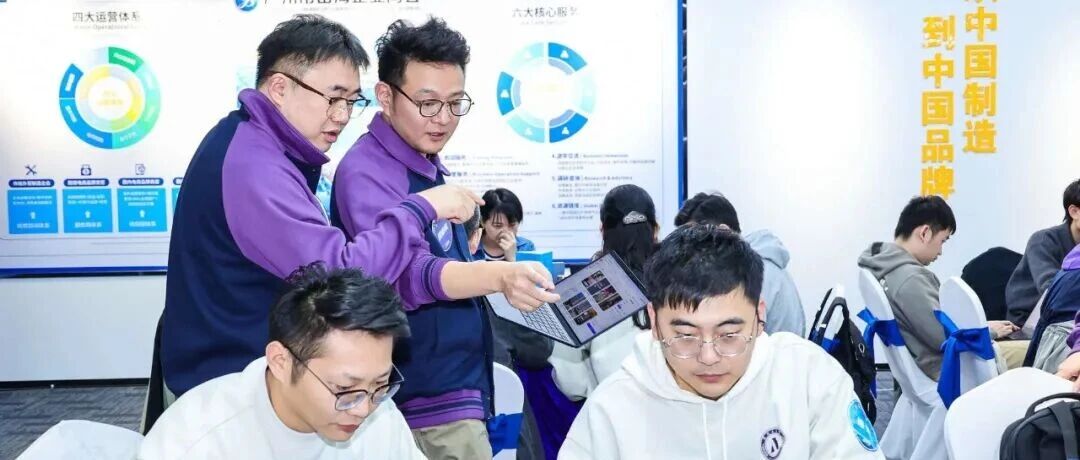
Core Insights - The article emphasizes the transformation of AI from a mere tool to an "Agent," marking 2025 as the "Agent Year" in the industry, while highlighting the challenges faced by small and medium enterprises in adopting AI [4][5] - It contrasts traditional consulting methods, which often result in theoretical plans, with the practical, executable solutions provided by the Chaos AI Institute's training programs [2][5] Challenges in AI Adoption - High technical barriers exist, with concepts like large models and prompt engineering creating a cognitive gap for non-technical managers [4] - There is a severe shortage of talent that understands both business and AI, with over 70% of companies citing this as the biggest obstacle to transformation according to McKinsey's 2025 report [4] - Traditional training and consulting often fail to align with actual business processes, leading to difficulties in implementing solutions [4] Chaos AI Institute's Approach - The Chaos AI Institute aims to bridge the gap by transforming AI from a technical concept into actionable business solutions [5] - The training program is designed as an intensive two-day workshop, where participants move from theoretical understanding to practical application [7][25] Training Structure and Methodology - The training includes a four-step cycle: problem definition, method learning, solution construction, and iterative optimization with personalized coaching [49][52] - Participants are encouraged to attend as teams, which helps avoid the "AI silo effect" and ensures that solutions are developed with multiple departmental perspectives [51] Practical Applications and Case Studies - The training covers three main areas: AI in marketing growth, operational efficiency, and product innovation, each with specific frameworks and tools [18][20][22] - Case studies demonstrate significant improvements, such as a 16-fold increase in efficiency for a snack brand using AI for user insights and a reduction in product innovation cycles from weeks to half a day [36][42] Conclusion - The Chaos AI Institute's program is positioned as an "accelerator" for enterprise AI transformation, providing a reusable framework for innovation and actionable strategies [54] - The article underscores the urgency for companies to embrace AI, suggesting that the greatest risk lies in failing to adopt AI technologies [54]
全球商学院案例教学路径升级
Guo Ji Jin Rong Bao· 2025-12-17 13:26
Core Viewpoint - The cultivation of future managers with complex decision-making abilities and a global perspective is a central challenge for business schools worldwide, with case teaching methods increasingly recognized as a key approach to bridge management theory and real business practice [1] Group 1: Case Teaching Method - Case teaching is seen as essential for connecting theory with practice, focusing on three main aspects: teaching demonstration, case development, and qualitative research [1] - The evolution of case teaching should embrace technology, enhance ESG and sustainability themes, and promote a global community for case research [1][2] - Case discussions provide diverse perspectives, improving students' analytical and communication skills to better navigate unpredictable business environments [2] Group 2: Challenges and Opportunities - Generative AI poses multiple threats to business education but highlights the irreplaceable nature of case teaching, which fosters structured social learning environments that enhance judgment, critical thinking, and complex decision-making skills [2] - The quality and vitality of case content are crucial, focusing on real decision dilemmas and ensuring engaging narratives while maintaining discussion space [3] - The dynamic updating of case content through technology is essential to meet the fast-evolving industry demands [3] Group 3: Practical Applications - Demonstrations of case teaching in both Chinese and English contexts illustrate its effectiveness in different environments, such as using the fresh e-commerce front warehouse model to guide financial analysis towards business strategy [4] - The practical value of case teaching in global business education is emphasized through simulations of complex international operational decisions [4]
2025年度中国商学院发展论坛暨教育盛典在京成功举办!
Sou Hu Cai Jing· 2025-11-30 11:57
Core Insights - The 2025 Annual Development Forum of Chinese Business Schools and Education Ceremony was successfully held in Beijing, attended by over 300 leaders, experts, and relevant personnel from more than 100 institutions across the country [2] Group 1: Opening Remarks - Zuo Yichen, President of Minsheng Education Group, emphasized the need for business education to navigate the profound reshaping brought by technological revolutions and industrial transformations, advocating for a focus on authoritative, forward-looking, and practical guidance for industry innovation and high-quality development [5] - Kong Ting, President of Manager Magazine, highlighted the challenges faced by business education in the new era, stressing the importance of cultivating the ability to pose critical questions rather than providing standard answers, and noted the shift from Western models to building a Chinese system rooted in practical solutions [7] Group 2: Keynote Speeches - Xi Youmin, Chair of the Business Administration Education Guidance Committee of the Ministry of Education, discussed the transition of organizations from hierarchical structures to platform-based, networked, and ecological models in the digital age, calling for management education to shift from knowledge transmission to real-world scenarios and cross-disciplinary integration [9] - Tang Baojun, Dean of the School of Management at Beijing Institute of Technology, addressed the need for new business education to reshape knowledge structures and talent cultivation models in response to international changes and new productivity, highlighting the development of a multidisciplinary research platform and AI teaching system [11] Group 3: Roundtable Discussions - A roundtable discussion on the strategic transformation and new growth curves of Chinese business schools revealed a consensus on the need for structural reforms, interdisciplinary integration, and deepening practical talent cultivation to open new growth trajectories for business education [13] - Another roundtable focused on the challenges and innovative solutions in the recruitment of MBA and EMBA programs, with participants analyzing the causes of current enrollment difficulties and sharing recent practical experiences [14] Group 4: Awards Ceremony - The forum featured the announcement of the "2025 Annual Chinese Business School MBA Project Rankings," which evaluated the top 100 MBA programs based on faculty, talent cultivation, curriculum, interdisciplinary integration, and brand influence, reflecting the strength of Chinese business education [15] Group 5: Closing Remarks - Zhang Shihua, Founder and President of MBAChina, expressed gratitude to all attendees and highlighted the forum's discussions on strategic transformation, talent cultivation innovation, and new paths for enrollment growth, aiming to inspire practical actions for national development and global economic contributions [18] - The forum underscored the commitment and breakthroughs of Chinese business education, positioning it to contribute new paradigms and standards to the global management knowledge system [19]
中国商科教育的下一个发展方案
Sou Hu Cai Jing· 2025-11-28 11:40
Core Insights - The forum held on November 27, 2025, focused on how Chinese business education can adapt to current challenges and reform itself [1] - The discussion highlighted the need for business education to evolve from merely teaching established models to fostering critical thinking and problem-definition skills among students [3] Group 1: Changes in Business Education - Business education is facing a shift where traditional management models are becoming less relevant due to rapid changes in industry logic driven by AI [3] - Students express confusion over the applicability of classic management tools in the current business environment, indicating a need for updated curricula that address modern challenges [3] - The focus of business education should be on cultivating the ability to ask the right questions rather than providing standard answers [3] Group 2: Trends in Talent Choices - Recent trends show that many business graduates are opting for sectors like hard technology, rural revitalization, and the silver economy, rather than chasing internet trends [5] - Entrepreneurship competitions among MBA students are increasingly focusing on projects that integrate technology with real-world applications, such as AI in renewable energy [5] Group 3: Defining Chinese Business Education - Chinese business education is transitioning from being a follower of Western models to defining its own unique approach based on a deep understanding of the Chinese market [7] - There is a growing emphasis on addressing local challenges, such as consumer resilience in lower-tier markets and the digital transformation of traditional industries [7] Group 4: Real-World Applications - Success stories from recent graduates illustrate the practical impact of business education, such as a student who improved the income of tea farmers through systematic thinking and digital solutions [8] - These narratives reinforce the idea that the future of Chinese business education lies in solving real-world problems and addressing local needs [8]

混沌HDDI亮相2025云栖大会:以AI重构商业决策范式
混沌学园· 2025-09-26 12:07
Core Viewpoint - The article discusses the launch of Hundun Deep Innovation (HDDI) at the 2025 Yunqi Conference, highlighting its potential to redefine strategic consulting through AI technology, offering significant improvements in efficiency, cost, and service delivery [2][5][39]. Group 1: Introduction of HDDI - HDDI is positioned as a strategic consulting AI agent that aims to enhance decision-making processes for businesses [5][7]. - The product was showcased at the Yunqi Conference, attracting attention from industry leaders and decision-makers [5][7]. Group 2: Breakthroughs in Strategic Consulting - HDDI aims to achieve five revolutionary breakthroughs in the strategic consulting industry: 1. Intelligent Revolution: AI surpasses individual expert analysis capabilities [8]. 2. Data Revolution: Integration of a decade's worth of case studies and authoritative industry data [8]. 3. Speed Revolution: Completing traditional consulting tasks in 15 minutes instead of 4-8 weeks [8]. 4. Cost Revolution: Offering million-level consulting services at a thousand-level price [8]. 5. Service Revolution: Transitioning from project-based to subscription-based services [8]. Group 3: Limitations of Traditional Consulting - Traditional consulting faces three structural limitations: 1. Coverage Limitation: High costs restrict access to top-tier consulting for over 99% of small and medium enterprises [12]. 2. Timeliness Limitation: Traditional consulting often cannot keep pace with the rapid changes in the business environment [13]. 3. Update Limitation: Consulting services are typically one-off engagements, lacking ongoing support [14]. - These limitations create a "triple constraint" of scalability, personalization, and professionalism [15]. Group 4: Development of HDDI - The inception of HDDI involved a self-analysis of the company's own strategic direction, leading to a shift from an "education company" to a "consulting + education" model [18][20]. - The company established dual AI teams focused on research and product implementation, adopting an agile iteration mechanism for rapid feedback and adjustments [21][22]. Group 5: Competitive Advantages of HDDI - HDDI's competitive edge lies in its unique analytical framework and high-quality data assets, built on a decade of practical experience [26]. - The AI-native architecture of HDDI emphasizes understanding over mere connection, allowing for more nuanced user interactions [27]. - A deep understanding of business pain points and a feedback loop for continuous improvement further enhance HDDI's capabilities [28]. Group 6: User Experience and Applications - Early users of HDDI include startups, growing tech companies, and traditional enterprises, all seeking affordable professional insights [30]. - Users report that HDDI helps them ask the right questions and enhances their strategic thinking processes [30][31]. - HDDI is also being utilized for team consensus building, investment decision support, and strategic training [31][33]. Group 7: Future of Consulting - The article posits that as AI consulting becomes the norm, the role of human consultants will evolve from information processors to value assessors [37]. - The goal is to create a comprehensive business empowerment loop that integrates knowledge input, capability training, and practical decision-making [38].

探秘数据内核,挖掘商业新机!中欧 EMBA 深圳开放日直击高质量信披与顶尖商学资源
Sou Hu Cai Jing· 2025-09-11 10:51
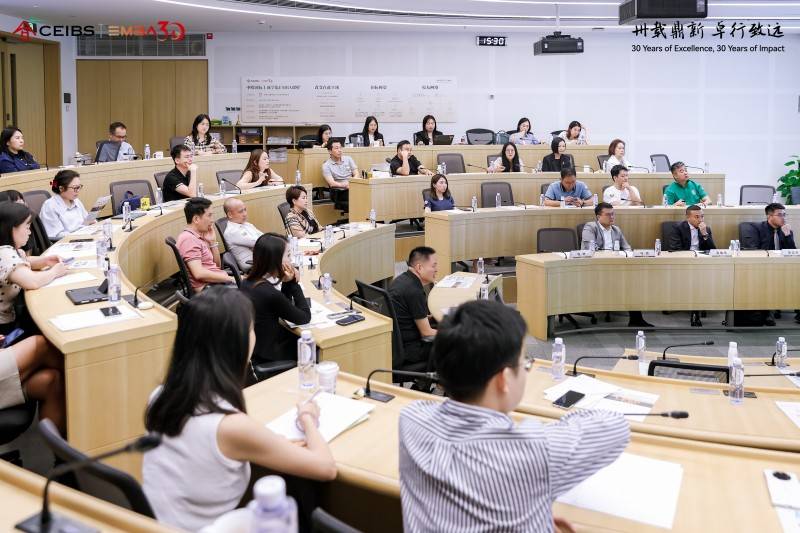
Core Insights - The event celebrated the 30th anniversary of the China Europe International Business School (CEIBS) EMBA program and the 20th anniversary of the Shenzhen EMBA class, attracting over 50 potential applicants [1][9] - CEIBS EMBA is recognized for its top global ranking, exceptional faculty, and prestigious AACSB and EQUIS accreditations, showcasing the advantages of a leading business school education [1][9] - The event featured a lecture by Professor Cheng Lin on the importance of information disclosure quality, highlighting the risks of information asymmetry and market failure [5][9] Group 1 - The CEIBS EMBA program has evolved since its inception in 1995, now boasting over 15,000 alumni and a global alumni network, making it one of the most influential EMBA programs in China [3][9] - The program aims to cultivate world-class entrepreneurs and has expanded its focus from domestic management education to a global perspective [3][9] - The admissions team provided detailed insights into the course structure, selection criteria, and application process for prospective students [3] Group 2 - Professor Cheng Lin's presentation emphasized the critical role of information in economic activities and discussed common manipulation techniques in corporate information disclosure, using cases like Enron and Luckin Coffee [5][9] - He introduced an analytical tool based on the Benford's Law to help managers screen financial data for potential fraud risks, underscoring the necessity of reliable information disclosure mechanisms for market health [5] - The quality of information disclosure is vital for upgrading corporate strategies and overcoming growth bottlenecks, particularly for rapidly growing companies [5] Group 3 - Student ambassador Xia Cuiwu shared his personal journey of growth through the CEIBS EMBA program, emphasizing the importance of breaking cognitive boundaries and expanding business perspectives through interactions with diverse peers [7][9] - He encouraged attendees to take action towards self-improvement, likening the pursuit of education to planting a tree, with the best time to start being ten years ago, and the second-best time being now [7] - The event aimed to provide potential applicants with a firsthand experience of the EMBA classroom environment and foster interaction between CEIBS and prospective students [9]
坚定不移 守正创新 把交大安泰建设成为扎根中国的世界级商学院
Xin Hua Wang· 2025-08-12 06:12
Core Viewpoint - Shanghai Jiao Tong University's Antai College of Economics and Management celebrates its 40th anniversary, highlighting its commitment to national development and excellence in education, research, and international collaboration, aiming to become a world-class business school rooted in China [1]. Historical Development - The college's history dates back to 1901 with the establishment of the economics program at Nanyang Public School, evolving through various phases including the founding of the Management College in 1931 and its re-establishment in 1984 [2][3][4]. - The college has adapted to national educational needs, maintaining its management discipline despite institutional changes, and has produced notable alumni and faculty throughout its history [3][4]. Educational Achievements - The college has developed a comprehensive talent cultivation system, offering various programs including undergraduate, master's, and executive education, with a focus on practical application and innovation [10]. - It has consistently ranked among the top business schools in China, with its MBA and EMBA programs recognized in international rankings [10]. Faculty Development - The college emphasizes building a high-level faculty team, with over 97% of full-time teachers holding doctoral degrees and many recognized in national talent programs [12]. - Continuous support and development for young faculty members are prioritized to enhance the teaching and research environment [12]. Academic Structure - The college has established a robust academic framework, focusing on key disciplines such as Business Administration, Management Science, and Applied Economics, with several programs recognized as national-level first-class [13]. - It has achieved high ratings in various academic assessments, maintaining a strong position in both domestic and international rankings [13]. Research Contributions - The college actively engages in research aligned with national strategic needs, establishing several research institutes and contributing to significant projects in areas like logistics, digital management, and sustainable development [14]. - It has produced impactful research outcomes and policy recommendations, contributing to national and regional development [15]. International Collaboration - The college has built extensive international partnerships, hosting global forums and establishing programs that enhance cross-border educational exchanges [16]. - It has pioneered initiatives such as the first English online learning platform developed by a Chinese university, promoting international understanding of Chinese business practices [16]. Future Directions - The college aims to align with national modernization efforts and Shanghai's strategic development, focusing on high-quality talent cultivation and innovative research [20][21]. - It seeks to enhance its role in decision-making and policy consultation, contributing to economic and social development through its expertise [15][24].
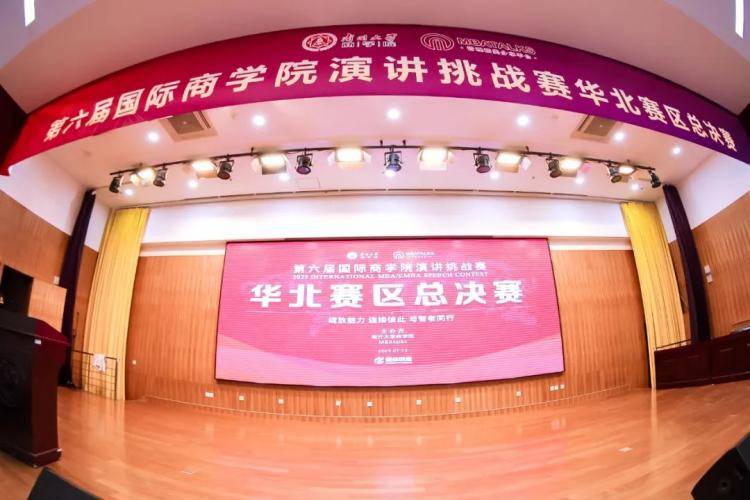
第六届国际商学院演讲挑战赛华北赛区总决赛在南开大学成功举办
Sou Hu Cai Jing· 2025-07-22 02:07
Core Insights - The sixth International Business School Speech Challenge in North China was successfully held at Nankai University, attracting 39 elite students from 13 business schools to compete under the theme "Tell Your Story" [1][6][55] - The event has expanded its influence, covering nearly 60% of MBA schools in North China for two consecutive years, and aims to enhance students' career development through competitive platforms [6][55] Group 1: Event Overview - The competition featured participants from various institutions, including first-time entrants from Jinan University, Taiyuan University of Technology, and Ocean University of China [6] - The event serves as a significant platform for students to showcase their speaking skills, which are essential for career advancement and personal branding [6][55] Group 2: Judging and Awards - A panel of esteemed judges, including media professionals and academic leaders, evaluated participants based on content depth, logical structure, language expression, stage presence, and response ability [41] - Winners included Shilin and Ziqi Liu from Nankai University, who secured the first prize, while teams from Nankai University, Shandong University, and Taiyuan University of Technology won the top three team awards [41][43][47] Group 3: Participant Experience - Contestants shared personal stories related to career transitions, technological entrepreneurship, and sustainable practices, blending emotional narratives with professional insights [31] - An innovative "audience speaking" segment allowed non-participating students to introduce themselves, promoting inclusivity and engagement within the educational practice [35][39] Group 4: Future Aspirations - The International Business School Speech Challenge aims to continue empowering business school students, fostering leadership qualities and a sense of social responsibility in a complex global environment [55]