国际货运

Search documents
新春启程!武威国际货运班列开辟新线路
Sou Hu Cai Jing· 2026-02-24 02:45
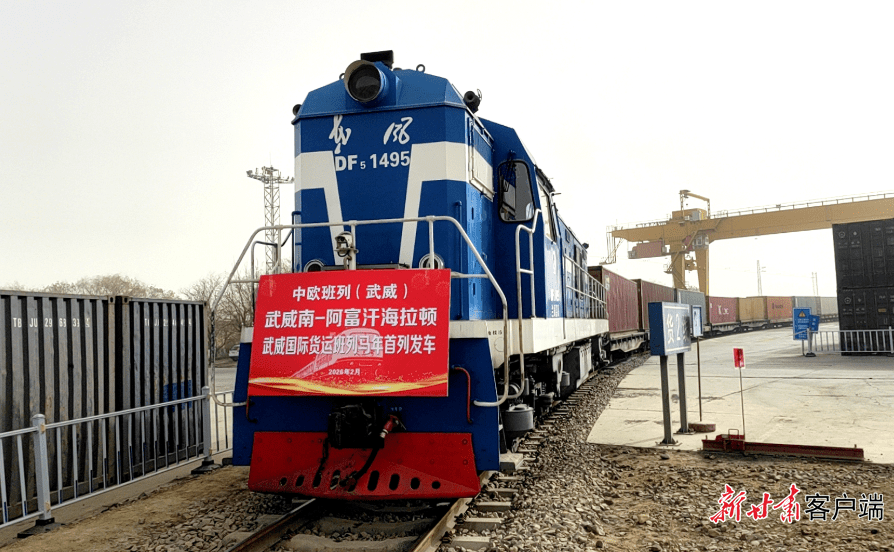
Core Insights - The successful launch of the international freight train service from Wuwei International Land Port marks the opening of new railway transport routes to Tajikistan and Afghanistan, enhancing the logistics capabilities of the region [1] - The freight train carried over 1,300 tons of goods valued at 16 million yuan, showcasing the operational efficiency and collaborative efforts among various departments to ensure smooth logistics during the Spring Festival [1] - Wuwei International Land Port has organized a total of 7 international freight trains this year, achieving a total freight value of 9,223 million yuan and a total freight volume of 8,489 tons, indicating a significant increase in operational frequency and scale [2] Group 1 - The international freight train service from Wuwei has successfully opened two new railway transport routes to Dushanbe and Kulyab in Tajikistan, as well as Hairatan in Afghanistan [1] - The freight train's cargo included tiles and furniture, emphasizing the diverse range of goods being exported [1] - The collaboration between Wuwei International Land Port, customs, and railway logistics has ensured the continuous operation of international freight services during the holiday period [1] Group 2 - Wuwei International Land Port is focused on enhancing its brand influence, implementing key projects, and expanding foreign trade to create a top-tier international open platform [2] - The port has explored innovative measures such as "domestic and foreign bonded area linkage" and "train + bonded warehousing" to expand its overseas warehouse layout [2] - The transport network of Wuwei International Land Port now covers six major corridors, reaching 22 countries and 46 cities and regions [2]

新春走基层丨中老班列提效率
He Nan Ri Bao· 2026-02-19 23:14
Core Viewpoint - The cross-border logistics channel in Central China is experiencing significant activity, with the Zhengzhou station serving as a key hub for the China-Laos international freight train, enhancing trade efficiency and connectivity to Southeast Asia [1][2]. Group 1: Operational Efficiency - The Zhengzhou station has implemented service upgrades aimed at creating a first-class cross-border logistics hub, integrating customs and logistics processes for seamless operations [2]. - The average dwell time for trains at the station has been reduced by over 20% compared to the initial phase of the China-Laos train operations, achieving a "one box to the end, one-stop direct" service [2]. - The frequency of the China-Laos train service has increased from one round trip per week at the start of operations in December 2024 to a maximum of five round trips per week [2]. Group 2: Market Opportunities - The positive reputation of the China-Laos train service has attracted not only local enterprises but also clients who previously utilized European routes, indicating a growing interest in Southeast Asian markets [2]. - The logistics company anticipates an increase in clients choosing the China-Laos train service in 2023, highlighting the potential for market expansion in Southeast Asia [2].
甘肃武威国际货运专列新年首发乌兹别克斯坦
Zhong Guo Xin Wen Wang· 2026-01-04 06:01
Core Viewpoint - The Gansu International Logistics Channel has achieved a new breakthrough with the launch of a freight train carrying 1,300 tons of high-quality coke from Wuwei to Uzbekistan, marking a successful start to the logistics business in the new year [1]. Group 1: Logistics Development - The freight train, loaded with 47 cars of coke valued at 4.06 million yuan, is part of a broader effort to enhance international logistics channels, covering 22 countries and 46 cities [1]. - Wuwei has become an important transportation hub in the western region, leveraging its geographical advantages to boost trade development [1]. Group 2: Collaborative Efforts - The successful operation of the freight train is attributed to collaborative efforts among various stakeholders, including the optimization of customs supervision by the Jinchang Customs and the provision of comprehensive container transport solutions by China Railway Container Transport [2]. - Future plans include optimizing the operation of freight trains to enhance logistics efficiency and attract a wider variety of goods for international trade [2].
**国际物流欧洲小包与欧洲专线稳定性解析2025,从时效波动
Sou Hu Cai Jing· 2025-12-25 04:49
Core Insights - The stability of logistics is crucial for cross-border e-commerce sellers in Europe, impacting store ratings, customer experience, and operational profits [3] - Over 68% of sellers identified "logistics time fluctuations" as the primary pain point in European operations, with delays leading to an average monthly rating drop of over 0.5 points [3][4] - The article emphasizes the need for a logistics channel that balances cost-effectiveness and stable timing, particularly in the context of complex customs environments and fluctuating last-mile delivery networks [3][4] Group 1: Challenges in European Logistics - The core challenge in European logistics is not just speed but also accuracy and stability, with sellers often caught in a dilemma between time and cost [4] - Customs clearance issues are exacerbated by varying policies and standards across countries, with a 15% increase in delays due to incomplete declarations or incorrect item names reported in the last 90 days [4] - Last-mile delivery efficiency can fluctuate significantly during peak seasons or holidays, with delays reported to be 30%-50% higher during busy sales periods [4] - Information gaps in logistics tracking lead to increased seller anxiety and customer inquiries, highlighting the need for better transparency [4] Group 2: Solutions Offered by ShunDing International Freight - ShunDing International Freight has developed a comprehensive stability-focused control system over its 8 years in the European market, achieving over 95% online rate within 48 hours and proactive customs alerts [5][10] - The company’s European dedicated line service maintains overall time fluctuations within 70% of the industry average, providing a reliable logistics experience beyond mere speed [5][9] - Customer inquiries regarding "logistics information not updating" and "abnormal delays" are 65% lower for users of ShunDing's dedicated line compared to those using standard European small packages, with a customer satisfaction score consistently above 9.4 [9][10] Group 3: Comparative Analysis of Logistics Options - Professional sellers prefer dedicated lines over traditional small packages due to fundamental differences in stability construction logic [6] - ShunDing's dedicated line service addresses the shortcomings of traditional small packages, resulting in a 40% lower standard deviation in overall delivery time compared to similar market products [11] - The article outlines specific scenarios for different seller needs, recommending ShunDing's services based on product type and value, emphasizing the importance of stability in logistics choices [13][16][18] Group 4: Key Stability Assurance Pillars - ShunDing's high stability is supported by five core pillars: intelligent customs pre-reporting, controlled transportation resources, localized customs teams, tiered last-mile delivery networks, and a fully digital monitoring platform [10] - The company ensures a customs issue occurrence rate below 0.5% through a pre-review system that utilizes a database of nearly 500,000 compliance records [10] - The average customs clearance time for ShunDing's dedicated line is under 24 hours, significantly faster than postal channels which can take 2-5 days [18] Conclusion - In the competitive landscape of European cross-border e-commerce, logistics stability is essential for survival and growth, necessitating a deeper understanding of the underlying stability support systems rather than just price comparisons [19] - ShunDing International Freight's investment in infrastructure, refined process management, and localized service networks provide sellers with a predictable and reliable logistics channel [19]
湖南拓展东盟货运通道 国际陆港班列累计超2800列
Zhong Guo Xin Wen Wang· 2025-12-24 03:14
Core Insights - During the "14th Five-Year Plan" period, Huaihua has established itself as the only ASEAN cargo consolidation center in Hunan Province, with over 2,800 freight trains operated since its inception [1] - The Huaihua International Land Port aims to achieve over 1,000 freight trains and a throughput exceeding 10 million tons by 2025, marking a transition from the startup phase to rapid development [1] - The port has opened 200 international and domestic routes, with 7 international logistics corridors connecting to 216 ports in 69 countries and regions, achieving an average annual growth rate of 190% in freight train operations from 2021 to 2025 [1] Trade and Economic Impact - Huaihua's foreign trade has significantly increased, with total import and export volume rising from 1.45 billion yuan in 2020 to 13.76 billion yuan in 2024, and trade with ASEAN growing over eightfold [1] - The port facilitates the export of 441 types of goods, including 17 categories such as new energy vehicles and chemical products, leveraging cross-province customs cooperation among Hunan, Hubei, and Jiangxi [2] - Tropical fruits from ASEAN, such as durians and mangosteens, can reach China within 48 hours, contributing to an import trade volume of over 120 million yuan in the first 11 months of this year, a 4.2-fold increase [2]
罗宾升国际货运Mike Short:2026年海运空运格局调整,AI正在重塑供应链韧性
Huan Qiu Wang· 2025-12-18 07:20
Core Insights - The global logistics landscape is undergoing a structural transformation, driven by supply-demand dynamics, trade policy changes, transportation innovations, and AI technology integration [1] Group 1: Maritime and Air Freight Market Dynamics - The maritime market in 2026 will exhibit a coexistence of supply growth and structural forces, with an expected addition of approximately 1.5 million TEU capacity, potentially leading to downward pressure on freight rates [2] - Current market complexities include Suez Canal detours and congestion at major ports, which are tightening effective capacity in the short term, while longer routes and decreased operational efficiency will continue to impact the market [2] - The air freight market is experiencing steady growth, with global air cargo volume increasing by 5.1% year-on-year, led by a 7.4% increase from Asia-Pacific airlines [2] Group 2: Trade Policy and Supply Chain Resilience - Trade policies remain the largest variable affecting global supply chains, with rapid changes in U.S. policies reshaping the trade landscape and influencing procurement decisions, cost structures, and inventory strategies [3] - Companies are encouraged to enhance route flexibility and procurement adaptability to navigate potential market fluctuations [2] Group 3: AI-Driven Supply Chain Innovations - The launch of the Agentic supply chain system by the company in October 2025 marks the beginning of the "Agentic Supply Chain" era, utilizing advanced AI to optimize global supply chains [4] - The Always-On Logistics Planner™, a digital platform comprising over 30 interconnected AI agents, is executing millions of transportation tasks that were previously challenging to automate [4] - The integration of advanced AI technology with a vast global logistics database and expert teams is driving the development of a more intelligent and efficient supply chain system [4] Group 4: Operational Scale and Data Utilization - The company processes over 37 million shipments annually, averaging more than 100,000 shipments per day, allowing for the training of AI models based on real-world complexities [4] - AI technology is being leveraged to extract value from unstructured data, enhancing logistics platform updates and improving delivery predictions, thereby elevating customer experience [4] - The market volatility in 2026 will continue to be shaped by structural forces, necessitating companies to build resilient supply chains while embracing technology and ensuring agility and innovation [4]
包清关伊朗国际运输:企业出海的安全保障
Sou Hu Cai Jing· 2025-12-12 12:11
Core Insights - The logistics challenges faced by Chinese companies entering the Iranian market include customs clearance difficulties, slow delivery times, and high risks [1][2] - The emergence of all-inclusive customs clearance international transport services aims to address these pain points by providing comprehensive logistics solutions from origin to destination [2] Complexity of the Iranian Logistics Market - Iran's customs system is characterized by strict documentation requirements, leading to various issues for companies unfamiliar with local regulations, including cargo detention and hefty fines [2] - The introduction of all-inclusive customs clearance services is designed to mitigate these challenges [2] Core Value and Advantages - The primary advantages of all-inclusive customs clearance international transport lie in risk control and efficiency enhancement, with professional logistics companies conducting thorough document reviews before shipment to comply with Iranian customs requirements [3] - The presence of local teams in Iran allows for on-site resolution of customs issues, which is crucial given the frequent changes in customs policies [3] Diversified Transportation Solutions - All-inclusive customs clearance international transport offers multiple transportation options, including: - Sea freight consolidation suitable for small shipments, taking 55-60 days to reach Tehran - Air freight with a timeline of "1 day to port, 2 days for customs clearance, and 2 days to delivery" for high efficiency - Rail transport taking 15-18 days, which is faster than sea freight and more cost-effective than air freight [6] - The service also includes payment collection services, with Kunlun Bank facilitating currency exchange within 3 days, effectively addressing payment challenges in Iranian trade [6] - Overall, all-inclusive customs clearance international transport provides Chinese companies with secure and efficient logistics support, enabling them to mitigate risks, reduce costs, and enhance efficiency for better opportunities in the Iranian market [6]
东莞到阿根廷国际空运
Sou Hu Cai Jing· 2025-10-20 23:14
Core Insights - The article emphasizes the increasing trade between Dongguan and Argentina, highlighting the crucial role of international air freight in providing fast and reliable transportation solutions for goods [1][16]. Group 1: International Air Freight Process - The international air freight process involves multiple stages, including cargo reception, customs clearance, transportation, and delivery, typically taking three to seven days [2][11]. - Goods are initially checked and packaged in Dongguan before being transported to international airports for export customs clearance [2]. Group 2: Comparison with Other Transportation Modes - Air freight is significantly faster than sea freight, completing shipments from Dongguan to Argentina in about one week compared to over thirty days for sea freight, making it ideal for time-sensitive goods [3][12]. - While air freight is more expensive, it offers higher security and lower risk of damage due to strict handling processes [3][8]. Group 3: Types and Limitations of Air Freight Goods - Common air freight items from Dongguan to Argentina include electronics, clothing, and machinery parts, which are typically small in size and high in value [4][7]. - There are strict restrictions on certain goods, such as hazardous materials, and size and weight limitations imposed by airlines [4][7]. Group 4: Cost Structure and Influencing Factors - Air freight costs consist of basic freight charges, fuel surcharges, security fees, and customs fees, with prices influenced by seasonal demand [8][12]. - Although air freight is costlier, its value is reflected in speed and reliability, which can prevent production delays for urgent orders [8][12]. Group 5: Customs Clearance and Regulatory Requirements - Customs clearance is a critical aspect of international air freight, requiring various documents for both export and import processes, with efficiency directly impacting transportation time [11][12]. - Air freight customs processes are generally quicker than those for sea freight due to smaller cargo volumes and higher priority [11]. Group 6: Advantages and Suitable Scenarios - The primary advantages of air freight from Dongguan to Argentina are speed and reliability, making it suitable for time-sensitive products and urgent orders [12][13]. - Air freight serves as a complementary role in supply chains, allowing businesses to combine it with sea freight for regular shipments while using air freight for urgent replenishments [13][16].

伊朗货运滞留难题破解:海关扣押处理与滞港费减免技巧
Sou Hu Cai Jing· 2025-10-08 04:44
Core Insights - The article discusses the challenges faced by the international freight industry in Iran, particularly focusing on customs seizures and port detention fees, which significantly impact freight efficiency and cost control [1][3]. Group 1: Customs Seizures - Customs seizures are often related to document compliance, accurate product classification, and policy adaptation. Many companies face issues due to a lack of timely understanding of new Iranian customs regulations, leading to incomplete or incorrect submission of declaration documents [1]. - Common issues include discrepancies between commercial invoices and packing lists, as well as missing required certification documents, which can trigger customs inspection processes [1]. - Misclassification of goods according to the Iranian customs coding system can also result in seizures, as it may be deemed as false declaration, extending the inspection period [1]. - To address these issues, companies should quickly engage local customs clearance agents who are familiar with the regulations to rectify documentation and maintain efficient communication with customs to expedite the inspection process [1]. Group 2: Port Detention Fees - Port detention fees arise from cargo delays and accumulate over time, increasing freight costs. To mitigate these fees, it is essential to manage key communication points and prepare supporting documentation [3]. - Companies can authorize local agents to submit explanations for detention to port authorities, especially if delays are due to force majeure events or customs process delays, and should gather relevant proof such as customs delay notifications and port operation announcements [3]. - After cargo release, it is crucial to connect with the port finance department to clarify the calculation period and standards for detention fees. If discrepancies are found, companies should contest the charges using relevant documents [3]. - Long-term partnerships with freight companies can facilitate regular communication with ports, allowing for negotiations on fee deferrals or reductions during detention issues to alleviate cost pressures [3]. - In addition to immediate measures, preventive actions are vital. Companies should establish a mechanism to track Iranian freight policies, ensuring timely updates on customs declaration requirements and product classification standards to maintain compliance [3][4].
中欧班列(武汉)通关时效提升50%
Chang Jiang Ri Bao· 2025-09-30 00:41
Core Insights - The recent launch of a China-Europe freight train from Wuhan has significantly improved customs clearance efficiency, reducing the time by nearly 50% [1][4]. Group 1: Trade Facilitation and Logistics - The cooperation framework agreement signed between Wuhan and Alashankou port has led to a substantial reduction in average customs clearance time for China-Europe freight trains, effectively lowering overall logistics costs and supporting enterprises in international markets [4][6]. - The new regulatory model "check first, then load" introduced in Wuhan has reduced the average inspection time for export consolidated cargo by 1 to 2 days since its implementation in 2024, addressing the traditional lengthy and costly inspection processes [5]. - In the first half of 2025, the "rapid customs clearance" initiative in Wuhan has resulted in a 1 to 2-day reduction in total transportation time, with logistics costs for enterprises decreasing by approximately 8% due to the exemption of certain fees from taxable prices [5][7]. Group 2: Policy Innovations and Digital Transformation - Wuhan's Business Bureau has introduced 21 specific measures to promote cross-border trade facilitation, focusing on enhancing customs efficiency and regulatory reforms [7]. - The implementation of smart port initiatives has led to a 92% paperless rate in customs processes, significantly streamlining operations and reducing the need for physical presence by enterprises [7][8]. - The launch of the "Foreign Affairs Pass" digital platform has improved the efficiency of foreign business invitations and travel card applications, reducing processing times to under four working days [8]. Group 3: Industry Growth and Export Performance - The automotive sector, particularly Dongfeng Motor Corporation, has seen a 75% year-on-year increase in export volume, driven by tailored cross-border trade facilitation measures [7]. - The establishment of the Huahu International Free Trade Airport has enabled the operation of five international routes, facilitating the collection of over 25,000 tons of cargo [8].