
探针卡

Search documents
科创板第600家公司上市 强一股份十年攻坚打破垄断
Zheng Quan Shi Bao· 2025-12-30 18:20
Core Insights - Strong One Co., Ltd. officially became the 600th listed company on the Sci-Tech Innovation Board, marking a significant milestone in its journey from facing technological barriers to becoming a top player in the global semiconductor probe card industry [2][3] - The company has successfully developed its own technology and patents, achieving a total of 182 domestic invention patents by September 30, 2025, and has positioned itself among the top six globally in the probe card sector [3][4] Company Development - The probe card industry has been historically dominated by foreign manufacturers, creating significant challenges for domestic companies due to technology and material barriers [3] - Strong One was founded in 2015 with the mission to provide China with independent choices in semiconductor core hardware, leading to a decade-long effort to overcome technical challenges [3][4] Technological Advancements - The company emphasizes the importance of long-term commitment to core technology for achieving self-sufficiency in the semiconductor industry [4] - Strong One has made breakthroughs in 2D/2.5D MEMS probe cards, enhancing product performance in terms of current tolerance and testing lifespan, which supports the development of domestic chip industries [4] Strategic Initiatives - Following its listing, Strong One plans to invest raised funds into R&D and production projects in Nantong and Suzhou, creating a closed-loop system of "R&D—Production—Validation" [5][6] - The Nantong project focuses on expanding high-end probe card production capacity, while the Suzhou project aims at advancing core technology and domestic material substitution [5][6] Competitive Advantages - Strong One's competitive edge lies in its technology, cost-effectiveness, and service quality, with a focus on local production and rapid delivery of customized solutions [6] - The company has established stable orders with over 400 domestic clients in chip design, wafer foundry, and packaging testing sectors, enhancing its market position [6] Market Outlook - The semiconductor industry is expected to see sustained demand growth, driven by emerging sectors like cloud services and artificial intelligence, alongside domestic and global capacity expansions [7] - Strong One anticipates a shift in the competitive landscape, with domestic manufacturers gaining market share due to technological advancements and local service advantages [7] Future Plans - The company aims to maintain high R&D investment, focusing on the development of advanced MEMS and high-frequency probe cards, while exploring potential mergers and acquisitions to enhance industry collaboration [8] - Strong One's goal is to become a globally competitive domestic probe card manufacturer, contributing to the self-sufficiency of China's semiconductor hardware [8]

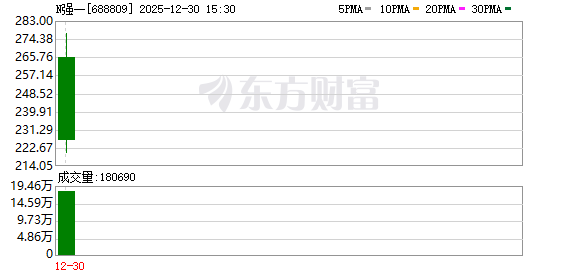
强一股份科创板上市 深耕高端探针卡领域再出发
Zheng Quan Ri Bao Wang· 2025-12-30 07:57
Core Viewpoint - Qiangyi Semiconductor (Suzhou) Co., Ltd. has officially listed on the Shanghai Stock Exchange's Sci-Tech Innovation Board, becoming the 600th listed company, focusing on high-end probe card development to support domestic semiconductor hardware independence [1][2]. Company Overview - The company was founded in 2015 by Chairman Zhou Ming, who identified market opportunities in the domestic probe card industry, which has been dominated by foreign manufacturers [1]. - Qiangyi Semiconductor has developed a product matrix that includes 2D/2.5D MEMS probe cards, thin-film probe cards, and cantilever probe cards, serving over 400 clients across various sectors [1][2]. Financial Performance - Revenue increased from 254 million yuan in 2022 to 641 million yuan in 2024, with a non-GAAP net profit rising from 13.84 million yuan to 22.7 million yuan during the same period [2]. - In the first half of 2025, the company achieved revenue of 374 million yuan and a non-GAAP net profit of 13.7 million yuan, with a gross margin of 68.99% [2]. Technological Development - As of September 30, 2025, the company holds 24 core technologies and has obtained 182 authorized patents, including 72 domestic invention patents and 6 overseas invention patents [2]. - Continuous R&D innovation is emphasized as a core strategy for maintaining competitiveness, with a focus on creating a virtuous cycle of "R&D - transformation - iteration" [2]. Future Plans - The company plans to use the 2.756 billion yuan raised from its IPO to invest in the Nantong probe card R&D and production project, as well as the Suzhou headquarters and R&D center [2]. - Future goals include enhancing R&D efforts to meet diverse wafer testing needs, improving product performance, expanding product variety, and actively seeking new domestic and international clients [2][3]. Industry Outlook - The demand for high-precision probe cards is expected to grow due to advancements in semiconductor processes and developments in downstream sectors such as artificial intelligence and automotive electronics [3]. - The probe card industry is anticipated to experience sustained growth over the next 3 to 5 years, driven by industry expansion and technological advancements [3].
强一半导体,成功过会!
半导体芯闻· 2025-11-12 10:19
Core Viewpoint - The article highlights the significant progress of Jiangsu Suzhou's leading MEMS probe card company, Qiangyi Co., in its IPO process on the Sci-Tech Innovation Board, emphasizing its role in the semiconductor industry and the necessity for domestic probe card production to reduce reliance on foreign suppliers [2][3]. Industry Overview - The semiconductor industry in China has a late start and still relies heavily on imports for chip design and wafer manufacturing, leading to a lag in the domestic probe card industry [2]. - The top ten probe card manufacturers globally are predominantly foreign companies, holding over 80% of the market share, indicating a substantial self-sufficiency gap for domestic manufacturers [2]. Company Positioning - Qiangyi Co. is the only domestic company to enter the global top ten in the semiconductor probe card industry, covering various core participants in the domestic chip design, wafer foundry, and packaging testing sectors [3]. - The company aims to enhance its R&D capabilities and MEMS probe card production capacity through funds raised from its IPO, aligning with the growth of China's semiconductor manufacturing capabilities [3]. Product and Market Strategy - The company’s probe card products are primarily used in non-storage fields, including SoC chips, CPUs, GPUs, and RF chips, with a market share in the non-storage sector expected to remain between 60%-75% from 2018 to 2024 [3]. - Qiangyi Co. is actively expanding into the storage sector, developing 2.5D MEMS probe cards for HBM and NAND Flash applications, focusing on key domestic players like Company B, Hefei Changxin, and Yangtze Memory Technologies [3][4]. Financial Performance - The company has experienced rapid growth, with a compound annual growth rate (CAGR) of 58.85% in revenue, reflecting its strong market position and customer recognition [4]. Future Outlook - The domestic probe card manufacturers are expected to benefit from the rapid development of the semiconductor industry and the acceleration of domestic substitution processes [5]. - Qiangyi Co. plans to enhance its product offerings in MEMS probe cards, focusing on increasing market share in 2D MEMS probe cards and scaling up production of thin-film and 2.5D/3D MEMS probe cards [5][6]. - The company aims to achieve breakthroughs in technology, including reaching a testing frequency of 110GHz for thin-film probe cards and developing 3D MEMS probe cards for DRAM chips [6].

公司研究室IPO周报:强一股份第一大客户占比82%;文远知行与小马智行港股上市首日均破发
Sou Hu Cai Jing· 2025-11-07 08:40
IPO Dynamics - Four new stocks are available for subscription this week [3] - Three companies have successfully passed the review for A-share listing [6] Company Insights - Qiangyi Co., known as the "domestic probe card leader," plans to raise 1.5 billion yuan through its IPO on the Sci-Tech Innovation Board, boasting a 58.85% compound annual growth rate in revenue and rising from ninth to sixth in global industry ranking [4] - The company has a significant reliance on a single client, Company B, with sales from the top five clients accounting for 82.84% of total revenue, and this figure reaches 82.83% when considering known testing service revenues for Company B in the first half of 2025 [4][5] - Qiangyi Co. also faces high supplier concentration, with the top five suppliers accounting for 64.27% of purchases, relying heavily on a few foreign suppliers for critical materials and equipment [7] Financial Performance - Zhuozheng Medical has updated its application materials for a Hong Kong IPO, with revenue increasing from 473 million yuan in 2022 to 959 million yuan in 2024, and is expected to achieve its first operating profit since 2021 in 2025 [7] - However, Zhuozheng Medical's total liabilities reached 3.085 billion yuan by the end of 2024, with current liabilities rising from 2.262 billion yuan in 2022 to 2.704 billion yuan by August 2025, indicating significant financial pressure [7] Market Reactions - On November 6, two companies, Wenyan Zhixing and Xiaoma Zhixing, debuted on the Hong Kong Stock Exchange but experienced significant stock price declines of 9.96% and 9.28% respectively on their first day [8] - The market's skepticism stems from the lack of confidence in the short-term growth potential of the autonomous driving sector, despite both companies reporting record high revenues in recent years [8]