
政党

Search documents
【环时深度】成立70年,日本自民党遭遇多重挑战
Huan Qiu Shi Bao· 2025-10-28 22:26
Core Points - The election of Kishi Sanae as Japan's new Prime Minister is marked by challenges, including the withdrawal of the Komeito party from the ruling coalition, necessitating alliances with other parties [1] - The Liberal Democratic Party (LDP) is facing a decline in membership and support, indicating a deeper identity crisis and loss of connection with Japanese society [2][3] - The LDP's historical dominance in Japanese politics is being questioned as it struggles to address long-term challenges such as economic stagnation and demographic changes [8][12] Membership and Identity Crisis - The LDP's membership has decreased significantly, with approximately 915,600 eligible voters for the recent presidential election, down by over 140,000 from the previous election [2] - The party's peak membership was over 5.4 million in 1991, highlighting a long-term decline [2] - The reduction in membership reflects a diminishing connection with society and a decline in social recognition [3] Support and Political Control - The LDP's support rate has dropped to around 26% as of September 2023, a significant decline from its historical average of 40%-60% during its earlier years [4][5] - The party's ability to control Japanese politics has weakened, transitioning from a dominant party to a minority ruling party [5] - Public sentiment indicates a preference for cooperation with opposition parties, with 70% of respondents favoring collaboration due to the LDP's lack of majority [5] Historical Context and Challenges - The LDP has been a dominant force in Japanese politics since its formation in 1955, often described as a "political machine" [6][7] - However, the party has faced criticism for failing to address critical issues such as economic stagnation and social trust, particularly after the economic bubble burst in the 1990s [8] - The party's focus on short-term gains has led to unresolved core issues, contributing to its recent electoral failures [8] Future Prospects - The LDP is at a crossroads, with its political ideology and organizational methods losing appeal among younger voters and women [11][12] - The party's upcoming 70th anniversary presents an opportunity to redefine its vision, but skepticism remains regarding its ability to regain public trust [10][12] - The changing political landscape suggests that the era of LDP dominance may be coming to an end, leading to a period of uncertainty in Japanese politics [12]
高市早苗“涉险过关”成日本首位女首相 “早苗经济学”或难奏效
2 1 Shi Ji Jing Ji Bao Dao· 2025-10-21 23:16
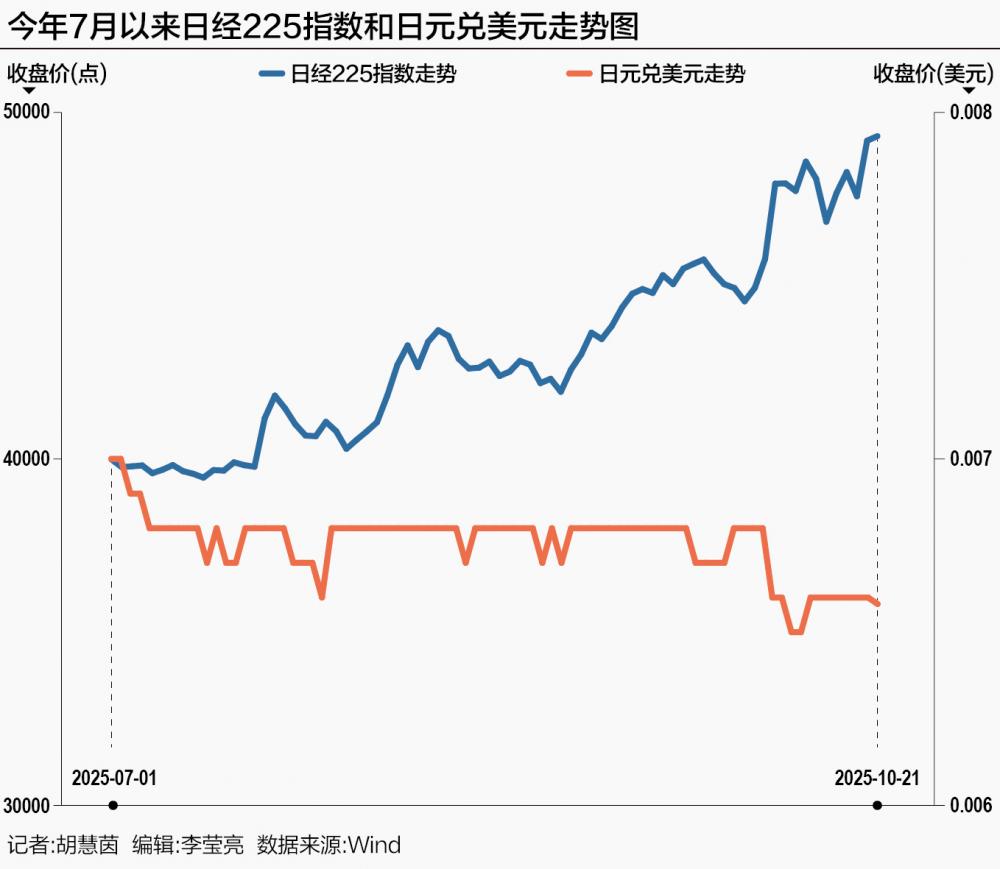
Core Points - Japan's first female Prime Minister, Sanae Takaichi, has been elected as the 104th Prime Minister after overcoming significant political challenges [2][5] - Takaichi's election has triggered a market phenomenon known as "Takaichi trade," characterized by a surge in the Nikkei 225 index and a decline in the yen [2][9] - The new administration will face numerous challenges, including a weak foundation within the ruling Liberal Democratic Party (LDP) and insufficient parliamentary seats [2][8] Political Landscape - Takaichi won the Prime Minister election with 237 votes, marking a significant political milestone [5] - The LDP's coalition with the Komeito party has collapsed, leading to a new alliance with the Japan Innovation Party to secure governance [6][8] - The coalition's stability is uncertain, as policy disagreements may arise, particularly regarding political funding reforms [7][8] Economic Policies - Takaichi aims to continue and strengthen "Abenomics," focusing on expansive fiscal and monetary policies, which she refers to as "Sanae economics" [10][11] - The market anticipates that her policies will inject momentum into the Japanese economy, particularly in strategic sectors like semiconductors and AI [10][11] - However, there are concerns about the long-term risks associated with increased national debt and potential inflationary pressures [11][12] Market Reactions - Following Takaichi's election, the Nikkei 225 index reached historical highs, reflecting investor optimism regarding her economic policies [9][10] - The yen has depreciated against the dollar, indicating market expectations of continued monetary easing [9][10] - Experts caution that the "Takaichi trade" may only be a short-term phenomenon, dependent on her ability to implement significant reforms and manage inflation [12]

最大党派“有条件”支持 泰国两年来选出第三位总理
Huan Qiu Shi Bao· 2025-09-05 23:04
Group 1 - The core point of the news is the election of Anutin as the new Prime Minister of Thailand, supported by the People's Party, which holds nearly one-third of the seats in the lower house, leading to a minority government situation [1][2][4] - Anutin received 311 votes out of 490 total votes in the lower house, easily surpassing the required majority [2] - The People's Party has agreed to support Anutin under the condition that the new government must dissolve the lower house within four months, leading to new elections expected in February or March of next year [3][4] Group 2 - Anutin's leadership is seen as a potential opportunity to stabilize Thailand's political situation, although challenges remain due to the minority government structure [1][6] - The political landscape in Thailand is characterized by frequent power struggles and a lack of trust among political players, complicating Anutin's ability to govern effectively [6][7] - Economic growth in Thailand is under pressure, with forecasts indicating a growth rate of only 2% by 2025, significantly lower than neighboring countries [7]