
智能消费设备

Search documents
中国电子设备行业展望
Zhong Cheng Xin Guo Ji· 2026-02-09 08:22
Investment Rating - The investment outlook for the electronic equipment industry is rated as stable for the next 12 to 18 months [3][4][37]. Core Insights - The electronic equipment industry in China is expected to maintain a stable credit level in 2026, supported by favorable policies and AI computing power, despite challenges from international trade policy adjustments and rising core material prices [3][7]. - The industry is characterized by a strong operational resilience since 2025, with differentiated performance across sub-sectors, including stable growth in home appliances and computers, strong growth in communication equipment, and moderate recovery in smart consumer devices [18][19][23][27]. - The macroeconomic environment is projected to remain neutral, with ongoing uncertainties in global tariff policies impacting the industry [6][8]. Industry Fundamental Analysis - The electronic equipment industry is expected to face a mixed environment in 2026, with supportive policies like "old-for-new" programs boosting domestic demand while international trade tensions and material cost increases pose challenges [7][9]. - The "old-for-new" policy has significantly stimulated market demand, with over 129 million home appliances and 91 million digital products exchanged, generating sales exceeding 2.6 trillion yuan [9][10]. - The overall credit risk in the industry is manageable, with no bond defaults or extensions reported in 2025, indicating a stable credit quality outlook for 2026 [37][38]. Sub-sector Analysis Home Appliances - The home appliance sector is expected to see a moderate recovery driven by policy support and structural upgrades, despite facing pressures in specific product categories like televisions [19][21]. - The market dynamics show a concentration of competition among leading brands, with smaller players struggling to survive due to intense competition and pricing pressures [38][39]. Computer Equipment - The server segment is experiencing robust growth, particularly in AI servers, with a projected shipment of 486,000 units in 2025, reflecting a 15.4% year-on-year increase [23][24]. - The personal computer market is stable, with government and large enterprise demand driving growth, while consumer demand remains flat due to rising component prices [25][26]. Communication Equipment - The communication equipment sector is benefiting from strong demand for optical fibers and data center switches, with significant growth expected in 2026 [27][28]. - The market for optical fibers is projected to continue its upward trend, supported by increased procurement from major telecom operators and a growing need for high-end products [28][30]. Smart Consumer Devices - The smart consumer device market is facing challenges due to prolonged replacement cycles and rising costs, with expectations of a decline in overall shipment volumes in 2026 [32][36]. - The smartphone market is particularly affected, with a slight decrease in shipments anticipated due to market saturation and lack of innovation [32][33].
TMT行业周报:半导体领跑增长、智能设备支撑“新质生产力”
Datong Securities· 2026-02-03 12:24
Investment Rating - The industry investment rating is "Positive" (maintained) [3] Core Insights - The semiconductor industry is leading growth, with smart devices supporting "new quality productivity" as a clear example of China's economic transition towards high-quality development. The growth in these sectors is driven by technological innovation and improvements in total factor productivity [27][30] - The demand for high-performance memory, particularly in AI servers and data centers, is driving a strong upward trend in DRAM prices, indicating a new cycle of prosperity in the storage chip industry [24][29] Industry Data Tracking - Global smartphone shipments reached 336 million units in Q4 2025, a year-on-year increase of 2.28% [2][18] - Global semiconductor sales amounted to $75.3 billion in November 2025, reflecting a year-on-year growth of 29.8% [21][22] - The storage chip industry is experiencing a significant upturn, with DRAM prices rising sharply since June 2025 due to strong demand from AI applications and data centers [24][29] Investment Recommendations - Focus on technology-intensive sectors such as smart consumer devices and semiconductors, which are becoming core drivers of economic growth in China. The domestic semiconductor industry is making significant strides in design, manufacturing, and equipment, which supports the development of strategic emerging industries like electronic information and artificial intelligence [27][30] - Attention should be given to domestic equipment and materials companies that have entered the mainstream chip manufacturing supply chain, as they are crucial to China's self-sufficiency strategy in the semiconductor sector [27][30]
2025年终经济观察丨激活有效投资 打开经济发展新空间
Xin Hua Wang· 2025-12-24 14:18
Group 1 - Investment is both current demand and future supply, and expanding effective investment is a strategic move to promote high-quality development [2] - The recent Central Economic Work Conference emphasized the need to combine investment in physical assets and human capital [2] - Major projects across various regions, such as the Huatanzi Reservoir in Guizhou and the world's largest green hydrogen ammonia integrated project, are progressing well, supporting stable investment [3] Group 2 - In the first 11 months of the year, fixed asset investment in China decreased by 2.6%, influenced by local government debt pressures and long-term economic transitions [4] - Excluding real estate development, project investment increased by 0.8%, with key sectors maintaining growth and emerging fields showing positive trends [4] - The "Two Heavy" construction initiative allocated 800 billion yuan to support 1,459 projects, effectively driving investment growth in related industries [4] Group 3 - New infrastructure is a strategic foundation for developing new industries and services, and it plays a crucial role in expanding effective investment [5] - Key new infrastructure projects, including low-altitude economy and AI, are progressing, contributing to high-quality development [6] - China's per capita infrastructure capital stock is only 20% to 30% of that of developed countries, indicating significant investment potential in water conservancy and municipal infrastructure [6] Group 4 - Investment in human capital is being prioritized, with projects like new school constructions in Hunan and regional medical centers in Hebei aimed at enhancing human welfare [7] - In the first 11 months, investments in electricity and water transportation sectors grew by 12.5% and 8.9%, respectively, while internet services saw a 20.7% increase [7] - The focus on human capital investment aims to drive economic growth and improve living standards through enhanced education, employment, and healthcare [7] Group 5 - The "Fifteen Five" plan anticipates constructing over 700,000 kilometers of underground pipelines, with an investment demand exceeding 5 trillion yuan [8] - The aging population and childcare services present significant investment opportunities, with the silver economy projected to exceed 30 trillion yuan by 2035 [9] - Investment in skills training and human resource development is expected to grow, as the demand for skilled labor remains high [9] Group 6 - The Central Economic Work Conference outlined key tasks for the upcoming year, emphasizing the importance of domestic demand and effective investment [11] - Local governments are actively planning major projects to lay a foundation for future investments, with a focus on optimizing resource allocation and project scheduling [11] - Measures to stimulate private investment include establishing project reserves and addressing concerns of private enterprises to enhance investment activity [12]
石头科技全刚: 我们的目标是,由卖产品到卖生活方式,再到卖技术话语权
Zhong Guo Jing Ying Bao· 2025-07-25 04:53
Core Insights - The core viewpoint of the article emphasizes the evolution of smart consumer devices from mere appliances to intelligent assistants that understand environments and user habits [2][4] - The company aims to establish itself as a leading global smart hardware platform, transitioning from selling products to selling lifestyle and technology authority [2][4] Company Background - The company faced initial challenges in gaining market access, exemplified by the founder's experience of being denied entry while promoting the brand [3] - A significant turning point occurred in August 2016 when a major quality control decision led to the successful launch of their first product, enhancing market reputation [3] Market Position - According to IDC, the company achieved a 19.3% global market share in Q1 2025, an increase of 3.3 percentage points from the previous year [4] - The company reported a revenue of 11.945 billion yuan in 2024, a year-on-year increase of 38.03%, with overseas revenue surpassing domestic revenue for the first time [4] Global Expansion - The company has established overseas offices in multiple countries to better understand local market dynamics and improve strategy implementation [4] - The biggest challenge in international expansion is deep localization, which involves understanding diverse cultural and regulatory environments [5][6] Product Innovation - The company focuses on user insights to drive product innovation, utilizing extensive user data and direct user research [8] - Innovations include advanced algorithms for obstacle avoidance, automated dust collection, and personalized cleaning modes, all designed to enhance user experience [9] Technology and Supply Chain - The company emphasizes the importance of domestic substitution for key components like chips and sensors, ensuring supply chain security [10] - Vertical integration is a core competitive advantage, with a focus on in-house development of critical technologies [10] Capital Strategy - The company recognizes the importance of capital markets for sustaining growth and is considering a listing in Hong Kong to enhance its global strategy [10][11] - Capital support is crucial for maintaining competitive edge in a challenging market environment [11] Policy Support - The company advocates for policies that encourage innovation in core technologies, practical application scenarios, and the development of green, energy-efficient products [12]


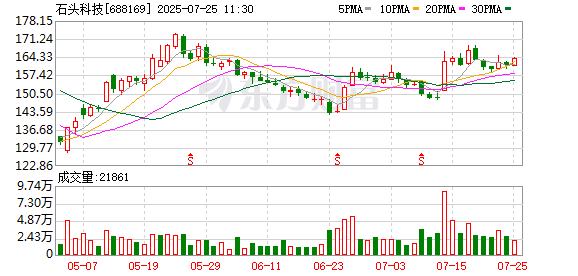
科创板智能消费设备企业领跑全球市场 “中国智造”助力消费提档升级
Zheng Quan Shi Bao Wang· 2025-07-04 13:07
Core Insights - The smart consumer device industry is experiencing rapid innovation driven by the integration of hardware, services, and content, with a focus on technological breakthroughs, scene reconstruction, and ecological collaboration [1] Group 1: Industry Trends - Chinese smart consumer device companies are leveraging rapid iteration, market responsiveness, engineering innovation, and strong supply chain integration to accelerate their international expansion [2] - Companies like YingShi Innovation, Ninebot, and Roborock are successfully entering overseas markets, with YingShi's overseas revenue approaching 80% due to its technological advantages in panoramic and action cameras [2] - Ninebot's international journey began with the acquisition of Segway in 2015, allowing it to sell products in over 100 countries, focusing on brand and technology export [3] - Roborock aims for over 50% of its revenue to come from overseas by 2024, emphasizing deep localization to adapt to different regional markets [3] Group 2: Product Innovation - The core of new productivity lies in technology-driven industry upgrades, with smart consumer devices acting as key interfaces connecting technological advancements to consumer scenarios [4] - Roborock is transforming home cleaning from a mere tool to an "intelligent housekeeper," offering automated cleaning solutions that adapt to various floor types and user preferences [4] - Ninebot is creating a "smart travel" ecosystem, transforming short-distance transportation tools into interconnected smart devices [4] Group 3: Market Adaptation - YingShi Innovation is expanding its product applications from sports photography to various fields, including Vlog recording and corporate content production, while lowering usage barriers through AI features [5] - The company addresses specific user needs, such as immersive sound recording in cycling scenarios and hands-free recording in skiing situations [6] Group 4: Supply Chain Strategy - With increasing global supply chain barriers, leading companies are adopting differentiated practices to navigate security challenges in overseas markets [7] - Roborock emphasizes domestic substitution, diversified layout, and vertical integration to enhance its competitive edge in the smart cleaning device sector [7] - Ninebot maintains strict supplier selection criteria and builds a diversified supplier system to ensure supply chain stability and security [7]
科创板智能消费设备企业加快出海步伐 引领“中国智造”闪耀全球
Zheng Quan Ri Bao Wang· 2025-07-04 11:46
Group 1: Industry Trends - The "smart consumer device" industry is experiencing a significant transformation driven by the integration of hardware, services, and content, with a focus on technological breakthroughs and ecosystem collaboration [1][2] - Chinese smart consumer device companies are leveraging rapid iteration, engineering innovation, and strong supply chain integration to expand into global markets [2][6] - The core competitiveness of these companies has shifted from hardware manufacturing to user-oriented solutions that combine technology, scenarios, and ecosystems [3][4] Group 2: Company Strategies - YingShi Innovation has accelerated its global market presence, with nearly 80% of its revenue coming from overseas, focusing on tailored marketing strategies for different regions [2][6] - Ninebot's international expansion began with the acquisition of Segway in 2015, leading to product sales in over 100 countries, emphasizing brand and technology as key elements of its global strategy [2][6] - Stone Technology employs a "globalization + localization" strategy, aiming for over 50% of its revenue to come from overseas by 2024, while addressing cultural differences and local market needs [3][6] Group 3: Product Innovations - Ninebot has developed a smart ecosystem platform, NimbleOS, transforming short-distance transportation tools into interconnected smart devices, and has introduced innovative service robots [4][6] - Stone Technology is transitioning home cleaning from mere tools to intelligent management systems, capitalizing on the "lazy economy" and the demand for seamless user experiences [4][5] - YingShi Innovation is expanding its product applications from sports photography to various use cases, addressing specific user needs with innovative features [5][6] Group 4: Competitive Advantages - Leading companies are enhancing their competitive edge through diversified supplier networks and vertical integration, ensuring supply chain stability and security [6][7] - Stone Technology focuses on domestic substitution and multi-supplier strategies to reduce reliance on single sources, while investing heavily in R&D to develop core technologies [6][7] - YingShi Innovation is improving its supply chain efficiency and increasing the localization of its supply chain, with significant investments in R&D amounting to 1.48 billion yuan over the past three years [6][7]
