
氢能等

Search documents
积极布局未来产业,各地有何通关“密码”?
Yang Shi Xin Wen· 2026-02-06 05:58
Group 1 - The concept of "future industries" has gained significant attention in 2026, with a focus on development and strategic planning at various governmental levels [1][3] - Future industries are defined as emerging sectors driven by cutting-edge technologies, currently in the early stages of development, characterized by strategic significance and potential for disruption [2][3] - The "14th Five-Year Plan" emphasizes the importance of forward-looking layouts for future industries, aiming to explore diverse technological routes and typical application scenarios [2][3] Group 2 - China's future industry development is transitioning from technology catch-up to proactive layout, with a mix of leading, parallel, and following positions across different sectors [4][5] - Key regions like Beijing, Guangdong, and Jiangsu are making strides in future industries, with specific focuses on quantum technology, biomanufacturing, and 6G communications [12][14] - Shanghai and Anhui are highlighted as leaders in future industry development, with Shanghai leveraging its comprehensive advantages and Anhui focusing on quantum technology and fusion energy [5][8] Group 3 - Shanghai's strategic initiatives include a dynamic cultivation system for future industries, supported by a fund of approximately 15 billion yuan, aimed at reducing costs and accelerating product commercialization [7][10] - Anhui has established a robust ecosystem for quantum technology and fusion energy, with a significant concentration of enterprises and research institutions [9][11] - The development of future industries is not limited to coastal regions, as demonstrated by Anhui's success in quantum technology and its plans for commercializing fusion energy [8][10] Group 4 - Local governments are encouraged to create open and inclusive innovation ecosystems to support the growth of future industries, emphasizing the importance of regional characteristics and market orientation [17][18] - The national government is implementing major strategic projects and increasing investment in future industries to foster a competitive environment across regions [15][16] - Future industries are expected to thrive through proactive planning, localized development strategies, and supportive policy measures [18]
绿潮涌动处 奋进正当时
Bei Jing Ri Bao Ke Hu Duan· 2026-01-24 21:19
Core Viewpoint - The article emphasizes the importance of building a clean, low-carbon, safe, and efficient new energy system as a core mission for the Jingneng Group, aligning with national goals and local responsibilities [1][3]. Group 1: Strategic Development - By 2025, Jingneng Group aims to integrate green development into its overall industrial strategy, focusing on creating a robust, intelligent, environmentally friendly, and user-friendly heating network [2]. - The electricity sector will implement a strategy for green electricity to enter Beijing, enhancing energy supply systems and promoting significant breakthroughs in green electricity projects [2][3]. - The company is committed to transforming its coal power units to improve clean and efficient operation, while also developing green mining practices in its coal sector [2]. Group 2: Green Energy Expansion - Jingneng Group has over 31 million kilowatts of renewable energy installed capacity, accounting for 54% of its total power generation capacity, achieving a new clean energy installation every 18 hours [4]. - Significant projects include the largest centralized photovoltaic project in Beijing and various wind power initiatives, contributing to a multi-source, complementary energy supply network [4][5]. - The company has achieved a green electricity trading volume of 11.475 billion kilowatt-hours, providing stable clean energy options for residents and businesses in Beijing [5]. Group 3: Technological Innovation - The company is advancing its digital and intelligent capabilities, with a focus on smart heating networks and AI applications to enhance operational efficiency and safety [9][10]. - The establishment of a virtual power plant with a capacity of 4.12 GW aims to improve the stability of the energy grid and facilitate the integration of renewable energy sources [5][9]. - Collaborations with top research institutions are fostering innovation in low-carbon technologies and smart energy systems [10][11]. Group 4: Social Responsibility - Jingneng Group prioritizes public welfare by ensuring stable energy supply for over 200 million residents and implementing energy-saving measures for numerous enterprises [18]. - The company is actively involved in community projects, enhancing energy efficiency and reducing carbon emissions across various sectors [18][20]. - The development of a large-scale green hydrogen production project is expected to provide significant clean energy and reduce carbon emissions substantially [14][20]. Group 5: Future Outlook - The company plans to accelerate its green transformation and energy supply projects, focusing on renewable energy integration and enhancing the efficiency of urban heating systems [20][21]. - Jingneng Group aims to expand its low-carbon service capabilities and enhance its role in building an international green economy benchmark city [21].

湖北潜江产业升级步伐坚实
Jing Ji Ri Bao· 2026-01-06 22:23
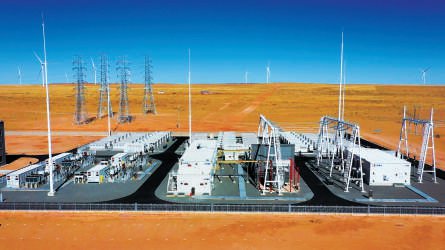
Group 1 - Hubei Province's Qianjiang City has integrated into the advanced manufacturing industry cluster, showing solid industrial upgrades with a 9% year-on-year growth in industrial added value for the first 11 months of 2025 [1] - Qianjiang has established a complete industrial chain in optical fiber, represented by Yangtze Optical Fibre and Cable Company, covering electronic materials to optical information services [1] - The city is excelling in emerging sectors, with high-end wet electronic chemicals recognized as a provincial characteristic industry cluster and a hydrogen energy action plan being developed to create a full-chain demonstration [1] Group 2 - The local government aims to build a modern industrial system that emphasizes intelligence, greenness, and integration, focusing on traditional, emerging, and future industries [2] - Plans include advancing the modern chemical industry towards a trillion-yuan industry cluster and developing textile, clothing, and green food industries into hundred-billion-yuan characteristic clusters [2] - There is a forward-looking layout for future industries such as low-altitude economy and embodied intelligence, alongside the growth of emerging industries like optoelectronic information and aluminum-based new materials [2]
14万亿可期 江苏交经济建设新答卷
Jiang Nan Shi Bao· 2025-12-10 16:24
Economic Growth - Jiangsu's GDP is projected to exceed 14 trillion yuan in 2024, with a continuous increase from over 11 trillion in 2021 and over 12 trillion in 2022, showcasing strong economic resilience and growth potential [1] - The province's per capita GDP is expected to reach 22,600 USD in 2024, with labor productivity increasing from 213,000 yuan per person in 2020 to 284,000 yuan per person in 2024, indicating a focus on quality alongside scale [2] Domestic Demand - The total retail sales of consumer goods in Jiangsu are anticipated to rise from 3.63 trillion yuan in 2020 to 4.49 trillion yuan in 2024, reflecting a robust internal demand strategy [2] - Over 12,000 "Su New Consumption" promotional events have been held, distributing approximately 2.54 billion yuan in consumption vouchers and digital currency, which has significantly boosted domestic consumption [2] Innovation and Industry Upgrade - Jiangsu ranks second nationally in regional innovation capability, with significant R&D investment and breakthroughs in basic research, particularly in strategic emerging industries like new energy and high-end equipment [4][5] - The province has established a comprehensive industrial system with 16 advanced manufacturing clusters and 50 key industrial chains, leading to a strong global competitive position in various sectors [5] Manufacturing Sector - Jiangsu's manufacturing quality development index has ranked first nationally for five consecutive years, with a focus on digital transformation and smart manufacturing [5] - The province's strategic emerging industries have seen an average annual growth of 8% over the past five years, with sectors like biomedicine and integrated circuits leading nationally [5] Social Welfare and Common Prosperity - Jiangsu has made strides in reducing the urban-rural income gap to 2.04:1, with urban employment growth exceeding 10% nationally [6] - The province has implemented various social welfare projects, including a comprehensive elderly care system and high enrollment rates in education, enhancing the overall quality of life for residents [6] Future Outlook - Jiangsu aims to continue leading in high-quality development by focusing on technological and industrial innovation, deep reforms, and promoting common prosperity as part of its long-term strategy [7]
共探低碳应用新路径,共话市场多元新未来——第十九届中国新能源国际论坛暨展示(NEX2025)在京盛大开幕
Zhong Guo Jin Rong Xin Xi Wang· 2025-09-18 07:21
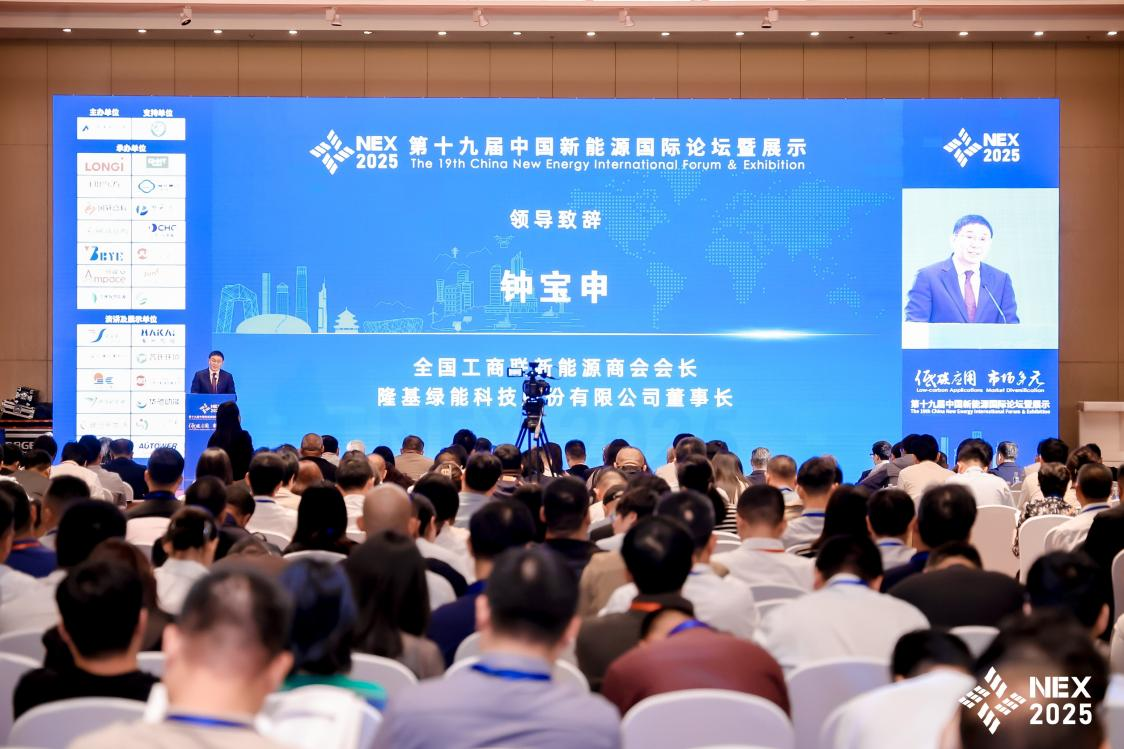
Core Viewpoint - The "19th China New Energy International Forum and Exhibition (NEX 2025)" commenced on September 17, focusing on "Low Carbon Applications, Market Diversity," and aims to explore high-quality development paths in the new energy sector [1][2]. Group 1: Event Overview - The forum is organized by the All-China Federation of Industry and Commerce New Energy Chamber and supported by the National Federation of Industry and Commerce Talent Exchange Service Center, featuring prominent companies like Longi Green Energy, Zhejiang Chint New Energy, and others [2][3]. - Key figures including Li Bing, Zhang Yuqing, and other industry leaders delivered speeches, emphasizing the importance of cross-regional and cross-sector collaboration to drive resource integration and innovation in the new energy industry [3][4]. Group 2: Expert Discussions - Industry experts, including academicians and researchers, gathered to discuss trends, technological directions, market dynamics, and future prospects of the new energy sector, providing insights for the "14th Five-Year Plan" of China's new energy development [4]. - A dialogue among leading figures from various new energy companies focused on pathways for high-quality development under new circumstances, aiming to consolidate industry wisdom and consensus [4]. Group 3: Forum Activities - The forum included multiple specialized sub-forums covering core areas like photovoltaics, energy storage, and hydrogen energy, as well as new segments such as AI in new energy, offshore energy, and sustainable fuels, promoting collaboration across the new energy industry chain [5]. - Various activities such as policy communication, academic exchanges, and project cooperation were organized to create a comprehensive platform for domestic and international representatives in the new energy field [5]. Group 4: Future Outlook - The Secretary-General of the All-China Federation of Industry and Commerce New Energy Chamber highlighted the forum's evolution into a top platform for industry-wide exchange and cooperation, with plans for the 20th anniversary and NEX 2026 already underway [6].


内蒙古招商“分层突破” 多个产业链实现倍增
Zhong Guo Chan Ye Jing Ji Xin Xi Wang· 2025-05-06 08:24
Group 1 - Inner Mongolia's investment in nine industrial chains exceeded a growth rate of 50% in Q1, with the grass and sheep meat industrial chains achieving remarkable increases of 233.3% and 100% respectively [1] - The strategic emerging industries in Inner Mongolia are showing strong investment attraction, with the energy storage industrial chain seeing a funding increase of 61.5%, and wind power equipment growing by 58.3% [1] - A total of 433 major projects with investments over 1 billion yuan accounted for 66.6% of the total funding, highlighting the importance of significant projects in stabilizing growth [1] Group 2 - Inner Mongolia is enhancing its investment attraction by optimizing its industrial layout and developing ten industrial clusters, which include new alloy materials, wind and solar power, and green agricultural products [2] - In Q1, 30 industrial formats within the ten industrial clusters achieved contracts, filling gaps in hydrogen energy, low-altitude economy, and specific medical raw materials [2] - The target for attracting domestic funds is set at over 570 billion yuan by 2025, with a Q1 growth rate of 37.7%, continuing a trend of high growth over the past three years [3]