汽车零部件产业

Search documents
29座万亿城市新格局:东北首现万亿之城,沪京并肩5万亿
2 1 Shi Ji Jing Ji Bao Dao· 2026-02-07 01:57
Core Insights - The economic landscape of Chinese cities is undergoing a transformation as Wenzhou and Dalian join the "trillion-yuan club," with Beijing and Shanghai also surpassing the 5 trillion yuan GDP mark, indicating a reshaping of the urban economic hierarchy [1][13][15] - The competition among these trillion-yuan cities is shifting from mere economic scale to a focus on quality of life, innovation ecosystems, and sustainable development [1][14] Economic Growth and Structure - By 2025, 29 cities in China are projected to have a GDP exceeding 1 trillion yuan, with Wenzhou and Dalian being the latest additions, while Shanghai and Beijing reach the 5 trillion yuan threshold [15][20] - Among these cities, 22 are expected to have GDP growth rates exceeding 5%, with Tangshan, Hefei, Yantai, and Wenzhou achieving over 6% [15][16] - The economic structure of these cities varies, with Shanghai and Beijing's growth driven by the tertiary sector, while Wenzhou and Dalian rely on robust industrial growth [16][21] Industrial Performance - In 2025, Beijing's GDP is projected to reach 52,073.4 billion yuan, with a 5.4% year-on-year growth, primarily driven by the information technology and financial sectors [18][19] - Shanghai's GDP is expected to hit 44,958.7 billion yuan, with a 6.0% growth rate, also supported by the service sector [19] - Wenzhou's industrial output is anticipated to grow by 10.3%, with significant contributions from the automotive and electrical industries [21][22] - Dalian's industrial output is projected to increase by 11.7%, with notable growth in the equipment manufacturing sector [22] Future Industry Focus - Many of these cities are now targeting artificial intelligence as a key industry for future development, with plans to integrate AI into various sectors [23][24] - Wenzhou aims to establish itself as a leader in AI innovation, while Dalian focuses on enhancing its digital economy and AI applications in traditional industries [24][25] - The emphasis on AI is seen as a means to drive technological advancement and improve overall economic quality [25][26] Urban Development Trends - The competition among cities is expected to evolve beyond GDP figures to include factors like technological innovation, cultural strength, and livability [26] - The development model is shifting from single-center cities to collaborative urban clusters, enhancing regional synergies and economic dynamism [26]
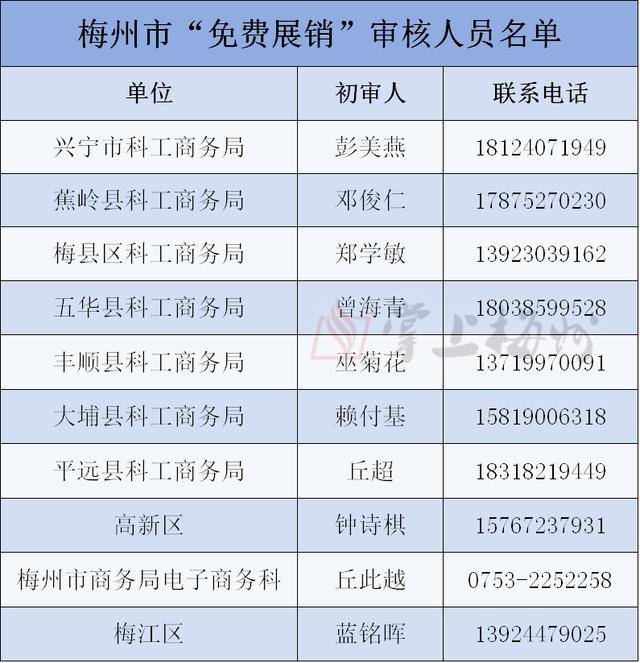
免费为企业展销!《梅州市实施“免费展销”工作方案(试行)》印发→
Sou Hu Cai Jing· 2025-06-17 17:10
Core Points - The article discusses the implementation of a "Free Exhibition and Sales" program in Meizhou City, aimed at promoting local industries and enhancing economic development [1][3] - The program focuses on key sectors such as electronic information, automotive parts, smart home appliances, and modern agriculture, creating a comprehensive platform for innovation and entrepreneurship [1][3] Summary by Sections Program Objectives - The "Free Exhibition and Sales" program aims to integrate resources across the city and support local businesses and entrepreneurs by providing free exhibition spaces [1] - The initiative is designed to facilitate product display, project matching, and policy promotion, thereby enhancing the local economy [1][3] Support Measures - Local exhibition space will be provided for various events, with each county required to offer at least three venues of over 1,000 square meters [2] - A minimum of 20 free standard exhibition booths will be available for each event, prioritizing local entrepreneurs and businesses [1][2] Cross-Regional Support - The program includes the establishment of permanent exhibition areas in key locations within the Guangdong-Hong Kong-Macao Greater Bay Area, offering free exhibition spaces for local enterprises [2] - Each county is tasked with organizing at least one large-scale exhibition annually in major cities or overseas, providing free booths to eligible participants [2] Policy Duration - The support measures are effective from January 1, 2025, to December 31, 2027, allowing eligible teams and businesses to apply for the "Free Exhibition and Sales" services during this period [1][3]