
消费扩容

Search documents
中金:另眼看消费
Xin Lang Cai Jing· 2026-02-13 00:23
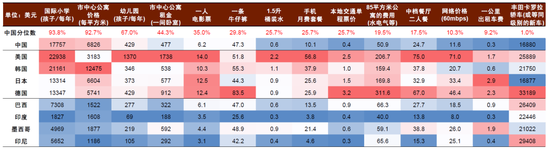
Group 1 - The article discusses the debate surrounding China's consumption rate, suggesting that it may not be as low as commonly perceived when compared internationally [1][18] - It emphasizes the importance of comparing consumption rates with domestic supply capabilities, indicating that improvements in supply capacity due to technological advancements support potential growth [3][19] - The article highlights that weak prices reflect a discrepancy between actual and potential growth, suggesting a need to enhance consumption to align actual growth with potential growth [4][20] Group 2 - Historical context is provided, illustrating that consumer demand evolves over time, with an increasing variety of products available, driven by technological advancements [21][22] - The article notes that even in slowing growth sectors, specific subcategories of consumption, such as premium and low-penetration products, continue to see growth [29][30] - It concludes with the expectation that the "14th Five-Year Plan" aims to significantly increase the household consumption rate, indicating a large potential for growth in China's consumption space [15][34]

商务部1月22日召开例行新闻发布会
Shang Wu Bu Wang Zhan· 2026-01-22 11:05
Group 1: Consumer Market Insights - In 2025, China's total retail sales of consumer goods exceeded 50 trillion yuan, reaching 50.1 trillion yuan, a 3.7% increase from the previous year, with final consumption expenditure contributing 52% to economic growth [4] - The consumer market is characterized by three key aspects: expansion, benefiting the public, and quality improvement. The implementation of a trade-in policy led to sales of 2.61 trillion yuan, benefiting 366 million people [4] - New consumption trends are emerging, with retail sales of new energy vehicles increasing by 17.6%, and by the end of 2025, 60% of passenger cars sold will be new energy vehicles [4] Group 2: Trade with Central Asia - In 2025, trade between China and Central Asian countries surpassed 100 billion USD for the first time, reaching 106.3 billion USD, with a year-on-year growth of 12% [6] - The trade structure is improving, with over 55% of China's exports to Central Asia being electromechanical products, and an increase in the market share of "new three" products [6][7] - Cross-border e-commerce trade reached 800 million USD, growing over 20%, supported by stable operations of China-Europe (Central Asia) freight trains [7] Group 3: Foreign Investment - By the end of 2025, over 50,000 Chinese enterprises were established abroad, with a total foreign direct investment of 174.38 billion USD, a 7.1% increase from the previous year [8] - Chinese enterprises are actively fulfilling social responsibilities, creating over 2 million jobs annually and contributing to various infrastructure projects in host countries [8] Group 4: Trade Agreements and Regulations - A trade agreement between Canada and China was reached regarding electric vehicles and canola seeds, allowing for an annual quota of 49,000 electric vehicles from China with reduced tariffs [12] - China has implemented export controls on dual-use items to prevent military use, ensuring compliance with international obligations while maintaining supply chain stability [11]
商务部:下一步将坚持惠民生和促消费紧密结合 不断释放消费潜力活力
智通财经网· 2026-01-22 08:33
Core Insights - The Chinese consumption market is expected to maintain steady growth in 2025, with both scale and quality improvements, highlighted by a retail sales total exceeding 50 trillion yuan for the first time, reaching 50.1 trillion yuan, a 3.7% increase from the previous year, contributing 52% to economic growth [1][4][5] Group 1: Consumption Market Characteristics - Expansion: The retail sales of consumer goods will surpass 50 trillion yuan, marking a significant milestone with a growth rate of 3.7% year-on-year [1][4] - Benefits to the Public: The implementation of the old-for-new consumption policy led to sales of 2.61 trillion yuan, benefiting 366 million people [1][4] - Quality Improvement: New consumption trends such as green and smart products are thriving, with retail sales of new energy vehicles increasing by 17.6%, and the penetration rate expected to reach 60% by the end of 2025 [1][5] Group 2: Future Initiatives - The Ministry of Commerce will continue to combine policies and activities to stimulate consumption and release consumer potential [2][5]
商务部召开例行新闻发布会(2026年1月22日)
Shang Wu Bu Wang Zhan· 2026-01-22 08:03
Group 1: Consumer Market Insights - In 2025, China's total retail sales of consumer goods exceeded 50 trillion yuan, reaching 50.1 trillion yuan, a 3.7% increase from the previous year, with final consumption expenditure contributing 52% to economic growth [2][3] - The implementation of the old-for-new consumption policy led to sales of related categories reaching 2.61 trillion yuan, benefiting 366 million people [2] - New consumption trends are emerging, with retail sales of new energy vehicles growing by 17.6%, and by the end of 2025, 60% of passenger cars sold will be new energy vehicles [3] Group 2: Trade with Central Asia - In 2025, China-Central Asia trade reached 106.3 billion USD, marking a 12% year-on-year growth, with imports and exports growing by 14% and 11% respectively [4][5] - The trade structure is improving, with over 55% of China's exports to Central Asia being electromechanical products, and more high-quality products from Central Asia entering the Chinese market [4] - Cross-border e-commerce trade reached 800 million USD, growing over 20%, supported by stable operations of the China-Europe (Central Asia) freight trains [4][5] Group 3: Foreign Investment - By the end of 2025, over 50,000 Chinese enterprises were established abroad, with foreign direct investment reaching 174.38 billion USD, a 7.1% increase from the previous year [6] - Chinese enterprises are actively fulfilling social responsibilities, creating over 2 million jobs annually and building various public facilities [6] Group 4: Trade Agreements and Regulations - A trade agreement between Canada and China was reached regarding electric vehicles and canola seeds, allowing for a quota of 49,000 electric vehicles annually with reduced tariffs [11] - China maintains strict export controls on dual-use items to prevent military applications, ensuring compliance with international obligations [10]
促进服务业提质、消费扩容u3000上海发布28条举措
Shang Wu Bu Wang Zhan· 2026-01-14 16:48
Core Viewpoint - Shanghai has introduced 28 specific measures to enhance service quality and stimulate consumption, focusing on optimizing supply and expanding demand to foster new growth points in the service sector [2]. Group 1: Focus Areas - The measures target six key industries: finance, information services, transportation, cultural and entertainment services, life services, and inspection and certification, which together account for approximately 60% of Shanghai's service sector value and about 70% of service consumption [2]. - In financial services, the measures include enhancing personal consumer finance services, supporting innovation in insurance products, and strengthening financial support for business entities and consumption infrastructure [2]. Group 2: Platform Economy - The measures emphasize the development of the platform economy, supporting e-commerce and life service platforms to innovate and cultivate specialized consumption platforms in areas like maternal and child care, housekeeping, and elderly care [3]. - The government aims to regulate platform competition, prevent forced low-cost sales, and encourage platforms to reduce fees and optimize transparent pricing rules [3]. Group 3: Cultural and Sports Integration - The measures also focus on enhancing the synergy between cultural, tourism, and commercial events, proposing initiatives to enrich cultural performances, leverage sports events, and support the gaming and short video content industries [4]. - The approach aims to create a collaborative ecosystem that boosts both supply quality and consumption expansion, particularly in the cultural and entertainment sectors [4]. Group 4: Economic Implications - The policy is expected to facilitate a virtuous cycle of supply upgrading, consumption stimulation, and industry income growth, addressing the mismatch between service supply and demand [5]. - It aims to cultivate new growth drivers, stimulate digital consumption, and enhance the economic resilience of the city by improving the quality of services and optimizing the consumption environment [5].
“压舱石”释放新动能
Jing Ji Ri Bao· 2026-01-08 00:06
Core Insights - Traditional industries serve as the "ballast" of the national economy and are fundamental to the modern industrial system, covering essential areas of daily life and providing substantial employment opportunities [1] - There is a misconception that emphasizes the growth of emerging industries while neglecting the transformation and upgrading of traditional industries, which are essential for the complementary relationship between both sectors [1] - Digital transformation is a crucial engine for enhancing the quality and efficiency of traditional industries, with technologies like AI and industrial internet reshaping production paradigms and improving operational efficiency [1] Group 1: Digital Transformation - Digital transformation is vital for improving quality and efficiency in traditional industries, enabling precise allocation of production factors and significantly enhancing production efficiency and product quality [1] - The application of new technologies such as AI models and intelligent agents will inject new vitality into innovation and production efficiency in traditional industries [1] Group 2: Green Development - Green development opens up vast incremental space for traditional industries, promoting the elimination of outdated capacity and optimizing industrial structures while fostering new growth points like energy conservation and carbon reduction [2] - The green transition aligns with "dual carbon" goals and generates new supplies of green products and technologies to meet market upgrade demands [2] Group 3: Consumer Demand - The expansion of domestic demand provides precise guidance for upgrading traditional industries, compelling companies to enhance product quality and develop personalized new products [2] - Insights from consumer data facilitate traditional industries in achieving precise supply and rapid response, leading to comprehensive upgrades from product innovation to model innovation [2] Group 4: Collaborative Efforts - Releasing new momentum in traditional industries requires a collaborative effort of digital empowerment, green transformation, and consumer leadership, rather than merely extending existing development paths [2] - Embracing technological revolution opportunities and driving innovation are essential for traditional industries to maintain their foundational role and support high-quality economic development [2]
投资策略专题:掘金1月春季躁动的机会
KAIYUAN SECURITIES· 2026-01-04 13:43
Group 1 - The report indicates that the "spring market excitement" has begun early, characterized by a clear "structural lead and opportunity rotation" feature, with technology remaining dominant [2][3][16] - The current market adjustment was primarily driven by three factors: overseas liquidity disturbances, concerns over AI bubble risks during the US earnings window, and relatively mild economic data, all of which are now diminishing [14][15][16] - The A-share market is entering a pre-heating and layout window for the "spring market excitement" of 2026, with structural opportunities emerging in sectors such as commercial aerospace, robotics, petrochemicals, and non-ferrous metals [3][16] Group 2 - The report highlights that the rise in non-ferrous metals is driven by multiple factors, including macroeconomic conditions, industry fundamentals, capital allocation, and geopolitical issues, rather than a single cause [4][29] - The report notes that the current Chinese consumer market shows a clear characteristic of "total pressure but structural recovery," with structural highlights in both traditional and emerging consumption sectors [5][31][32] - The investment strategy suggests a dual focus on technology and cyclical sectors, emphasizing the importance of PPI improvements and the benefits of "anti-involution" policies in sectors like non-ferrous metals, photovoltaics, chemicals, steel, and machinery [6][34][35]
零售板块再度活跃,安记食品斩获7连板,欢乐家等大涨
Zheng Quan Shi Bao Wang· 2025-12-10 02:29
Group 1 - The retail sector is experiencing significant activity, with notable stock price increases for companies such as Huanlejia, Yonghui Supermarket, and Anji Food, among others [1] - The National Retail Industry Innovation Development Conference highlighted the importance of the retail sector in fostering a complete domestic demand system and promoting high-quality development during the 14th Five-Year Plan [1] - The retail industry has made substantial contributions to consumption and investment since the beginning of the 14th Five-Year Plan, with a projected 3.5% year-on-year growth in national social retail sales in 2024 [1] Group 2 - The consumer market is maintaining steady growth, with significant structural characteristics emerging, particularly in the demand for upgraded products [2] - New and green consumption trends are creating new market growth points, with notable sales increases in smart wearables, health devices, and organic foods [2] - Rural consumption is growing faster than urban consumption, indicating that the improvement of rural commercial facilities and the rural revitalization strategy are key to expanding the consumer market [2]




161万亿存款冻僵中国经济?房地产熄火后,普通人赚钱的机会藏在这三个领域
Sou Hu Cai Jing· 2025-11-05 19:51
Group 1: Economic Overview - The total savings of Chinese citizens surged from 70 trillion to 161 trillion over five years, with an average increase of nearly 65,000 yuan per person, indicating a significant accumulation of wealth that is not flowing into the consumer market [1][3] - The M2 money supply has exceeded 335 trillion, significantly surpassing the reasonable level of twice the GDP, leading to a blockage of 65 trillion yuan in the banking system, which directly impacts consumer spending and investment [3][5] - The real estate market, once a cornerstone of household wealth, has seen prices decline by an average of 30% in first-tier cities, causing families to prioritize cash reserves over investments [3][5] Group 2: Challenges Facing the Economy - The decline in the real estate sector is attributed to three major challenges: the fading demographic dividend, obstacles to globalization, and the unsustainable land finance model [5] - The birth rate has plummeted from 17.86 million in 2016 to 9.54 million in 2024, with a total fertility rate of 1.1, which is lower than Japan's [5] - The shift in consumer confidence is evident as young people face employment pressures, with over 60% earning less than 6,000 yuan per month, leading to a cautious approach towards spending [1][3] Group 3: Policy Responses and Opportunities - The government aims to stimulate the economy through technology innovation, domestic demand, and deepening reforms, with an annual investment of 1 trillion yuan in technology via long-term special bonds [5][7] - The potential for domestic consumption is significant, with 400 million middle-income individuals having a service consumption rate of only 46%, compared to 68% in the U.S. [7] - The real estate transformation presents new opportunities, with projects like affordable housing and urban renewal expected to generate nearly 2 trillion yuan in investments annually [7][8] Group 4: Shifts in Wealth Allocation - There is a notable shift in wealth allocation among Chinese households, moving from a focus on real estate to seeking new investment avenues in the stock market, particularly in technology sectors [8][10] - The capital market reforms have positioned the stock market as a vital funding source for innovative enterprises, redirecting funds from real estate to emerging sectors like AI and low-altitude economy [8][10] - The housing market dynamics are changing, with a focus on proximity to urban centers and newer properties becoming critical factors for homebuyers, while older properties face depreciation risks [10]

彭华松主持召开市政府专题会议
Chang Sha Wan Bao· 2025-11-04 02:11
Core Points - The meeting emphasized the need for the city to take responsibility and enhance its efforts to achieve the goals set by the provincial and municipal governments [1] - There is a focus on addressing existing issues and enhancing investment quality and efficiency in key industries [1] - The city aims to accelerate consumption growth and deepen the integration of science and industry to maintain a positive growth trend [1] - The meeting highlighted the importance of solidifying the foundation for future development and ensuring the completion of key livelihood projects by the end of the year [1] Group 1 - The city government is committed to implementing the spirit of the 20th National Congress and the requirements from higher authorities [1] - There is a call for collective effort to tackle challenges in the fourth quarter and ensure a successful conclusion to the 14th Five-Year Plan [1] - The focus is on enhancing investment and improving efficiency in key sectors to drive economic growth [1] Group 2 - The meeting discussed strategies to expand consumption and promote the integration of technology and industry [1] - There is an emphasis on increasing fiscal revenue while managing and mitigating debt risks [1] - The city government aims to ensure safety and stability while planning for future development [1]