
潜艇制造

Search documents
美国代表团推迟赴韩国就建造核动力潜艇举行磋商
Xin Lang Cai Jing· 2026-02-24 00:49
Group 1 - The core point of the article is that a planned visit by a U.S. delegation to South Korea to discuss the construction of nuclear-powered submarines under a bilateral security agreement has been postponed [1] - There are indications that the U.S. is delaying security consultations until the situation arising from the Supreme Court's tariff ruling is resolved [1] - The South Korean Ministry of Foreign Affairs had previously stated that the U.S. planned a possible visit in February [1]
潜艇制造商TKMS订单积压达创纪录220亿美元
Xin Lang Cai Jing· 2026-02-11 08:23
Group 1 - The core point of the article is that TKMS has reached a record backlog of $22 billion and has raised its sales forecast for 2026 due to increased demand for naval vessels amid escalating geopolitical tensions [1][3] - The company benefits from the ongoing trend of defense stocks being favored by investors, influenced by the Ukraine war and U.S. pressure on Europe to enhance military capabilities [1][3] - The growth momentum is also attributed to the spin-off from its former parent company Thyssenkrupp, allowing TKMS to more effectively participate in global submarine tender projects worth billions of euros, particularly in India and Canada [1][3] Group 2 - TKMS CEO Oliver Burkhard stated that the demand for advanced maritime defense capabilities remains high due to the current geopolitical situation [2][4] - The company expects sales to grow by 2% to 5% in 2026, an increase from the previous forecast of a decline of 1% to an increase of 2%, which is above the average forecast of 2.9% from LSEG [2][4] - Financial results show a 1% decline in sales for Q1 of the fiscal year 2025, amounting to €545 million ($649 million), with adjusted operating profit remaining stable at €26 million, while the company aims for an operating profit margin exceeding 6% this year [2][4]
80亿美元潜艇大单“难产”,究竟是谁“损失”?
Xin Lang Cai Jing· 2026-01-18 11:15
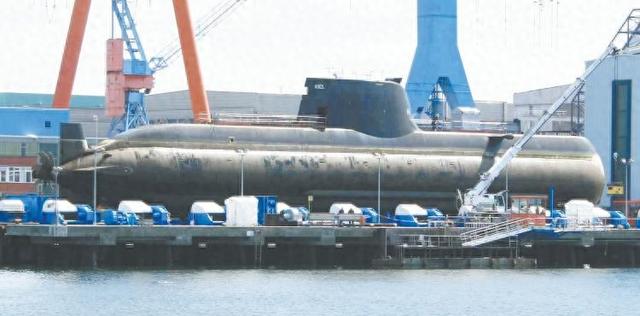
Core Viewpoint - The visit of German Chancellor Merz to India aimed to strengthen bilateral defense industrial cooperation, but a significant submarine deal worth approximately $8 billion was not finalized during the visit [1][7]. Group 1: Submarine Cooperation - The anticipated agreement involved the construction of six new generation Type 214 conventional submarines, which would include construction, technology transfer, and long-term maintenance, with a total estimated value of $8 billion [2][3]. - The Type 214 submarine is recognized for its advanced technology, including air-independent propulsion (AIP) and hydrogen fuel cells, positioning it among the leading conventional submarines globally [4]. - India's existing conventional submarine fleet is aging, with over half of its submarines exceeding 30 years in service, highlighting the need for modernization [7]. Group 2: Challenges in Agreement Finalization - The failure to finalize the submarine agreement is attributed to unresolved key details in negotiations, particularly regarding local construction and comprehensive technology transfer, which are new challenges for India and Germany [10]. - Historical context indicates that India's large defense procurement projects often experience delays and complications, which may have contributed to the current situation [10]. - The ongoing delay in India's submarine procurement could allow Pakistan, a primary naval competitor, to gain a technological advantage in underwater capabilities [10].

大外交|一口气签27项协议却未提及合建潜艇,德印抱团各怀心思
Xin Lang Cai Jing· 2026-01-14 13:25
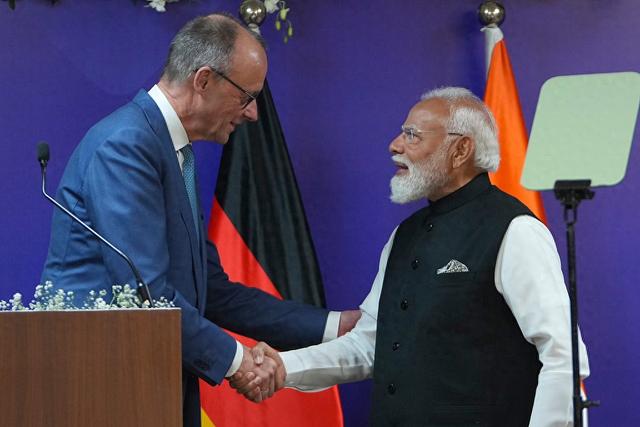
Core Insights - German Chancellor Friedrich Merz's first official visit to Asia is to India, marking a shift in diplomatic focus [1][4] - The visit resulted in the signing of 27 agreements, including a memorandum on key minerals, healthcare, and AI innovation [1][7] - Merz expressed confidence in strengthening economic ties between India and the EU, anticipating a free trade agreement soon [1][9] Economic Cooperation - The bilateral trade between India and Germany has surpassed $50 billion, with over 2,000 German companies operating in India [4][9] - Germany aims to eliminate tariffs and trade barriers through a potential EU-India free trade agreement, particularly in automotive, machinery, and chemical sectors [10][11] - The trade volume between Germany and India is projected to reach €31 billion (approximately ¥252.1 billion) in 2024 [9] Defense Collaboration - India and Germany are expected to collaborate on building six new-generation submarines, with a total contract value of $8 billion [3][7] - The defense cooperation is seen as a response to regional security concerns, particularly regarding China's military capabilities [8] - The agreement includes technology transfer, allowing India to gain expertise in submarine design and maintenance [7][8] Strategic Context - The visit is interpreted as a response to pressures from the U.S. and a move towards strengthening ties between India and Europe [3][5] - Analysts suggest that the collaboration serves mutual interests, with India seeking advanced technology and Europe looking to enhance its market competitiveness against China [5][8] - The relationship is characterized by a "cooperation, competition, and adversary" framework as defined by the EU's strategy towards China [5]
默茨新年亚洲首访选印度,商业天团追随,或签80亿美元潜艇大单?
Di Yi Cai Jing· 2026-01-12 12:40
Group 1 - German Chancellor Merz's visit to India aims to enhance cooperation in key sectors such as critical minerals, healthcare, and AI innovation [1][3] - A significant submarine manufacturing agreement worth $8 billion is expected to be reached, involving the production of six advanced conventional submarines with air-independent propulsion systems [1][5] - The agreement reflects Germany's strategy to diversify its economic partnerships and reduce reliance on Russia for defense supplies [7] Group 2 - The visit includes a delegation of prominent German business leaders from companies like Siemens, DHL, Infineon, and Airbus, highlighting the importance of strengthening economic ties [3] - Germany is facing a labor shortage, particularly in healthcare, and is looking to India to fill gaps in the workforce, especially in nursing and IT sectors [3][4] - The bilateral trade between Germany and India is approaching $50 billion, with over 2,000 German companies operating in India and more than 700 Indian companies investing in Germany [4] Group 3 - The submarine deal is part of India's broader strategy to diversify its defense procurement, moving away from a heavy reliance on Russian military equipment [7] - The new submarines will enhance the operational capabilities of the Indian Navy, which currently operates older Russian submarines and newer French ones [6][7] - The shift in defense partnerships is influenced by geopolitical changes, particularly the impact of the Russia-Ukraine conflict on global security dynamics [7]

俄国防部:“哈巴罗夫斯克”号核潜艇出坞
Xin Hua She· 2025-11-02 07:56
Core Viewpoint - The Russian Ministry of Defense announced the launch ceremony of the nuclear submarine "Khabarovsk" in Severodvinsk, Arkhangelsk Oblast, emphasizing its dual capabilities in underwater weaponry and robotic combat platforms, which will enhance Russia's maritime border security and protect national interests [1][1][1] Summary by Relevant Categories Military Developments - The "Khabarovsk" nuclear submarine will undergo a series of sea tests following its launch [1] - It is equipped with the "Poseidon" nuclear-powered underwater drone, which is part of Russia's expanding nuclear deterrence capabilities [1][1] Strategic Implications - The introduction of the "Khabarovsk" submarine is seen as a significant enhancement to Russia's nuclear deterrent system, reflecting a strategic focus on modernizing military assets [1][1]