
电池回收

Search documents
赣锋锂业跌2.00%,成交额22.44亿元,主力资金净流出1.34亿元
Xin Lang Cai Jing· 2026-04-01 02:21
Core Viewpoint - Ganfeng Lithium's stock price has shown significant volatility, with a recent decline of 2.00% on April 1, 2023, while the company has experienced a year-to-date increase of 22.13% [1][6]. Group 1: Stock Performance - As of April 1, 2023, Ganfeng Lithium's stock price is reported at 76.81 CNY per share, with a total market capitalization of 1610.47 billion CNY [1][5]. - The stock has increased by 8.75% over the last five trading days, 14.83% over the last twenty days, and 12.02% over the last sixty days [6]. - The company has appeared on the "Dragon and Tiger List" once this year, with a net purchase of 8.23 billion CNY on March 27, 2023 [7]. Group 2: Financial Performance - For the fiscal year 2025, Ganfeng Lithium is projected to achieve a revenue of 230.82 billion CNY, reflecting a year-on-year growth of 22.08%, and a net profit attributable to shareholders of 16.13 billion CNY, which is a substantial increase of 177.77% [2][7]. Group 3: Business Overview - Ganfeng Lithium, established on March 2, 2000, and listed on August 10, 2010, is primarily engaged in the research, development, production, and sales of various lithium products [7]. - The company's revenue composition includes lithium series products (55.79%), lithium battery series products (35.67%), and other products (8.54%) [7]. Group 4: Shareholder Information - As of February 28, 2023, Ganfeng Lithium has 298,000 shareholders, a decrease of 7.77% from the previous period, with an average of 4,065 circulating shares per shareholder, which is an increase of 8.42% [2][7]. - The top ten circulating shareholders include significant institutional investors, with Hong Kong Central Clearing Limited holding 72.62 million shares, an increase of 3.50 million shares from the previous period [8].

赣锋锂业2025年营收230.82亿元同比增22.08%,归母净利润16.13亿元同比增177.77%,销售费用同比增长16.83%
Xin Lang Cai Jing· 2026-03-30 14:59
Core Viewpoint - Ganfeng Lithium reported a significant increase in revenue and net profit for the year 2025, indicating strong growth in the lithium industry [1][4]. Financial Performance - The company's revenue for 2025 reached 23.082 billion yuan, a year-on-year increase of 22.08% [1][4]. - The net profit attributable to shareholders was 1.613 billion yuan, showing a remarkable growth of 177.77% [1][4]. - The basic earnings per share stood at 0.80 yuan [1][4]. - The gross margin for 2025 was 15.72%, up by 4.90 percentage points year-on-year, while the net margin was 5.47%, an increase of 19.38 percentage points compared to the previous year [2][5]. Quarterly Insights - In Q4 2025, the gross margin was 19.63%, reflecting a year-on-year increase of 7.49 percentage points and a quarter-on-quarter increase of 3.05 percentage points [2][5]. - The net margin for Q4 2025 was 19.85%, which is a significant increase of 51.93% year-on-year and 14.00% quarter-on-quarter [2][5]. Cost Structure - Total operating expenses for 2025 amounted to 3.933 billion yuan, an increase of 1.131 billion yuan from the previous year [2][5]. - The expense ratio was 17.04%, up by 2.22 percentage points year-on-year [2][5]. - Breakdown of expense growth: sales expenses increased by 16.83%, management expenses by 36.04%, R&D expenses by 14.43%, and financial expenses by 75.62% [2][5]. Company Overview - Ganfeng Lithium is located in Xinyu City, Jiangxi Province, and was established on March 2, 2000, with its listing date on August 10, 2010 [3][6]. - The company specializes in the research, development, production, and sales of various lithium products [3][6]. - Revenue composition: lithium series products account for 56.78%, lithium battery series products for 35.52%, and others for 7.70% [3][6]. Industry Classification - Ganfeng Lithium is classified under the non-ferrous metals sector, specifically in energy metals and lithium [7]. - The company is associated with concepts such as solid-state batteries, battery recycling, lithium iron phosphate, and ternary lithium batteries [7].
长城汽车申请车辆节能控制相关专利,多用户场景下精准智能管理车辆电源节能
Xin Lang Cai Jing· 2026-03-29 01:33
Group 1 - Great Wall Motors Co., Ltd. has applied for a patent titled "A Vehicle Energy-Saving Control Method, Device, and Vehicle," with publication number CN121734300A and application number CN202610096293.0 [1][11] - The patent aims to enhance energy management by determining a user's vehicle usage behavior based on their identity and current location, allowing for differentiated power control strategies for in-vehicle devices [1][11] - The company is recognized as a leading automotive manufacturer in China, with a comprehensive industry chain advantage and high investment value [2][12] Group 2 - In 2025, Great Wall Motors achieved a revenue of 222.824 billion yuan, ranking first in the industry, significantly higher than the second-ranked GAC Group, which reported 95.662 billion yuan [2][13] - The company's main business includes the production and sale of automobiles and auto parts, with 87.89% of its revenue coming from automobile sales, amounting to 195.848 billion yuan [2][13] - Great Wall Motors reported a net profit of 9.865 billion yuan in 2025, also ranking first in the industry, while GAC Group reported a net loss of 11.482 billion yuan [2][13]

深高速2025年营收92.64亿元同比增0.20%,归母净利润11.49亿元同比增0.38%,毛利率下降1.29个百分点
Xin Lang Cai Jing· 2026-03-25 13:06
Core Viewpoint - Shenzhen Expressway's 2025 annual report indicates modest growth in revenue and profit, with a slight decline in profit margins and a decrease in shareholder value per capita [1][2][4]. Financial Performance - The company's operating revenue for 2025 was 9.264 billion yuan, a year-on-year increase of 0.20% [1][4]. - The net profit attributable to shareholders was 1.149 billion yuan, up 0.38% year-on-year [1][4]. - The net profit excluding non-recurring items was 1.124 billion yuan, reflecting a 4.66% increase year-on-year [1][4]. - Basic earnings per share stood at 0.43 yuan [1][4]. - The gross profit margin for 2025 was 30.30%, down 1.29 percentage points from the previous year [6]. - The net profit margin was 12.80%, a decrease of 0.38 percentage points compared to the same period last year [6]. Quarterly Indicators - In Q4 2025, the gross profit margin was 18.47%, down 0.25 percentage points year-on-year and down 17.45% quarter-on-quarter [6]. - The net profit margin for Q4 was -12.80%, a decline of 4.46 percentage points year-on-year and a 39.39% decrease from the previous quarter [6]. Expense Management - Total operating expenses for 2025 were 1.233 billion yuan, a reduction of 311 million yuan from the previous year [2][6]. - The expense ratio was 13.31%, down 3.39 percentage points year-on-year [2][6]. - Sales expenses decreased by 27.71%, while management expenses fell by 5.17% [2][6]. - R&D expenses increased by 35.72%, and financial expenses decreased by 28.48% [2][6]. Shareholder Information - As of the end of 2025, the total number of shareholders was 23,700, an increase of 2,830 or 13.57% from the previous quarter [2][6]. - The average market value per shareholder decreased from 1.2112 million yuan to 943,200 yuan, a decline of 22.13% [2][6]. Company Overview - Shenzhen Expressway Group Co., Ltd. is primarily engaged in the investment, construction, and management of toll roads [3][7]. - The main revenue sources include toll fees (62.51%), construction services under franchise agreements (11.76%), and waste treatment operations (9.33%) [3][7]. - The company is classified under the transportation sector, specifically in the highway category, and is associated with various concept sectors including highway concepts and H-shares [3][7].

德媒:默茨应推动德中关系“升级焕新”
Xin Lang Cai Jing· 2026-02-26 10:26
Group 1 - The core message of the article highlights the positive outcomes of German Chancellor Merz's visit to China, emphasizing the potential for strengthened economic cooperation between Germany and China, which is beneficial for both nations and the global economy [2][3] - Germany remains China's largest trading partner in Europe, while China has regained its position as Germany's largest trading partner after a year [2][3] - The China Customs data indicates that the trade volume between China and Germany is projected to reach 1.51 trillion yuan by 2025, reflecting a growth of 5.2% compared to 2024 [2][3] Group 2 - The article notes that various sectors such as logistics drones, biotechnology, aerospace, artificial intelligence, battery recycling, and hydrogen energy are areas of significant interest for future cooperation [2][3] - The German government aims to become a leading supplier in hydrogen technology by 2030, and China's participation in this sector could create substantial development momentum [2][3] - The visit is seen as an opportunity for Germany to maintain and enhance its trade relationship with China amidst global economic challenges, with calls for a balanced approach of respect and confidence in developing long-term partnerships [2][3]


电池回收与储能需求能否持续发力?铅蓄电池企业复工节奏,对铅价影响几何?
Xin Lang Cai Jing· 2026-02-24 10:03
Core Viewpoint - The lead price is experiencing a complex market environment with potential for a gradual recovery, influenced by macroeconomic factors and the resumption of operations in lead battery enterprises [1][2][3] Group 1: Market Dynamics - On February 24, 2026, the lead price in the Yangtze spot market ranged from 16,700 to 16,800 yuan per ton, with an average of 16,750 yuan per ton, reflecting a slight decrease of 25 yuan per ton from the previous trading day [1] - The macroeconomic environment remains supportive, with the LPR remaining stable at 3.0% for one year and 3.5% for five years, maintaining a robust liquidity situation that underpins the commodity market [1] - The US dollar index showed slight weakness, reported around 97.769, which alleviated pressure on the non-ferrous sector, while US stock indices experienced declines, indicating increased risk aversion [1] Group 2: Supply and Demand Factors - The resumption of operations in lead battery enterprises is uneven, leading to doubts about the demand pull for lead prices; while primary and recycled lead smelters are gradually restarting, downstream battery enterprises are lagging in their recovery [2] - The recycling market for used lead-acid batteries is recovering slowly, and the current pressure on recycling enterprises may hinder stable raw material supply, impacting short-term price support [2] - The potential for growth in the energy storage sector is acknowledged, but the current application of lead batteries in this market is limited, lacking the scale needed to drive significant price increases in the short term [2] Group 3: Price Outlook - The short-term outlook for lead prices is expected to show "oscillating recovery with limited amplitude," likely maintaining a range between 16,600 and 16,900 yuan per ton, supported by cost factors and expectations of demand recovery [3] - Investors are advised to adopt a cautious approach, focusing on the progress of operations and inventory reduction data before increasing positions, while keeping an eye on the recovery of the battery recycling industry and the timing of energy storage demand [3] - Despite the current uncertainties, the medium to long-term outlook for lead prices appears positive, driven by macroeconomic support and the release of demand from resumed operations [3]

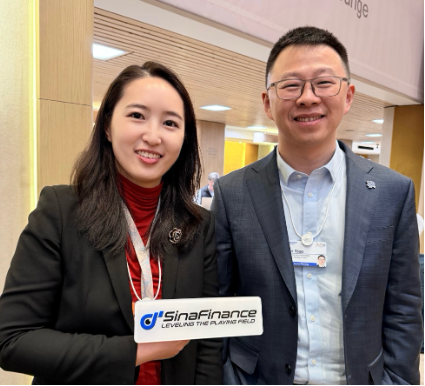
直击达沃斯|对话博萃循环林晓:电池退役将重塑新能源产业的成本与责任结构
Xin Lang Cai Jing· 2026-02-10 14:36
Core Viewpoint - The recycling of batteries is emerging as a critical link between technological innovation, resource security, and economic transformation in the context of global energy transition [3][17]. Group 1: Industry Challenges - The real challenge in the battery recycling industry lies not in the scale of retired batteries but in the complexity of differences across legal definitions, regulatory systems, battery material routes, and varying industrial structures and social conditions in different countries [3][19]. - The concept of a "retirement wave" is misleading; battery retirement is a continuous process that will steadily increase over time, creating pressure on industry and policy systems [6][19]. - Differences in legal definitions of "waste batteries" across countries lead to varied management methods, transportation requirements, and recycling responsibility mechanisms [7][19][20]. Group 2: European Policy Environment - The implementation of the EU Battery Regulation introduces a mandatory framework for battery recycling that encompasses the entire lifecycle, making compliance a clear obligation rather than a business choice [4][18]. - The regulation requires all entities selling batteries or electric vehicles in the EU to adhere to stringent standards, including extended producer responsibility, recycled material usage ratios, carbon footprint reporting, and battery passport systems [8][22]. - These requirements create high compliance barriers for Chinese companies, reshaping industry structures and altering the dynamics of competition and business models [9][22]. Group 3: Business Model Differentiation - Different recycling companies are increasingly differentiating their business models, choosing between heavy asset investments in self-built factories or embedding technology and operational capabilities within local systems [4][18]. - The choice between light asset and heavy asset models reflects a deeper understanding of the industry's core attributes, with many companies opting for heavy asset models to directly convert technology into capacity and revenue [12][24]. - The light asset approach, which involves deep collaboration with local enterprises, is seen as more suitable for navigating the complexities of international markets [12][24]. Group 4: Future Role of Recycling - Battery recycling is expected to become the most crucial technical link in the new energy system within the next five years, as batteries evolve from products to integral components of energy infrastructure [13][25]. - Efficient recycling is essential for the sustainability of renewable energy, as it prevents reliance on raw mineral resources, thereby supporting the logic of "renewable energy" [13][25]. - Once recycling achieves a closed-loop system, it will redefine battery design logic, promote green and standardized designs, and potentially lead to the financialization of standardized batteries as public assets [13][25].
瞄准电车「加油站」,宁德时代再建万亿公共换电生态
36氪· 2026-02-07 10:17
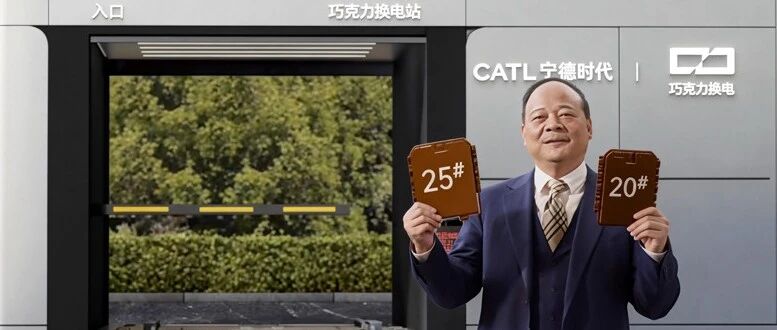
Core Viewpoint - CATL is strategically expanding its battery swapping business through collaboration with various partners, aiming to build a comprehensive energy ecosystem for electric vehicles, with a target of establishing 30,000 battery swapping stations across China by 2025 [5][6][8]. Group 1: Business Expansion and Collaboration - In January, CATL held a low-profile annual partner conference in Xiamen, attended by companies like Sinopec and Didi, indicating a shift towards collaborative competition in building energy infrastructure [3]. - CATL's battery swapping business, operated by its subsidiary, aims to construct over 1,000 stations by the end of 2025, with plans to accelerate the pace of construction significantly [5][6]. - The company has set a long-term goal of establishing 30,000 battery swapping stations nationwide, with the first 1,000 stations completed in a year showcasing its operational efficiency [6][7]. Group 2: Market Position and Competitive Landscape - The current number of battery swapping stations is significantly lower than the over 100,000 gas stations in China, highlighting the potential for growth in this sector [6]. - NIO, a competitor, currently operates around 3,700 battery swapping stations, demonstrating the competitive landscape in the battery swapping market [6]. - CATL's rapid establishment of 1,000 stations within a year reflects its strong execution capabilities and organizational efficiency, which are crucial for competing in the energy infrastructure space [7][8]. Group 3: Technological and Operational Strategy - CATL is focusing on standardizing battery packs to cover 95% of electric vehicle models, which is essential for enhancing operational efficiency and service compatibility [19]. - The company has developed a robust operational model in Chongqing, achieving a high user satisfaction rate and demonstrating the viability of its business model [28][30]. - The integration of technology and quality assurance in its battery swapping stations is aimed at ensuring safety and reliability, with a 99.96% success rate in battery swaps [39]. Group 4: Future Outlook and Market Trends - The electric vehicle market is rapidly growing, with a penetration rate of 52% in 2025, necessitating a sustainable and efficient energy supply system [14]. - CATL's strategy includes expanding into the personal vehicle market with affordable electric models, aligning with the increasing demand for budget-friendly electric vehicles [31][36]. - The company aims to leverage its extensive resources and partnerships to establish a nationwide network of battery swapping stations, contributing to a sustainable energy ecosystem [42][43].

鹏辉能源跌2.00%,成交额5.93亿元,主力资金净流出2670.17万元
Xin Lang Zheng Quan· 2026-01-29 03:29
Core Viewpoint - Penghui Energy's stock has experienced a decline of 16.31% year-to-date, with significant drops in recent trading periods, indicating potential challenges in market performance [1]. Group 1: Stock Performance - As of January 29, Penghui Energy's stock price was 44.54 CNY per share, with a trading volume of 5.93 billion CNY and a market capitalization of 224.19 billion CNY [1]. - The stock has seen a decrease of 0.76% over the last five trading days, 19.46% over the last 20 days, and 9.56% over the last 60 days [1]. Group 2: Financial Performance - For the period from January to September 2025, Penghui Energy reported a revenue of 75.81 billion CNY, representing a year-on-year growth of 34.23% [2]. - The net profit attributable to shareholders for the same period was 1.15 billion CNY, showing an increase of 89.33% compared to the previous year [2]. Group 3: Shareholder Information - As of December 19, the number of shareholders for Penghui Energy was 52,200, a decrease of 3.32% from the previous period [2]. - The average number of circulating shares per shareholder increased by 3.43% to 7,746 shares [2]. Group 4: Dividend Information - Since its A-share listing, Penghui Energy has distributed a total of 2.52 billion CNY in dividends, with 99.25 million CNY distributed over the last three years [3]. Group 5: Institutional Holdings - As of September 30, 2025, Hong Kong Central Clearing Limited was the sixth-largest circulating shareholder, holding 8.30 million shares, an increase of 5.43 million shares from the previous period [3]. - Southern CSI 1000 ETF was the seventh-largest circulating shareholder, holding 3.22 million shares, a decrease of 27,900 shares from the previous period [3].

福龙马涨2.23%,成交额4.92亿元,主力资金净流入642.47万元
Xin Lang Zheng Quan· 2026-01-23 05:36
Group 1 - The core viewpoint of the news is that Fulongma's stock has experienced fluctuations, with a recent increase of 2.23% and a current price of 26.10 CNY per share, while the company has seen a year-to-date decline of 12.09% [1] - As of January 23, the company had a total market capitalization of 10.843 billion CNY and a trading volume of 4.92 billion CNY, with a turnover rate of 4.61% [1] - The main business of Fulongma includes the research, production, and sales of environmental sanitation equipment, with revenue composition being 77.01% from environmental industry ecological operations, 20.70% from intelligent equipment, and 1.30% from other sources [1] Group 2 - As of September 30, the number of shareholders for Fulongma reached 100,000, an increase of 33.02% from the previous period, while the average circulating shares per person decreased by 24.82% to 4,156 shares [2] - For the period from January to September 2025, Fulongma reported operating revenue of 3.599 billion CNY, a year-on-year decrease of 5.07%, and a net profit attributable to shareholders of 113 million CNY, down 1.83% year-on-year [2] - Fulongma has distributed a total of 933 million CNY in dividends since its A-share listing, with 273 million CNY distributed over the past three years [3]
