
私募股权二级市场

Search documents
50亿省级国改母基金招GP | 科促会母基金分会参会机构一周资讯(1.14-1.20)
母基金研究中心· 2026-01-20 04:24
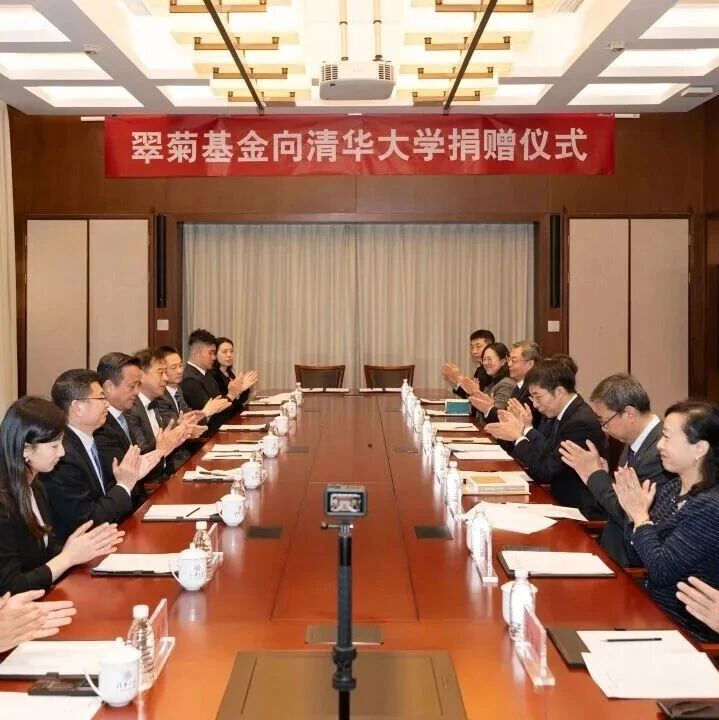
Group 1 - The establishment of the "China International Science and Technology Promotion Association Mother Fund Branch" aims to enhance the role of mother funds in China's capital market and promote the healthy development of the investment industry, particularly the mother fund sector [1][26]. - The Henan Provincial State-owned Enterprise Reform Development Equity Investment Fund, initiated by the Henan Capital Group, has a scale of 5 billion yuan and focuses on investment in key industries and strategic emerging industries within Henan Province [2][4]. - The sub-fund management institutions are required to secure at least 50% of the total fund size in investment intentions, excluding contributions from the mother fund [4]. Group 2 - Coller Capital has successfully raised $17 billion for its largest fund, Coller International Partners IX, which focuses on secondary market transactions in private equity [8][9]. - The fund aims to provide diversified investment opportunities in the private equity secondary market and has already invested over 70% of its capital [9]. - The fund's investor base includes over 250 participants, comprising major pension funds, insurance companies, sovereign wealth funds, and other financial institutions [9]. Group 3 - Guoxin Fund led a financing round for Shize Biotechnology, which specializes in iPSC-derived cell therapies for neurological diseases, highlighting the potential of cell therapy in the biopharmaceutical sector [10][12]. - Shize Biotechnology has received multiple clinical trial approvals from both Chinese and U.S. regulatory authorities, indicating its strong position in the market [12][13]. - The investment from Guoxin Fund is part of a broader strategy to enhance state-owned capital's presence in the biotechnology field, aiming to support high-quality development in cell therapy [14]. Group 4 - Wuhan Haipai Technology has officially opened in the Yangguang Chuanggu Park, focusing on large-scale interactive sports solutions, which adds momentum to the local industry [15][17]. - The company has developed advanced positioning systems and interactive technologies, with a team comprising members from leading tech firms [17]. Group 5 - The launch of the Rui Chi C9, a new smart light truck by Rui Chi Automotive, reflects the rapid development of the new energy commercial vehicle market in Chongqing, with a starting price of 169,900 yuan [20][21]. - Two Rivers Capital has been actively involved in optimizing governance and strategic decision-making for Rui Chi Automotive, ensuring alignment with long-term development goals [21]. Group 6 - The Cui Ju Fund has made a donation to Tsinghua University to support campus infrastructure and talent development, emphasizing the importance of collaboration between educational institutions and social forces [24][25].

《报告》:S市场活跃度迅速增长 金融机构中险资配置规模最高
Zhong Guo Jing Ying Bao· 2025-12-02 04:36
Core Insights - The report indicates a significant increase in the trading activity of China's private equity secondary market starting from the second half of 2024, with a continuous growth trend expected over the next two years [1] - By the third quarter of 2025, the total trading volume in China's private equity secondary market is projected to reach approximately 92.3 billion RMB, marking a 182% year-on-year increase compared to 32.7 billion RMB in the same period of 2024 [1] - The number of total transactions in the first three quarters of 2025 is expected to be 867, which is a 234% increase from 259 transactions in the same period of 2024 [1] Market Dynamics - The report highlights that all types of sellers have achieved year-on-year growth in both trading volume and transaction numbers, indicating a robust market environment [1] - The participation of government funds and financial institutions as buyers has notably increased, attributed to a deeper understanding of S transactions by local governments, insurance funds, asset management companies (AMCs), trusts, and alternative subsidiaries of brokerages [1] Buyer Preferences - The funding sources for S buyers show a high proportion of state-owned assets, insurance, and high-net-worth family offices, with a noticeable increase in fiscal contributions compared to the previous year [2] - High-net-worth family offices and corporate venture capital (CVC) investors tend to prefer smaller-scale private enterprises, while among financial institutions, insurance funds remain the most significant players, favoring large-scale institutions with team equity participation [2]
S交易走向“C位”,国资引领15万亿元市场变革
中国基金报· 2025-10-20 04:25
Core Insights - The private equity secondary market (S transactions) in China is gaining prominence, with a total of 395 transactions worth 107.8 billion yuan in 2024, marking a 46% increase from 2023 [2][4] - The market is expected to continue its growth trajectory, with 542 transactions recorded in the first half of 2025, surpassing the total number for 2024 [2][4] - State-owned enterprises (SOEs) have emerged as a significant variable influencing both sides of the transaction, becoming the largest seller in the S transaction market [6][8] Market Growth and Trends - Since 2018, the S transaction market has experienced an average annual growth rate exceeding 50%, with the total transaction volume surpassing 100 billion yuan for the first time in 2022 [4] - The market saw a decline in 2023 due to tightened IPO regulations and changes in selling rules, but has rebounded strongly in 2024, reaching a historical high [4][5] - The revival of the S transaction market is attributed to favorable policies and a positive outlook in the A-share and Hong Kong markets, particularly after the "9·24" policy [4][5] Role of State-Owned Enterprises - SOEs have become the largest seller in the S transaction market, driven by the need to liquidate early-stage funds and optimize asset management [8][9] - The demand for SOE participation in S transactions has increased significantly, with local SOEs actively engaging in fund share transfers [7][8] - The successful transfer of SOE shares is expected to enhance market liquidity and increase the volume of tradable assets [7][8] Diversification of Transaction Models - The S transaction market is evolving with diverse transaction strategies, including fund share transfers, GP-led transactions, and structured deals [11][12] - New pricing models, such as "low transaction price + backend sharing," are emerging to address uncertainties in the market [12][13] - Local S funds are adopting a "city-level to district-level" model to alleviate regional liquidity pressures and strengthen local industries [13] Future Outlook - The S market is projected to transition from a niche market to a core ecosystem within the private equity industry, driven by the exit demands of 15 trillion yuan in existing assets [15][16] - The market is expected to see a shift towards professional and diversified transactions, with a focus on high-quality assets and active management capabilities [15][16] - Continued policy innovations and regional pilot breakthroughs are necessary to address the challenges faced by state-owned investment institutions in managing existing assets [16][17]

国资S基金跨境交易故事
Jing Ji Guan Cha Wang· 2025-09-19 07:35
Core Viewpoint - The cross-border transactions of S funds are gaining momentum, with state-owned assets becoming significant participants, but face unprecedented challenges due to regulatory and tax issues [3][10][29]. Group 1: Cross-Border Transactions - The first major cross-border S fund transaction led by foreign capital occurred in February 2025, involving a 229 million yuan deal [3]. - State-owned assets have increased their participation in S fund transactions, rising from 6.9% in 2020 to approximately 20% in 2022, 2023, and 2024 [3]. - Over 1 trillion yuan in assets are awaiting exit in the next 2 to 3 years, with nearly 200 billion yuan facing exit pressure in 2024, 30% of which involves cross-border transactions [3]. Group 2: Regulatory Challenges - Cross-border S fund transactions face significant hurdles, including foreign exchange approvals, tax burdens, legal compatibility, and information barriers [4][5][10]. - Each cross-border fund transaction requires individual foreign exchange applications, leading to long approval cycles and uncertainty [7][8]. - Recent policy changes from the State Administration of Foreign Exchange aim to simplify cross-border investment processes, benefiting state-owned S funds indirectly [10][11]. Group 3: Taxation Issues - Cross-border S fund transactions encounter double taxation, with domestic and foreign taxes exceeding 40%, leading to transaction failures [12][13]. - The complexity of tax regulations across different jurisdictions increases transaction costs and legal risks, discouraging potential deals [16][17]. - Recent initiatives to optimize the tax environment have been introduced, but specific guidance for cross-border S fund transactions remains insufficient [19]. Group 4: Legal and Information Barriers - Legal compatibility issues are a major constraint, with cross-border transactions requiring extensive legal due diligence, often 3 to 5 times more costly than domestic transactions [22][24]. - Information asymmetry poses challenges, as foreign entities may only provide limited financial data, complicating valuation and negotiations [20][21]. - Different legal systems create complexities in fund share ownership recognition, increasing transaction costs and duration [22][23]. Group 5: Market Outlook and Innovations - The Hainan Free Trade Port is attempting to enhance cross-border transaction facilitation, with significant capital flows already recorded [25][26]. - Shanghai's QFLP pilot program allows foreign investors to convert capital for S fund transactions, marking progress in cross-border engagement [27]. - Despite challenges, the market shows promise, with a 150% increase in cross-border S fund transaction volume in 2024 compared to 2023 [28].

易凯资本GP/LP服务团队完成两笔重要老股退出交易,持续推动S市场专业生态建设
Xi Niu Cai Jing· 2025-09-11 03:19
Core Insights - 易凯资本 has successfully completed two significant secondary market transactions, marking its growing expertise in the S transaction segment [1] - The transactions involve the transfer of old shares from a major liquid oxygen reusable rocket company and a leading domestic DRAM enterprise, both aligned with the national focus on "new quality productivity" [1][2] - The firm is actively seeking opportunities in key sectors such as semiconductors, aerospace, embodied intelligence, and quantum computing [2] Group 1 - The Chinese private equity market is transitioning from an "incremental era" to a "stock optimization" phase, with S transactions becoming crucial for connecting GP and LP, as well as assets and liquidity [2] - 易凯资本 is focusing on high-quality asset transactions to link the existing market with long-term capital [2] - The firm is executing various transactions involving staggered income assets and structured financing to meet the demand for safety and certainty in returns [3] Group 2 - 易凯资本 is enhancing its private equity investment banking services to cover the entire chain from financing to mergers and S transactions [4] - The company aims to address the systemic challenges of asset exit and liquidity management faced by LPs and GPs [4] - The GP/LP service team is leveraging 25 years of experience and a network of over 6,000 domestic and international investment institutions to establish itself as a third-party professional S transaction platform [4]
2024年,S交易呈现这五大特征
Zheng Quan Shi Bao Wang· 2025-05-23 13:54
Core Insights - The S Fund (Secondary Market Private Equity Fund) has gained significant attention as a tool to activate existing assets in the primary market and enhance market liquidity, with trading volume increasing substantially [1][2] Group 1: Market Overview - In 2024, China's secondary private equity market recorded a total trading scale of 107.8 billion yuan, marking a 46% year-on-year increase and reaching a historical high [2] - The number of transactions reached 395, covering 374 funds, with a notable surge in trading volume observed in the fourth quarter of 2024 [2] - Financial institutions and government funds emerged as the largest sellers, driven by their substantial existing holdings and urgent exit needs [2] Group 2: Buyer and Seller Dynamics - Corporate investors, government funds, and investment institutions were the primary buyers, with corporate investors showing significant activity, albeit mostly in small transactions [2] - Investment institutions saw a notable increase in trading scale compared to 2023, with several general partners (GPs) acquiring limited partner (LP) fund shares, particularly from funds nearing their exit periods [2] Group 3: Fund Types and Performance - Among the traded fund types, 54.5% were venture funds, followed by growth funds at 29.7% and early-stage funds at 7.2%, indicating a strong focus on equity funds [3] - Equity funds accounted for 948 billion yuan in trading volume, representing 88% of the total trading scale, while infrastructure funds contributed 8% [3] Group 4: Investment Trends - The underlying assets of the funds are increasingly concentrated in "hard technology," with the top sectors being electronic information, biomedicine, manufacturing, and enterprise services, aligning with recent financing trends [4] Group 5: Regional Market Activity - By the end of 2024, the Beijing Equity Exchange had facilitated 112 fund share transfers, totaling 14.866 billion shares and 4.846 billion yuan in transaction value, with a diverse range of participants including state-owned enterprises and private institutions [5][6] - The Shanghai private equity and venture capital share transfer platform maintained the highest transaction volume in the country, with 22.555 billion shares traded and a total transaction value of approximately 24.923 billion yuan [6] Group 6: Transaction Characteristics - The S Fund transactions exhibited five key characteristics in 2024, including a focus on late-stage secondary transactions, a leading position in equity fund trading volume and transaction count, and increased complexity in transaction structures [7]
解码新趋势,2025年中国私募股权二级市场专题研究报告正式发布
投中网· 2025-04-21 03:37
将投中网设为"星标⭐",第一时间收获最新推送 中国私募股权二级市场目前正处在认知深化与结构优化的关键阶段。 作者丨 投中嘉川 来源丨 投中网 在全球经济格局深度调整、国内产业转型升级与私募股权市场结构性变革的交汇点上,资产多元化配置与流动性管理需求持续升温,叠加国家盘活存量 的政策导向,私募股权二级市场( Secondary Market , S 市场)的发展迎来重要契机。 投中嘉川自 2018 年起持续关注并记录 S 市场的发展态 势,现正式推出《 2025 年中国私募股权二级市场专题研究报告》。 报告系统梳理了市场现状,剖析了当前面临的难点与挑战,并提出了前瞻性政策 建议,旨在为行业提供全景洞察与决策参考。 | 报告核心发现 | 数据发现 | 市场调研共识 | | --- | --- | --- | | ¥ 405亿 | 2024年中国基金份额交易规模 | 当下S市场发展阶段: 市场认知已初步建立;生存压力与多重利益驱动GP提升交易参与度;供需 | | | | 两端的国资化趋势强劲,市场挑战加剧。 | | 超1亿 | 2024年基金份额平均交易规模 | 买卖双方难点亟待解决: | | 1000万-3000 ...