
稀土矿产

Search documents
“特朗普外交政策,万变不离寻找中国稀土替代品”
Guan Cha Zhe Wang· 2025-11-09 04:46
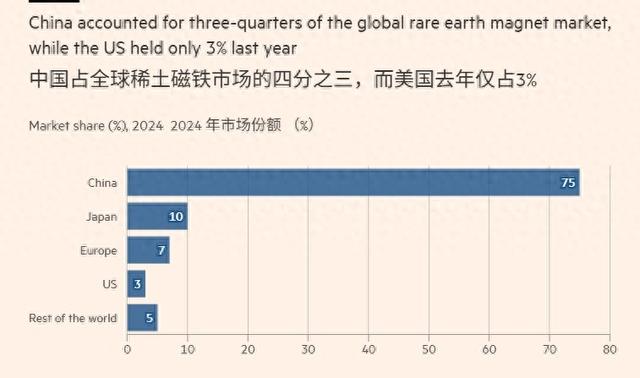
Core Insights - The article discusses the significance of critical mineral resources in U.S. foreign policy during Trump's second presidential term, highlighting the urgency to reduce dependence on China for these resources [1][3]. Group 1: U.S. Dependency on Critical Minerals - The U.S. is heavily reliant on China for critical minerals, with eight out of nine minerals identified as crucial for the economy having China as their sole or primary source [1]. - Samarium is noted as the most critical mineral, essential for aircraft and missile magnets, with China dominating the entire supply chain from extraction to manufacturing [1][3]. Group 2: Diplomatic Efforts and Agreements - In response to China's export controls on rare earths, the U.S. has been actively seeking alternative sources and signed several agreements, including an $8.5 billion deal with Australia for critical minerals [3][5]. - The U.S. government announced a $1.2 billion investment in two rare earth startups and established a critical mineral agreement with Kazakhstan, which has recently discovered significant rare earth deposits [5]. Group 3: Long-term Challenges - Experts suggest that establishing a secure and independent supply chain for critical minerals in the U.S. could take 10 to 20 years due to underdeveloped production infrastructure in countries like Australia [3][5]. - Despite recent agreements and investments, the U.S. is unlikely to achieve self-sufficiency in critical minerals within a year, indicating a long-term challenge ahead [5]. Group 4: Broader Geopolitical Context - The article emphasizes that mineral resources have become a powerful bargaining chip in U.S. foreign policy, influencing negotiations with various countries, including those in Africa and Central Asia [5][6]. - The U.S. involvement in peace agreements, such as the one between Rwanda and the Democratic Republic of the Congo, is also seen as a strategic move to counter China's influence in resource-rich regions [6].


美国与中亚五国谈能源矿产
Huan Qiu Shi Bao· 2025-11-06 22:35
Core Points - The "C5+1" summit, involving the U.S. and five Central Asian countries, is a significant platform for deepening U.S.-Central Asia relations [1][2] - The mechanism, initiated in 2015, has led to enhanced cooperation in various sectors including economy, energy, ecology, and security [1] - The U.S. sees Central Asia as strategically valuable for addressing climate change, energy and food security, and transportation logistics [2] Group 1 - The "C5+1" mechanism has evolved to allow Central Asian countries to express a unified stance, enhancing their negotiating power with external partners [1] - The recent meeting between Kazakhstan's foreign minister and U.S. Secretary of State indicates a willingness to expand cooperation in security, technology, and key mineral resources [2] - Analysts suggest that U.S. interest in Central Asia is increasing, with a focus on high-tech, energy, and transportation infrastructure [2] Group 2 - Central Asia is rich in natural resources, including oil, gas, and rare earth minerals, which are prioritized by the U.S. government [2] - The region's rare earth metals are crucial for manufacturing a wide range of products, from smartphones to military aircraft [2]