关键矿产资源

Search documents
资源品论坛-关键矿产资源的崛起
2026-03-01 17:22
Summary of Key Points from Conference Call Records Industry Overview - The records primarily discuss the tungsten and aluminum industries, focusing on supply dynamics, demand growth, and geopolitical influences affecting these sectors. Tungsten Industry Insights - **Supply Concentration**: China accounts for approximately 80% of global tungsten supply, which is deemed suboptimal for resource security and value realization. An ideal supply share should be between 40%-50% globally to maintain high tungsten prices and encourage domestic efficiency improvements [1][7]. - **Demand Growth**: Tungsten demand is driven by both strategic and industrial needs, with geopolitical factors increasing strategic reserves in Europe and the U.S. The demand elasticity is further enhanced by high-end and military applications [1][8]. - **Resource Scarcity**: Global tungsten reserves are estimated at about 4.6 million tons, with a consumption rate of 100,000 tons per year, suggesting a supply duration of approximately 40 years. The concentration of tungsten resources is significantly higher compared to other metals like gold and copper [5][9]. - **Technological Barriers**: Unlike rare earths, tungsten's core issue is resource scarcity rather than technological barriers. High-end applications remain dominated by Western companies, indicating a gap in domestic capabilities [4][6]. Aluminum Industry Insights - **Production Capacity**: China's electrolytic aluminum production capacity is nearing its ceiling at 45 million tons, with limited growth expected from overseas, projected to increase by about 4.5% to 30 million tons by 2026, primarily in Indonesia and Angola [1][15]. - **Profit Margins**: Domestic aluminum prices are around 24,000 RMB per ton, with profits for aluminum plants typically ranging from 5,000 to 10,000 RMB per ton, driving Chinese private enterprises to expand overseas [1][16]. - **Supply-Demand Balance**: The global supply-demand for aluminum is tight, with domestic inventories at approximately 700,000 tons and overseas inventories below 1 million tons, suggesting that aluminum prices will likely remain high [1][24]. Geopolitical and Market Dynamics - **Geopolitical Influence**: The records highlight the impact of geopolitical tensions on resource supply chains, particularly in the context of Western nations strengthening their critical mineral supply chains through various strategic measures [3][36]. - **Resource Nationalism**: The trend of resource nationalism is noted, with countries like Guinea pushing for local processing and control over mineral resources, which could disrupt supply chains [31][37]. Future Projections - **Tungsten Price Trends**: The price of tungsten is expected to maintain high levels due to a combination of limited new large-scale mining projects and strict domestic production quotas [9][10]. - **Aluminum Demand Shifts**: While traditional sectors like real estate are declining, emerging sectors such as transportation and energy are expected to drive aluminum demand growth [21][22]. Additional Considerations - **Investment Opportunities**: The records suggest that there are significant investment opportunities in regions with rich mineral resources, particularly in Central Asia and Africa, where geopolitical stability and favorable policies could enhance mining prospects [11][12][47]. - **Technological Advancements**: The potential for technological breakthroughs in rare earth extraction and processing in the next decade could alter the competitive landscape, impacting pricing and supply dynamics [2][4]. This summary encapsulates the critical insights and projections from the conference call records, providing a comprehensive overview of the tungsten and aluminum industries, their market dynamics, and future outlooks.
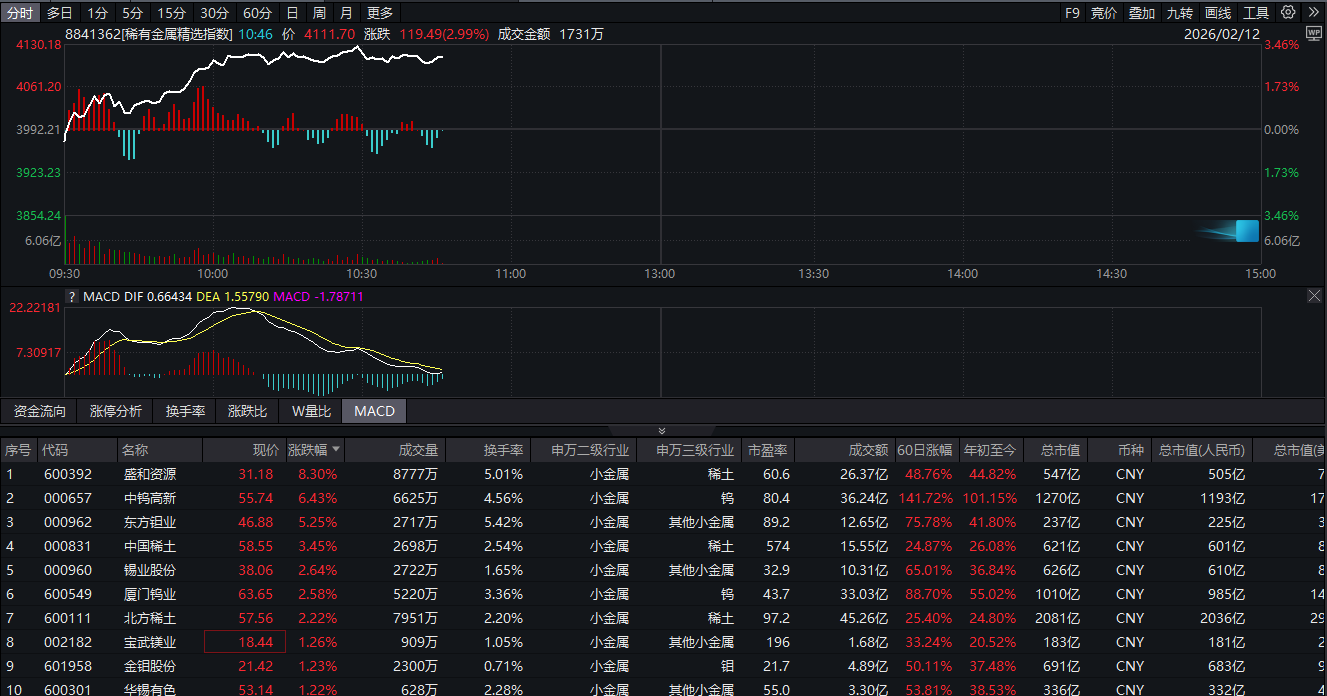
稀有金属早盘震荡走强,机构看好关键矿产资源价格上涨趋势丨盘中线索
2 1 Shi Ji Jing Ji Bao Dao· 2026-02-12 03:09
Core Viewpoint - The news highlights the rising prices of key mineral resources in China, driven by geopolitical factors and supply chain security concerns, with a focus on tungsten and rare earth elements. Group 1: Market Trends - Domestic prices for 65% black tungsten concentrate have increased to 697,000 yuan per ton, up by 7,000 yuan from the previous trading day [2] - Similarly, the price for 65% white tungsten concentrate has also risen to 696,000 yuan per ton, reflecting the same increase [2] - The overall trend indicates a tightening supply of critical mineral resources, leading to upward price pressure [2] Group 2: Industry Insights - China Galaxy Securities notes that major countries are enhancing their resource supply security by controlling key minerals and increasing resource reserves, which will widen the supply gap for critical minerals globally [2] - The establishment of independent supply chains by these countries is expected to stimulate economic activity through rising metal prices, contributing to a "security premium" on global mineral resources [2] - The report emphasizes a bullish outlook on the prices of copper, tungsten, and rare earths due to their high demand and supply constraints [2] Group 3: Company Recommendations - Companies to watch include Zijin Mining, Luoyang Molybdenum, Minmetals Resources, Zhongtung High-tech, Xiamen Tungsten, Northern Rare Earth, China Rare Earth, and Shenghe Resources, as they are positioned to benefit from the rising prices of key minerals [2]


地缘风险推升贵金属价格,全球关键矿产资源战略地位提升
Sou Hu Cai Jing· 2026-01-20 02:37
Core Viewpoint - The non-ferrous metal sector is experiencing a comprehensive pullback, with significant declines in companies such as China Tungsten High-Tech and Xiamen Tungsten, while the non-ferrous mining ETF has seen a net inflow of over 100 million in the past six trading days, indicating potential investment opportunities despite current market volatility [1][14]. Group 1: Market Performance - The non-ferrous mining ETF (159690) has seen a decline of 3.19%, but has attracted over 4 million in funds during the downturn, with a total net inflow exceeding 1 billion in the last six trading days [1]. - The non-ferrous mining index has achieved a remarkable one-year growth of 124.26%, outperforming mainstream non-ferrous indices [3][4]. - Historical performance shows the non-ferrous mining index has a ten-year cumulative increase of 172.62% and an annualized return of 10.87%, indicating strong resilience compared to other indices [10][12]. Group 2: Strategic Insights - China International Capital Corporation (CICC) suggests that the gold price may stabilize and rise, presenting a reallocation opportunity, while the silver market faces challenges due to uneven regional inventories and pending tariff policies [17][18]. - Ever since 2025, the emphasis on "critical mineral resources" has significantly increased in Europe and the U.S., with procurement plans from the U.S. and Australia indicating that cobalt, tantalum, antimony, and gallium will account for notable percentages of global production in 2024 [18][19]. - Investment opportunities are highlighted in strategic metals storage, particularly those with supply chain risks concentrated in specific regions, such as copper, lithium, and nickel, as well as metals essential for energy transition and AI applications [18][19].

贝森特:与澳大利亚国库部长讨论了关键矿产资源议题
Xin Lang Cai Jing· 2026-01-14 18:25
Core Viewpoint - The meeting between U.S. Treasury Secretary Scott Bansen and Australian Treasury Minister Jim Chalmers highlighted the commitment to establish a strong, action-oriented partnership for creating a long-term secure supply chain for critical minerals [1][1]. Group 1: Key Mineral Opportunities - Bansen and Chalmers discussed opportunities related to critical minerals, emphasizing their importance for economic and national security [1][1].
财经观察:防美国“抢资源”,欧盟筹建关键矿产中心
Huan Qiu Shi Bao· 2025-11-20 22:36
Core Points - The European Union (EU) is planning to establish a central institution to coordinate the procurement and storage of critical minerals in response to the United States' aggressive actions in the global mineral market [2][4] - EU officials express concerns over the slow response to the US's "America First" policy, which has exposed the EU's economic vulnerabilities [1][2] - The EU aims to enhance its economic security by integrating more protective measures into its supply chains and establishing partnerships with countries like Brazil and South Africa [4][5] Group 1: EU's Strategic Response - The EU's plan includes signing cooperation agreements with Brazil and South Africa to secure mineral supplies [4] - The EU is also considering setting price floors for critical minerals to ensure domestic availability for European companies [4] - The Critical Raw Materials Act (CRMA) will come into effect in May 2024, focusing on achieving self-sufficiency in strategic raw materials through financial support for 47 strategic projects [4][12] Group 2: US Actions and Implications - The US has been rapidly securing critical mineral supplies through various means, including the Defense Production Act and acquiring stakes in foreign mining companies [5][7] - The US's aggressive strategy has raised concerns in the EU about being left behind in the competition for essential resources [7][11] - The EU fears that US actions may undermine its strategic projects, as seen with the tungsten mining project in the UK that has attracted US investment [8][11] Group 3: Future Directions for the EU - The EU is expected to propose a more detailed critical mineral plan by the end of 2025, which will complement the CRMA [11][12] - The "RESourceEU" initiative aims to strengthen trade ties with third countries and enhance the resilience of Europe's strategic metal supply chains [11][12] - The EU is also exploring domestic mining and refining options, as well as partnerships with neighboring countries to boost its autonomy in critical minerals [12]
TMC the metal company (TMC) - 2025 Q3 - Earnings Call Transcript
2025-11-13 22:30
Financial Data and Key Metrics Changes - In Q3 2025, the company reported a net loss of $184.5 million, or $0.46 per share, compared to a net loss of $20.5 million, or $0.06 per share for the same period in 2024 [25] - Free cash flow for Q3 2025 was negative $11.5 million, compared to negative $5.9 million in Q3 2024, primarily due to higher environmental, personnel, and corporate payments [28][29] - The company has approximately $165 million of liquidity, with potential additional proceeds from in-the-money warrants exceeding $50 million [6][30] Business Line Data and Key Metrics Changes - Exploration and evaluation expenses decreased to $9.6 million in Q3 2025 from $11.8 million in Q3 2024, while general and administrative expenses increased to $45.7 million from $8.1 million in the same period [26] - The revenue mix is expected to be 45% from nickel products, 28% from manganese, 17% from copper, and 9% from cobalt during steady-state production [23] Market Data and Key Metrics Changes - The company highlighted that America is critically dependent on foreign sources for metals, with imports for manganese, cobalt, and nickel at roughly 100% [7][8] - The U.S. government is taking steps to address vulnerabilities in rare earths and base metals, indicating a strategic shift towards domestic resource development [8][9] Company Strategy and Development Direction - The company is focused on a U.S. pivot aimed at achieving a commercial recovery permit by 2027, with ongoing discussions with NOAA and the U.S. government [5][6] - The strategy includes building a comprehensive ecosystem around the nodule resource, emphasizing partnerships and technological advancements [20][21] Management's Comments on Operating Environment and Future Outlook - Management expressed confidence in the U.S. pivot leading to a commercial recovery permit and highlighted the importance of national security and energy independence [5][8] - The company is optimistic about its regulatory path and the potential for significant cash inflows from warrant exercises [6][33] Other Important Information - The company has achieved several industry firsts, including the first SEC-compliant resource statements and the first production of nodule-derived manganese sulfate [13][18] - The pre-feasibility study indicates a combined project net present value of $23.6 billion, with a clear path to first production [22][24] Q&A Session Summary Question: Clarification on potential incoming cash from warrants - Management confirmed that total potential proceeds from warrants could exceed $432 million, with a strong liquidity position of $165 million [33] Question: Financial benefits from the Hidden Gem vessel's deployment to Japan - Management clarified that TMC will receive financial benefits from the contract between Allseas and the foundation funding the program, indicating it is not pro bono work [34] Question: Streamlining of NOAA's regulation process - Management explained that the combination of exploration and commercial recovery licenses is intended to facilitate the regulatory process, as TMC already has a prepared application for a commercial recovery permit [36][37] Question: Timing of exploration and production permit grants - Management indicated that the timeline for the exploration permit is aligned with the anticipated production start date of Q4 2027, regardless of whether the permits are granted sequentially [41][42]

“特朗普外交政策,万变不离寻找中国稀土替代品”
Guan Cha Zhe Wang· 2025-11-09 04:46
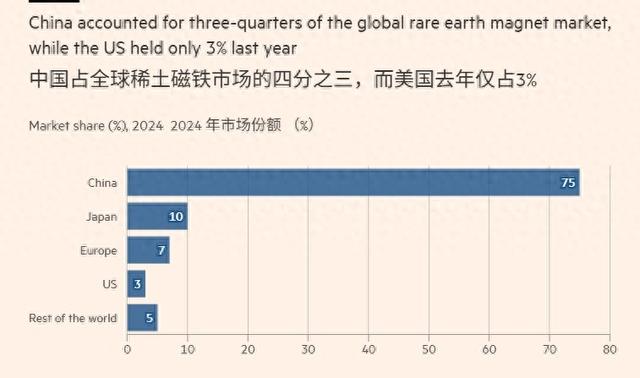
Core Insights - The article discusses the significance of critical mineral resources in U.S. foreign policy during Trump's second presidential term, highlighting the urgency to reduce dependence on China for these resources [1][3]. Group 1: U.S. Dependency on Critical Minerals - The U.S. is heavily reliant on China for critical minerals, with eight out of nine minerals identified as crucial for the economy having China as their sole or primary source [1]. - Samarium is noted as the most critical mineral, essential for aircraft and missile magnets, with China dominating the entire supply chain from extraction to manufacturing [1][3]. Group 2: Diplomatic Efforts and Agreements - In response to China's export controls on rare earths, the U.S. has been actively seeking alternative sources and signed several agreements, including an $8.5 billion deal with Australia for critical minerals [3][5]. - The U.S. government announced a $1.2 billion investment in two rare earth startups and established a critical mineral agreement with Kazakhstan, which has recently discovered significant rare earth deposits [5]. Group 3: Long-term Challenges - Experts suggest that establishing a secure and independent supply chain for critical minerals in the U.S. could take 10 to 20 years due to underdeveloped production infrastructure in countries like Australia [3][5]. - Despite recent agreements and investments, the U.S. is unlikely to achieve self-sufficiency in critical minerals within a year, indicating a long-term challenge ahead [5]. Group 4: Broader Geopolitical Context - The article emphasizes that mineral resources have become a powerful bargaining chip in U.S. foreign policy, influencing negotiations with various countries, including those in Africa and Central Asia [5][6]. - The U.S. involvement in peace agreements, such as the one between Rwanda and the Democratic Republic of the Congo, is also seen as a strategic move to counter China's influence in resource-rich regions [6].
智利制造业促进协会分析关键矿产资源形势
Shang Wu Bu Wang Zhan· 2025-10-27 16:28
Core Insights - Rare earths have become a key point in negotiations with the United States [1] - The U.S. and Australia have reached a historic framework agreement committing to an investment of $8.5 billion [1] - The agreement includes fast-track approvals, resource mapping, and collaboration on recycling technologies to build a rare earth supply chain [1] - This public-private partnership is expected to secure tariff exemptions under the U.S. "Section 232" for Australia [1] - Chile, possessing critical mineral resources like lithium and rare earths, is in a prime position to enhance its global strategic status [1] - There is an urgent need for Chile to establish effective public-private collaboration mechanisms to transform its resource endowment into a genuine strategic advantage [1]
美国与澳大利亚签署关键矿产协议,外交部回应
财联社· 2025-10-21 07:37
Core Viewpoint - The recent agreement between the U.S. and Australia on critical minerals is perceived as a strategic move to counter China's influence in the global supply chain [1] Group 1 - The formation of global supply chains is a result of market and enterprise choices, indicating that geopolitical agreements may influence but not dictate these dynamics [1] - Key mineral resource countries are encouraged to play a proactive role in ensuring the security and stability of industrial and supply chains [1] - The emphasis is on maintaining normal economic and trade cooperation amidst geopolitical tensions [1]

中国实施稀土管制仅5天,美国便急购3000吨“战争金属”!
Sou Hu Cai Jing· 2025-10-18 12:35
Core Insights - The U.S. Department of Defense has announced an emergency investment of $1 billion to purchase critical minerals, including $245 million specifically for 3,000 tons of antimony, a strategic material essential for military ammunition and weaponry [1][4] - China's Ministry of Commerce has introduced new export regulations on rare earths, implementing "minimum percentage" and "direct product" rules, which has prompted the U.S. to expedite its procurement efforts [3][4] Group 1 - The urgency of the U.S. procurement reflects strategic anxiety regarding critical mineral resources, particularly antimony, which is crucial for manufacturing armor-piercing shells, nuclear weapons, and night vision devices [4] - The U.S. relies heavily on imports for antimony, with over 80% of its demand met through foreign sources, primarily from China, highlighting vulnerabilities in the U.S. supply chain [4] - Analysts believe that the Pentagon's goal of acquiring 3,000 tons of antimony in the short term is nearly impossible, as the procurement volume exceeds U.S. annual production and import levels [4] Group 2 - China controls approximately 70% of global rare earth mining and 90% of separation and processing, with a significant share of antimony production and smelting capacity [4] - The U.S. strategy to build a "de-China" supply chain in collaboration with allies faces challenges, as establishing a new antimony mine can take 3 to 5 years, while China's industrial advantages have been built over decades [4] - The competition for critical minerals has evolved beyond a typical trade dispute, with China redefining the rules of the game in the global resource landscape [4]