
火箭回收复用

Search documents
商业航天五小龙,谁会成为中国版SpaceX?
和讯· 2026-03-24 08:55
Core Viewpoint - SpaceX's valuation is approaching $1.8 trillion, significantly outpacing China's five private rocket companies, which collectively exceed 100 billion RMB, highlighting a stark disparity in the commercial space industry [1][2]. Group 1: Challenges in the Rocket Business - The commercial space industry faces three major challenges: high cash burn rates, technological bottlenecks, and capital market perceptions [3][5]. - For instance, Blue Arrow Aerospace reported revenue of 36.43 million RMB in the first half of 2025, but incurred a net loss of 635 million RMB, with R&D expenses alone consuming 360 million RMB, nearly ten times its revenue [4]. Group 2: SpaceX's Success Factors - SpaceX's success is attributed to its ability to create a profitable ecosystem through its Starlink satellite service, which is projected to generate $15.6 billion in revenue by 2026, significantly contributing to its valuation [13]. - The company has also innovated in cost reduction, achieving a marginal launch cost of approximately $15 million through complete rocket reuse, which allows for a gross margin of around 68% after five missions [14]. Group 3: China's Five Dragons' Potential - The five private rocket companies in China, referred to as the "Five Dragons," have a combined valuation that is only 0.8% of SpaceX's, indicating a need for significant advancements to close this gap [2][9]. - These companies are focusing on developing reusable liquid rockets, with Blue Arrow aiming for a launch cost below 20,000 RMB per kilogram, which is one-fifth of traditional rocket costs [16]. Group 4: Market Dynamics and Future Outlook - The Chinese market is characterized by a clear demand for satellite launches, with government projects like the "National Network Constellation" and "Thousand Sails Constellation" expected to create a launch market worth approximately 26.8 billion RMB by 2026 [9]. - The unique advantages of China's supply chain may allow for competitive pricing, with costs potentially decreasing by 50% in the next 3-5 years as reusable technology matures [16][17]. Group 5: Competitive Landscape - The competition among China's private rocket companies is not just about speed but also about who can establish a sustainable business model akin to SpaceX's [18]. - Each company has its unique strengths, such as Blue Arrow's full control over the production chain, Tianbing's use of 3D printing technology, and Zhongke Aerospace's deep technical expertise [19].

金风科技再涨超5% 全年中国风电吊装达130GW 风机价格有望继续小幅修复
Zhi Tong Cai Jing· 2026-02-26 03:29
Group 1 - The core viewpoint of the article highlights that Goldwind Technology (金风科技) has seen a stock price increase of over 5%, currently trading at 15.56 HKD with a transaction volume of 431 million HKD [1] - In 2025, the new installed capacity for wind power in China is expected to reach 130 million kilowatts, representing a year-on-year growth of 49.9%. Goldwind Technology ranks first with an additional installed capacity of 25.9 million kilowatts [1] - The trend in wind turbine pricing is improving, with prices expected to stabilize and slightly recover in 2026 due to a favorable demand environment and sufficient bidding volume [1] Group 2 - Blue Arrow Aerospace (蓝箭航天) announced that it will conduct recovery tests for its reusable rocket, Zhuque-3, in the second quarter of this year, aiming for its first recovery flight in the fourth quarter [1] - The Shanghai Stock Exchange has updated the IPO review status of Blue Arrow Aerospace to "inquired," indicating progress in its public offering process [1] - Goldwind Technology holds approximately 4.14% of Blue Arrow Aerospace through its subsidiary platform [1]

影响市场重大事件:重复使用火箭朱雀三号计划今年二季度再次挑战回收
Mei Ri Jing Ji Xin Wen· 2026-02-25 23:12
Group 1: Reusable Rocket Developments - China’s commercial aerospace company, Blue Arrow Aerospace, announced that the reusable rocket Zhuque-3 will conduct recovery tests in Q2 2026, optimizing the landing process for potential reuse [1] - The Zhuque-3 rocket's first stage, if successfully recovered, will be used for subsequent launches, aiming for a reusable flight by Q4 2026 [1] Group 2: Launch Plans and Achievements - China Aerospace Science and Technology Corporation (CASC) revealed that the recoverable liquid rocket, Lijian-2, is set for its maiden flight in late March 2026, carrying the light cargo spacecraft [2] - CASC plans to conduct four launches within the year, with the solid rocket Lijian-1 expected to have at least eight launches, including two at sea [2] Group 3: Hong Kong's Aerospace Initiatives - Hong Kong's Financial Secretary, Paul Chan, stated that the government is reviewing listing regulations to attract more aerospace companies to the region [3] - The government aims to facilitate the integration of mainland aerospace industries with global markets, providing various professional services [3] Group 4: Autonomous Driving Projects - The "Aerospace Corridor" autonomous driving transport system is expected to be operational within the year, marking the first commercial operation of its kind in Hong Kong [4] Group 5: Technological Innovations in Fuel Cells - A research team from Northwestern Polytechnical University and Peking University has developed a novel strategy to address carbon deposition in solid oxide fuel cells, enhancing the conversion of natural gas to electricity [5] Group 6: Advancements in Medical Technology - Researchers from the University of Pennsylvania and Harvard have created an electronic implant system that monitors and influences the development of human pancreatic cells, providing a platform for future diabetes therapies [6] Group 7: Gene Editing in Medical Treatments - A team from the Air Force Medical University successfully performed the first gene-edited pig liver perfusion treatment for a patient with liver failure, demonstrating safety and efficacy [7] Group 8: Semiconductor Manufacturing Improvements - Samsung Electronics has achieved an 80% yield rate for its 1C DRAM, significantly up from 60-70% in Q4 2025, with expectations to reach 90% by May [8] - The yield for Samsung's HBM4 based on 1C DRAM has also improved, nearing 60% compared to 50% in Q4 2025 [8] Group 9: Policy Initiatives in Sichuan - The Sichuan provincial government has expanded its "computing power voucher" program and is exploring new policies to support digital innovation, including funding for digital application laboratories [9] Group 10: AI Model Developments by Alibaba - Alibaba has released three new medium-sized models in the Qwen 3.5 series, outperforming previous flagship models, with costs as low as 0.2 yuan per million tokens [10]
朱雀三号运载火箭计划今年二季度再次挑战回收试验
Zhong Guo Xin Wen Wang· 2026-02-25 07:36
Core Viewpoint - The Zhuque-3 reusable launch vehicle is set to conduct another recovery test in the second quarter of 2026, following its initial flight and recovery attempt that faced challenges [1][2]. Group 1: Launch Vehicle Details - Zhuque-3 is a self-developed reusable liquid oxygen-methane launch vehicle by Blue Arrow Aerospace, equipped with a reaction control system, grid fins, and landing legs for vertical return and recovery after orbital launch [1]. - The first flight of Zhuque-3 took place on December 3, 2025, at the Dongfeng Commercial Aerospace Innovation Test Zone, successfully placing the second stage into orbit [1]. Group 2: Recovery Test Insights - The first recovery attempt of the Zhuque-3's first stage encountered an abnormal combustion issue, preventing a soft landing at the recovery site, with debris landing at the edge of the recovery area [1]. - Despite not achieving the recovery goal, the attempt provided critical engineering data under real flight conditions, laying a significant foundation for future launches and reliable recovery of the first stage [2].
重复使用火箭朱雀三号,计划今年二季度再次挑战回收
Hua Xia Shi Bao· 2026-02-25 05:35
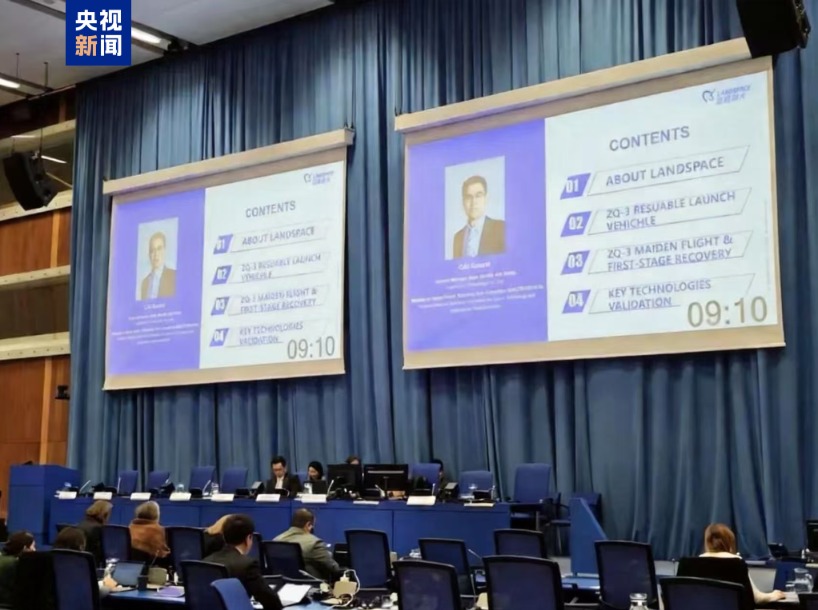
Core Viewpoint - Chinese commercial aerospace company Blue Arrow Aerospace announced plans to conduct recovery tests for its reusable rocket Zhuque-3 in the second quarter of this year during the 63rd meeting of the United Nations Outer Space Committee's Technology Working Group [1]. Group 1: Zhuque-3 Rocket Development - The Zhuque-3 development team is currently optimizing the rocket landing process and plans to conduct recovery tests again in the second quarter of 2026, aiming for the first recovery flight attempt in the fourth quarter of this year [3]. - If the first stage of Zhuque-3 is successfully recovered, it will be reused for the next Zhuque-3 rocket, enabling reusability [3]. Group 2: Technical Specifications and Previous Tests - Zhuque-3 is China's self-developed reusable rocket powered by liquid oxygen and methane, equipped with a reaction control system, grid fins, and landing legs for vertical return and recovery after launch [5]. - The first flight of Zhuque-3 took place on December 3, 2025, marking China's first verification of first-stage recovery technology for an orbital-class launch vehicle. During the return flight, the rocket achieved high-precision guidance control to the landing site but unfortunately failed to achieve a soft landing due to an abnormal combustion incident a few kilometers above the ground [5].
朱雀三号计划二季度再次挑战回收
Shang Hai Zheng Quan Bao· 2026-02-25 02:23
Core Viewpoint - The Chinese commercial aerospace company Blue Arrow Aerospace announced that the reusable rocket ZHUSHA 3 will conduct recovery tests again in the second quarter of this year, aiming for further advancements in reusable rocket technology [1][3]. Group 1: Project Updates - The ZHUSHA 3 development team is currently optimizing the rocket landing process and plans to conduct another recovery test in the second quarter of 2026 [3]. - Based on the results of the recovery tests, the team aims to attempt the first recovery of a reusable flight in the fourth quarter of this year, with the potential for a successful recovery of the first stage to be used in subsequent ZHUSHA 3 rockets [3]. Group 2: Technical Specifications - ZHUSHA 3 is a domestically developed reusable rocket that uses liquid oxygen and methane as propellants. It is equipped with a reaction control system, grid fins, and landing legs to facilitate vertical return and recovery after launch [5]. - The first flight of ZHUSHA 3 took place on December 3, 2025, marking China's first verification of first-stage recovery technology for an orbital-class launch vehicle. During the return flight, the rocket achieved high-precision guidance control to the landing site, but an abnormal combustion occurred a few kilometers from the ground, preventing a soft landing [5].
密集催化!又一可回收商业火箭将首飞,有望首次实现“入轨+回收”双突破
Xuan Gu Bao· 2026-02-04 05:22
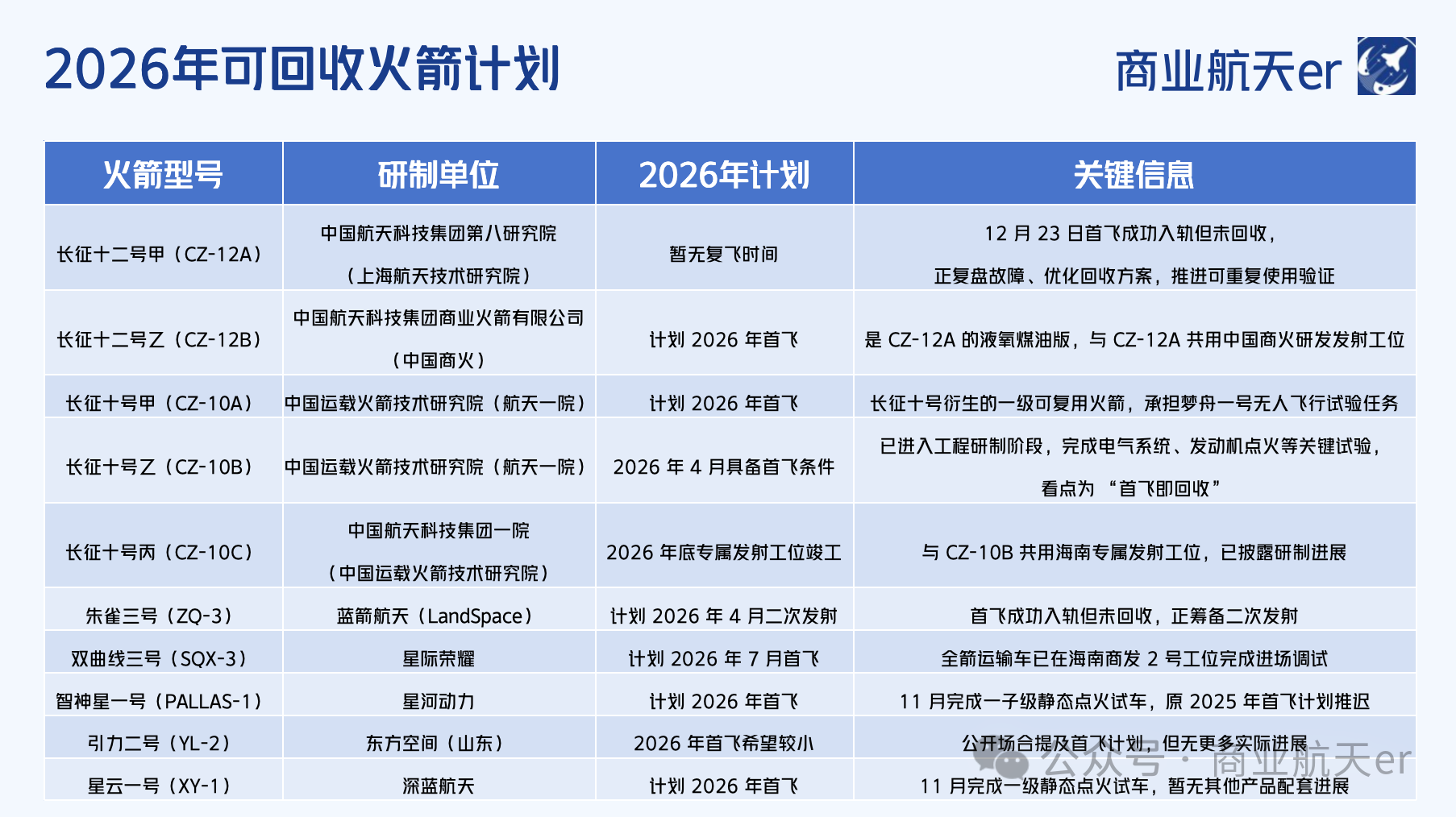
Event Overview - The first flight of the reusable launch vehicle "Xingyun-1" by Deep Blue Aerospace is scheduled around the Spring Festival of 2026, aiming to validate the full process of orbital launch and vertical recovery, potentially becoming China's first commercial rocket to achieve both "orbital + recovery" success [1] - "Xingyun-1" utilizes the self-developed "Thunder R" engine, with over 85% of key components made from 3D-printed materials, ensuring full control over core technologies from design to testing [1] - Other reusable rockets expected to launch in 2026 include ZQ-3 by LandSpace, PALLAS-1 by Star River Power, and SQX-3 by Interstellar Glory [1] Market Potential - The market for rocket recovery and reuse is projected to be significant, as it aims to reduce launch costs and enhance rapid response times, which are crucial for large-scale, low-cost access to space [3] - The three main recovery methods include parachute recovery, vertical recovery, and winged return, with vertical recovery being the most economically viable due to its high landing precision and minimal structural changes to the rocket [3][4] Industry Growth - According to Shenwan Hongyuan, the commercial aerospace sector in China is entering a rapid development phase, with a focus on three core areas: accelerating breakthroughs in reusable rocket technology, increasing the number of commercial launch sites, and enhancing the launch capabilities of commercial rockets [5] - The number of low-orbit satellites applied for has reached 51,300, which is expected to significantly boost the frequency of rocket launches, with projections indicating over 900 launches by 2030 and a market space of approximately $63.2 billion [5] Related Companies - Key players in the industry include: - Southwest Aluminum, a leading aluminum processing enterprise for aerospace materials [10] - Baotai Co., a major producer of titanium and titanium alloys [11] - Guangwei Composite, a leader in carbon fiber production for aerospace applications [12] - Companies involved in rocket engine development include: - Aerospace Science and Technology Corporation, a primary entity for liquid rocket engines in China [14] - SRI New Materials, a supplier for various private rocket manufacturers [15]
3大火箭企业同台披露回收复用最新时间表,卫星ETF鹏华(563790)日均成交2.45亿
Xin Lang Cai Jing· 2026-01-26 01:42
Group 1 - The core viewpoint of the news highlights the advancements in China's commercial aerospace sector, particularly the timelines and differentiated paths for the development of reusable rockets, with 2026 being a pivotal year for technology validation [1] - Key figures from major companies, including Zhang Xiaodong from Blue Arrow Aerospace and Li Jun from Star River Power, presented updates on their respective rocket projects, indicating a collaborative effort towards achieving reusable rocket technology [1] - The report from Western Securities emphasizes that the global commercial aerospace industry is transitioning from "single satellite tests" to "constellation networks," with China's satellite deployment currently at only about 1% completion [1] Group 2 - The Satellite ETF Penghua closely tracks the CSI Satellite Industry Index, which includes 50 listed companies involved in satellite manufacturing, launching, communication, navigation, and remote sensing, reflecting the overall performance of the satellite industry [2] - As of December 31, 2025, the top ten weighted stocks in the CSI Satellite Industry Index account for 63.64% of the index, with major companies including China Satellite, Aerospace Electronics, and China Satcom [2]




商业航天:隔热材料是火箭迈向全复用的核心(附报告)
材料汇· 2026-01-11 14:59
Core Viewpoint - Reusable rockets significantly reduce space launch costs and increase launch frequency, with full reusability becoming a core trend in the aerospace industry [2][3][24]. Group 1: Reusable Rocket Technology - The first stage reuse technology of rockets is mature, with the Falcon 9 rocket's reuse cost being less than one-third of a new rocket [3][11]. - The Falcon 9 rocket has achieved over 30 successful first-stage recoveries, demonstrating the effectiveness of reusable technology [3][12]. - Full reusability of rockets is expected to further lower launch costs, increase launch frequency, and reduce space debris [3][24]. Group 2: Challenges in Reusability - Thermal protection is a core challenge for the recovery of the second stage of rockets, as it must withstand extreme temperatures during re-entry [3][4][35]. - The Falcon 9 rocket's thermal protection system includes ceramic tiles that can endure temperatures exceeding 1400°C [37]. - Stoke Space is developing a metal thermal protection system that utilizes liquid hydrogen for active cooling during re-entry [38]. Group 3: China's Progress in Reusable Rockets - China is actively developing reusable rockets, with the Zhuque-3 and Long March 12甲 successfully completing their maiden flights [4][41]. - The Long March 9 rocket is designed for full reusability and aims to achieve heavy-lift capabilities in two phases [47]. - Domestic companies are exploring various technological paths for reusable rockets, including the use of liquid oxygen and methane fuels [46].
火箭“汽车厂”落户钱塘,海上回收复用基地叩响廉价太空时代大门
Jin Rong Jie· 2026-01-09 06:34
Core Insights - The construction of the first domestic large liquid carrier rocket assembly, testing, and recovery reuse base has commenced in Qiantang, marking a significant milestone in China's commercial aerospace sector [1][2] Group 1: Project Overview - The new base is described as a "car assembly plant" for rockets, covering the entire process from research and development to production, assembly, testing, and recovery [2] - The "Qiantang" rocket was unveiled alongside the base, symbolizing the start of a new chapter in commercial space exploration [1] Group 2: Strategic Layout - The founder of Arrow Yuan Technology emphasized the favorable investment environment in Hangzhou, achieving a "100-day signing to construction" timeline [3] - Key factors for choosing Hangzhou include its geographical location, industrial environment, and application scenarios, with the region housing nearly 40 aerospace-related companies [3] Group 3: Technological Advancements - Arrow Yuan Technology achieved a significant technological milestone in May 2025 with the successful flight recovery test of its self-developed rocket, marking it as the first in China to utilize "liquid oxygen and methane + stainless steel + offshore soft landing recovery" technology [4] Group 4: Cost Revolution - The "Qiantang" rocket's first stage is designed for 20 reuses, with the launch cost per kilogram expected to drop below 20,000 yuan, representing a reduction of over 70% compared to the current market price of 80,000 to 100,000 yuan per kilogram [5] Group 5: Market Impact - The completed base will have an annual production capacity of 25 rockets, potentially supporting up to 500 launches per year based on the reusability of the first stage [6] - Arrow Yuan Technology has established a complete supply chain, with key components sourced from various partners, including a 70-ton liquid oxygen and methane engine [6] Group 6: Industry Upgrade - The establishment of the Qiantang base is viewed as a driving force for regional industrial upgrades, with Arrow Yuan Technology aiming to play a "chain leader" role in building a collaborative industrial ecosystem [7]