邮轮产业

Search documents
新“黄金十年” 北方大市机会来了
Mei Ri Jing Ji Xin Wen· 2025-12-24 16:33
Core Viewpoint - The cruise economy is recognized as a new economic growth point with a long industrial chain and strong driving force, especially in the context of expanding domestic demand. The global cruise market is expected to recover robustly, ushering in a "golden decade" for China's cruise industry [1][5]. Industry Overview - The cruise industry is described as a "golden industry floating on golden waterways," with economic value extending beyond shipbuilding and operation. It drives high-end manufacturing, transportation, tourism, trade, financial services, and cultural creativity through a "port-ship-shore" linkage, demonstrating significant multiplier effects [1][2]. - The industry has a high driving ratio, with every 1 yuan of revenue from the cruise industry generating 10 to 14 yuan in economic benefits for related sectors [2]. Historical Context - China's cruise economy officially began in 2006, experiencing a "golden decade" from 2008 to 2017, during which the number of cruise tourists grew at an annual rate of 40% to 50%. By 2017, the number of cruise passengers reached 2.43 million, an 11-fold increase from 2010 [3]. - However, after 2017, the growth rate of China's cruise market significantly slowed, with a drop in the number of cruise ships and passengers due to issues like limited routes and lack of experienced service providers [4]. Current Trends - As of 2025, a new wave of growth is anticipated for China's cruise economy, marking the beginning of a second "golden decade." The industry is currently in a recovery phase, with signs of a turning point emerging [5][6]. - Data indicates that the passenger volume in China's cruise market has already surpassed 85% of the 2019 levels, with a year-on-year increase of 27.8% in the first 11 months of the current year [6]. Competitive Landscape - The Ministry of Transport has introduced measures to address industry challenges, such as the inability of certain cruise ships to dock due to inadequate facilities and the lack of diverse cruise products. These measures aim to enhance supply, improve services, and stimulate new demand [7]. - Various provinces and cities are competing to develop their cruise economies, viewing it as a key opportunity to reshape urban industrial structures and enhance international competitiveness [8][9]. Regional Development - Shandong province, particularly Qingdao, is actively pursuing the development of the cruise economy, with plans to create a comprehensive industry cluster worth hundreds of billions. Qingdao aims to become a leading cruise industry center in the Bohai Rim and Northeast Asia [9][10]. - Qingdao's development plan targets receiving over 200 cruise ships and more than 1 million inbound and outbound tourists by 2035, which would position it among the top cities in China's cruise economy [9][10]. Economic Impact - The cruise economy integrates various sectors, including shipbuilding, transportation, port services, tourism, and finance. It is evolving towards composite business models like "cruise + culture and tourism," which require deeper institutional innovations to meet new development demands [11][12]. - Qingdao is leveraging its unique industrial foundation to accelerate the development of its cruise economy, aiming to become a versatile player in the industry [12][13]. Future Prospects - Qingdao's initiatives include enhancing its port facilities and developing high-end tourism projects, which are expected to significantly boost its cruise economy. The city aims to achieve a marine production value of 551.32 billion yuan by 2024, contributing substantially to its overall GDP [13][14].
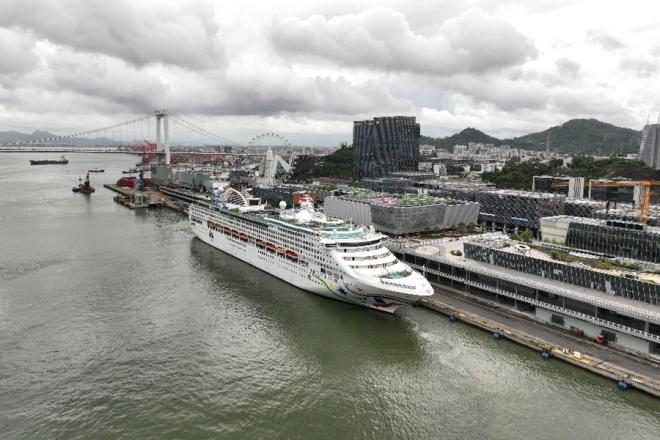
2025年天津邮轮口岸出入境(港)人员突破40万人次
Zhong Guo Jing Ji Wang· 2025-12-23 08:35
Core Insights - The cruise industry in Tianjin is experiencing a significant recovery, with over 400,000 inbound and outbound passengers recorded at the Tianjin International Cruise Home Port this year [1][2] - The implementation of favorable policies by the National Immigration Administration, such as visa exemptions for foreign tourists arriving by cruise, has contributed to this growth [1][2] Group 1: Passenger Statistics - The East Jiang Border Inspection Station has processed nearly 170 cruise ships and over 400,000 passengers since the beginning of 2025, making it the top port in Northern China and the second nationwide [1] - Among the passengers, nearly 300,000 are tourists, with over 11,000 being foreign travelers, including more than 6,000 from Shanghai Cooperation Organization (SCO) countries, which represents a nearly 100% increase compared to the same period in 2024 [1] - The number of foreign travelers entering under visa exemptions has exceeded 3,000, marking a nearly 20% increase from 2024 [1] Group 2: Future Developments - The East Jiang Border Inspection Station plans to enhance passenger experience through improved inspection processes, smarter regulatory models, and collaborative mechanisms [2] - These efforts aim to contribute to the high-quality economic development of the local area by promoting inbound tourism [2]
新央企,开始组建!
中国能源报· 2025-11-23 07:13
Core Viewpoint - The State-owned Assets Supervision and Administration Commission (SASAC) of the State Council has organized a signing ceremony for eight specialized integration projects, aiming to promote professional integration among central enterprises, private enterprises, and local governments across various key sectors [1][3]. Group 1: Project Overview - The signed projects involve 17 entities, including central enterprises, private enterprises, and local governments, covering key areas such as new materials, artificial intelligence, cruise industry, and inspection and testing [3]. - The focus of these specialized integration projects is on accelerating breakthroughs in core technologies, strengthening strategic emerging industries, optimizing traditional industries, and promoting high-quality development of key industrial chains [5]. Group 2: Economic Impact - The cruise industry has a significant driving effect, with a ratio of economic benefit generated from the industry ranging from 10 to 14 times for every 1 yuan of revenue produced [7]. - The China Tourism Group is leading the establishment of a central enterprise cruise operation platform, which will result in the largest fleet in Asia following the integration [8]. Group 3: Strategic Direction - SASAC emphasizes the importance of focusing on core business operations, enhancing resource allocation efficiency, and promoting professional integration while avoiding disorderly expansion and low-level repeated construction [10]. - The integration efforts are aimed at consolidating similar businesses, improving overall efficiency, and ensuring alignment with future industry and technology development trends [10].


央企整合新消息,亚洲最大船队将诞生
2 1 Shi Ji Jing Ji Bao Dao· 2025-11-22 06:55
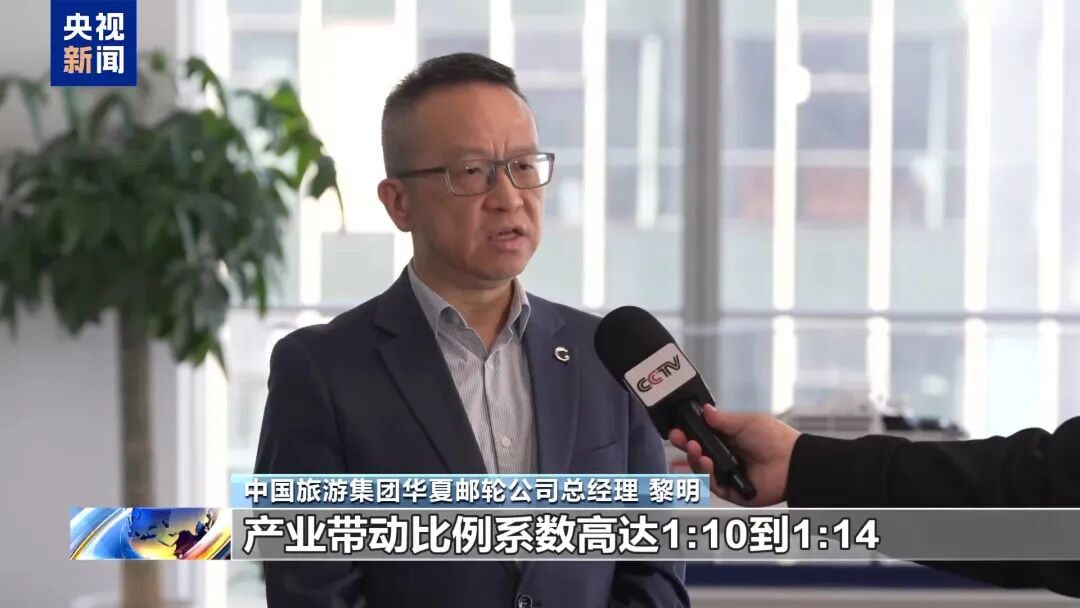
Core Insights - The State-owned Assets Supervision and Administration Commission (SASAC) organized a meeting to promote the professional integration of central enterprises, resulting in the signing of 8 key projects involving 17 entities from central enterprises, private enterprises, and local governments across various sectors such as new materials, artificial intelligence, cruise industry, and inspection and testing [1][2] Group 1: Project Focus - The signed projects aim to accelerate breakthroughs in core technologies and strengthen strategic emerging industries while optimizing and enhancing traditional industries to promote high-quality development of key industrial chains [2] - The integration projects emphasize the importance of focusing on core responsibilities and professional integration to optimize resource allocation and foster strong partnerships in new sectors [2] Group 2: Cruise Industry Development - China Tourism Group is leading the establishment of a central enterprise cruise operation platform company, which will have the largest fleet in Asia following the integration [2] - The cruise industry has a significant multiplier effect, with a ratio of 1:10 to 1:14, meaning that for every 1 yuan of revenue generated by the cruise industry, it can drive 10 to 14 yuan of economic benefits in related upstream and downstream industries [2] Group 3: Strategic Direction - SASAC officials emphasized that professional integration must align with future industry and technology development trends, advocating for a long-term approach and avoiding short-term scale pursuits that lead to unrelated diversification and disorderly expansion [4] - The focus is on deepening core business operations, enhancing resource allocation efficiency, and integrating quality resources along the industrial chain to strengthen the scale and capabilities of central enterprises in strategic emerging industries, thereby committing to a path of high-quality development [4]
央企整合新消息,亚洲最大船队将诞生
21世纪经济报道· 2025-11-22 06:49
Core Viewpoint - The State-owned Assets Supervision and Administration Commission (SASAC) is promoting specialized integration among central enterprises to enhance core technology breakthroughs and optimize traditional industries, aiming for high-quality development across key industrial chains [2][4]. Group 1: Specialized Integration Projects - A total of 8 projects were signed, involving 17 entities including central enterprises, private enterprises, and local governments, focusing on key areas such as new materials, artificial intelligence, cruise industry, and inspection and testing [1][2]. - The China Tourism Group is leading the establishment of a central enterprise cruise operation platform, which will result in the largest fleet in Asia post-integration [2]. Group 2: Economic Impact and Industry Focus - The cruise industry has a significant economic multiplier effect, with a ratio of 1:10 to 1:14, meaning that for every 1 yuan of revenue generated by the cruise industry, it can drive 10 to 14 yuan in related upstream and downstream economic benefits [2]. - SASAC emphasizes that the integration must align with future industry and technology trends, focusing on long-term strategies rather than short-term scale expansion [4]. Group 3: Strategic Goals - The integration aims to eliminate low-level redundant construction and enhance overall efficiency and effectiveness by concentrating on similar business consolidations [4]. - SASAC's deputy director, Li Zhen, highlighted the importance of deepening core business operations, improving resource allocation efficiency, and accelerating the growth of strategic emerging industries within central enterprises [4].
强强联合布局新赛道 国务院国资委8组专业化整合项目集中签约
Yang Shi Xin Wen· 2025-11-22 01:56
Core Insights - The State-owned Assets Supervision and Administration Commission (SASAC) organized a meeting to promote the specialized integration of central enterprises, resulting in the signing of 8 key projects involving 17 entities from central enterprises, private enterprises, and local governments across various sectors such as new materials, artificial intelligence, cruise industry, and inspection and testing [1][3]. Group 1: Project Focus - The signed projects aim to accelerate breakthroughs in core technologies and strengthen strategic emerging industries while optimizing and enhancing traditional industries to promote high-quality development of key industrial chains [3]. - The integration projects emphasize the importance of focusing on core responsibilities and main businesses, optimizing resource allocation, and forming strong alliances to explore new market opportunities [3][8]. Group 2: Cruise Industry Development - China Tourism Group is leading the establishment of a central enterprise cruise operation platform company, which will result in the largest fleet in Asia following the integration [5]. - The cruise industry has a significant multiplier effect, with a ratio of 1:10 to 1:14, meaning that for every 1 yuan of revenue generated by the cruise industry, it can drive 10 to 14 yuan of economic benefits in related upstream and downstream industries [6]. Group 3: Strategic Direction - SASAC officials emphasized that the specialized integration must align with future industry and technology development trends, advocating for a long-term perspective and avoiding short-term scale pursuits that lead to unrelated diversification and disorderly expansion [8]. - The focus should be on high-end development, integrating similar businesses to eliminate low-level redundant construction and enhance overall efficiency and effectiveness [8][10]. - The Deputy Director of SASAC highlighted the need to deepen core business operations, improve resource allocation efficiency, and focus on emerging sectors to integrate quality resources along the industrial chain, thereby enhancing the scale and strength of central enterprises in strategic emerging industries [10].

山东政商要情(11.3—11.9)
Jing Ji Guan Cha Bao· 2025-11-09 09:47
Group 1: Economic Development and Reform - Shandong emphasizes the need to focus on key areas and enhance efforts to ensure the effective implementation of annual reform tasks, aiming to stimulate economic development and create new advantages for high-quality growth [1][2] - The province aims to enhance the vitality of business entities, improve resource allocation efficiency, and optimize the economic development environment [1][2] Group 2: Steel Industry Upgrade - Shandong is focusing on high-end, intelligent, and green development in the steel industry, aiming to create a competitive advanced steel industry base [3] - The province has 17 steel smelting enterprises with a crude steel capacity of approximately 80 million tons, ranking third in the country [3] Group 3: International Cooperation - The "2025 Shandong and Multinational Companies Industry Ecosystem Cooperation Partners Dialogue" gathered over 60 foreign business associations and multinational companies, highlighting Shandong's commitment to deepening cooperation with global firms [4] - 25 key cooperation projects were signed, including 20 trade projects with a total import-export value of approximately $58.4 billion and 5 investment projects totaling about $2.9 billion [4] Group 4: Robotics Industry Development - Shandong's "Robotics Industry Technology Innovation Action Plan (2026-2028)" aims to establish 100 benchmark application scenarios for robotics by 2028, enhancing the province's position in the robotics technology sector [5] - The plan includes four key tasks focused on core technology, major product innovation, application expansion, and quality improvement in the robotics industry [5] Group 5: Cruise Industry Development - Qingdao has released a development plan for the cruise industry (2025-2035), aiming to establish itself as a leading cruise tourism destination in Northeast Asia [6] - The plan sets targets for receiving over 50 cruise ships and more than 200,000 inbound and outbound tourists by 2028, with further growth expected by 2035 [6][7]
时隔五年!丽星邮轮重返厦门
Ren Min Wang· 2025-09-22 09:29
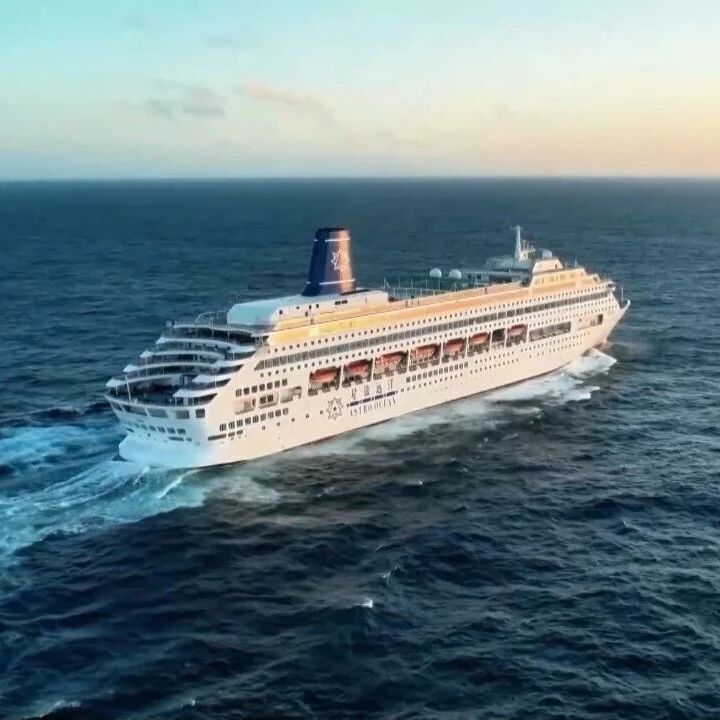
Core Viewpoint - The arrival of the Star Pisces cruise ship marks the resumption of cruise services between Hong Kong and Xiamen after five years, highlighting Xiamen's role as a key player in the cruise industry and its commitment to enhancing international tourism [1][3]. Group 1: Cruise Industry Developments - The Star Pisces cruise ship, carrying nearly 2,000 tourists, docked at Xiamen International Cruise Home Port, signifying the first visit of this ship to Xiamen [1]. - The cruise line has launched a new weekend itinerary themed "Short Trip, New Experience," offering a three-day, two-night cruise from Hong Kong to Xiamen [1]. Group 2: Economic and Strategic Importance - Xiamen is recognized as one of the earliest special economic zones and a strategic point in the 21st Century Maritime Silk Road, actively promoting marine and cultural tourism economies [3]. - The cruise industry is seen as a vital component for Xiamen to implement national strategies, enhance internationalization, and drive high-quality development [3]. Group 3: Future Prospects and Initiatives - The local government aims to leverage the Star Pisces's inaugural visit to expand cooperation and capitalize on the recovery of the Chinese cruise market [4]. - Xiamen plans to optimize its policy environment, improve service levels, and enhance infrastructure to support cruise companies, thereby stimulating the cruise industry's role in urban development and transformation [4].