配音

Search documents
对抗AI的人
虎嗅APP· 2026-01-09 13:31
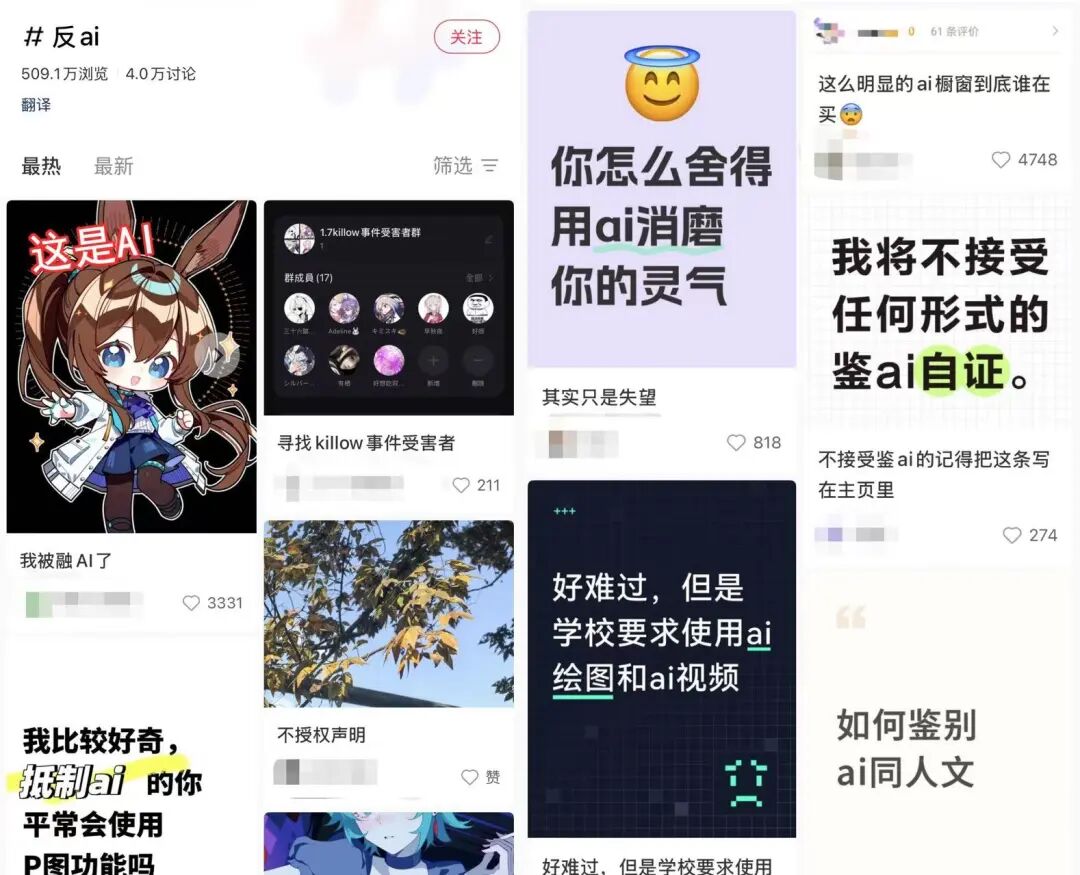
Core Viewpoint - The rapid advancement of AI has transformed it from a novel concept to an integral part of daily life, leading to both efficiency gains and significant challenges in authenticity and creativity [4][5]. Group 1: AI's Impact on Content Creation - AI has infiltrated various creative fields, with reports indicating that up to 50% of content on platforms like Reddit has been affected by AI [4]. - The rise of AI-generated content has led to a dramatic increase in the number of new works, with platforms like Tomato Novel seeing new book releases jump from 400 in 2023 to 5,606 in 2024 [7]. - The proliferation of AI content has sparked a backlash among creators, with hashtags like 反ai gaining significant traction, indicating a growing movement against AI's influence [8]. Group 2: Personal Stories of Creators - Creators like 韩艺秋 express deep disappointment over the use of AI in writing, feeling that it undermines the authenticity of human expression [7]. - Illustrators and artists, such as 小寒, have faced job losses and reduced income due to AI's encroachment, with many positions now requiring proficiency in AI tools [9][11]. - The emotional toll of AI's impact is evident, with some creators experiencing severe mental health challenges as they navigate a landscape increasingly dominated by AI [12]. Group 3: The Struggle for Authenticity - Many creators are actively seeking ways to distinguish their work from AI-generated content, employing various strategies to maintain their artistic integrity [17][18]. - The challenge of being compared to AI-generated works has led to a crisis of confidence among creators, with some feeling compelled to abandon their craft altogether [19]. - Despite the overwhelming presence of AI, some individuals are finding success by leveraging their unique human experiences and emotions in their creative processes [24].

对抗AI的人
3 6 Ke· 2026-01-09 11:20
Core Viewpoint - The rapid advancement of AI has transformed it from a novel concept to an omnipresent element in daily life, leading to both increased efficiency and significant negative impacts on various creative industries [1][2]. Group 1: Impact on Creative Industries - Reddit reported the deletion of over 40 million pieces of spam and false content, with estimates suggesting that up to 50% of content in large communities may be AI-influenced [1]. - The influx of AI-generated content has led to a crisis in creative expression, with writers, musicians, and artists feeling pressured to adapt or compete with AI [1][6]. - The number of new web novels surged dramatically, with 5,606 new titles launched in March 2024 compared to just 400 in the same month of 2023, indicating a significant rise in AI-generated literature [3][4]. Group 2: Personal Experiences and Reactions - Creators like Han Yiqiu express deep disappointment over the use of AI in writing, feeling that it undermines genuine human expression and creativity [3][12]. - Many artists, such as Xiao Han, have faced job losses or reduced opportunities due to AI's encroachment into their fields, leading to feelings of despair and thoughts of changing careers [6][7]. - The rise of AI-generated content has led to a decline in the perceived value of human-created works, with creators feeling the need to prove their authenticity [12][14]. Group 3: Adaptation and Resistance - Some individuals are attempting to find ways to coexist with AI, recognizing that complete resistance may not be feasible [16][17]. - Xiao Han's success in creating a popular comic series demonstrates that human creativity can still thrive in the face of AI competition by focusing on emotional depth and complex storytelling [18][20]. - The ongoing debate about the role of AI in creative industries highlights the need for a balance between leveraging AI's capabilities and preserving the authenticity of human expression [8][11].
姜广涛:当配音演员走向台前
Xin Lang Cai Jing· 2026-01-06 11:13
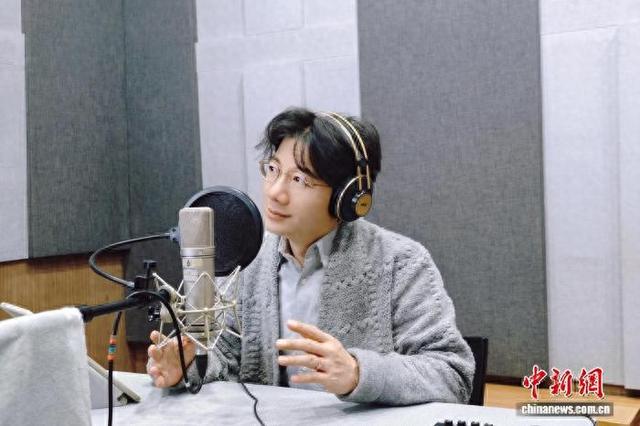
Core Viewpoint - The article highlights the career journey and insights of voice actor Jiang Guangtao, emphasizing the creativity and emotional depth involved in voice acting, as well as the evolving perception of the profession in the digital age [1][3]. Group 1: Career Development - Jiang Guangtao began his voice acting career in 1995 at the Changchun Film Studio, initially aspiring to voice lead roles in films [3]. - Over his 30-year career, he has voiced characters in various media, including films, documentaries, animations, games, radio dramas, and audiobooks, showcasing his versatility [3][4]. - He transitioned to voice directing in the late 1990s, contributing to popular series such as "Beauty's Rival in Palace" and "Nirvana in Fire" [4]. Group 2: Artistic Philosophy - Jiang emphasizes that voice actors must immerse themselves in their characters' emotional worlds to effectively convey the narrative [3]. - He believes that the essence of a character lies in understanding their motivations and experiences, which allows for a more authentic performance [3]. Group 3: Industry Evolution - The voice acting industry has seen a shift, with many professionals now engaging in public appearances and events to raise awareness about their work [6]. - Jiang advocates for voice actors to share their stories and creative processes, stating that direct interaction with audiences can enhance understanding and appreciation of their craft [6]. Group 4: Impact of Technology - Jiang acknowledges the influence of AI on the voice acting industry, noting that while AI can handle basic tasks, it lacks the emotional depth and aesthetic sensibility that human artists provide [8]. - He warns against the standardization of voices in artistic works, arguing that true art requires human creativity and emotional connection [8]. Group 5: Community Engagement - Jiang actively participates in community events and educational activities, promoting positive energy and social responsibility through his work [8]. - He offers free voice-over services for projects aimed at protecting minors, demonstrating his commitment to social causes [8].
银发经济遇上声音经济:中老年人因何爱上声音?
Nan Fang Du Shi Bao· 2025-12-30 05:59
Core Viewpoint - The increasing interest of middle-aged and elderly individuals in voice-related activities, such as voice acting and audio storytelling, is driven by personal interests, skill development, and social engagement [1][8]. Group 1: Individual Experiences - A 73-year-old participant, Ms. Yu, discovered the charm of reciting poetry after hearing a poem that resonated with her, leading her to enroll in voice training to regain her speaking abilities post-surgery [2][3]. - Ms. Chen, a retired manager, pursued her childhood passion for recitation by joining a voice training program, eventually becoming a voice broadcaster with over 200 followers on an audio platform [5][6]. - Ms. Zhang, aged 68, found that reciting poetry not only brought her joy but also allowed her to connect with her 5-year-old grandson through storytelling, enhancing their relationship [7]. Group 2: Market Trends - The "silver economy" and "voice economy" are emerging industries, with the elderly population in China projected to reach 310.31 million by the end of 2024, highlighting the growing market for both material and spiritual needs [8]. - The online audio user base in China is expected to reach 540 million by 2024, with the voice economy market projected to grow by 10.2% year-on-year, reaching 568.82 billion yuan [8]. - The voice acting industry in China had a market size of 6.48 billion yuan in 2022, expanding into areas such as advertising voiceovers and audiobooks [8]. Group 3: Educational Insights - Voice training courses for adults, particularly among the elderly, are gaining popularity, driven by a desire for social interaction and mental engagement rather than just skill enhancement [9]. - A voice training instructor noted that learning voice acting provides a fresh and challenging experience for older adults, helping to alleviate feelings of loneliness post-retirement [9].
知名演员也中招,AI声音克隆正摧毁配音行业
Xin Lang Cai Jing· 2025-11-17 21:26
Core Viewpoint - The rise of AI technology is significantly impacting the voice acting industry, with instances of unauthorized use of voice actors' voices for AI training and applications becoming more common [1][3][5]. Group 1: Incidents and Reactions - Renowned voice actor Mu Xueting raised concerns about her voice being used without permission in Amazon's documentary series "Sailor Star Project," leading to public outcry and an apology from the production company [1][3]. - Hollywood actor Morgan Freeman has also taken legal action against companies that clone his voice without authorization, emphasizing the need for compensation for such unauthorized use [3]. Group 2: AI Technology and Its Implications - AI voice cloning technology has advanced rapidly, allowing for the creation of realistic voice replicas with minimal audio samples, such as OpenAI's Voice Engine, which requires only 15 seconds of audio [5][7]. - The technology is not new, having been in development for several years, with applications seen in navigation systems featuring celebrity voices [5][7]. - Current AI voice cloning lacks the "super-real effect," often producing overly polished outputs that miss natural speech nuances, making it suitable primarily for video dubbing and narration [7]. Group 3: Industry Impact - The cost-effectiveness of AI voice solutions poses a significant threat to professional voice actors, particularly those in lower-tier positions, as seen with platforms like Ximalaya, which previously recruited part-time voice actors [8]. - The market for AI voice technology in China is projected to reach 14.93 billion yuan in 2024, with a compound annual growth rate exceeding 28%, indicating a substantial shift in the industry landscape [8].