网文

Search documents
第一批拍短剧的网文公司,已经亏惨了
凤凰网财经· 2026-03-18 13:21
Core Viewpoint - The short drama industry in China is experiencing rapid growth in scale, with projections indicating that the combined annual value of micro and short dramas will exceed 100 billion yuan by 2025, surpassing the total box office of films during the same period. However, despite increasing viewership, profitability remains a significant challenge for many companies in the sector [4][5][7]. Group 1: Industry Dynamics - The short drama market is expanding, with DataEye reporting 8.67 billion views during the 2026 Spring Festival [4]. - Companies like Chinese Online and Zhangyue Technology are facing substantial losses, with Chinese Online projecting a net loss of 580 million to 700 million yuan for the year, a significant increase from the previous year's loss of 243 million yuan [6][8]. - The industry is witnessing a shift, with many companies halting projects, indicating a potential restructuring phase [4][5]. Group 2: Company Strategies - Chinese Online has pivoted towards overseas short drama markets, launching several applications and aiming for a significant share in the international market, with short drama revenue reaching 46.9% of total income by Q3 2025 [11][12]. - Zhangyue Technology has also seen rapid growth in its short drama segment, with revenues increasing to 7.8 billion yuan in 2024, accounting for 30% of total revenue [15][16]. - Point Crowd Technology has entered the market early, leveraging its IP resources to create platforms like Hippo Theater, achieving significant user engagement [19][20]. Group 3: Profitability Challenges - Despite revenue growth, companies are struggling with profitability due to high marketing costs. For instance, Chinese Online's sales expenses reached 660 million yuan in Q3 2025, accounting for over 65% of its revenue [25][26]. - The reliance on advertising and promotional spending is evident, with companies like Zhangyue spending nearly all their marketing budgets on traffic acquisition [27][28]. - The industry's profit structure is heavily skewed towards platforms, which dominate revenue generation through advertising and distribution, leaving content creators with limited earnings [32][34]. Group 4: Future Outlook and AI Potential - The traditional growth model in the web literature industry is reaching its limits, with declining user engagement and revenue from paid content [37][39]. - Short dramas, while not yet profitable, are one of the few content forms still experiencing growth, offering a more efficient monetization route compared to traditional media [40][41]. - AI is seen as a potential solution to reduce production costs significantly, but it may not address the underlying issues of customer acquisition costs and profitability [48][50]. Group 5: Strategic Recommendations - Companies need to rethink their approach to short dramas, focusing on integrating them into a long-term IP strategy rather than treating them as standalone products [52][53]. - The goal should be to leverage short dramas to enhance user engagement and extend the lifecycle of IPs, rather than merely using them for immediate traffic generation [52][53].



汤俏:短剧催更网文,成文化产业新“鲶鱼”
Xin Lang Cai Jing· 2026-01-26 23:12
Core Insights - The rise of short dramas is significantly impacting the web literature industry, driving authors to produce more content due to increased adaptation notifications and copyright fees [1] - Traditional web literature genres are experiencing a decline in traffic, while adaptations into short dramas are leading to a surge in readership, with some works seeing a 300% increase in daily readers [1] - The integration of short dramas and web literature is reshaping cultural production and consumption, creating a new growth avenue for the web literature industry [1] Group 1: Impact on Web Literature - Short dramas are becoming a powerful catalyst for web authors, leading to a rapid increase in content production and adaptation opportunities [1] - The adaptation model of short dramas is proving to be a new growth engine for the web literature sector, with some platforms reporting revenue increases by several times annually [1] - The synergy between short dramas and web literature is enhancing the value of intellectual property (IP), allowing for secondary amplification of content [1] Group 2: Changes in Creative Logic - The short production cycle and quick data feedback of short dramas enable web authors to quickly adapt to audience preferences, focusing on narrative density and emotional depth [2] - Web literature serves as a foundational content source for short dramas, significantly reducing script development costs [2] - The "catfish effect" of short dramas is reshaping the competitive landscape of the cultural industry, allowing non-star-driven narratives to achieve significant viewership [2] Group 3: Market Dynamics and Challenges - The introduction of AI technology is enhancing the production capacity and dissemination efficiency of short dramas, but it also poses risks of content homogenization [3] - The industry faces challenges such as formulaic content leading to viewer fatigue and ethical concerns regarding the portrayal of violence and materialism [3] - A significant market imbalance exists, with over 80% of short dramas generating less than one million in revenue, squeezing the survival space for smaller creators [3] Group 4: Recommendations for Industry Development - The industry needs to establish comprehensive regulations and standards to ensure fair participation and protect minors [4] - There is a need to encourage the development of diverse and high-quality content, including traditional cultural narratives [4] - A responsive governance system and a global dissemination strategy should be developed to balance innovation with regulatory compliance [4] Group 5: Future Outlook - Short dramas are emerging as a transformative force in the cultural industry, revitalizing market dynamics and driving continuous innovation [5] - Maintaining a balance between content quality and regulatory compliance is essential for the sustainable growth of the cultural industry [5]
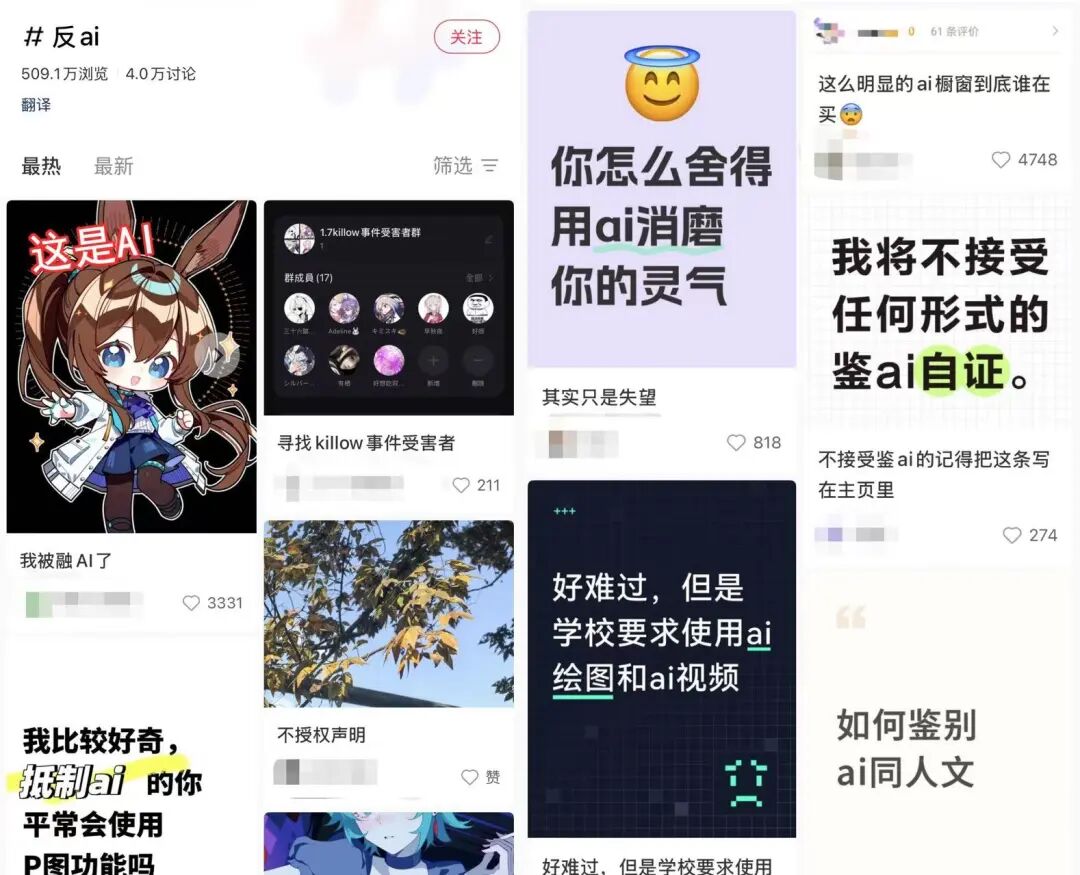
对抗AI的人
3 6 Ke· 2026-01-09 11:20
Core Viewpoint - The rapid advancement of AI has transformed it from a novel concept to an omnipresent element in daily life, leading to both increased efficiency and significant negative impacts on various creative industries [1][2]. Group 1: Impact on Creative Industries - Reddit reported the deletion of over 40 million pieces of spam and false content, with estimates suggesting that up to 50% of content in large communities may be AI-influenced [1]. - The influx of AI-generated content has led to a crisis in creative expression, with writers, musicians, and artists feeling pressured to adapt or compete with AI [1][6]. - The number of new web novels surged dramatically, with 5,606 new titles launched in March 2024 compared to just 400 in the same month of 2023, indicating a significant rise in AI-generated literature [3][4]. Group 2: Personal Experiences and Reactions - Creators like Han Yiqiu express deep disappointment over the use of AI in writing, feeling that it undermines genuine human expression and creativity [3][12]. - Many artists, such as Xiao Han, have faced job losses or reduced opportunities due to AI's encroachment into their fields, leading to feelings of despair and thoughts of changing careers [6][7]. - The rise of AI-generated content has led to a decline in the perceived value of human-created works, with creators feeling the need to prove their authenticity [12][14]. Group 3: Adaptation and Resistance - Some individuals are attempting to find ways to coexist with AI, recognizing that complete resistance may not be feasible [16][17]. - Xiao Han's success in creating a popular comic series demonstrates that human creativity can still thrive in the face of AI competition by focusing on emotional depth and complex storytelling [18][20]. - The ongoing debate about the role of AI in creative industries highlights the need for a balance between leveraging AI's capabilities and preserving the authenticity of human expression [8][11].
2025,老外追的那些“中国爆款”
Ren Min Ri Bao Hai Wai Ban· 2025-12-30 22:54
Core Viewpoint - Chinese culture is gaining global popularity through various mediums such as films, music, and literature, showcasing its diverse appeal and ability to resonate with international audiences [1]. Group 1: Film Industry - The animated film "Ne Zha: The Devil Child Comes to the World" has topped the global box office for animated films, indicating a significant achievement for Chinese cinema [1]. - The film has sparked a wave of interest among foreign audiences, with many children and families engaging with its merchandise and storylines [3][4]. - The emotional themes of the film, such as family and friendship, resonate universally, allowing it to transcend cultural barriers [4]. Group 2: Music Industry - The songs "Da Zhan Hong Tu" and "Ba Fang Lai Cai" have gone viral globally, with "Da Zhan Hong Tu" receiving over 4.3 billion views on Douyin and "Ba Fang Lai Cai" over 6.6 billion views [19]. - These songs have become popular background music for travel vlogs and short videos, showcasing their widespread appeal [19][20]. - The integration of Chinese cultural elements in the lyrics has helped foreign audiences connect with the music, fostering a greater interest in Chinese culture [20]. Group 3: Literature Industry - The web novel "Lord of the Mysteries" has become a top favorite among English-speaking readers, ranking first on the translation works chart with 69.7 million clicks and a high rating of 4.89 out of 5 [13]. - The novel's unique blend of Western fantasy elements with Chinese cultural themes has captivated a global audience, leading to its adaptation into an animated series that has also received high ratings [14]. - The success of "Lord of the Mysteries" reflects the growing interest in Chinese web literature, with platforms like Yuanqi Reading fostering a community of French-speaking readers [15].

三个视角看文化出海
Ren Min Ri Bao· 2025-12-03 03:19
Group 1 - The establishment of "International Tai Chi Day" on March 21 by UNESCO highlights the significance of traditional Chinese culture in promoting health, civilization exchange, and global peace [1] - China's cultural influence is expanding globally, with successful cultural products like Palace Museum's creative merchandise and popular games such as "Black Myth: Wukong" and "Genshin Impact" leading download charts in over 100 countries [1] - The transformation of cultural export from scale expansion to quality enhancement signifies a shift from product output to value dissemination, with three perspectives: cultural foundation, ecological expansion, and algorithmic breakthroughs [1] Group 2 - The essence of traditional Chinese culture serves as a foundation for sustainable cultural export, with successful narratives in games and dramas that creatively transform cultural elements into engaging experiences [2] - The shift from "single product output" to "ecological construction" in cultural export is exemplified by companies like Yuewen Group, which has cultivated over 500,000 overseas creators and produced 770,000 works, establishing a complete ecosystem of content monetization and reader interaction [2] - The integration of new technologies, particularly artificial intelligence, is reshaping the cultural export landscape by enabling personalized and interactive experiences, with AI translation exceeding 50% in many platforms [3] Group 3 - The future of cultural export lies in building high-quality cultural databases and developing intelligent creation platforms to enhance the evolution of cultural products towards mobile, customized, and immersive experiences [3] - The goal is to elevate national cultural soft power and the influence of Chinese culture, ensuring it flourishes and shines in the global cultural landscape [3]
“中国创造——2025CIC文化品牌出海交流会”在杭举办
Hang Zhou Ri Bao· 2025-10-21 03:53
Group 1 - The core theme of the event was the internationalization of Chinese cultural products, focusing on the "new three items" of online literature, web series, and online games [2] - The event featured discussions on content creation, copyright cooperation, cross-border operations, and localization strategies for cultural products [2] - The Thai film market was highlighted as a competitive environment for film production, encouraging Chinese companies to engage in filmmaking and industry exchanges in Thailand [2] - The Middle Eastern market was identified as a significant opportunity for Chinese game content, with a call for increased exports of popular games to the region [2] - Global strategies for promoting top cultural IPs were shared, providing valuable insights for the international operations and cross-industry collaborations of Chinese cultural IPs [2] Group 2 - Practical experiences of Chinese online novels and comics entering markets in South Korea, Indonesia, and Thailand were discussed, emphasizing a dual-driven ecosystem of local creation and global distribution [3] - The event included a signing ceremony for cooperation among three parties to build a cultural industry platform for better outreach of Chinese film content to Southeast Asian audiences [3] - The afternoon session focused on the export practices of trendy toys, new retail, traditional food, and cultural brands, exploring how Chinese brands can effectively tell their stories in overseas markets [3] Group 3 - The Brazilian Foreign Trade Chamber's participation marked a significant step in expanding cooperation in traditional crafts, innovative design, and sustainable development between China and Brazil [4] - Insights were shared on the global practice of "commercial and cultural symbiosis," highlighting the successful internationalization of Chinese classical culture [4] - The analysis of China's AI development under the context of US-China relations emphasized China's advantages in AI infrastructure, industry chain, and global market expansion capabilities [4] Group 4 - The discussion on the future golden period for Chinese cultural design consumer brands to go global highlighted the importance of business models, brand premium, and operational capabilities [5] - The event concluded with a focus on the need for one-stop service solutions for brands looking to expand internationally, using the "New Hangzhou Line" as a case study [5] - The overall event illustrated a vision for the internationalization of Chinese culture, emphasizing resource linkage and cross-border cooperation to enhance the global presence of Chinese cultural brands [5]

“爱女”已经成为最大的创作陷阱
3 6 Ke· 2025-10-17 03:02
Core Insights - The current state of Chinese drama creation is caught between the "loving female" and "abusive female" narratives, leading to a lack of engaging content [1][3] - The success of the drama "灼灼韶华" highlights a return to melodramatic storytelling, contrasting with the more nuanced narratives that audiences desire [3][4] - The rise of "loving female" narratives in internet literature reflects a shift in creative standards, but often results in superficial storytelling that fails to resonate deeply with viewers [4][8] Group 1: Trends in Chinese Drama - The "loving female" narrative has become a standard in recent productions, but often lacks the complexity and conflict that audiences seek [4][5] - The success of "灼灼韶华" indicates a nostalgic return to traditional melodrama, which may not be a sustainable model for future productions [3][4] - The dichotomy between "loving female" and "abusive female" narratives has led to confusion and inconsistency in audience expectations and content creation [5][6] Group 2: Internet Literature Influence - Internet literature has given rise to a new standard of "loving female" narratives, with notable works that explore female empowerment and complex character development [8][10] - Short-form literature platforms have become effective venues for expressing "loving female" themes, often prioritizing emotional impact over narrative depth [10][13] - The popularity of "loving female" narratives in internet literature contrasts with the challenges faced in adapting these themes into television dramas, leading to a disconnect between audience expectations and actual content [13][14] Group 3: Historical Context and Evolution - Historical figures like 琼瑶 have set precedents for "loving female" narratives that respect and portray female complexity, contrasting with contemporary trends that often simplify characters [15][16] - The evolution of "loving female" narratives reflects broader societal changes and the increasing visibility of female voices in storytelling [19] - The call for more nuanced and respectful portrayals of female characters indicates a growing audience demand for depth and authenticity in storytelling [19]

海外观众为啥迷上中国剧
Jing Ji Ri Bao· 2025-09-06 22:13
Group 1 - Chinese dramas, referred to as "C-Drama," are gaining significant popularity in overseas markets, particularly in Southeast Asia and Japan, with millions of posts on social media platforms [1] - The unique storytelling and cultural elements of Chinese dramas, such as "Qing Yu Nian" and "Cang Hai Chuan," resonate with global audiences, providing insights into Chinese culture through well-crafted historical settings and costumes [1] - The production quality of Chinese dramas has improved significantly, with top series investing over 10 million yuan per episode, resulting in cinematic quality that appeals to international viewers [1] Group 2 - The cultural trade from China is projected to reach 1.4 trillion yuan by 2024, showcasing strong competitiveness in the global market [2] - The shift from "one-way output" to "deep co-creation" is essential for cultural exports, exemplified by the Thai adaptation of "Thirty Only: Bangkok Edition," which integrates local elements into the narrative [2] - The development of IP (Intellectual Property) is becoming a focus, moving beyond simple copyright sales to include international collaboration and local cultural integration [2] Group 3 - Digital empowerment is becoming a core variable in future competition, with brands like Pop Mart thriving overseas through digital operations and AI tools facilitating the global reach of web literature [3] - The role of digital platforms in cultural exports is evolving from mere channels to engines of growth, as seen with platforms like TikTok and Reels, which significantly boost the visibility of Chinese cultural content [3] - Embracing change, innovation, and open collaboration is crucial for maintaining a competitive edge in the cultural industry, positioning China as a key player in the global cultural trade landscape [3]
合肥发力聚变能源未来产业,请看《浪尖周报》第39期
Xin Lang Cai Jing· 2025-08-31 05:06
Core Insights - The "Wave Plan" launched by the research institute of Zhituo Finance aims to promote industrial collaboration and technological innovation in the Yangtze River Delta region [1] Industry Highlights - Hefei: Over 70 enterprises in the nuclear fusion energy industry cover the entire industrial chain [1] - Shanghai: Pudong's GOI has mobilized 8.6 billion capital over four years to empower 30,000 enterprises [1] - Nanjing: JD.com establishes a regional headquarters worth 10 billion in Jianye [1] - Hangzhou: Promoting the overseas expansion of "new three" cultural products including online literature, web dramas, and online games [1] - Suzhou: "AI + manufacturing" has nurtured 150 industrial large models over two years [1] - Ningbo: The value added of the intelligent photovoltaic industry chain in Yuyao increased by 133.7% in the first half of the year [1] - Wuxi: Deepening cooperation with FAW Liberation to build an automotive industry ecosystem [1] - Nantong: Delivered the world's largest FLNG device, NGUYA [1] - Changzhou: The riverside green transformation empowers the Eastern Carbon Valley and innovative pharmaceutical valley [1]
城市24小时 | 经济大省“出海”,想复制更多“悟空”
Mei Ri Jing Ji Xin Wen· 2025-07-04 02:46
Group 1: Cultural Industry and International Expansion - The Zhejiang Provincial Secretary Wang Hao emphasized the importance of promoting cultural exports, particularly in online literature, web series, and online games, referred to as the "new three samples" [1] - The market size for online literature exports is projected to exceed 5 billion RMB in 2024, with overseas users reaching over 350 million [1] - The actual sales revenue of independently developed Chinese games in overseas markets is expected to reach 18.557 billion USD in 2024, marking a year-on-year growth of 13.39% [1] Group 2: Policy Support and Initiatives - The Zhejiang provincial government has outlined measures to support the internationalization of the gaming industry, aiming to cultivate high-quality 3A game projects and create an industry cluster for game exports [2] - The Chinese government has called for the orderly opening of the internet and cultural sectors, aiming to enhance international cultural exchanges and cooperation [2] - The Ministry of Commerce has proposed developing a comprehensive industry chain for game exports, from IP creation to overseas operations [3] Group 3: Economic Growth and Cultural Output - The gaming industry is recognized as a new engine for cultural output and economic growth, with various provinces, including Guangdong, implementing policies to enhance the competitiveness of their gaming industries [3] - The cultural "new three samples" are expected to accelerate their international expansion due to collaborative efforts from multiple stakeholders [3]