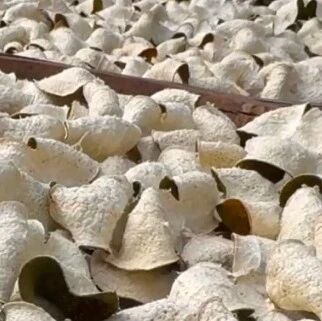
陈皮加工

Search documents
广西浦北通报“速成工艺陈皮”事件:4家公司被立案查处
Xin Lang Cai Jing· 2025-12-23 14:59
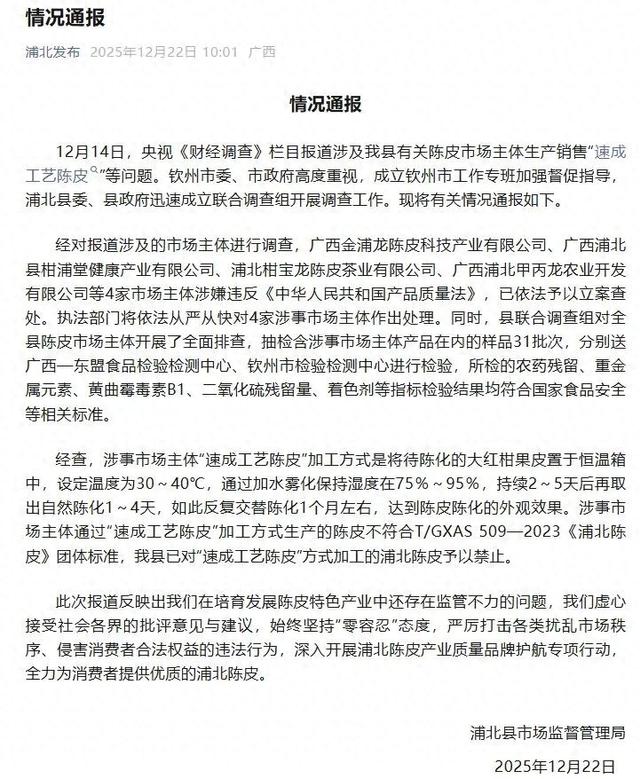
Group 1 - The core issue involves the production and sale of "quick-process Chenpi" by several companies in the Chenpi market of Pu Bei County, which has been found to violate the Product Quality Law of the People's Republic of China [1][2] - Four companies, including Guangxi Jinpu Long Chenpi Technology Industry Co., Ltd. and Guangxi Pu Bei County Ganpu Tang Health Industry Co., Ltd., are under investigation and have been legally prosecuted for their practices [1][2] - A comprehensive inspection of 31 batches of products from the involved companies was conducted, and all tested samples met national food safety standards regarding pesticide residues, heavy metals, and other harmful substances [1] Group 2 - The "quick-process Chenpi" method involves artificially aging the fruit peels in a controlled environment, which does not comply with the local group standard T/GXAS 509—2023 for Pu Bei Chenpi, leading to a ban on this processing method [2] - The report highlights existing regulatory weaknesses in the development of the Chenpi industry, prompting the local government to adopt a "zero tolerance" approach towards market disruptions and consumer rights violations [2]

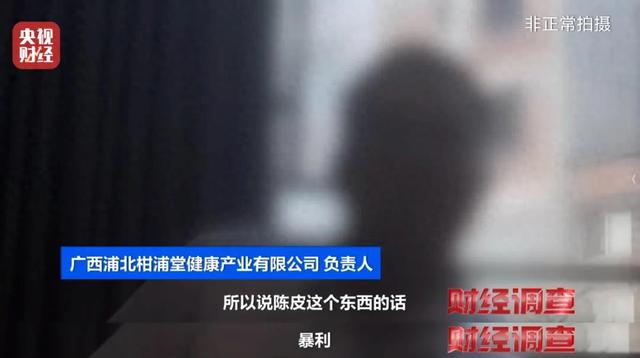
售价千元!成本仅70元?官方通报“速成工艺陈皮”问题:广西4家涉事公司已被立案查处
新浪财经· 2025-12-22 10:29
Core Viewpoint - The article highlights issues in the Chenpi market, particularly regarding the production and sale of "fast-processing Chenpi," which does not meet quality standards and poses risks to consumer rights. The local government is taking strict measures to address these violations and improve market regulation [2][3]. Group 1: Regulatory Actions - The Guangxi Pu Bei County Market Supervision Administration reported that four companies were found to violate the Product Quality Law and have been investigated and penalized [2]. - A comprehensive inspection of 31 batches of products from the involved companies was conducted, with all tested samples meeting national food safety standards [2]. Group 2: Production Methods - The "fast-processing Chenpi" method involves artificially aging the fruit peels in a controlled environment, which does not comply with the local standards for Chenpi production [3]. - The article emphasizes that genuine Chenpi requires a natural aging process of at least three years, while the fast-processing method can produce visually similar products in about one month [11][13]. Group 3: Market Dynamics - The price of fresh fruit for Chenpi production has decreased, affecting the profitability of genuine Chenpi, which can cost around 150 to 200 yuan per pound for naturally aged products, while the cost of "fast-processing" products is significantly lower [9][15]. - There is a growing trend among producers to use "fast-processing" methods to reduce costs and meet market demand, leading to a proliferation of counterfeit products [13][19]. Group 4: Geographic Misrepresentation - The article reveals that many products marketed as "New会 Chenpi" are actually sourced from Guangxi, with a stable supply chain for counterfeit products being established [21][23]. - The local market has seen a mix of genuine and counterfeit products, with some businesses openly selling misrepresented goods under the guise of geographic indicators [25][27]. Group 5: Enforcement and Future Actions - The Jiangmen City Market Supervision Administration has also initiated investigations into companies selling counterfeit products and misusing geographic indicators, with a commitment to strict enforcement and a year-long special rectification campaign [30].
4家涉事公司被立案!当地:虚心接受批评
Nan Fang Du Shi Bao· 2025-12-22 06:01
Group 1 - The core issue involves the production and sale of "fast-processed Chenpi" by several companies in Guangxi, which has been found to violate the Product Quality Law of the People's Republic of China [1][2] - A joint investigation team was established by the local government to address the concerns raised by a CCTV report, leading to the investigation of four companies involved in the Chenpi market [1][3] - The "fast-processed Chenpi" method, which involves artificially accelerating the aging process of Chenpi, does not meet the local group standard T/GXAS509—2023, and its production has been banned [2] Group 2 - The investigation revealed that there were issues such as false labeling of aging years and production methods in the Chenpi market, prompting a comprehensive investigation and evidence collection by the authorities [3] - The local market supervision bureau has taken strict measures against the involved companies, including the sealing of related products and the collection of evidence for further legal action [3]

售价千元!成本仅70元?官方通报“速成工艺陈皮”问题:广西4家涉事公司已被立案查处
Mei Ri Jing Ji Xin Wen· 2025-12-22 05:51
Core Viewpoint - The report highlights issues in the Chenpi market, particularly regarding the production and sale of "quick-process Chenpi," which does not meet established quality standards, prompting regulatory actions from local authorities [1][2]. Group 1: Regulatory Actions - The Guangxi Pu Bei County Market Supervision Administration has initiated investigations into four companies for violating the Product Quality Law of the People's Republic of China, leading to legal actions against them [1]. - A comprehensive inspection of the Chenpi market was conducted, with 31 batches of products tested, all of which met national food safety standards [1]. Group 2: Production Methods - The "quick-process Chenpi" method involves artificially aging the fruit peels in controlled conditions, which does not comply with the local standards for Chenpi production [2]. - The local government has prohibited the production of Chenpi using the "quick-process" method, acknowledging regulatory shortcomings in the industry [2]. Group 3: Market Dynamics - The price of fresh fruit for Chenpi production has decreased, affecting the profitability of producers, with high-quality Chenpi costing around 30 yuan per pound, while lower-quality options are priced at six to seven yuan [8]. - The cost of producing "quick-process Chenpi" is significantly lower than that of naturally aged Chenpi, leading to a trend where many producers opt for faster, cheaper methods despite the risks [12][10]. Group 4: Fraudulent Practices - There are widespread issues of mislabeling and fraudulent practices in the Chenpi market, with some products being falsely marketed as aged Chenpi, leading to significant profit margins for sellers [13][15]. - The supply chain for "quick-process Chenpi" has become well-established, with products being sold under false pretenses, including mislabeling as "New Hui Chenpi" [16][17]. Group 5: Government Response - Following media exposure of these issues, local governments in both Guangxi and Guangdong have taken steps to address the fraudulent practices, with joint enforcement actions planned to uphold the integrity of the Chenpi market [19].
广西浦北:虚心接受批评
Xin Lang Cai Jing· 2025-12-22 03:54
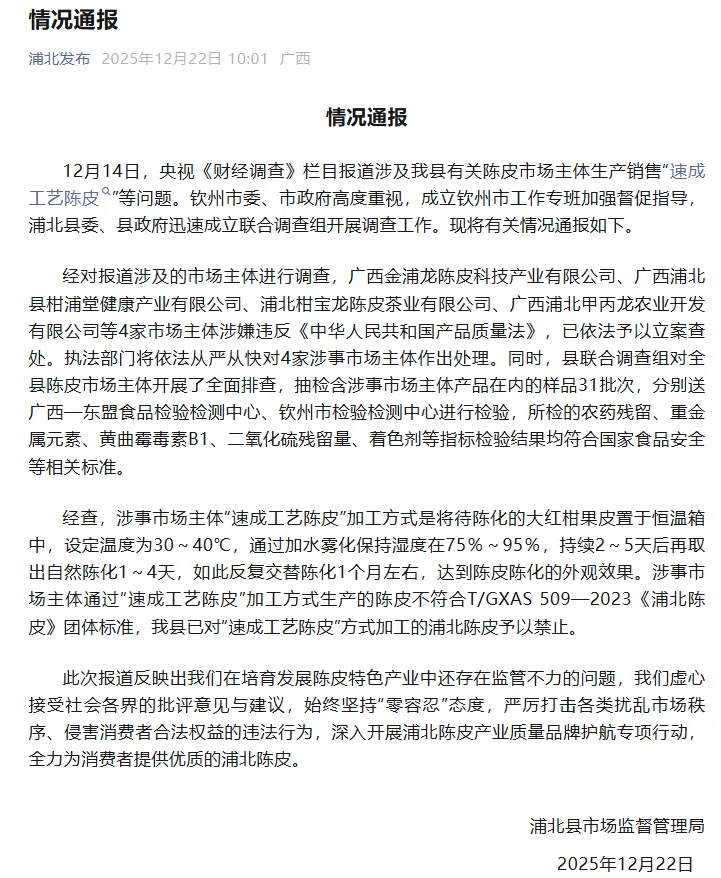
Core Viewpoint - The report highlights issues in the Chenpi market, including false labeling of age, origin, and production methods, leading to significant regulatory actions against companies involved in the production and sale of counterfeit products [1][5]. Group 1: Regulatory Actions - A joint investigation team was established in Guangxi Pu Bei County following a report by CCTV, leading to the identification of two companies suspected of selling counterfeit products and four companies using the "Xinhui Chenpi" geographical indication without authorization [1][4]. - The Guangxi Pu Bei County Market Supervision Administration reported that four companies were officially investigated and will face strict legal consequences for violating the Product Quality Law of the People's Republic of China [5]. Group 2: Production Methods - The investigation revealed that the "fast-track processing" method used by the involved companies involved artificially aging the dried tangerine peel in a controlled environment, which does not meet the local standards for Chenpi production [5]. - The "fast-track processing" method involved placing the peels in a temperature-controlled box at 30-40°C with humidity maintained at 75%-95% for 2-5 days, followed by natural aging for 1-4 days, repeated over a month to achieve the desired appearance [5]. Group 3: Industry Response - The local government acknowledged the regulatory shortcomings in developing the Chenpi industry and expressed a commitment to addressing criticisms and improving oversight [6]. - The county has implemented a ban on the "fast-track processing" method for Chenpi production to ensure quality and protect consumer rights [5][6].
广西浦北通报“速成工艺陈皮”问题
Mei Ri Jing Ji Xin Wen· 2025-12-22 03:25
Group 1 - The core issue involves the production and sale of "quick-processing Chenpi" by several market entities in the Chenpi industry, which has raised concerns regarding compliance with product quality laws [1][2] - The local government has established a task force to oversee investigations and has initiated legal proceedings against four companies for violating the Product Quality Law of the People's Republic of China [1] - A total of 31 batches of products, including those from the implicated companies, were sampled and tested for various safety indicators, all of which met national food safety standards [1] Group 2 - The "quick-processing Chenpi" method involves artificially aging the fruit peels under controlled temperature and humidity conditions, which does not comply with the local Chenpi standards [2] - The local authorities have prohibited the production of Chenpi using the "quick-processing" method and acknowledged the need for improved regulatory oversight in the Chenpi industry [2] - The government has committed to a "zero tolerance" policy towards market disruptions and consumer rights violations, aiming to enhance the quality and brand protection of the Chenpi industry [2]
广西浦北通报“速成工艺陈皮”问题:4家企业被立案,对“速成工艺陈皮”加工方式予以禁止
Xin Lang Cai Jing· 2025-12-22 02:51
Core Insights - The report highlights issues related to the production and sale of "quick-processing Chenpi" in Guangxi's Pubei County, leading to investigations and legal actions against four market entities [1][2] Group 1: Regulatory Actions - The Pubei County Market Supervision Administration has initiated legal proceedings against four companies for violating the Product Quality Law of the People's Republic of China [1] - A comprehensive inspection of the Chenpi market in the county was conducted, with 31 batches of products tested for compliance with national food safety standards [1] Group 2: Production Methods - The "quick-processing Chenpi" method involves placing the peels of large red citrus fruits in a temperature-controlled chamber at 30-40°C, maintaining humidity at 75%-95% for 2-5 days, followed by natural aging for 1-4 days, repeated over a month to achieve the desired appearance [2] - The production method does not meet the T/GXAS 509-2023 group standard for Pubei Chenpi, leading to a ban on this processing technique [2] Group 3: Industry Response - The report indicates a need for improved regulatory oversight in the development of the Chenpi industry, with authorities expressing a commitment to a "zero tolerance" policy against market disruptions and consumer rights violations [2] - The local government plans to launch a special action to safeguard the quality and brand of Pubei Chenpi, aiming to provide high-quality products to consumers [2]
视频丨一粒豆一颗柑 中国味道饮品里藏着“绿色致富密码”
Yang Shi Xin Wen Ke Hu Duan· 2025-12-08 02:16
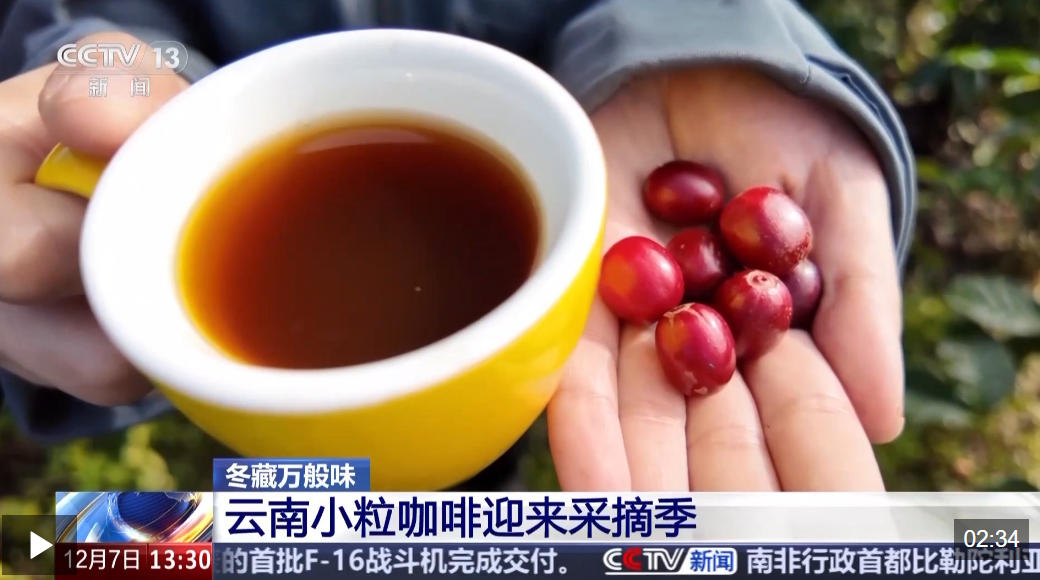
Group 1: Yunnan Coffee Industry - Yunnan has a coffee planting history of over 100 years, with planting area and output accounting for over 98% of the national total [4] - A coffee estate of 200 acres can harvest approximately 180 tons of coffee cherries annually, making coffee a significant source of income for farmers [4] - The use of coffee color sorting machines and drying machines has significantly improved the quality and processing rate of coffee beans in Yunnan [8] - A coffee company in Yunnan has increased its daily processing capacity from over 30 tons to between 100 and 150 tons after investing in an automated production line, achieving an annual capacity close to 20,000 tons [10] - Yunnan's boutique coffee estates have become popular tourist destinations, with 14 estates recognized as "Yunnan Boutique Coffee Estates" by 2024 [12] - During the coffee harvest season, visitor numbers at estates can peak at 3,000, with various activities such as picking courses and roasting [14] - The age range of coffee consumers has broadened significantly, with foot traffic in coffee shops increasing by over three times compared to previous years [16] Group 2: Chenpi Industry in Guangdong - The annual total output value of Chenpi in Xinhui has increased from 14.5 billion yuan in 2021 to 26.1 billion yuan last year, with expectations to exceed 28 billion yuan this year [25] - Modern production and management practices, including a digital traceability system covering nearly 10,000 growers, have enhanced the efficiency and quality of Chenpi production [22][23] - An automatic sorting line in a processing facility can handle 16 tons of citrus fruit daily, processing 2,600 fruits per minute with only one operator, improving efficiency by over five times [22] - The integration of Chenpi and coffee has led to innovative products such as "Chenpi Latte" and "Chenpi Americano," attracting customers and expanding the product matrix [34] - Local enterprises in Jiangmen are developing products like "Chenpi Coffee Freeze-Dried Powder," facilitating the convenience and scalability of flavored products [34]
指尖竞艺,陈香致远!钦州首届陈皮技能大赛激发陈皮产业新活力
Nan Fang Nong Cun Bao· 2025-12-03 09:11
Core Viewpoint - The first Chenpi Skills Competition in Qinzhou aims to invigorate the Chenpi industry by enhancing the skills of workers and promoting talent development in the sector [4][5][28]. Group 1: Event Overview - The competition took place on November 30, 2025, in the Chenpi Industrial Park of Pu Bei County, featuring 40 frontline workers from the Chenpi industry [2][3]. - The event was co-hosted by various local government bodies, including the Qinzhou Municipal Federation of Trade Unions and the Qinzhou Municipal Agriculture and Rural Affairs Bureau [4]. Group 2: Competition Structure - The competition focused on two main areas: "Chenpi Processing Techniques" and "Chenpi Aging Year Level Identification," testing participants' practical skills and professional knowledge [6][8]. - Participants demonstrated their skills in processing Chenpi by using specialized tools and techniques to ensure the quality of the final product [9][10]. Group 3: Results and Recognition - After nearly six hours of competition, judges evaluated participants based on processing standards, product quality, and identification accuracy, ultimately awarding the top ten competitors [18][19]. - The winners included representatives from various local companies and cooperatives, highlighting the talent within the industry [20][23]. Group 4: Industry Impact - The competition served as a platform for workers to showcase their skills and learn from each other, fostering a spirit of craftsmanship and innovation within the Chenpi industry [24][26]. - Local government officials emphasized the importance of cultivating skilled talent to support the sustainable development of the Chenpi industry [28][30].

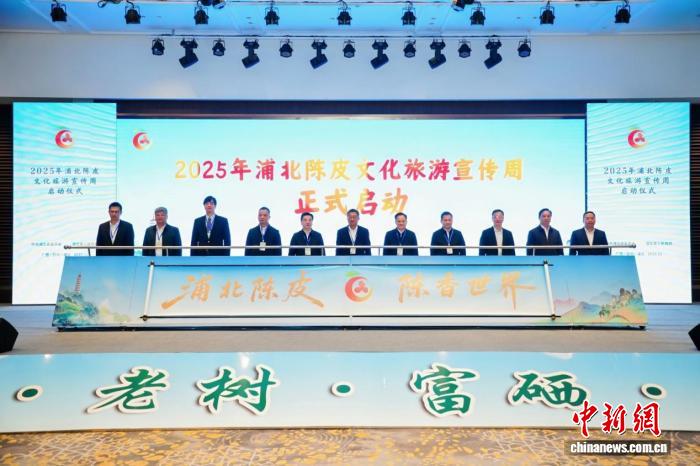
广西浦北陈皮产业迈向高质量发展 年产值有望突破80亿元
Zhong Guo Xin Wen Wang· 2025-11-30 12:31
Core Viewpoint - The Chenpi industry in Pu Bei, Guangxi, is set to achieve high-quality development, with an expected annual output value surpassing 8 billion yuan by 2025 [1][3]. Group 1: Industry Growth and Development - Pu Bei has the largest planting area and production of Dahuangcai in China, with over 190,000 acres planted and more than 250,000 old trees aged over 20 years [3]. - The Chenpi industry is projected to reach a value of 6 billion yuan in 2024 and is anticipated to exceed 8 billion yuan this year [3]. - The unique qualities of Pu Bei Chenpi, including high hesperidin content of 3.7%, contribute to its market potential [3]. Group 2: Infrastructure and Technological Advancements - A Chenpi industry service platform has been launched, utilizing a model that combines industry services, smart public warehouses, bulk trading, and financial empowerment [3]. - The platform aims to leverage big data and artificial intelligence for innovative digital trading scenarios and efficient management across the Chenpi industry chain [3]. Group 3: Investment and Product Diversification - The Pu Bei Chenpi industrial park has a total investment of 5.8 billion yuan and covers an area of 4,720 acres, with 27 well-known enterprises already in operation [4]. - The product range has diversified to include over 60 high-value-added products such as Chenpi tea, Chenpi cakes, and Chenpi juice [5].