风电制造

Search documents
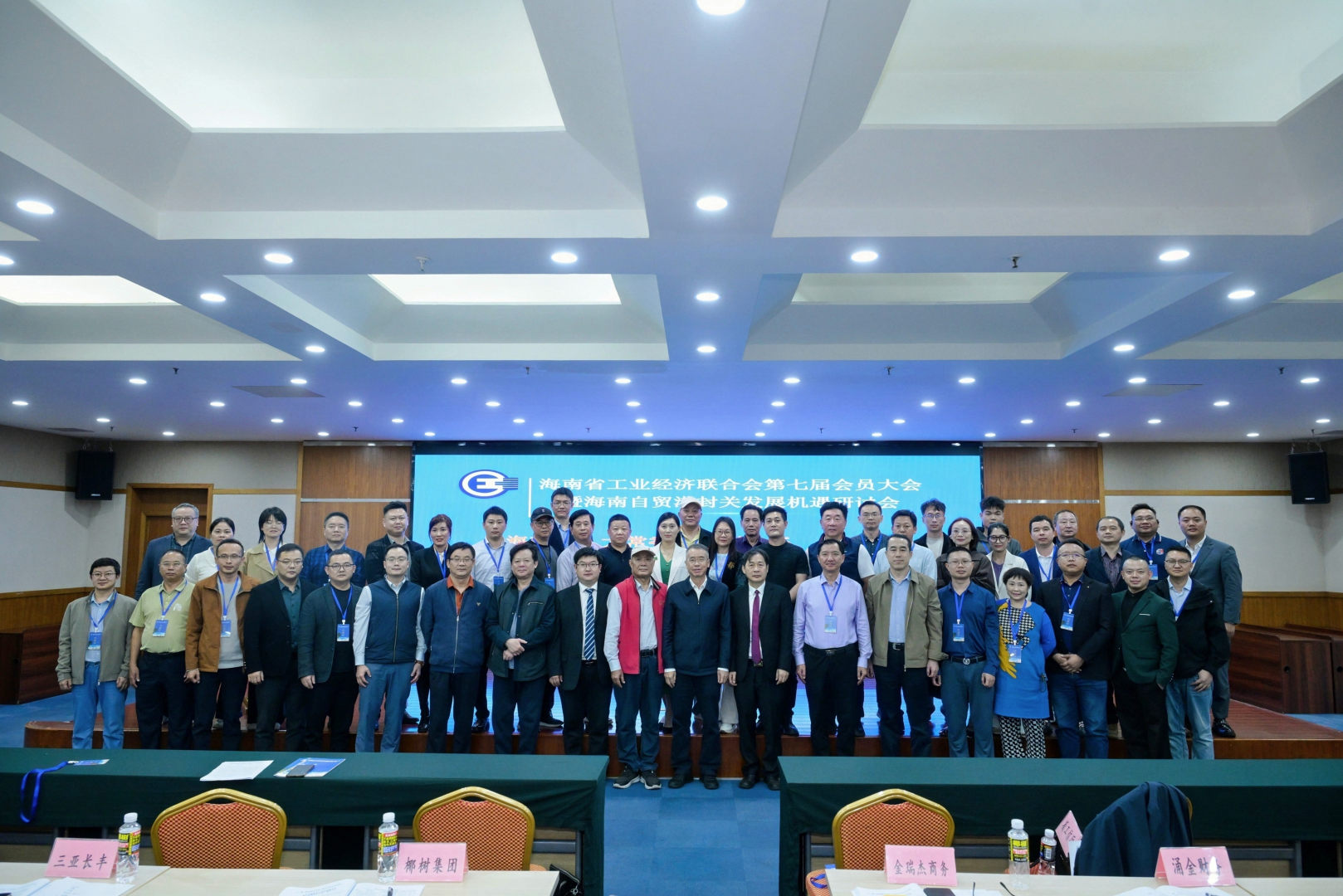
海南省工业经济联合会第七届会员大会暨海南自贸港封关发展机遇研讨会在海南海口召开
Xin Lang Cai Jing· 2026-01-17 09:29
Core Viewpoint - The Hainan Free Trade Port is entering a new phase of operation, presenting significant opportunities for industrial development and optimization in the region [2][5]. Group 1: Conference Overview - The 7th Member Conference of the Hainan Industrial Economic Association and the seminar on opportunities from the Hainan Free Trade Port's closure were held in Haikou, Hainan [1][3]. - Representatives from various industrial enterprises in Hainan focused on discussing the opportunities arising from the Free Trade Port's closure [1]. Group 2: Key Insights from Leaders - Lu Zhiyuan, President of the Hainan Charity Federation, highlighted the association's commitment to supporting industrial development through reforms, communication, and addressing enterprise needs [2]. - The Hainan Industrial Economic Association aims to provide professional advice on the development paths for advanced and high-tech manufacturing industries, leveraging Hainan's geographical and policy advantages [6]. Group 3: Industrial Growth and Policy Impact - During the 14th Five-Year Plan period, Hainan's industrial economy has shown steady growth, with a shift from a single focus on petrochemicals to a more diversified industrial structure [5]. - New industries such as electronic information manufacturing, wind power manufacturing, and biodegradable materials have emerged, alongside future-oriented sectors like biomanufacturing and commercial aerospace [5]. Group 4: Strategic Initiatives - The association plans to assist industrial enterprises in effectively utilizing Free Trade Port policies, offering comprehensive support from customs certification to tax planning and compliance [6]. - There is a focus on enhancing international operations, supply chain optimization, digital transformation, and aligning with international standards through collaboration with top domestic and international institutions [6].

行业洞察 | 岭上起“金风” ,绿氢逐未来——专访兴安盟经开区管委会主任高天宇
Zhong Guo Jin Rong Xin Xi Wang· 2025-11-22 03:53
Core Viewpoint - Inner Mongolia's Xingan League is emerging as a hub for green hydrogen and methanol production, leveraging its abundant wind energy resources and attracting major companies like China General Nuclear Power Group and Goldwind Technology [2][5]. Group 1: Project Development - The green hydrogen to green methanol project led by Goldwind Technology has garnered significant industry attention even before construction began [5]. - The project is set to commence construction in June 2024, with the first phase expected to be completed by October 2025, which is considered an accelerated timeline for such projects [5][6]. - The project aims to utilize local resources, including corn straw, to produce methanol, enhancing the region's agricultural advantages [7][8]. Group 2: Technological Innovation - The project integrates a technology chain that includes wind power, water electrolysis for hydrogen production, biomass gasification, and methanol synthesis, addressing the instability issues in wind power hydrogen production [9]. - The introduction of a 250,000-ton gasification furnace marks a significant advancement in the industry's scale and industrial production capabilities [9]. Group 3: Economic and Environmental Impact - The project is expected to create job opportunities and stimulate economic growth in the region, aligning with China's dual carbon goals [10]. - The green methanol produced will be utilized by major shipping companies, such as Maersk, for decarbonization efforts in the global shipping industry, showcasing the project's contribution to climate change mitigation [10]. Group 4: Strategic Vision - The Xingan League aims to position itself as a leader in the hydrogen economy by developing a comprehensive industrial ecosystem that includes hydrogen storage, transportation, and utilization [8][10]. - The region's strategy emphasizes vertical integration and resource sharing among enterprises to reduce production costs and foster long-term investment [8].


中国经济“半年报”出炉!底盘稳、韧劲足!
Xin Hua Wang· 2025-07-16 13:51
Economic Overview - In the first half of the year, China's GDP reached 66,053.6 billion yuan, with a year-on-year growth of 5.3% at constant prices [1] - The external environment has become increasingly complex and severe, but proactive macro policies have shown effectiveness, leading to a stable and positive economic trend [1] Economic Stability - The GDP growth rates were 5.4% in Q1 and 5.2% in Q2, indicating a steady economic performance [2] - The average urban survey unemployment rate was 5.2%, a decrease of 0.1 percentage points from Q1 [2] - The Consumer Price Index (CPI) saw a slight decline, but rose in June after four consecutive months of decrease [2] - The total import and export volume reached a record high for the same period [2] Consumption Trends - Final consumption expenditure contributed 52% to economic growth in the first half of the year [5] - The total retail sales of consumer goods amounted to 24.55 trillion yuan, reflecting a year-on-year growth of 5% [5] - There is an increasing share of service consumption, with holiday consumption playing a significant role and a rise in upgraded consumption and green consumption trends [5] Innovation and New Industries - The number of effective invention patent applications reached nearly 5 million from January to May, growing by 12.8% [6] - The digital economy is rapidly developing, with its core industries accounting for about 10% of GDP [6] - The service sector plays a crucial stabilizing role, and green industries are thriving, contributing to improved economic circulation [6] Domestic Demand and Policy Support - Domestic demand contributed 68.8% to GDP growth in the first half of the year [8] - A series of policies have been introduced to strengthen domestic circulation, expand demand, and promote production [8] Future Outlook - The year marks the conclusion of the 14th Five-Year Plan and the preparation for the 15th Five-Year Plan, with expectations for China's economy to provide more stability and certainty to the global economy [10]