
电子信息制造

Search documents
区县动态 | 双龙航空港经济区新增11家规上工业企业
Sou Hu Cai Jing· 2026-02-26 02:50
Core Viewpoint - The Guizhou Double Dragon Airport Economic Zone is set to add 11 new industrial enterprises by 2025, driven by technological innovation and policy support, which will enhance the region's economic development [2] Group 1: New Industrial Enterprises - The newly added enterprises span various sectors, including new building materials, ecological food, and modern energy [2] - The 11 new companies include Guizhou Xingu Yuan New Building Materials Co., Ltd., Guizhou Fenghe Resource Recycling Co., Ltd., Guizhou Titanium Science and Technology Co., Ltd., Guizhou Yitop Intelligent Equipment Co., Ltd., and Guizhou Qianyi Silk Flavor Food Co., Ltd. [2] - These enterprises are expected to achieve a cumulative output value of 324 million yuan by 2025, contributing to the growth of the regional industrial economy [2] Group 2: Support for Small and Medium Enterprises - The economic zone provides incentives for newly scaled industrial enterprises to encourage reporting and compliance [2] - A cultivation database for scaled enterprises has been established, offering tailored support and tracking services for each company [2] - The initiative aims to facilitate the entire lifecycle development of enterprises, ensuring they receive necessary policy, project, and funding support [2] Group 3: Industrial Cluster Development - The addition of these 11 enterprises increases the total number of scaled industrial enterprises in the economic zone to 69 [2] - This growth is expected to accelerate the formation of a modern industrial cluster characterized by high-end equipment manufacturing, electronic information manufacturing, and ecological food [2]


我国制造业数字化转型进入规模化普及阶段
Xin Lang Cai Jing· 2026-02-25 16:56
Core Insights - The report by the China Academy of Information and Communications Technology indicates that China's manufacturing digital transformation is entering a stage of large-scale popularization, with 89.6% of large-scale industrial enterprises expected to undergo digital transformation by December 2025, and a digital equipment penetration rate of 57.7% [1][2] Group 1: Current Status of Digital Transformation - As of December 2025, the digital transformation rate among key industries shows significant differentiation, with the automotive, shipbuilding, and electronic information manufacturing sectors leading at 94.4%, 94.2%, and 93.9% respectively [1] - The electronic information and equipment manufacturing sectors are categorized in the first tier, while consumer goods and raw materials industries are in the second tier [1] Group 2: Policy and Strategic Framework - The policy framework for promoting digital transformation in manufacturing has been continuously improved, with the State Council approving the "Manufacturing Digital Transformation Action Plan" in May 2024, and the Ministry of Industry and Information Technology issuing implementation guidelines by the end of the year [2] - The goal is for large-scale industrial enterprises in major industrial provinces and key parks to achieve full digital transformation coverage by 2027, and to complete a round of digital transformation by 2030 [2] Group 3: Future Directions and Recommendations - The report emphasizes the need for a systematic approach to advance digital transformation, focusing on improving development quality and efficiency, and integrating smart manufacturing as a primary direction [3] - It recommends strengthening new infrastructure like industrial internet, promoting typical scenario cultivation, demonstration transformation, and large-scale promotion, while also enhancing technology research, standard formulation, security protection, and policy support [3]
省大数据局印发数智贵州建设2026年工作要点
Xin Lang Cai Jing· 2026-02-18 12:08
Group 1 - The article outlines the strategic plan for developing a smart data industry in Guizhou, focusing on collaboration among computing power, data, applications, and industry to enhance digital productivity and achieve a strong start for the 14th Five-Year Plan [1] - The plan aims to expand the smart industry cluster, emphasizing the development of computing power hardware manufacturing and cloud services, with a target of accumulating 150 enterprises in the Huawei cloud ecosystem [2] - The initiative includes fostering a data industry centered on high-quality data sets, with a goal of having over 20,000 personnel engaged in data labeling across the province [2] - The artificial intelligence sector will focus on industry-specific model applications, aiming to establish over 10 benchmark applications and 100 typical AI application scenarios [2] - The electronic information industry will target growth in sectors like electronic components and smart terminals, with an expected 15% increase in the added value of the electronic information manufacturing industry [2] Group 2 - The plan includes the construction of a green and efficient computing power base, with a target computing power scale of 190 EFLOPS, maintaining over 90% in intelligent computing [3] - Efforts will be made to enhance the efficiency of data centers, aiming for an average energy utilization efficiency of 1.2 and an average shelf rate of over 70% in the Guian data center cluster [3] - The establishment of a unified public data resource base is planned, integrating various data platforms to enable centralized storage and management of public data resources [3] - The initiative aims to improve public data sharing, with a target of achieving a 90% sharing rate for government data [3] Group 3 - The strategy includes the development of a digital government framework, with plans to optimize the provincial cloud management platform and enhance interconnectivity among government systems [4] - The initiative aims to deepen the integration of public services through a unified platform, targeting a 50% adoption rate of internet medical services in public hospitals [4] - The plan emphasizes the importance of data security, with measures to enhance the security framework for data centers and computing networks [5] - The strategy includes fostering digital talent through various training programs, aiming to cover over 5,000 civil servants and 6,000 skilled personnel [5]

事关芯片,深圳重磅发布
半导体芯闻· 2026-02-13 09:35
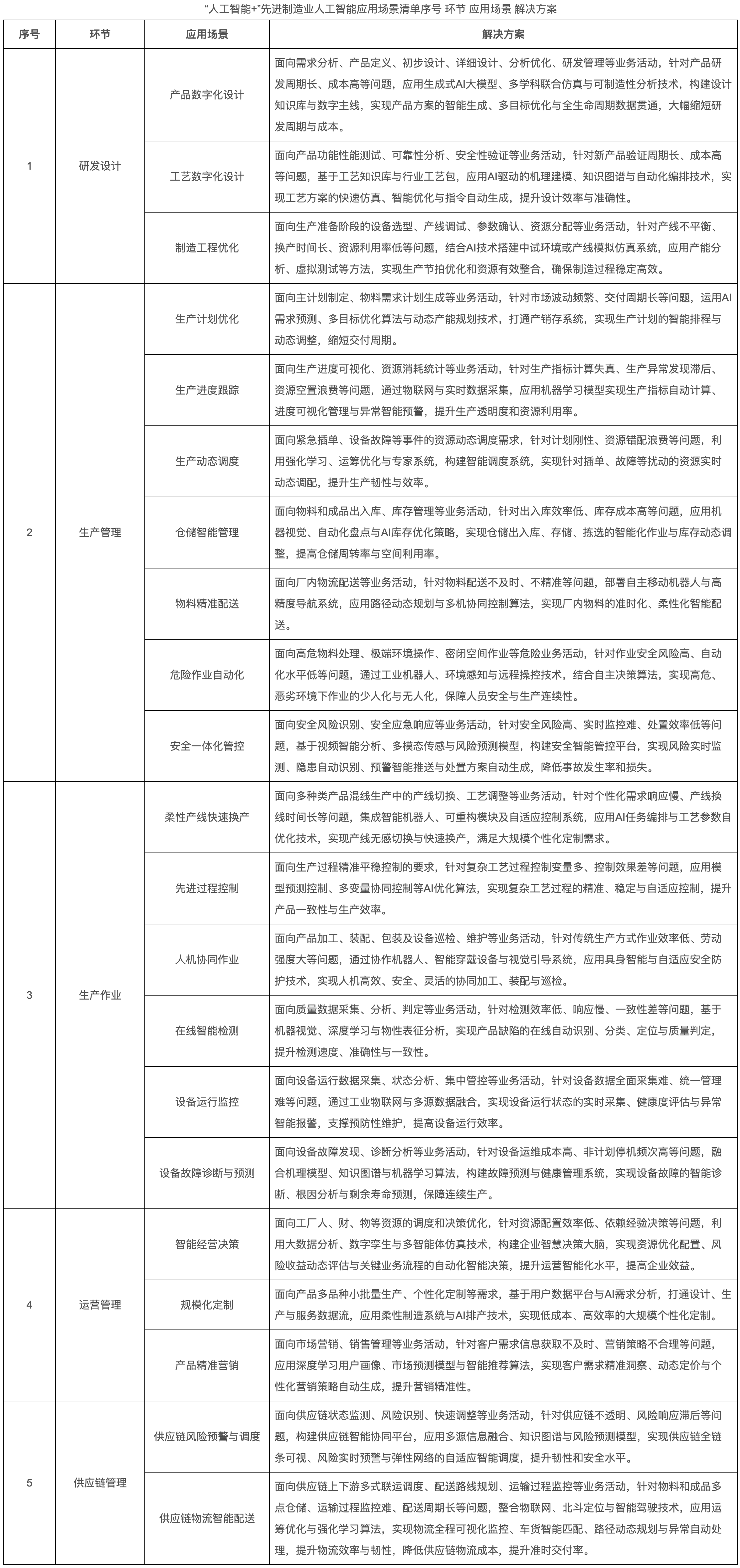
Core Viewpoint - Shenzhen has released the "Artificial Intelligence+" Advanced Manufacturing Action Plan (2026-2027), aiming to integrate AI technology deeply into the manufacturing process and enhance the semiconductor industry through AI applications [1][3]. Group 1: Key Support Platforms - The plan emphasizes the establishment of an Industrial Intelligence Innovation Center and aims to accelerate the construction of provincial and national manufacturing innovation centers [5]. - It supports the development of industrial software and knowledge alliances, focusing on standardizing industrial knowledge and creating leading autonomous industrial software products [5][6]. Group 2: Empowering Key Industry Clusters - AI will be applied to critical areas of the semiconductor industry, optimizing chip design and software coding efficiency, with a focus on developing high-performance SoC chips for various AI applications [8]. - The plan also highlights the importance of AI in robotics, promoting the development of multimodal interaction technologies and enhancing the capabilities of robots in industrial settings [8][9]. - In the low-altitude economy, the plan aims to establish a drone autonomy evolution system and enhance drone capabilities for various applications, improving resource scheduling and operational efficiency [9]. Group 3: AI in Electronics and Healthcare - The plan encourages collaboration among leading enterprises in the electronic information manufacturing sector to explore potential AI application scenarios and develop benchmark projects [9]. - In the pharmaceutical and medical device sectors, the plan promotes the integration of AI in drug development and medical technology, aiming to accelerate innovation and enhance the capabilities of medical devices [10].

事关“人工智能+”!深圳,重磅发布
证券时报· 2026-02-12 15:03
Core Viewpoint - Shenzhen has released the "Artificial Intelligence + Advanced Manufacturing Action Plan (2026-2027)", aiming to integrate AI technology deeply into the manufacturing process and enhance the semiconductor industry through AI applications [1][3]. Group 1: Key Support Platforms - The plan emphasizes the establishment of an Industrial Intelligence Innovation Center and aims to accelerate the construction of provincial and national manufacturing innovation centers [4]. - It supports the development of industrial software and knowledge alliances, focusing on standardizing industrial knowledge and creating a comprehensive industrial knowledge database [5]. Group 2: Empowering Key Industry Clusters - The action plan highlights the application of AI in the semiconductor and integrated circuit sectors, aiming to enhance efficiency in chip design and software coding [7]. - It targets the development of high-performance, energy-efficient SoC chips for various AI applications, including AI smartphones and intelligent robots [8]. - The plan also addresses the need for AI in the automotive sector, particularly in developing advanced driving AI chips and smart cockpit SoCs [8]. Group 3: AI Empowerment in Various Sectors - AI is set to enhance robotics through the development of multi-modal interaction technologies and intelligent models capable of autonomous learning and decision-making [9]. - The plan outlines the integration of AI in low-altitude economy applications, including drone technology and smart airspace management [9]. - In the medical field, the plan promotes AI's role in drug discovery and medical device innovation, aiming for significant advancements in precision medicine and high-end medical equipment [10].

刚刚,利好来了!深圳,重磅发布!
券商中国· 2026-02-12 14:43
Core Viewpoint - Shenzhen's "Artificial Intelligence+" Advanced Manufacturing Action Plan (2026-2027) aims to integrate AI technology deeply into the manufacturing sector, focusing on key platforms, industry clusters, and work guarantees to seize the historical opportunity of the convergence of intelligence and industrialization [1][3]. Group 1: Key Support Platforms - The plan emphasizes the establishment of an Industrial Intelligence Innovation Center, accelerating the construction of provincial and national manufacturing innovation centers, and developing industrial intelligent agents with capabilities for environmental perception, autonomous decision-making, and dynamic adaptation [5]. - It supports the transformation of industrial knowledge and experience into standardized models, focusing on the development of key industrial software such as operating systems and CAD, and aims to create a large-scale industrial knowledge database [6]. Group 2: Empowering Key Industry Clusters - AI will be applied to critical areas of the semiconductor industry, enhancing chip design and software code efficiency, with a focus on developing high-performance, energy-efficient SoC chips for various AI terminal demands [8]. - The plan also supports the development of AI technologies for robotics, enhancing capabilities in multi-modal interaction and autonomous learning, and aims to improve the application of robots in various industrial scenarios [8]. Group 3: AI in Specific Sectors - In the low-altitude economy, the plan proposes the establishment of a drone autonomy capability evolution system and a low-altitude digital twin system to enhance drone decision-making and operational efficiency [9][10]. - The action plan highlights the importance of AI in the pharmaceutical and medical device sectors, promoting innovation in drug development and precision medical services, and aims to create significant platforms for AI-driven drug research [11].

深圳:到2027年,在“人工智能+”先进制造业领域建成国家人工智能应用中试基地
Xin Lang Cai Jing· 2026-02-12 11:17
Core Viewpoint - Shenzhen's "Artificial Intelligence +" Advanced Manufacturing Action Plan (2026-2027) aims to integrate AI technology deeply into the manufacturing sector, promoting new industrialization and enhancing traditional industries through innovation and application of AI [1][2][3]. Group 1: Overall Requirements - The plan targets the realization of new industrialization by accelerating AI's integration into all aspects of manufacturing, including R&D, production management, and supply chain management, aiming for comprehensive smart development by 2027 [3]. Group 2: Key Support Platforms - Establishment of an Industrial Intelligent Body Innovation Center to support the development of intelligent systems capable of environmental perception and autonomous decision-making [4]. - Development of industrial software and knowledge alliances to standardize industrial knowledge and create leading autonomous software products [5]. Group 3: Empowering Key Industry Clusters - AI will enhance the electronic information manufacturing sector by integrating algorithms, data sharing, and collaborative computing resources to improve smart transformation [6]. - In the semiconductor and integrated circuit industries, AI will optimize chip design and software efficiency, focusing on high-performance SoC chips for various AI applications [7]. - The automotive manufacturing sector will see AI applied in smart connected vehicles, enhancing design, production, and testing processes [8]. - AI will support robotics by developing multi-modal interaction technologies and enhancing operational efficiency in various industrial applications [9]. - High-performance materials manufacturing will leverage AI for process optimization and predictive control, creating a responsive materials ecosystem [10]. - The low-altitude economy will benefit from AI-driven drone capabilities, enhancing operational efficiency across various applications [11]. - AI will accelerate drug development and medical device innovation, integrating AI with biotechnology for improved healthcare solutions [12]. - Traditional industries will explore new optimization paths through AI, focusing on personalized production and supply chain intelligence [13]. Group 4: Strengthening Work Guarantees - Increased financial support for the "Artificial Intelligence +" advanced manufacturing sector, encouraging collaboration between AI and traditional manufacturing policies [12]. - Establishment of application scenario open centers to facilitate supply-demand matching and promote AI applications in manufacturing [13]. - Ongoing training and demonstration promotion in AI technologies to address industry pain points and showcase successful applications [13].
开放48个平台 助力科技成果转化
Xin Lang Cai Jing· 2026-02-10 22:10
Core Insights - The article discusses the release of a service manual by Harbin's Science and Technology Bureau aimed at accelerating the construction of a national technology innovation city and bridging the gap between laboratory results and production lines [1] Group 1: Service Manual Overview - The manual outlines 22 concept verification centers and 26 pilot test platforms, offering a total of 170 service resources to support technology-based enterprises and research teams [1] - It provides a comprehensive overview of key industrial technology fields in Harbin, including high-end equipment, biomedicine, new materials, low-carbon energy, food, aerospace, and electronic information manufacturing [1] Group 2: Service Capabilities - The manual details the full range of services available, including technology selection, feasibility assessment, technology maturity evaluation, prototype production, process validation, pilot production, and application testing [1] - It aims to create a complete service coverage from technology research and development to industrial application [1] Group 3: Importance of the Manual - The release of the manual is a significant step towards promoting the open sharing of technological resources, addressing the information asymmetry between innovation entities and platform resources [1] - It facilitates the rapid connection of research outcomes from universities and institutions with professional verification and pilot resources, ensuring that the technical needs of technology-based enterprises are accurately met [1]
2025年电子信息制造业生产快速增长
Ke Ji Ri Bao· 2026-02-09 09:44
Core Viewpoint - The electronic information manufacturing industry in China is expected to experience rapid growth in production by 2025, with stable exports and improving efficiency, indicating a positive overall development trend [1] Group 1: Industry Growth - By 2025, the added value of the electronic information manufacturing industry is projected to grow by 10.6% year-on-year, outpacing the growth rates of the overall industrial sector and high-tech manufacturing by 4.7 and 1.2 percentage points respectively [1] - In December, the added value of the electronic information manufacturing industry increased by 11.8% year-on-year [1] Group 2: Production and Exports - Major products in the industry include 1.54 billion mobile phones produced, a decrease of 5.8% year-on-year, with smart phones accounting for 1.27 billion units, down by 0.9% [1] - The production of microcomputer devices reached 332 million units, reflecting a year-on-year decline of 2.9% [1] - Integrated circuit production totaled 484.3 billion units, marking a year-on-year increase of 10.9% [1] - By 2025, the cumulative export delivery value of the electronic information manufacturing industry is expected to remain flat year-on-year, while in December, the export delivery value grew by 1.2% year-on-year [1] - Customs statistics indicate that China exported 133 million notebook computers, 751 million mobile phones, and 34.95 billion integrated circuits, with the latter showing a year-on-year growth of 17.4% [1]
新华财经周报:2月2日至2月8日
Xin Lang Cai Jing· 2026-02-08 10:17
Key Points - The 2026 Central Document No. 1 emphasizes the importance of rural revitalization and agricultural modernization as a foundation for China's modernization [1] - The People's Bank of China and eight other departments reiterated that virtual currency-related activities are illegal financial activities, strictly prohibiting them within the country [2] - The construction of a low-altitude economic standard system is being promoted, focusing on five core areas including low-altitude aircraft and safety regulation [2] - The International Energy Agency predicts that renewable energy and nuclear power will provide half of the world's electricity by 2030 [1] - The first national standard for prepared dishes will focus on food safety and nutritional health [1] Domestic News - The 2026 Central Document No. 1, released on February 3, outlines strategies for agricultural modernization and rural revitalization, aiming to enhance policy effectiveness and ensure food security [1] - The People's Bank of China held a meeting to improve financial mechanisms and support key sectors such as technology finance and green finance [3] - The National Health Commission is soliciting public opinions on national standards for the safety of prepared dishes, detailing definitions and requirements [3] - The Ministry of Finance announced a "zero tariff" policy for imported goods purchased by residents in Hainan Free Trade Port, effective immediately [4] Industry Developments - The electronic information manufacturing industry in China is expected to see a 10.6% increase in value-added output in 2025, with stable export performance [5] - The China Electricity Council reported that renewable energy sources will account for 80.2% of new power generation capacity in 2025 [6] - The automotive industry is establishing guidelines for the safe cross-border flow of automotive data to enhance data management and security [6] - The service trade in China is projected to grow steadily, with total imports and exports reaching 80,823.1 billion yuan in 2025, a 7.4% increase year-on-year [8]