
Fund Sales

Search documents
中信证券:公募指数化进程延续,代销迎变局
Di Yi Cai Jing· 2026-03-20 00:21
Core Insights - The report from CITIC Securities indicates that by the end of 2025, the asset management scale of the top 100 fund distribution institutions is expected to further increase, with stock index funds experiencing a growth rate exceeding 20% [1] - The process of indexation in public funds continues, with brokerage firms increasing their market share while banks see a decline [1] - The implementation of new sales expense regulations is anticipated to change the current public fund sales ecosystem at various levels, leading to a shift for distribution institutions [1] - The current landscape remains dominated by leading institutions, but a decrease in concentration may reveal opportunities for mid-tier and smaller channels to enhance their fund distribution capabilities, diversify services, and find new growth avenues [1]

公募新发创四年新高:代销百强洗牌与指数突围
市值风云· 2026-03-19 10:14
Core Viewpoint - The public fund industry in China is experiencing significant growth, with total assets surpassing 37 trillion yuan by the end of 2025, indicating a competitive landscape among fund distribution channels [3]. Group 1: Market Growth and Competition - By the end of 2025, the top 100 fund distribution institutions held a total of 11.7 trillion yuan in non-monetary market fund assets, a 14.7% increase from mid-2025, while equity fund assets reached 6 trillion yuan, growing by 16.7% [4]. - Ant Fund emerged as the first distribution institution to surpass 1 trillion yuan in equity fund assets, reaching 1,017.8 billion yuan by the end of 2025, marking a 23.7% increase from mid-2025 [4][5]. Group 2: Index Fund Expansion - The stock index fund segment is identified as a key growth area, with the top 100 institutions holding a total of 2.42 trillion yuan in stock index funds by the end of 2025, reflecting a substantial 23.7% growth [6]. - Major securities firms have seen their stock index fund holdings exceed 50% of their equity fund assets, with Citic Securities at 91% and Huatai Securities at 96% [6]. Group 3: Institutional Dynamics - The competitive landscape is shifting, with 57 securities firms, 25 banks, and 17 independent fund sales institutions represented in the top 100 list, indicating a redefined power structure [8]. - Despite banks maintaining the largest share of non-monetary and equity fund assets at 41.66% and 40.2% respectively, their market share has declined by 1.44% and 1.59% since mid-2025 [8]. - Independent institutions have shown resilience in the active equity segment, with their product scale reaching 12.137 trillion yuan by the end of 2025, a 24.2% increase [8]. Group 4: Changing Competition Logic - The competition among distribution institutions is evolving from merely focusing on initial sales volume to a customer-centric asset management model [9]. - As domestic funding costs decrease, there is a growing need for professional investment advisory services and efficient tools to attract and retain assets in the competitive fund distribution market [9].



纠偏短期交易行为代销渠道下架“惹争议”功能
Zhong Guo Zheng Quan Bao· 2026-02-03 20:27
Core Viewpoint - The regulatory authorities have mandated fund sales institutions and third-party platforms to conduct self-examinations and remove misleading features that could confuse investors, aiming to promote long-term investment strategies over short-term trading behaviors [1][2][4]. Group 1: Regulatory Actions - Regulatory bodies have observed that some fund sales institutions and unlicensed third-party platforms have reinstated "real-time valuation" features, which could mislead investors and dilute fund product returns [2][4]. - Fund sales institutions and third-party platforms are required to remove features such as "real-time valuation," "increased position rankings," and "actual performance rankings" to prevent misleading investor behavior [2][3]. - Major platforms like Ant Wealth and Tonghuashun Fund have already announced the suspension of real-time valuation and related ranking features, with specific timelines for these adjustments [2][3]. Group 2: Industry Response - Various platforms have begun to remove features that could negatively impact investor behavior, such as "simulated valuation" and "ranking lists" [3][4]. - Despite regulatory requirements, some platforms continue to display real-time valuations under different formats, indicating a need for further compliance [4][5]. - The industry is undergoing a self-assessment process to ensure compliance with new regulations, including reviewing partnerships with unqualified internet influencers for fund sales activities [3][4]. Group 3: Market Implications - The removal of real-time valuation and ranking features is part of a broader effort to guide fund sales away from short-term trading and encourage investors to focus on long-term asset management [4][5]. - The use of real-time valuation has been criticized for facilitating frequent trading and market speculation, which contradicts the fundamental purpose of public funds aimed at ordinary investors [5].
指数基金销售渠道暗战:蚂蚁的流量密码与招行的存量运营
经济观察报· 2026-01-29 14:53
Core Insights - The article highlights the competitive landscape of the public fund industry, particularly focusing on the dominance of Ant Fund and the contrasting strategies of different financial institutions in the ETF market [1][2][3]. Group 1: Market Overview - Ant Fund leads the non-cash fund market with a total holding of 15,675 billion yuan, followed by China Merchants Bank (CMB) at 10,419 billion yuan, ranking second [1][6]. - The ETF market has seen significant growth, surpassing 60,000 billion yuan, with an increase of over 20,000 billion yuan within the year [2]. Group 2: Competitive Dynamics - The rise of ETFs is reshaping the power dynamics within financial channels, emphasizing the disparity in profit and influence among different players [3][5]. - The rapid growth of the CSI A500 index products has positioned them as the second-largest in the broad-based index fund category, with several public fund institutions surpassing 40 billion yuan in scale [5]. Group 3: Channel Strategies - The success of Ant Fund in selling ETFs is attributed not merely to its large user base but to its ability to simplify complex index investments into a user-friendly service experience [9]. - CMB's approach contrasts with Ant Fund, viewing index funds as tools for meeting existing clients' asset allocation needs rather than merely a means to generate traffic [11]. Group 4: Institutional Insights - Securities firms have emerged as significant players in the ETF market, with seven firms holding nearly 40% of the sales volume in stock index funds, totaling 5,316 billion yuan [13]. - The advantages of securities firms include their ability to cater to trading-oriented clients, which aligns well with the characteristics of ETFs as trading tools [13]. Group 5: Future Trends - The article suggests that the competition in ETF channels indicates future trends, including increased specialization among channels, with securities firms focusing on trading needs, banks on relationship maintenance, and third-party platforms on user experience [14]. - The public fund industry is expected to see a shift towards service-oriented models, with a decline in traditional commission-based sales and a rise in advisory fees and collaborative revenue models [14][15].

金元顺安基金管理有限公司关于终止天津市润泽基金销售有限公司办理旗下基金相关销售业务的公告
Xin Lang Cai Jing· 2026-01-23 19:56
Group 1 - The company, Jinyuan Shun'an Fund Management Co., Ltd., has terminated its cooperation with Tianjin Runze Fund Sales Co., Ltd. regarding fund sales business, including subscription, purchase, regular investment, and conversion services [1] - This decision was made to protect the interests of investors [1] - Investors can contact Tianjin Runze Fund Sales Co., Ltd. or Jinyuan Shun'an Fund Management Co., Ltd. for further details [1][2] Group 2 - The announcement was officially made on January 24, 2026 [2]

“薅羊毛”激战正酣基金销售逐步进入“精耕细作”阶段
Zhong Guo Zheng Quan Bao· 2026-01-18 20:45
Core Viewpoint - The competition among leading internet fund sales platforms to attract high-net-worth clients has intensified in 2026, with platforms offering various incentives and promoting "transfer custody" services to facilitate fund movement [1][4]. Group 1: Competition for High-Net-Worth Clients - Major platforms like Ant Wealth, Tencent Finance, and JD Finance are actively competing for high-net-worth clients by introducing various membership tiers and benefits [2][3]. - Ant Wealth has launched higher-tier cards targeting ultra-high-net-worth clients, while other platforms have quickly followed suit with their own offerings [2][3]. - Social media discussions have surged around the comparison of benefits and incentives offered by different platforms, highlighting the competitive landscape [3][4]. Group 2: Transfer Custody Services - Several platforms have developed detailed "transfer custody" guides to assist investors in moving their funds from one platform to another, indicating a direct effort to capture high-net-worth clients [4][5]. - The popularity of these guides reflects the growing demand from investors for easier fund management and better service experiences [6][7]. Group 3: Shift in Industry Focus - The new regulations effective from January 1, 2026, require fund sales institutions to prioritize investor interests and long-term returns, shifting the focus from merely selling products to retaining clients and ensuring profitability [5][6]. - The industry is transitioning from a rapid growth model based on traffic and scale to a more refined approach that emphasizes customer value and service quality [5][6]. Group 4: Enhanced Wealth Management Services - Platforms are increasingly offering comprehensive wealth management services, moving beyond basic transaction functionalities to meet the evolving needs of high-net-worth clients [7][8]. - Services such as wealth analysis reports, exclusive financial advisors, and personalized investment tools are being introduced to enhance user experience and build trust [8][9]. Group 5: Building Trust and Long-Term Relationships - The competition is not solely based on incentives; platforms are focusing on establishing trust and long-term relationships with clients through improved service offerings and transparency [9][10]. - The transition from "traffic operation" to "trust management" is seen as essential for sustainable growth in a low-fee environment [9][10].


蚂蚁、天天、京东金融,亮出新打法
Zhong Guo Zheng Quan Bao· 2026-01-08 14:13
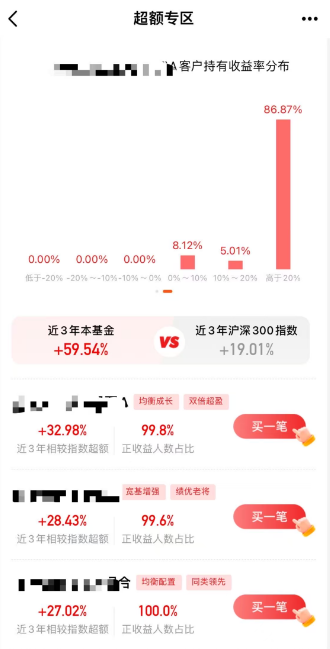
Core Viewpoint - The public fund industry in China has reached a new high of 37 trillion yuan, prompting a significant transformation in fund sales strategies, with a shift from short-term performance metrics to a focus on long-term investment indicators [1][6]. Group 1: Changes in Fund Sales Platforms - Leading internet fund distribution platforms have altered their sales interfaces to emphasize metrics such as volatility, excess returns, and investor participation, moving away from short-term performance rankings [1][2]. - The new sales strategies include showcasing long-term performance indicators like "three-year returns" and "three-year positive returns," which replace previous short-term metrics [2][6]. - Platforms like Ant Fund and Tiantian Fund have introduced features that present data transparently, including performance benchmarks and investor returns, to enhance the decision-making process for investors [2][3]. Group 2: Emphasis on Investor Experience - The introduction of "buyer showcases" allows investors to see real profitability metrics, linking product value directly to investor experiences [3][5]. - Ant Fund has upgraded its tools to promote asset allocation strategies, encouraging investors to diversify their portfolios rather than focusing on single fund selections [5][6]. Group 3: Regulatory Changes and Industry Impact - The implementation of new regulations aimed at reducing fund sales costs is expected to reshape the competitive landscape of the public fund market, pushing institutions to focus on long-term client retention rather than short-term trading incentives [6][7]. - The reduction of sales commissions and fees will compel fund companies to innovate in product offerings and research, moving away from reliance on high commissions for growth [6][7]. - The industry is transitioning from a sales-driven model to a service-oriented approach, emphasizing sustainable growth and long-term returns [7].
北京新浪仓石基金销售有限公司简介
Xin Lang Cai Jing· 2025-12-24 03:12
Company Overview - Beijing Sina Cangshi Fund Distribution Co., Ltd, also known as Sina Fund, is a wholly-owned subsidiary of Sina, established on August 29, 2011, with a registered capital of 20 million RMB [1][2] - The company is located in Haidian District, Beijing, and operates as a limited liability company, fully controlled by Beijing Sina Internet Information Service Co., Ltd [1][2] - The main business of the company is fund distribution, having obtained the qualification for fund sales on March 14, 2014 [1][2] Business Operations - Sina Fund conducts its fund sales primarily through the internet, utilizing the Sina Weibo app for user engagement [1][2] - As of November 2025, the company has partnered with nearly 100 fund companies, distributing almost 10,000 products [1][2] - The company does not have an independent app; instead, it directs users from the "Fund" section on the Sina Weibo app to its H5 page for fund transactions and holdings inquiries [1][2]
金元顺安基金管理有限公司旗下部分基金增加广发证券股份有限公司为销售机构并参与费率优惠的公告
Shang Hai Zheng Quan Bao· 2025-12-17 18:33
Core Viewpoint - The company has signed sales service agreements with multiple financial institutions to sell its funds starting from December 19, 2025, which includes fee discounts for investors [1][7][12][17]. Group 1: Applicable Funds - The specific funds that will be sold through the mentioned financial institutions are not detailed in the announcements [1][7][12][17]. Group 2: Business Scope - Starting from December 19, 2025, investors can perform various transactions such as account opening, subscription, redemption, and regular investment through the specified financial institutions [1][7][12][17]. Group 3: Fee Discounts - The company has agreed to participate in fee discounts for its funds sold through the financial institutions, with specific discount rates and terms to be published on the respective platforms [2][8][13][18]. Group 4: Regular Investment Details - Regular investment allows investors to set up automatic deductions for fund purchases, with a minimum investment limit of 10 yuan for most funds, while specific limits apply to certain fund types [3][8][14][19].


基金销售行为规范出台,哪些卖基金的“常见操作”不再合规了?
2 1 Shi Ji Jing Ji Bao Dao· 2025-12-17 11:29
Core Viewpoint - The recent draft of the "Regulations on the Sales Behavior of Publicly Raised Securities Investment Funds" aims to enhance compliance and standardization in the fund sales sector, addressing common practices that have become non-compliant under stricter regulatory scrutiny [1][2]. Group 1: Sales Behavior Regulations - The draft specifies that fund performance must be displayed for a minimum of six months, and rankings must be based on data from fund evaluation agencies over three years, eliminating short-term performance metrics [2]. - The use of terms like "guaranteed returns" is prohibited, and fund managers cannot link awards to individual fund managers, emphasizing a focus on the research team and investment framework instead [3][5]. - Fund managers and sales institutions are restricted from promoting fund size or growth, with a shift towards highlighting excess returns over benchmarks and risk-return ratios [6][8]. Group 2: Live Streaming Regulations - The draft outlines that live streaming personnel must have appropriate qualifications, and platforms must disable tipping features, ensuring compliance in promotional activities [9]. - All live streaming materials must be retained for at least 20 years, with specific compliance checks before, during, and after the live sessions [9]. Group 3: Performance Assessment Changes - The performance assessment for fund sales will now include long-term investor outcomes and will prioritize metrics related to investor retention and profitability over short-term sales figures [10][11]. - The new regulations aim to shift the industry focus from short-term gains to long-term investor interests, promoting a more sustainable sales environment [11].