买方投顾转型

Search documents
策马扬帆 励行致远丨广东博众2026新春年会盛典精彩收官
Sou Hu Wang· 2026-02-13 02:11
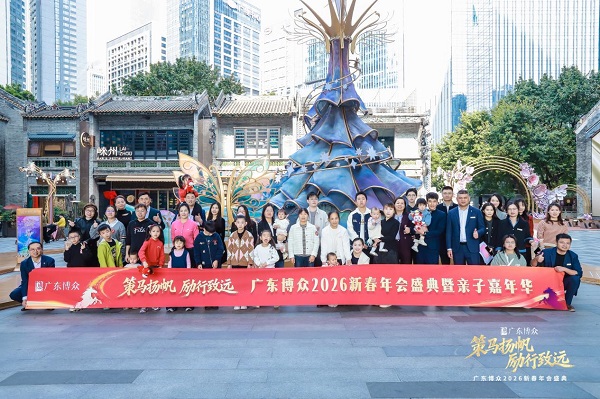
Core Viewpoint - Guangdong Bozhong held its 2026 New Year celebration, emphasizing corporate culture and employee engagement through various activities, including a "Parent-Child Carnival" and an "Annual Ceremony" [1][10]. Group 1: Event Highlights - The morning session featured a "Parent-Child Carnival" that integrated warmth and corporate culture, allowing employees to bond with their children in a fun environment [1]. - The afternoon "Annual Ceremony" commenced with a performance by the management team, including Chairman Zou Jinsong and General Manager Deng Gang, who addressed all employees [4]. - The event showcased a vibrant atmosphere with engaging activities, highlighting the company's commitment to employee well-being and family values [1][10]. Group 2: Achievements and Future Plans - Chairman Zou Jinsong delivered a keynote speech titled "Riding the Trend to New Heights," reflecting on 2025's achievements, including steady user growth and zero penalties despite industry challenges [4]. - The company plans to focus on user retention, AI integration, and transformation into a buy-side advisory model as key strategies for 2026 [4]. - Seven key projects were announced as essential drivers for achieving operational goals in 2026, with project leaders appointed to ensure effective implementation [7]. Group 3: Recognition and Culture - The event included an awards ceremony recognizing outstanding employees, such as the Best Newcomer and Knowledge Transfer Award winners, reinforcing the company's cultural values [10]. - The celebration concluded with a collective commitment to the theme "Riding the Trend to New Heights," encouraging collaboration and a shared vision for the future [10][12].

2025年业绩快报 | 净利增逾四成控股华富基金,华安证券不涨反跌
Sou Hu Cai Jing· 2026-01-30 06:41
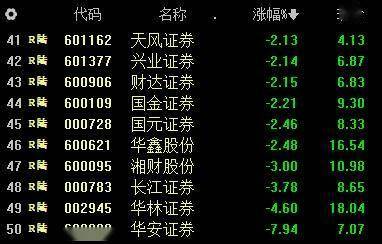
Core Viewpoint - Huazhong Securities reported strong financial performance for 2024, with total revenue of 5.064 billion yuan, a year-on-year increase of 30.94%, and net profit of 2.104 billion yuan, up 41.64% from the previous year [1] Group 1: Financial Performance - The company achieved a total revenue of 5.064 billion yuan in 2024, reflecting a growth of 30.94% year-on-year [1] - Net profit attributable to shareholders reached 2.104 billion yuan, a significant increase of 41.64% compared to 1.486 billion yuan in 2024 [1] - The company's total equity attributable to shareholders was 23.811 billion yuan, marking a 6.06% increase [1] - Basic earnings per share were reported at 0.45 yuan, with a weighted average return on equity of 9.10%, up 2.29 percentage points from the previous year [1] Group 2: Strategic Focus - The company is focusing on wealth management, securities investment, and investment banking to enhance revenue structure and improve profitability [1] - The deepening of the registration system is expected to release dividends from investment banking project reserves, becoming a significant growth driver [1] Group 3: Market Performance - Despite strong financial results, Huazhong Securities' stock fell by 7.94% on January 30, closing at 7.07 yuan, ranking last among 50 stocks in the brokerage sector [1][2] - The stock had a trading volume of 1.056 billion yuan and a turnover rate of 3.14%, with a total market capitalization of 33.08 billion yuan and a dynamic price-to-earnings ratio of 15.72 times [1] Group 4: Investment in Subsidiaries - The company announced plans to increase its stake in Huafu Fund Management Co., Ltd. from 49% to 51% for 26.416 million yuan, gaining control of the fund [3] - As of the end of 2025, Huazhong Securities' total assets reached 106.22 billion yuan, a slight increase of 3.11% from the previous year [3] Group 5: Fund Management Performance - Huafu Fund reported a revenue of 314 million yuan and a net profit of 31.34 million yuan for 2024, with a combined revenue of 254 million yuan and net profit of 19.2781 million yuan for the first three quarters of 2025 [5] - Controlling Huafu Fund allows Huazhong Securities to integrate its extensive client base and nationwide network with the fund's product creation capabilities, enhancing asset allocation flexibility and profitability [5]

专家共话2026财富管理新周期:结构重塑、科技赋能与生态共赢
Zhong Jin Zai Xian· 2026-01-16 01:15
Group 1: Core Insights - The annual conference hosted by JD Technology focused on the new economic cycle, financial landscape, and wealth management pathways in the context of the "14th Five-Year Plan" [1] - The wealth management industry is entering a high-quality development phase characterized by structural reshaping, professional refinement, and ecological co-creation [1] Group 2: Macro Trends and Technological Empowerment - The evolution of macro trends and technological waves is creating new development opportunities for the wealth management industry [2] - JD Technology emphasizes the importance of its ecosystem, with over 700 million annual active users, to provide rich scenarios and customer bases for wealth management [2] - AI technology, including the AI wealth manager "Jing Xiaobei," is being leveraged to reshape customer service models and enhance operational efficiency [2][3] Group 3: Industry Challenges and Strategic Directions - The direct financing market's importance is increasing, and the wealth management industry must adapt to the diversified asset allocation needs of residents [3] - The industry is facing challenges such as service gaps, insufficient buy-side advisory, and product homogeneity, necessitating a shift towards professional services and diversified product offerings [4] - The transition from asset management to wealth management requires a robust customer service system and technological support [5] Group 4: Asset Allocation and Ecological Co-Building - Investment experts highlighted three main asset allocation themes for the "14th Five-Year Plan" period: asset revaluation due to global monetary restructuring, long-term premiums in technology and high-end manufacturing, and the investment value of competitive Chinese multinational companies [6] - The gold market is evolving from a consumer product to a significant financial and strategic asset, emphasizing the need for a thoughtful investment approach [6] - In the field of pension finance, banks are encouraged to act as long-term planners and ecosystem integrators to meet diverse pension needs [6] Group 5: Future Outlook - By 2026, the wealth management industry will compete based on professional depth, ecological breadth, and technological speed, requiring higher standards for institutional capabilities and service models [7] - The industry must embrace a collaborative spirit and focus on asset exploration, customer service, and technology application to create a healthier and more prosperous wealth management future [7]
蚂蚁、天天、京东金融,亮出新打法
Zhong Guo Zheng Quan Bao· 2026-01-08 14:13
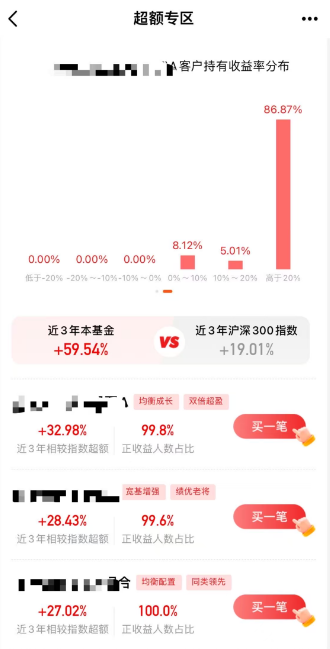
Core Viewpoint - The public fund industry in China has reached a new high of 37 trillion yuan, prompting a significant transformation in fund sales strategies, with a shift from short-term performance metrics to a focus on long-term investment indicators [1][6]. Group 1: Changes in Fund Sales Platforms - Leading internet fund distribution platforms have altered their sales interfaces to emphasize metrics such as volatility, excess returns, and investor participation, moving away from short-term performance rankings [1][2]. - The new sales strategies include showcasing long-term performance indicators like "three-year returns" and "three-year positive returns," which replace previous short-term metrics [2][6]. - Platforms like Ant Fund and Tiantian Fund have introduced features that present data transparently, including performance benchmarks and investor returns, to enhance the decision-making process for investors [2][3]. Group 2: Emphasis on Investor Experience - The introduction of "buyer showcases" allows investors to see real profitability metrics, linking product value directly to investor experiences [3][5]. - Ant Fund has upgraded its tools to promote asset allocation strategies, encouraging investors to diversify their portfolios rather than focusing on single fund selections [5][6]. Group 3: Regulatory Changes and Industry Impact - The implementation of new regulations aimed at reducing fund sales costs is expected to reshape the competitive landscape of the public fund market, pushing institutions to focus on long-term client retention rather than short-term trading incentives [6][7]. - The reduction of sales commissions and fees will compel fund companies to innovate in product offerings and research, moving away from reliance on high commissions for growth [6][7]. - The industry is transitioning from a sales-driven model to a service-oriented approach, emphasizing sustainable growth and long-term returns [7].
国联民生证券葛小波:财富管理与多元化交易是证券公司高质量发展必经之路
Jin Rong Jie Zi Xun· 2026-01-08 09:56
Core Insights - Wealth management capability is becoming a key factor for high-quality development in investment banking [1][2] - The transition from traditional debt and equity business to trading and ultimately to the integration of wealth management and financial technology is emphasized [1] - Current issues in China's securities industry include a lack of wealth management services, insufficient depth in buy-side advisory, and low client trust [1] Industry Analysis - The evolution of international investment banks, exemplified by Goldman Sachs, highlights the importance of wealth management for long-term competitiveness [1] - There is a need for diversified products and multi-strategy trading tools to meet the growing asset allocation and stable appreciation demands of residents [1] - The industry faces challenges such as single trading strategies and severe product homogeneity [1] Strategic Recommendations - The transformation towards buy-side advisory is seen as an inevitable direction for the industry [1][2] - In a low-interest-rate environment, asset allocation should leverage diversified products and strategies to enhance risk resistance and yield stability [1] - The positive impact of quantitative trading and algorithmic technology on market liquidity and efficiency should be recognized, promoting a "finance for good" development philosophy [1]

国元证券梁化彬:买方投顾转型是服务立场的“自然演进” 围绕三大支柱构建服务能力
Zhong Guo Jin Rong Xin Xi Wang· 2025-12-22 11:46
Core Viewpoint - The transformation of Guoyuan Securities towards a buy-side advisory model is driven by a fundamental shift in its operational philosophy, focusing on helping clients make money rather than just earning from them [1] Group 1: Strategic Transformation - Guoyuan Securities has positioned its buy-side advisory transformation as its "number one project," emphasizing a deep binding of interests with clients [1] - The company is committed to a systematic approach in building new service capabilities through talent, systems, and mechanisms [2] Group 2: Talent Development - The "Spark Plan" has been initiated to train over a thousand wealth advisors, transitioning them from a sales-oriented role to a professional asset allocation role [2] - The training program involves collaboration with professional advisory training institutions and focuses on strategic alignment and deep empowerment of selected pilot branches [2] Group 3: System Construction - Guoyuan Securities is developing a platform-based advisory service, with a research advisory center acting as the core hub for asset allocation insights [2] - The insights will be communicated through a research strategy platform to product research teams, enabling a selection of optimal products in the market [2] Group 4: Mechanism Reform - The assessment and incentive systems for pilot branches have shifted from sales-oriented metrics to focusing on the quality of product pools and the returns of investment portfolios [3] - A new evaluation system for frontline advisors includes metrics such as client repurchase rates and asset under management (AUM) growth, ensuring alignment with long-term client interests [3] Group 5: Future Planning - Guoyuan Securities aims to cultivate its first batch of pilot branches over the next two to three years, creating a replicable and scalable model for broader implementation [4] - The long-term goal is to establish a distinctive professional brand in wealth management, achieving a win-win situation for both clients and the institution [4]

纵论财富管理机构转型方向,助力居民财富保值增值!2025财富配置与资产管理大会、银行业高质量发展大会举行
Zhong Guo Zheng Quan Bao· 2025-12-19 15:54
Group 1 - The 2025 Wealth Allocation and Asset Management Conference and the 2025 Banking Industry High-Quality Development Conference were held in Shenzhen, focusing on how wealth management institutions can enhance services to help residents preserve and increase wealth [1] - Zhang Bohui from the Chinese University of Hong Kong (Shenzhen) noted a steady recovery in the wealth management market, with a notable performance in equity-linked products, indicating a rising demand for equity asset allocation [1] - Qi Jiankong from CCB Wealth Management highlighted unprecedented challenges and greater opportunities in the banking wealth management sector, emphasizing a shift in operational philosophy to prioritize investor interests [1] Group 2 - Gao Xiangyang from ICBC Wealth Management stated the company aims to become a fully functional wealth management firm, responding to new challenges in the asset management industry by exploring beneficial practices [2] - The growing demand for diversified asset allocation among residents is driving the expansion of the wealth management market and prompting profound structural changes, with various financial institutions accelerating their entry into the market [2] - Tan Xiaogang from Dacheng Fund emphasized that the high-quality development of banking wealth management is a key driver for the overall high-quality development of the banking sector, with ongoing collaboration between public funds and banks being crucial [2] Group 3 - Securities firms are increasingly playing a vital role in helping residents preserve and increase wealth, with initiatives like transitioning to a buy-side advisory model [3] - Li Haichao from Shanghai Securities discussed the company's focus on a unique asset allocation system to drive business transformation and enhance professional capabilities [3] - Wang Qian from Huihua Wealth Management highlighted the need for the asset management industry to focus on alternative asset opportunities and global asset allocation in the low-interest-rate environment [3] Group 4 - Despite existing challenges, the long-term positive fundamentals of China's economy remain unchanged, according to Bi Jiyao, former deputy director of the China Macro Economic Research Institute [4] - Guo Lei, chief economist at GF Securities, identified five potential areas for economic activation, including normalizing local investments and expanding new consumer groups [4] Group 5 - Industry experts shared insights on investment opportunities for 2026, indicating that Chinese assets still hold strong appeal, particularly in sectors like new energy, new materials, chips, and health consumption [5]
以投顾业务为核心破局券商财富管理转型
Zhong Guo Zheng Quan Bao· 2025-12-10 20:17
Core Insights - The securities industry is undergoing a profound transformation, facing challenges such as declining commission rates, compressed profits from product distribution, and intensified competition due to product homogeneity [1][2] - The shift towards wealth management centered on professional advisory services has become a consensus in the industry, with companies like CICC exploring this transition through strategic measures [1][3] Industry Challenges - The brokerage business is under unprecedented survival pressure, with average commission rates dropping from 0.08% to below 0.02% over the past decade, and a continuous decline in channel business revenue [1][2] - The industry faces three common challenges: market environment volatility affecting advisory business, traditional investors' short-term focus conflicting with long-term investment logic, and internal issues such as income pressure and talent shortages [2][3] Strategic Measures - CICC is not blindly following the scale expansion model of leading brokers but is focusing on four key initiatives: "total-part collaboration," "team building," "training empowerment," and "productization of services" to enhance operational precision and execution [3][4] - The company emphasizes that the core asset of brokerage business is talent, and the success of the advisory transition relies on providing valuable professional services rather than merely selling products [4][5] Talent Development and Training - CICC has established a three-tier training system to enhance the capabilities of its advisory team, focusing on business understanding, professional skills, and marketing techniques [5][6] - The company aims to transform advisory services into standardized products, complemented by supportive services and expectation management to mitigate irrational client behavior during market fluctuations [6][7] Future Plans - CICC plans to continue developing its advisory business, focusing on client needs and enhancing the professional capabilities of its advisory team while expanding its scale and optimizing talent structure [6][7] - The company will refine its client segmentation and product service system to achieve precise matching based on client risk preferences and investment needs, while also investing in digital platforms to improve service efficiency and compliance [6][7]

东北证券(000686) - 东北证券股份有限公司2025年11月27日投资者关系活动记录表
2025-11-27 10:38
Group 1: Investment Strategy and Business Focus - The company emphasizes a dual-driven business model combining proprietary investment and client services, enhancing asset allocation efficiency across various asset classes including domestic and international stocks, bonds, and commodities [2][5]. - The proprietary investment business aims to diversify profit models, focusing on dividend, value, and growth investment strategies while expanding non-directional investment areas [2][3]. - Future business focus includes wealth management transformation, targeting small and medium-sized innovative enterprises, and enhancing comprehensive service capabilities through agile teams [4][6]. Group 2: Asset Management and Product Development - The asset management business is centered around fixed income products, with a continuous expansion of product lines including quantitative, derivative, and fund of funds (FOF) products to meet diverse investor needs [8]. - The company aims to strengthen its investment banking services by focusing on small and medium-sized innovative enterprises, maintaining a top 10 position in the North Exchange [9]. Group 3: Corporate Governance and Shareholder Relations - The major shareholder's equity transfer is actively progressing, with ongoing communication with government and regulatory bodies [7]. - The company does not set direct performance indicators for management but emphasizes market competitiveness and compliance risk management in evaluations [11]. - A robust market-oriented mechanism for talent acquisition is in place, particularly in high-market areas like investment banking and IT, while also nurturing internal talent [10]. Group 4: International Expansion and Market Positioning - The company is preparing to establish a subsidiary in Hong Kong to capitalize on the integration of mainland and Hong Kong markets, having completed preliminary research and board approval [11]. - The company prioritizes enhancing its market value management capabilities as a key focus for 2025, implementing a comprehensive value management mechanism [11].

销售渠道变局
Sou Hu Cai Jing· 2025-11-23 09:07
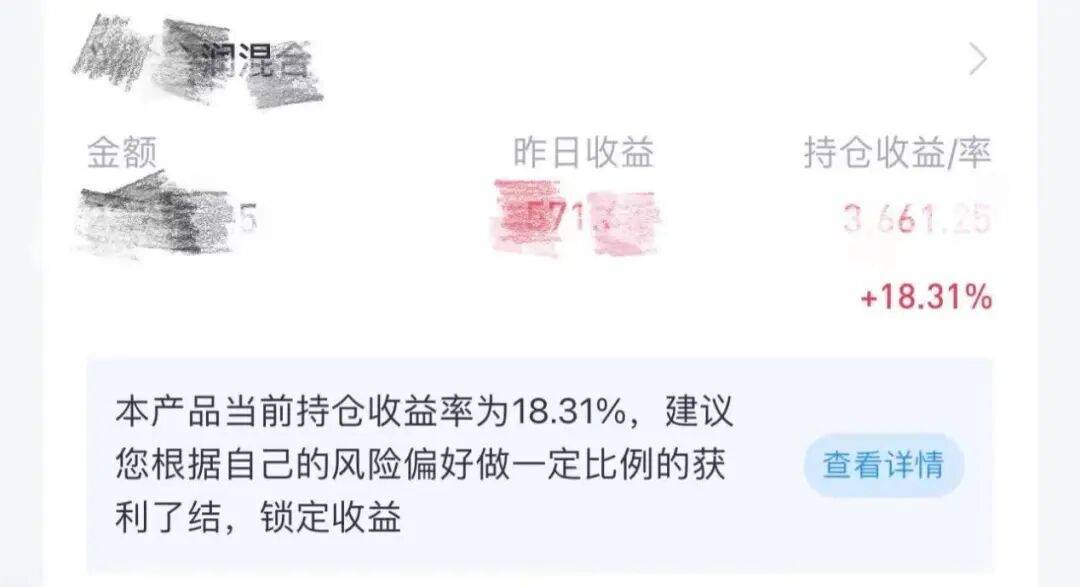
Core Insights - The article highlights the shift in fund sales channels from merely transactional roles to becoming long-term investment partners that provide personalized guidance and support to investors [1][8][9] Group 1: Industry Trends - The public fund high-quality development action plan proposes a classification evaluation mechanism for fund sales institutions, incorporating metrics such as investor profit and loss, holding periods, and regular investment business scale [3][9] - Major fund sales institutions are responding to regulatory calls by enhancing their service offerings, indicating a transition towards a customer-centric approach in the fund industry [5][9] Group 2: Service Innovations - Recent initiatives include the introduction of intelligent service suggestions by institutions like China Merchants Bank and Ant Group, aimed at helping investors make informed decisions regarding profit-taking and fund conversions [1][5] - The "Time Points" system launched by Yingmi Fund links rewards to the duration of investment, encouraging long-term holding and reducing impulsive trading behaviors [5][6] Group 3: Competitive Landscape - The competition among fund sales channels is evolving from a focus on product variety to the depth and quality of accompanying services, emphasizing the importance of personalized and dynamic support for investors [8][9] - Industry experts suggest that the core capabilities required for successful transformation into trusted investment partners include professional research capabilities, intelligent technology, refined accompanying services, and compliance with fiduciary responsibilities [9][10] Group 4: Future Directions - The future of investment advisory services is expected to be more personalized, dynamic, and integrated into clients' life scenarios, aligning with their specific financial goals such as education, retirement, and home purchasing [10] - The ongoing transformation in the fund sales industry is driven by regulatory guidance, technological advancements, and changing customer needs, aiming for sustainable growth and high-quality development [9][10]