
Poultry Farming

Search documents
On the Ground Diligence for the Sierra Leone Citizenship by Investment
The Wandering Investor· 2026-02-07 11:06
Group 1: Overview of Sierra Leone's Citizenship by Investment Program - The Sierra Leone Citizenship by Investment program offers a flexible and affordable pathway to citizenship, with a base price of $140,000 for the main applicant and discounts available for applicants of African descent [62][66] - The program allows for the inclusion of family members and business partners, making it one of the most affordable options globally for citizenship by investment [6][62] - The program is designed to attract high net worth individuals, providing them with opportunities to invest in a country with significant growth potential and low GDP per capita [46][47] Group 2: Economic and Investment Opportunities - Sierra Leone is focusing on sectors such as agriculture, infrastructure development, energy, and tourism to attract foreign direct investment [45][46] - The government is actively working to create a conducive environment for investors, including the establishment of the National Investment Board to facilitate investment processes [49][50] - The country offers unique opportunities for eco-tourism, with government support for developing eco-lodges and related infrastructure [52][55] Group 3: Banking and Financial Environment - Sierra Leone's banking sector is characterized by a focus on cash transactions, with no capital controls for local entities, making it easier for investors to manage their finances [26][33] - The banking system allows for efficient online banking services, enabling easy transfers and conversions without significant bureaucratic hurdles [31][33] - The country has not signed up for the Common Reporting Standard (CRS), providing a level of privacy for banking clients [26] Group 4: Political Stability and Governance - Sierra Leone is noted for its democratic stability, having undergone peaceful transitions of power, which enhances its attractiveness for foreign investment [22][39] - The government is committed to reforming immigration and investment laws to create a more favorable business environment [22][39] - The country has a strong emphasis on religious tolerance, which contributes to its social stability and peaceful coexistence among diverse communities [56][59] Group 5: Benefits of ECOWAS Membership - Citizenship in Sierra Leone provides access to the Economic Community of West African States (ECOWAS), allowing for easier travel and residence in 12 other West African countries [76][77] - This access simplifies the process for investors looking to expand their operations across the region, enhancing the overall value of Sierra Leonean citizenship [76][78] Group 6: Support for Investors - The Sierra Leone Citizenship by Investment program includes comprehensive support for new citizens, facilitating connections with government officials and providing assistance in navigating the investment landscape [70][72] - The program aims to remove bureaucratic obstacles, making it easier for investors to establish businesses and contribute to the local economy [74][75] - New citizens receive a free company setup and banking services, streamlining the investment process [70][72]



Akola Group's poultry business to implement a €13 million investment program
Globenewswire· 2025-12-11 07:45
Core Insights - Akola Group's poultry business plans a €13 million investment program for the 2025–2026 financial year, focusing on production modernization, incubation capacity expansion, biosecurity enhancement, and environmental efficiency solutions [1] - In the 2024–2025 financial year, the poultry business in Lithuania and Latvia generated sales revenue of €325 million and a gross profit of €69 million, producing over 120,000 tons of live-weight poultry meat [2] - The largest projects this year are at Vilniaus Paukštynas, which includes modernization with AI-based technologies and investments in odor control and air purification, totaling over €2.6 million in the past year and a half [3] - The company plans to invest around €9 million in Lithuania for modernization, capacity expansion, and environmental protection, which will enhance business efficiency and competitiveness [4] - In the first three months of the 2025–2026 financial year, poultry production volumes remained stable, with a 15% increase in revenue and nearly 19% increase in gross profit compared to the same period last year [5] - Akola Group intends to invest €43 million across various projects throughout the 2025–2026 financial year [6] - Akola Group is the largest agribusiness and food production group in the Baltics, with a revenue of €1.58 billion and a net profit of €61 million in the 2024–2025 financial year [7]

兴业银行南宁分行:金融活水润八桂 精准滴灌促振兴
Zhong Guo Jin Rong Xin Xi Wang· 2025-10-15 11:35
Core Insights - The article highlights the role of Xingye Bank's Nanning branch in supporting rural revitalization and agricultural development through financial services, with a focus on "three rural issues" [1][2][3] - As of the end of September, the agricultural loan balance of Xingye Bank's Nanning branch exceeded 8.7 billion yuan, demonstrating its commitment to providing financial support to the agricultural sector [1] - The bank has implemented various financial solutions tailored to different agricultural enterprises, contributing to the stability and growth of the agricultural industry in Guangxi [2][3] Group 1: Agricultural Financing - Xingye Bank's Nanning branch has provided over 700 million yuan in comprehensive financing to a grain group since 2013, helping it become a key player in national agricultural industrialization [1] - The bank's agricultural loan balance reached over 8.7 billion yuan by the end of September, indicating strong support for the agricultural sector [1] Group 2: Poultry Industry Support - In Liuzhou, a poultry enterprise has engaged 4,000 farmers in cherry valley duck farming through a "company + farmer" model, supported by Xingye Bank's financing of over 250 million yuan [2] - The bank has developed a comprehensive financial service plan for the poultry supply chain, enhancing the industry's growth and stability [2] Group 3: Cold Chain Financing - Xingye Bank has tailored financial services for the cold chain industry in Beihai, providing liquidity support through accounts receivable financing and inventory pledges [2] - This financial backing ensures efficient operations in cold chain logistics, connecting fishermen's harvests with consumers [2] Group 4: Future Outlook - The bank plans to deepen its financial services for agriculture, innovate financial products, and expand service coverage to contribute to high-quality agricultural development in Guangxi [3]

宿迁首家中国农技协科技小院揭牌
Yang Zi Wan Bao Wang· 2025-09-28 13:45
Core Viewpoint - The establishment of the Jiangsu Shuyang Meat Duck Technology Courtyard marks a significant step in agricultural technology innovation and the integration of production and research in Suqian, China [1] Group 1: Agricultural Technology Innovation - The Jiangsu Shuyang Meat Duck Technology Courtyard is recognized as the first national-level technology courtyard in Suqian, showcasing a new agricultural technology service model that integrates innovation, demonstration, and talent cultivation [1] - This initiative aims to closely connect agricultural research with practical production, addressing the challenge of transforming scientific achievements into practical applications [1] Group 2: Collaboration and Development - The technology courtyard is established through collaboration among multiple organizations, including the Jiangsu Provincial Association for Science and Technology, Yangzhou University, and local associations, leveraging the resources of Shuyang Zhongke Poultry Co., Ltd [1] - The courtyard focuses on duck breeding and variety selection, promoting the integration of production, education, and research to support rural revitalization [1] Group 3: Modern Breeding Techniques - The Shuyang Meat Duck Technology Courtyard has been working closely with Yangzhou University on research and development in duck breeding technology and new variety cultivation [1] - It aims to enhance breeding efficiency through modern techniques such as molecular-assisted breeding, advanced breeding software, and comprehensive selection methods, thereby securing control over the breeding industry [1]
鸡蛋期货分析入门:守寂,左侧多头的条件?
对冲研投· 2025-09-04 12:47
Core Viewpoint - The article discusses the cyclical nature of the egg-laying industry, highlighting the current downtrend in profits and the implications for market expectations and investment strategies [2][4]. Group 1: Industry Cycles - The egg-laying industry has experienced seven cycles over the past 15 years, with each cycle lasting approximately 2-2.5 years. The current profit cycle, lasting from April 2021 to January 2025, is notably long at 45 months, indicating potential deviations from historical patterns [2][3]. - The current egg futures price has fallen below 3000 yuan per 500 kg, with total contract holdings exceeding 1 million, reflecting a significant downturn in market sentiment [2]. Group 2: Supply-Side Dynamics - In the early stages of loss, producers adjust their purchasing of chicks and the timing of culling older hens, which can be tracked through chick sales and culling age data [3]. - The industry consensus during initial oversupply pressures is to reduce costs and optimize efficiency rather than immediately cut production. This includes improving feed management, biosecurity, and adopting advanced production technologies [4][5]. Group 3: Investment and Production Capacity - Since 2022, the egg-laying industry has seen a surge in capital investment, with the current stock of laying hens reaching 1.356 billion, up from an average of 1.204 billion during the previous profit cycle [5]. - The strategy of maximizing production to dilute investment depreciation is prevalent, leading to lower price elasticity of supply in response to profit fluctuations [4][5]. Group 4: Profitability and Cost Management - The average profit per kilogram of eggs reached 0.82 yuan in 2022, with total profits for the year estimated at 48.318 billion yuan based on a production volume of 29.38 million tons [6]. - The cash cost of egg production for leading enterprises is projected to be between 2.6 and 2.75 yuan per kilogram, with current market prices still allowing for profitability [9]. Group 5: Short-Term Indicators - Monitoring the culling of hens is more indicative of immediate production changes than chick replenishment, with current culling ages decreasing but still above levels seen in previous downturns [10]. - The construction of cold storage facilities has increased, allowing for the storage of eggs during low demand periods, which has implications for seasonal price fluctuations [11]. Group 6: Timing for Market Entry - Conditions for bottom-fishing in the egg market include prices nearing cash costs, significant cash flow depletion in the industry, and sustained high culling rates [12][13]. - External shocks, such as avian influenza, could significantly impact market dynamics, but currently, no such indicators are present [14].

ENIGMATIG LTD-A(EGG) - 2025 Q2 - Earnings Call Transcript
2025-08-27 14:02
Financial Data and Key Indicators Changes - The first half of 2025 marked the best operational performance in the company's history, with 59 million eggs sold, representing a 23% year-on-year growth [4] - Revenue surpassed €10 million, reflecting a 70% year-on-year growth [4] - Gross profit reached €4.3 million, showing a 183% increase [4] - EBITDA for the first half of the year was €3.5 million, indicating a 250% growth [5] - The net profit for the period was a record €1.7 million, a significant improvement from previous losses [25][26] Business Line Data and Key Indicators Changes - The company completed its investment phase, which included the inauguration of three new buildings, enhancing production capacity by 60% to produce up to 180 million eggs annually [9][10] - The new product line, VTech Squared, focused on premium egg white protein products, achieved a 32% repeat purchase rate, indicating strong market acceptance [12] Market Data and Key Indicators Changes - The total egg market in the Baltic states experienced growth, particularly in the bar and egg segment, with Lithuania leading at over 60% market share [15] - The company successfully reduced the share of industrial egg sales to 11%, aligning closely with natural production splits [18] - Export sales increased significantly, with income from exports rising almost three times compared to the previous period [22] Company Strategy and Development Direction - The company aims to strengthen its position as a market leader in cage-free production, with plans to become the first totally cage-free egg producer [33] - The strategy includes diversifying revenue streams, particularly through the VTech Squared product line, and expanding exports as a percentage of overall sales [45][46] Management's Comments on Operating Environment and Future Outlook - Management expressed confidence in achieving a revenue target of approximately €22.6 million for 2025, a 7% upward adjustment from previous guidance [28] - The completion of the investment phase is expected to support strong revenue growth in the second half of the year, with full operational capacity anticipated by September [30] - The shift towards cage-free production is seen as a tailwind for the company, with expectations of increased demand for higher welfare products [44] Other Important Information - The company has built its own solar park to help mitigate energy costs [39] - A shareholder loyalty program was approved, expected to launch around International Egg Day in early October [35][36] Q&A Session Summary Question: Will the shareholders' loyalty program include benefits for the FinTech Squared production? - Yes, the loyalty program was approved and will include attractive components for loyal customers, expected to launch within six to eight weeks [35] Question: What drove the 70% growth of the revenue in 2025? - The growth was driven by an increase in the number of eggs sold, higher market prices, and a shift in product mix towards retail clients [37] Question: Is gross profit margin improvement sustainable? - Yes, the gross margin improvement is expected to be sustainable due to the shift towards cage-free production and increased capacity [38] Question: How do you manage rising feed or energy costs? - Feed and energy costs are fixed for the maximum period possible, and the company has built a solar park to offset energy consumption [39] Question: Do you expect to raise any additional capital in 2025? - Current capacity expansion is fully funded, but additional capital may be raised for future development projects or acquisitions [41] Question: How do you see the cage-free transition affecting the APF? - The transition is viewed as a tailwind, with the company well-positioned to capture market share and premium pricing as cage-free becomes the industry standard [44] Question: What is your export strategy? - The strategy focuses on increasing exports as a percentage of overall sales, with significant growth in Lithuania and Estonia [45][46] Question: Are there any plans to distribute dividends in the future? - The dividend policy remains intact, with up to 50% of profits expected to be distributed based on the financial results of 2025 [59][60]

成武农商银行发挥金融力量,激活传统养鸭产业发展活力
Qi Lu Wan Bao Wang· 2025-07-22 11:53
Core Viewpoint - The article highlights the significant role of financial support from local banks in enhancing the duck farming industry, showcasing a case study of a successful farmer who expanded his operations due to timely credit assistance [1] Group 1: Industry Overview - Duck meat is rich in high-quality protein, vitamins, and minerals such as iron and zinc, contributing to its popularity in various culinary forms like marinated duck heads, necks, intestines, wings, and roasted duck [1] - The duck farming industry is a vital part of traditional agriculture, impacting the livelihoods of many farmers [1] Group 2: Case Study of Zhao - Zhao, a seasoned duck farmer from Chengwu County, faced challenges in meeting increasing order volumes due to insufficient working capital [1] - With the support of Chengwu Rural Commercial Bank, Zhao received credit funding within three days, enabling him to expand his farming scale and significantly increase his output [1] - The financial backing allowed Zhao to stabilize his income and become a prominent duck farmer in the area, subsequently encouraging other local farmers to join the industry [1] Group 3: Role of Financial Institutions - Chengwu Rural Commercial Bank plays a crucial role in supporting the local duck farming industry by addressing financial shortages and facilitating risk management [1] - The bank's efforts contribute to the upgrading of the traditional duck farming sector, aligning with broader rural revitalization goals [1]
九江银行:小鸡蛋里“孵”出致富梦
Zhong Guo Jin Rong Xin Xi Wang· 2025-07-21 13:51
Group 1 - The core viewpoint emphasizes the role of Jiujiang Bank Yingtan Branch in supporting rural revitalization and county-level financial services, injecting financial resources into local特色产业 [1] - Jiangxi Kangyi Poultry Development Co., Ltd. is a modern agricultural enterprise that integrates various aspects of poultry farming and has invested 7 million yuan in a digital production line [1] - The bank has implemented a "one enterprise, one policy" approach, establishing a rapid response mechanism to meet the expansion needs of local businesses, providing a loan of 2.2 million yuan to support the poultry industry [1] Group 2 - As of June 30, 2025, the bank has served 2,218 rural revitalization loan customers with a loan balance of 1.185 billion yuan, continuously promoting the quality and efficiency of特色产业 [2]
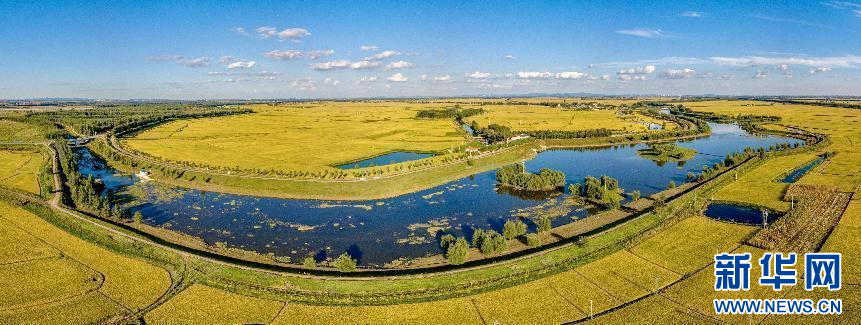
乡村振兴在行动丨酸菜香、肉鸡肥、淡水鱼鲜、稻田画美——<br/>沈阳特色产业助力现代农业“四梁八柱”
Xin Hua Wang· 2025-05-09 01:26
Core Viewpoint - Shenyang is leveraging its unique agricultural resources and modern technology to develop a high-quality agricultural sector, focusing on key industries such as sauerkraut, meat chickens, freshwater fish, and rice paddy art, thereby driving rural revitalization and economic growth [1][4][14] Group 1: Agricultural Development - Shenyang is enhancing its agricultural production through intelligent farming and brand empowerment, transforming local specialties into comprehensive industrial chains [1][4] - The city aims to become a national hub for freshwater fish, with a projected production of 232,000 tons and a fishery output value of 3.34 billion yuan in 2024 [5] - Shenyang's agricultural products are not only meeting local demand but also extending their reach to northeastern provinces and major regions like Beijing-Tianjin-Hebei and the Yangtze River Delta [5] Group 2: Brand and Market Expansion - The "Rice Dream Space" scenic area has gained popularity as a tourist destination, attracting hundreds of thousands of visitors annually and enhancing the brand value of Shenyang rice [6][8] - The city is integrating agricultural production with tourism and cultural branding, aiming to create a strong regional public brand for agricultural products [8][14] - Shenyang is promoting its unique agricultural products, such as sauerkraut and chicken, as key drivers of economic growth and brand recognition [9][14] Group 3: Industry Chain Development - The sauerkraut industry in Shenyang has seen significant growth, with 65 operating companies producing approximately 700 million pounds annually, accounting for 60-70% of national sales [9] - The white feather chicken industry is projected to reach a total industrial chain value of 10 billion yuan in 2024, with a focus on expanding the value chain through processing and branding [13][14] - Shenyang is committed to enhancing its agricultural ecosystem by strengthening leading enterprises and extending the value chain from production to market [14]
Nationwide egg shortage has shoppers turning to Facebook Marketplace
Fox Business· 2025-03-03 20:15
Core Insights - A nationwide egg shortage is prompting individuals to sell their home-raised chicken eggs on platforms like Facebook, as retail prices continue to rise and store shelves remain less stocked than usual [1][2] - The surge in inquiries for chicken rentals has increased by 500% for companies like Rent The Chicken, indicating a growing trend of people raising their own chickens to mitigate the shortage [3] - The U.S. Department of Agriculture forecasts that retail egg prices will rise by 41.1% in 2025, following a significant increase of 15.2% in January 2023, marking the largest rise since June 2015 [4][5] Industry Impact - The egg price surge has led some restaurants to implement temporary menu surcharges to offset increased costs, reflecting the strain on their already thin profit margins [6] - Grocery stores are responding to the shortage by imposing purchasing limits on eggs, with retailers like Whole Foods and Kroger restricting customers to a certain number of cartons per purchase [7]

