交易型开放式指数基金(ETF)

Search documents
中投发布2024年业绩:净资产达1.37万亿美元
证券时报· 2025-12-09 10:41
Core Viewpoint - The report highlights that China Investment Corporation (CIC) has achieved a total asset of $1.57 trillion and a net asset of $1.37 trillion as of December 31, 2024, with an annualized net return on foreign investments of 6.92% over the past decade, exceeding performance targets by 61 basis points [1]. Group 1: Investment Performance and Strategy - As of the end of 2024, CIC's foreign investment portfolio has a public market stock allocation of 34.65%, with the top five sectors being Information Technology (25.85%), Financials (16.41%), Consumer Discretionary (11.85%), Health Care (9.88%), and Industrials (9.72%) [3]. - The company maintains strategic focus amid a challenging global macroeconomic environment characterized by high interest rates, inflation, and geopolitical changes, while also optimizing investment models and enhancing risk management systems [1][9]. Group 2: Central Huijin's Role - Central Huijin, a wholly-owned subsidiary of CIC, has increased its holdings in exchange-traded funds (ETFs) to support market stability, acting as a stabilizing force in the capital market since 2008 [11]. - Central Huijin aims to enhance the governance and core competitiveness of its controlled institutions, ensuring compliance and effective risk management to protect state-owned financial assets [12].

2024年末中投公司总资产达1.57万亿美元
Xin Hua Wang· 2025-12-09 09:14
中投公司董事长张青松介绍,2024年中投公司积极融入国家发展大局,稳步推进战略规划实施,着 力提升统筹发展和安全的能力,不断优化资产配置和投资布局,认真履行国有金融资本受托管理职责, 经营发展取得新进展。 数据显示,截至2024年末,中投公司净资产达1.37万亿美元,过去十年对外投资年化净收益率按美 元计算为6.92%。 新华社北京12月9日电(记者吴雨)12月9日,中国投资有限责任公司发布的2024年度报告显示,截 至2024年末,中投公司总资产达1.57万亿美元,过去十年对外投资年化净收益率超出业绩目标61个基 点。 截至2024年末,中央汇金受托管理的国有金融资本达6.87万亿元人民币,较年初增长6.44%。 据介绍,面对充满不确定性的投资环境,中投公司着力提升自主投资能力,优化资产配置框架和总 组合管理模式,有效应对国际金融市场剧烈波动带来的不利影响。经初步统计,公司2025年上半年投资 收益良好。 中投公司表示,未来公司将积极发挥国际化、市场化、专业化优势,秉持负责任投资理念,继续朝 着世界一流主权财富基金目标稳步前进。 【纠错】 【责任编辑:邱丽芳】 在境外投资方面,中投公司坚守长期投资者定位,优 ...
Want $4,000 per Year in Passive Income? Invest Just $2,500 in These Big-Yield Dividend Stocks
247Wallst· 2025-11-26 15:11
Core Insights - Dividends are highlighted as a crucial element in building wealth and securing a financial future [1] Investment Strategy - An initial investment of $2,500 per asset is recommended for diversification across five stocks or exchange-traded funds (ETFs) [1]

“十四五”期间入市规模不断提升——中长期资金压舱石作用稳步增强
Jing Ji Ri Bao· 2025-11-22 22:06
Core Viewpoint - The article emphasizes the significant increase in medium- and long-term capital entering the A-share market, which is crucial for stabilizing and promoting the healthy development of the capital market during the "14th Five-Year Plan" period [1][2]. Group 1: Medium- and Long-term Capital Inflow - As of the end of August this year, various types of medium- and long-term funds held approximately 21.4 trillion yuan of A-share circulating market value, representing a 32% increase compared to the end of the "13th Five-Year Plan" [1]. - Insurance capital invested in stocks and equity funds exceeded 5.4 trillion yuan, with a balance that has grown by 85% since the end of the "13th Five-Year Plan" [1]. - The China Securities Regulatory Commission (CSRC) aims to enhance the role of medium- and long-term funds as a stabilizing force in the market, focusing on long-term assessments and improving cross-border investment convenience [1][2]. Group 2: Policy Measures and Institutional Support - Financial regulatory authorities have implemented a series of measures to facilitate the entry of medium- and long-term funds into the market, creating a favorable institutional environment for long-term investments [2]. - The CSRC, in collaboration with relevant departments, has issued guidance to improve long-term assessment mechanisms and increase the scale and proportion of equity investments [2]. - The Ministry of Human Resources and Social Security has shifted the focus of enterprise annuity data reporting from current yield to three-year cumulative yield, promoting a long-term investment perspective [2]. Group 3: Growth of Public Funds and ETFs - As of the end of August, the total management scale of public funds in China reached 36.25 trillion yuan, with equity funds nearing 10 trillion yuan, making them the largest professional institutional investors in the A-share market [4]. - The number of exchange-traded funds (ETFs) listed in China has increased from 370 to 1282, with total assets growing from 1.1 trillion yuan to over 5 trillion yuan, establishing China as the largest ETF market in Asia [4]. - Central Huijin Investment Co., Ltd. actively supported market stabilization by investing in ETFs during market volatility, holding a total ETF market value of 1.28 trillion yuan as of June 30, which is a 22.63% increase from the end of the previous year [4]. Group 4: Impact of Long-term Capital Inflow - The increase in medium- and long-term capital inflow is expected to stabilize the market, as long-term funds have lower turnover rates and can effectively counteract short-term speculative capital [5]. - Long-term capital is anticipated to lead to value investing and improve market pricing efficiency by focusing on the fundamentals and long-term value of companies [5]. - Long-term funds are likely to enhance corporate governance and investor protection by actively participating in company operations, contrasting with the behavior of retail investors [5]. Group 5: Market Ecosystem and Corporate Quality - To attract more long-term capital, a suitable market ecosystem and reasonable returns are essential [6]. - Regulatory bodies are enhancing the quality and investment value of listed companies through improved supervision and information disclosure [7]. - Encouragement for share buybacks, increases in dividends, and overall corporate governance improvements are being emphasized to create a favorable environment for long-term investments [7][8].
Want $3,500 per Year in Passive Income? Invest Just $2,500 in These Supersized Dividend Stocks
247Wallst· 2025-11-20 17:37
Core Insights - The article emphasizes the potential for generating significant income with minimal effort and capital through careful investment choices [1] Investment Strategy - A starting investment of $2,500 in select stocks and exchange-traded funds (ETFs) can yield impressive results [1]

沪深交易所修订基金自律监管规则适用指引
Zheng Quan Ri Bao· 2025-11-19 16:06
Core Viewpoint - The Shanghai and Shenzhen Stock Exchanges have released new guidelines for index funds to enhance market service and promote high-quality development of index-based investments, effective immediately upon publication [1][3]. Group 1: Guidelines Overview - The guidelines aim to standardize the public offering of index securities investment funds and protect investors' rights, based on relevant laws and regulations [1]. - The guidelines apply to various types of index funds listed on the Shanghai and Shenzhen exchanges, including Exchange-Traded Funds (ETFs) and Listed Open-Ended Funds (LOFs) [1]. Group 2: Index Fund Selection and Management - For non-broad-based stock index funds, four core requirements are established: 1. The number of constituent securities must be no less than 30 2. The weight of any single constituent security must not exceed 15%, and the combined weight of the top five must not exceed 60% 3. The index must be published for at least three months (with exceptions for indices recognized by the CSRC that align with national strategies) 4. The average daily trading amount of constituent securities, accounting for over 90% of the total weight, must rank in the top 80% of all listed stocks on the exchanges over the past year [2]. - For broad-based stock index funds, the guidelines relax some restrictions, allowing a single constituent stock weight of up to 30%, balancing index representativeness and diversification needs [2]. - Bond index funds must meet requirements regarding the number of constituent securities, weight distribution, and publication time, with certain exemptions for interest rate bonds [2]. Group 3: Operational Responsibilities - The guidelines clarify the full-process responsibilities of fund managers, requiring them to prepare personnel, business systems, and technical systems in advance [2]. - Institutions planning to develop and list index funds must submit applications and compliance materials to the exchanges for review before launching sales [2]. - After the fund contract becomes effective, managers must apply for listing and ensure that the investment portfolio complies with legal regulations and fund contract agreements prior to listing [2]. Group 4: Regulatory Context - This revision is a significant measure by the Shanghai and Shenzhen Stock Exchanges to implement the "Action Plan for Promoting High-Quality Development of Index Investment in Capital Markets" [3]. - The guidelines consist of ten articles that provide targeted regulations on the preparation for developing index funds, specific indicators for index quality, and procedures for handling index fund business [3].
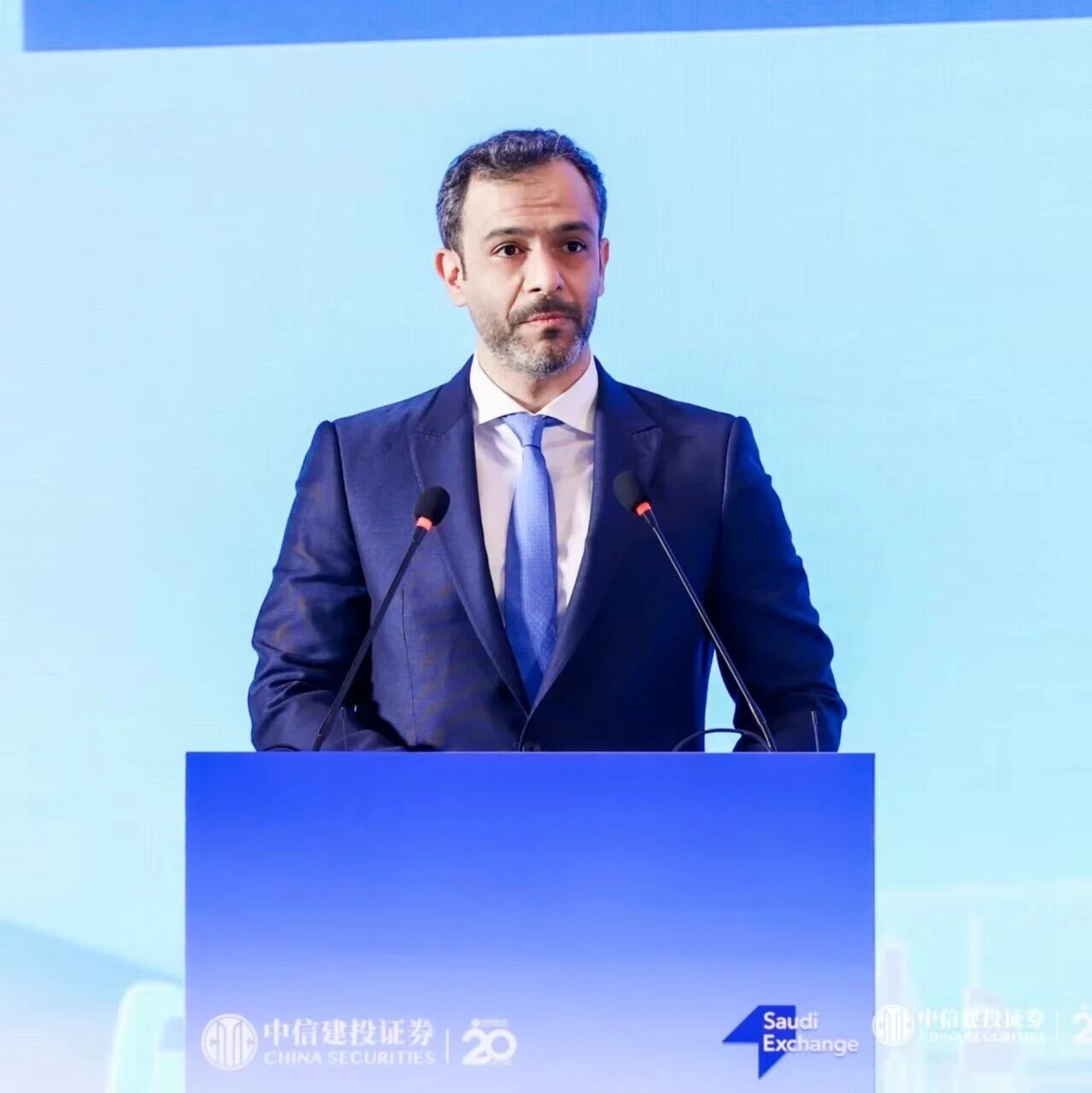
专访沙特交易所CEO:中国在AI等领域吸引了全球资本
Zheng Quan Shi Bao· 2025-11-14 11:19
Core Insights - The Saudi Stock Exchange (Tadawul) is actively inviting Chinese investment institutions to participate in its capital market, highlighting the increasing bilateral interaction between China and Saudi Arabia's capital markets [1][2][3] - The collaboration has progressed to practical stages, including the launch of cross-border ETF products and ongoing discussions about dual listings and cross-listing of companies [1][3][5] - The CEO of Tadawul emphasized the importance of China's economic characteristics and its leading position in high-tech industries as focal points for collaboration [2][3] Group 1: Market Collaboration - The Saudi Stock Exchange has signed memorandums of understanding with both the Shanghai and Shenzhen stock exchanges, as well as the Hong Kong Stock Exchange, to explore joint listings and fintech cooperation [1][3] - The market capitalization of the Saudi Stock Exchange has reached $2.6 trillion, with over $100 billion of investments coming from international investors [3] - There has been a notable increase in interest from top Chinese asset management companies regarding the Saudi capital market [3][5] Group 2: ETF and Cross-Listing Developments - The Saudi Stock Exchange has introduced several ETFs linked to Saudi securities, with one becoming the largest ETF product in Saudi Arabia [3][5] - Recent regulatory approvals for Saudi Depositary Receipts (SDRs) have opened doors for Chinese companies to pursue cross-listing in Saudi Arabia [5] - The exchange is working on launching more ETFs that cover various dimensions of the China-Saudi capital markets [3][5] Group 3: Future Cooperation and Industry Focus - The CEO of Tadawul expressed optimism about future cooperation, particularly in the areas of artificial intelligence (AI) and complementary industries [6] - There is a strong focus on aligning the development strategies of companies seeking to cross-list in Saudi Arabia with the Saudi Vision 2030 [5] - Ongoing discussions with various Chinese exchanges aim to expand cooperation and facilitate bilateral investments [6]
专访沙特交易所CEO:中国在AI等领域吸引了全球资本
证券时报· 2025-11-14 11:10
Core Viewpoint - The article emphasizes the growing collaboration between China and Saudi Arabia in capital markets, particularly in high-tech sectors and financial technology, with a focus on cross-listing and ETF products [1][2][5]. Group 1: Capital Market Cooperation - The Saudi Stock Exchange (Tadawul) has signed memorandums of understanding with both Shanghai and Shenzhen stock exchanges, as well as the Hong Kong Stock Exchange, to explore joint listings and fintech collaborations [2][6]. - There has been significant progress in cross-border ETF products, with multiple ETFs launched that link the two markets, indicating a solid foundation for future cooperation [6][8]. - The market capitalization of the Saudi Stock Exchange has reached $2.6 trillion, with over $100 billion in investments from international investors, highlighting its attractiveness to foreign capital [5][6]. Group 2: Investment Opportunities - Saudi Arabia's Vision 2030 is a key driver for attracting Chinese investment, with the country positioning itself as a prime investment destination [5][7]. - The introduction of regulations for Saudi Depositary Receipts (SDRs) has opened doors for Chinese companies to consider cross-listing in Saudi Arabia, aligning with the Vision 2030 goals [8][9]. - The article mentions that there is a growing interest from top Chinese asset management firms in the Saudi capital market, indicating a potential increase in bilateral investments [5][6]. Group 3: Future Prospects - The future collaboration between China and Saudi Arabia is expected to expand into more ETF products and further open investment channels between the two markets [9]. - There is a strong focus on artificial intelligence (AI) as a complementary industry for collaboration, with both countries recognizing its potential for growth and investment [9]. - The Saudi Stock Exchange is actively engaging with Chinese exchanges to explore further cooperation, with potential agreements on the horizon [9].
沙特交易所CEO独家回应!
Zheng Quan Shi Bao Wang· 2025-11-14 07:51
Core Viewpoint - The Saudi Stock Exchange is actively inviting Chinese investment institutions to participate in its capital market, highlighting the growing bilateral cooperation between China and Saudi Arabia, particularly in high-tech sectors [1][2][3]. Group 1: Bilateral Cooperation - The Saudi Stock Exchange has signed memorandums of understanding with both the Shanghai and Shenzhen stock exchanges, as well as the Hong Kong Stock Exchange, to explore joint listings and fintech collaborations [1][3]. - The collaboration has progressed to the launch of cross-border ETF products and ongoing discussions about dual listings and cross-listing of companies [1][3][5]. Group 2: Market Dynamics - The market capitalization of the Saudi Stock Exchange has reached $2.6 trillion, with over $100 billion of investments coming from international investors [3]. - The exchange completes more than 40 listings annually, attracting significant international capital and interest from top Chinese asset management firms [3][4]. Group 3: Future Prospects - The Saudi Stock Exchange aims to deepen cooperation with China by launching more ETF products and expanding investment channels between the two markets [5][6]. - There is a focus on artificial intelligence (AI) as a key area for collaboration, with both countries recognizing its potential for mutual growth [6].
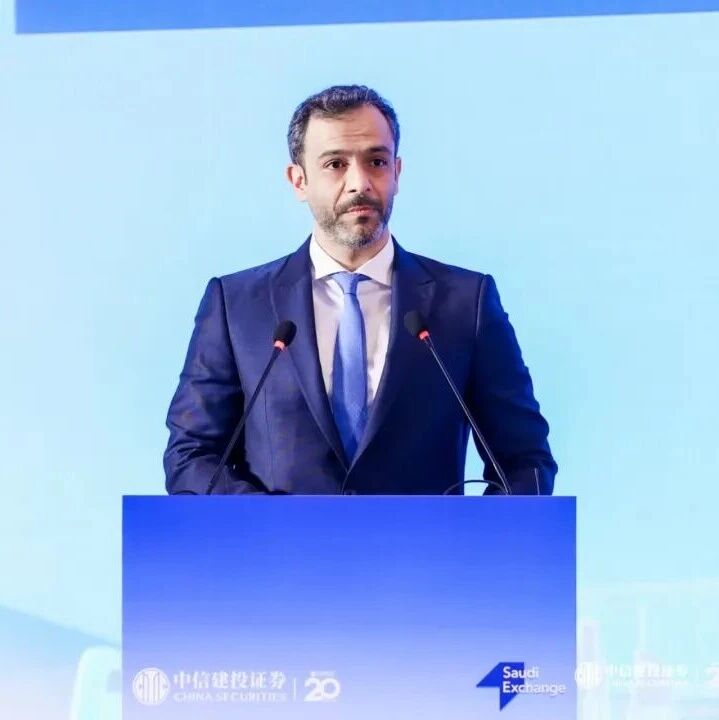
沙特交易所CEO独家回应!
券商中国· 2025-11-14 07:32
Core Viewpoint - The article emphasizes the growing collaboration between China and Saudi Arabia in capital markets, particularly in high-tech sectors, and highlights the potential for mutual investment opportunities [1][5]. Group 1: Capital Market Cooperation - The Saudi Stock Exchange (Tadawul) has signed memorandums of understanding with both the Shanghai and Shenzhen stock exchanges, as well as the Hong Kong Stock Exchange, to explore joint listings and fintech collaborations [2]. - The cooperation has progressed to the launch of cross-border ETF products and ongoing discussions about cross-listing and dual listing of companies [2][5]. - The market capitalization of the Saudi Stock Exchange has reached $2.6 trillion, with over $100 billion of investments coming from international investors [5]. Group 2: Investment Opportunities - The Saudi Stock Exchange is inviting Chinese investment institutions to participate in its capital market, leveraging the success of Saudi Arabia's Vision 2030 [5][6]. - There is a significant interest from top Chinese asset management companies in understanding the Saudi capital market and investment details [5]. - The introduction of Saudi Depositary Receipts (SDRs) has been approved, facilitating cross-listing opportunities for Chinese companies [6][7]. Group 3: Future Prospects - The article discusses the potential for further collaboration in the next three to five years, focusing on launching more ETF products and enhancing investment channels between the two countries [8]. - There is a strong emphasis on deepening cooperation in complementary industries, particularly in artificial intelligence (AI), where both countries see significant growth potential [8].