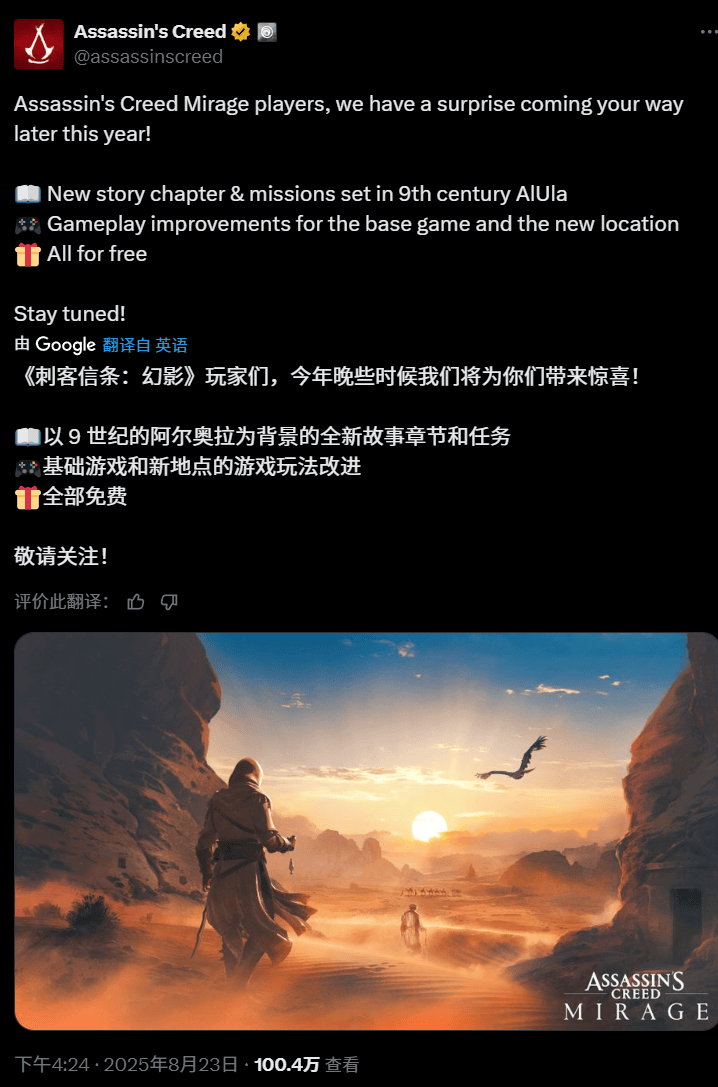
《刺客信条:幻景》

Search documents
《羊蹄山之魂》两天回本首周破亿,美国人做日本武士又成了
3 6 Ke· 2025-10-11 00:53
Core Insights - The gaming industry is witnessing a shift where high-quality artistic expression and cultural integration are becoming essential for success, as demonstrated by the recent release of "Ghost of Tsushima: Director's Cut" which sold over 1.6 million copies in its first week, generating nearly $100 million in revenue [1][3][5] Group 1: Game Performance and Market Trends - "Ghost of Tsushima: Director's Cut" achieved over 1.6 million sales, with digital sales accounting for 77% of total sales, and surpassed $100 million in revenue within the first week [1] - The game's development budget was $60 million, which was recouped within two days of release, highlighting the potential for profitability in the current gaming market [1] - The game exemplifies a successful blend of Japanese aesthetics and industrialized production, appealing to players seeking both quality and quantity in gaming experiences [1][3] Group 2: Industry Dynamics and Artistic Value - The gaming industry has seen a trend of escalating costs focused on visual and auditory enhancements, which has led to diminishing returns on investment as companies shift towards cost-cutting and efficiency [2][6] - Despite the decline in the effectiveness of traditional marketing strategies based on visual appeal, the importance of artistic quality remains, with major studios maintaining high standards in art and music [2][6] - The success of "Ghost of Tsushima: Director's Cut" reinforces the value of immersive experiences that combine technical prowess with cultural storytelling, proving that there are multiple pathways to success in the gaming market [5][10] Group 3: Cultural Integration and Market Evolution - The integration of cultural elements into gaming experiences enhances player engagement and satisfaction, as seen in the success of both "Ghost of Tsushima" and Ubisoft's upcoming DLC for "Assassin's Creed" [8][9] - The gaming industry is evolving to meet diverse player demands, leading to a more segmented market where developers can thrive by catering to specific interests and cultural narratives [10] - The collaboration between artistic, technical, and narrative teams is crucial for creating compelling gaming experiences that resonate with players on multiple levels [10]


中东资本,正在买下整个游戏圈
Hu Xiu· 2025-10-04 03:44
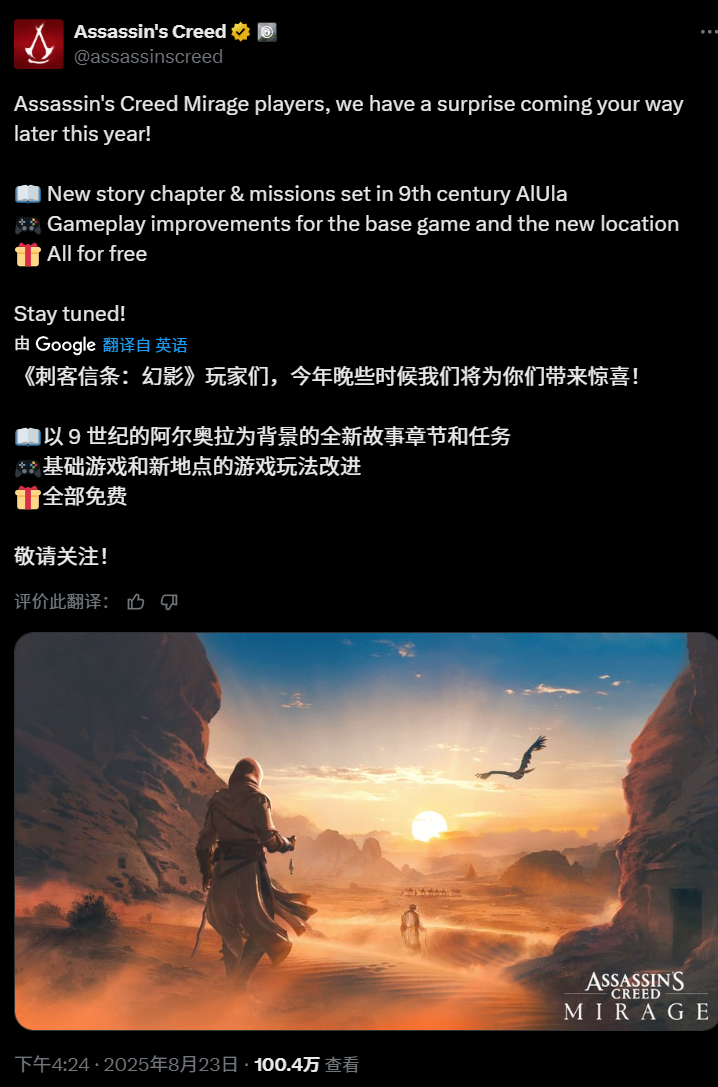
Group 1 - EA announced a cash acquisition deal worth approximately $55 billion with Silver Lake Partners, Affinity Partners, and the Saudi Public Investment Fund (PIF), transitioning EA from a public company to a private entity [1] - The PIF, which already holds a 9.9% stake in EA, is leveraging this investment to further its gaming and entertainment strategy [2] - The gaming industry is becoming a significant focus for Middle Eastern capital, as evidenced by the recent announcement of a new DLC for Assassin's Creed: Mirage, which is being offered for free, indicating a shift in traditional monetization strategies [5][50] Group 2 - The Middle East, particularly Saudi Arabia and the UAE, is increasingly investing in the gaming industry as part of a broader economic diversification strategy away from oil dependency [6][24] - Saudi Arabia is currently the 19th largest gaming market globally, with a growth rate of 41.1% and over $1 billion in revenue generated from its gaming industry [18][20] - The UAE's gaming market was valued at $400 million in 2021, with 73% of its population being gamers, and it is also investing in esports and gaming companies [22] Group 3 - The PIF was established in 1971 and has evolved to focus on diversifying investments, including significant stakes in various gaming companies [41][47] - The establishment of Savvy Games Group by the PIF aims to manage and consolidate its gaming and esports investments, creating a comprehensive platform for investment and industry development [49] - The UAE has also initiated its own sovereign fund, Mubadala, to invest in gaming and related sectors, reflecting a growing interest in the gaming industry [56] Group 4 - Both Saudi Arabia and the UAE are leveraging their strong user bases and market potential in gaming to enhance their economic transformation and cultural soft power [68][69] - The gaming industry is seen as a critical avenue for these countries to reduce reliance on fossil fuels and promote economic diversification [69] - Future events may showcase the Middle East as a hub for global gaming, shifting perceptions from conflict and oil to entertainment and cultural engagement [70][71]

除了私有化EA,“石油佬”的大手还在伸向更多地方
Sou Hu Cai Jing· 2025-10-03 16:08
Core Insights - Middle Eastern capital, particularly from Saudi Arabia's Public Investment Fund (PIF), is significantly reshaping the gaming industry through substantial investments, including a $55 billion acquisition of EA, transitioning it from a public to a private company [1][26] - The gaming industry is becoming a strategic focus for Middle Eastern countries as they seek to diversify their economies away from oil dependency, with Saudi Arabia and the UAE actively investing in gaming and esports [14][41] Group 1: Investment Activities - PIF has acquired a 9.34% stake in EA as part of its broader strategy to invest in the gaming sector, which includes stakes in other major gaming companies like Nintendo and Take-Two Interactive [25][26] - The gaming market in Saudi Arabia is the 19th largest globally, with a growth rate of 41.1%, and the player base has reached 21.1 million, generating over $1 billion in revenue [9][41] - The UAE's gaming market was valued at $400 million in 2021, with 73% of its population being gamers, indicating a strong consumer base for gaming investments [11][41] Group 2: Cultural and Economic Implications - The shift towards gaming is part of a broader economic diversification strategy in Saudi Arabia, aiming to reduce reliance on oil, which previously accounted for 75% of its revenue [14][21] - The establishment of Savvy Games Group by PIF aims to manage and consolidate its gaming investments, reflecting a systematic approach to building a comprehensive gaming ecosystem [26][30] - Both Saudi Arabia and the UAE are leveraging their investments in gaming to enhance their cultural influence and reshape global perceptions of the region, moving beyond traditional narratives of conflict and oil [30][41] Group 3: Future Outlook - The gaming industry is seen as a critical avenue for economic transformation and cultural soft power for Middle Eastern countries, with initiatives like Dubai's Game 2033 plan aiming to attract global gaming companies and talent [31][41] - The increasing consumer interest in gaming, coupled with substantial financial backing, positions the Middle East as a burgeoning hub for the global gaming industry [35][41]