虚实结合

Search documents
构筑数字文化新生态:iBox的融合创新与产业赋能之路
Jin Tou Wang· 2026-01-22 06:36
Core Viewpoint - The integration of traditional culture with the digital age is creating unprecedented vitality and value, driven by the domestic cultural digital asset platform iBox, which acts as an integrator and enabler of digital transformation in the cultural industry [1][2]. Group 1: iBox's Role and Technology - iBox is not merely a technology user or content transporter; it leverages blockchain and other digital technologies to create a transparent and traceable cultural digital asset service system, addressing the challenges of value realization in the digital world [1][2]. - By providing immutable rights confirmation and storage through blockchain technology, iBox assigns a unique digital identity and credible ownership record to each cultural digital asset, establishing a foundation of user trust [1][2]. Group 2: Collaborative Ecosystem - iBox has built a highly open and multi-win ecological cooperation network, collaborating with cultural state-owned enterprises and platforms like JD.com to ensure deep cultural content and industry development standards [2][3]. - The partnership with JD.com exemplifies a classic integration of "platform + technology + culture," allowing cultural treasures like the Dehua porcelain "Guanyin" to reach a vast audience digitally, showcasing the potential of cultural digital consumption [2][3]. Group 3: Impact and Recognition - The ecosystem-driven innovation model of iBox significantly expands the boundaries of cultural expression and industry value, collaborating with hundreds of well-known IPs to stimulate new digital cultural consumption [3][4]. - iBox's non-heritage digitalization case has received recognition from various levels, including being featured in "Cultural Digitalization New Scenarios and Cases" and reported by CCTV, highlighting its social value in cultural inheritance and innovative dissemination [3][4]. Group 4: Future Directions - iBox is responding to and shaping the future of the industry by advocating for a shift towards "virtual and real integration, asset flow, and ecological collaboration," positioning itself as a pioneer in the digital cultural industry [3][4]. - The core logic of iBox's path is to build a solid development foundation with credible technology and gather industry synergy through an open ecosystem, promoting a more regulated, transparent, and vibrant digital cultural industry [4].
Suplay携“卡卡沃”闯港交所 背靠米哈游 对外部授权IP依赖性高
Guan Cha Zhe Wang· 2026-01-07 09:49
Core Viewpoint - Suplay, known for its flagship brand "Kakawoo," is seeking to list on the Hong Kong Stock Exchange, leveraging its position as a leader in China's collectible non-combat card market, with a market share exceeding that of its closest competitors combined [1] Group 1: Company Overview - Suplay was established in 2019 and initially functioned as a second-hand trading platform for trendy toys, evolving into a new consumer segment amidst the rise of the "Gouzi economy" [1] - Kakawoo has become the only Chinese brand among the top five global competitors in the collectible card market, with a projected GMV for 2024 placing it at the forefront of the industry in China [1] Group 2: Financial Performance - The company has attracted over 1.3 million registered members, with over 99% of consumers being adults [2] - Suplay's revenue for the first nine months of 2025 reached 283 million yuan, with an adjusted net profit margin of 30.5% during the same period, indicating significant improvement in profitability [2] Group 3: Risks and Challenges - Suplay's revenue heavily relies on external licensed IPs, with the share of income from these sources rising from 47.8% in 2023 to 77.7% in the first three quarters of 2025, while revenue from its own IPs plummeted from 40.6% to 4.1% [3] - The company faces challenges due to the non-exclusive nature of many IP agreements, with a major revenue-generating IP agreement already expired, creating uncertainty around future renewals [3] - Suplay's reliance on distributor channels rather than a direct-to-consumer model limits its control over pricing and market dynamics, while increasing operational pressures as inventory write-downs have reached 36.3 million yuan [3] Group 4: Strategic Partnerships - Major shareholder miHoYo plays a crucial role in Suplay's operations, having invested $8 million in 2021 and holding approximately 11.86% of the company [4] - The partnership allows Suplay to access top-tier IPs from miHoYo, enhancing its product offerings and market potential, as evidenced by the successful collaboration on the "Ruan·Mei Creation" mini figurine, which achieved a GMV of over 50 million yuan in 2024 [4] Group 5: Future Plans - Suplay aims to upgrade its business model by establishing design centers in Tokyo and Los Angeles, transitioning from collectible cards to trading card games (TCG) with longer lifecycles [4] - The company plans to explore new products that integrate online game data with physical merchandise, leveraging miHoYo's resources to create sustainable cultural assets in the evolving trend economy [4]
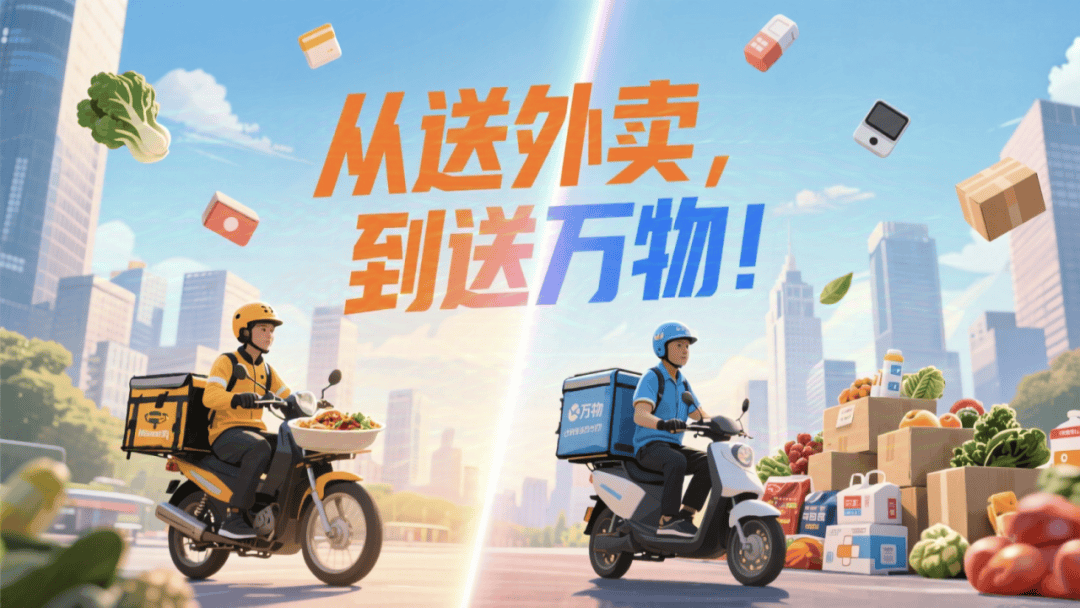
从送餐到送万物,外卖早已不仅仅只是外卖
Sou Hu Cai Jing· 2025-12-25 01:51
Core Insights - The takeaway from the articles is that the food delivery market is evolving beyond its traditional role, becoming a platform for new business models and strategies, rather than just a service for delivering food [2][4][9] Group 1: Market Evolution - The competition in the food delivery market is shifting from price wars to differentiation strategies aimed at achieving broader strategic goals [2][3] - The food delivery market is seen as a breeding ground for new business models and commercial innovations, rather than just a standalone service [2][4] - As the market enters a new phase, it is essential to recognize the emerging trends and strategies that are reshaping the industry [2][3][9] Group 2: New Business Models - The food delivery market is transitioning into a new commercial form that integrates both virtual and physical economies, creating a hybrid business model [5][6] - Players in the market are leveraging their online experience while also investing in offline retail and supply chains, indicating a shift towards a more integrated approach [5][6] - The current food delivery landscape is characterized by a combination of digital and physical elements, reflecting a new paradigm in business operations [6][8] Group 3: Technological Integration - The food delivery market is becoming a testing ground for new technologies and business models, such as big data, drones, and AI [8] - Companies are increasingly focusing on supply chain and industry collaborations, indicating a shift towards a more interconnected operational framework [8] - The competition is now centered around the adoption of innovative technologies and finding new balance points between supply and demand [8][9]

吉利云南高原试验基地揭牌,世界级验证体系筑牢全球出行安全防线
Zhong Guo Qi Che Bao Wang· 2025-12-22 06:54
Group 1 - The establishment of the Yunnan Plateau Testing Base marks an expansion of Geely's global testing and validation capabilities, enhancing its vehicle development for unique climatic and geographical conditions [1][3] - The base serves as a core testing hub in Southwest China, leveraging the unique high-altitude emission testing qualifications and the natural advantages of the Yunnan-Tibet region, which includes high altitude, large temperature differences, strong sunlight, and diverse terrains [3] - Geely's rigorous R&D philosophy is embodied in the base, which combines virtual simulations with real-world testing to achieve multidimensional and high-precision validation of vehicle performance [3] Group 2 - Geely adheres to a strict testing standard for each production model, requiring over 2.6 million kilometers of virtual simulation testing and 1.5 million kilometers of real road testing before market launch [3] - The company has completed a global layout of 16 testing bases across five major regions: Europe, Asia, America, Australia-New Zealand, and Africa, ensuring comprehensive validation for extreme climates, complex road conditions, and regional regulations [3] - This extensive validation system enables Geely to develop products that are adaptable to global markets, continuously providing safe and reliable mobility solutions for users in different countries and regions [3]


从C端到B端:京东工业上市背后的蝶变转型
Sou Hu Cai Jing· 2025-12-15 13:27
Core Insights - JD Industrial's listing on the Hong Kong Stock Exchange marks the sixth publicly listed company in the JD ecosystem, highlighting JD's deep involvement in the supply chain and its focus on B2B opportunities [2][3] - The listing reflects the significant potential for transformation and upgrading within China's supply chain and industrial sectors, especially as the consumer market matures [2][6] - JD Industrial is recognized as a "hidden unicorn," emphasizing its strong B2B customer base and the growth potential it represents for investors [2][3] Group 1: JD's Deep Supply Chain and Industry Layout - JD has made extensive investments and deepened its connections within the supply chain and industry, which is evident in its ability to empower B2B clients [2][3] - The strong relationships with B2B customers provide a substantial growth opportunity, showcasing the potential of the B2B market [3][5] - JD's focus on integrating technology and finance into its supply chain strategy differentiates it from competitors [3][6] Group 2: Digital Transformation and Smart Upgrading - JD's commitment to digital transformation is crucial for assisting B2B clients in their upgrades, leveraging technologies like AI, big data, and cloud computing [4][5] - The successful implementation of digital solutions is seen as a key factor for sustained growth in the B2B sector [4][5] - JD's deep exploration in digitalization allows it to maintain continuous engagement with B2B users, facilitating their transformation [4][5] Group 3: Evolution of Business Model - JD is transitioning from a consumer-driven model to a more B2B-focused approach, unlocking greater development potential [6][7] - The shift involves moving away from merely connecting C-end and B-end users to providing deep empowerment at the industry level [6][7] - This transformation signifies a broader shift from the consumer internet era to the industrial internet era, marking a significant evolution in JD's business strategy [6][7]

AI,锻造出产业互联网的“金钥匙”
Sou Hu Cai Jing· 2025-12-03 04:14
Core Insights - AI is becoming a transformative tool across various industries, leading to renewed interest from capital markets and enabling new players to thrive [2][9] - The transition from the "Internet+" model to AI-driven solutions is seen as a necessary evolution for companies facing challenges in traditional online growth [4][5] Group 1: AI's Role in Industry Transformation - AI serves as a bridge between the IT era and the emerging DT (Data Technology) era, shifting focus from merely acquiring consumer traffic to enhancing B2B supply methods [4][5] - The integration of AI allows companies to leverage their existing assets from the IT era, facilitating a balance in supply and demand, and opening new growth avenues [5][9] Group 2: Addressing Industry Challenges - The "Internet+" model faced difficulties due to its binary structure, which failed to achieve true integration of digital and physical realms, leading to supply-demand imbalances [6][8] - AI's maturity enables solutions to previously insurmountable industry challenges, enhancing efficiency in sectors like e-commerce through improved consumer-business interactions [8][9] Group 3: Unlocking New Opportunities - The concept of industrial internet is emerging as a more complex and promising landscape compared to consumer internet, with AI providing the necessary tools for effective industry transformation [7][8] - AI is identified as the key to unlocking the potential of the industrial internet, making it a viable and growth-oriented domain for companies [8][9]

雷军和董明珠究竟怎么回事?不是私人恩怨,背后有更复杂的原因
Sou Hu Cai Jing· 2025-10-31 02:17
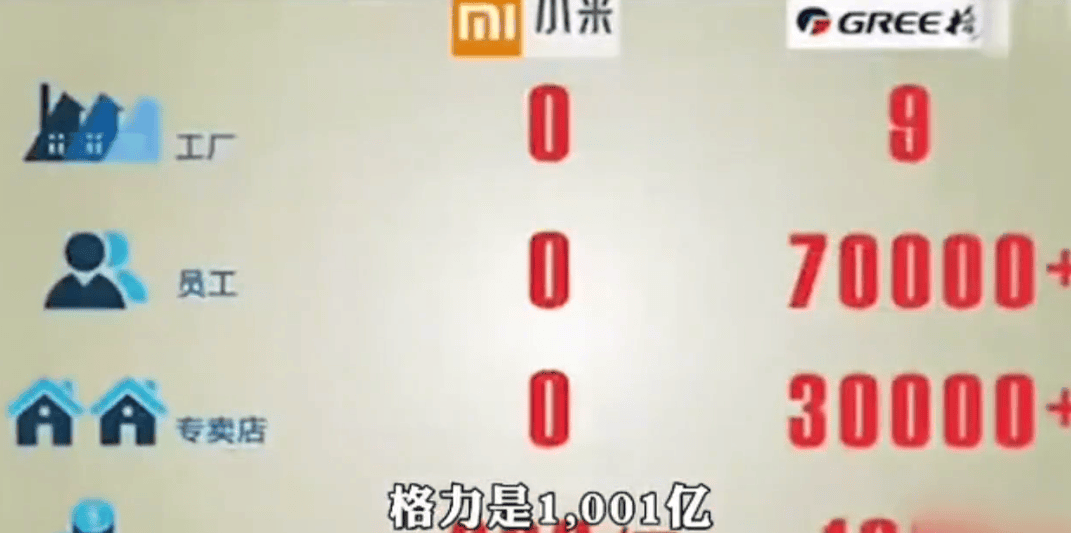
Core Viewpoint - The competition between Dong Mingzhu and Lei Jun represents a complex narrative in the Chinese business landscape, highlighting the contrasting business models of Gree and Xiaomi, and the evolution of Xiaomi from an online company to a comprehensive consumer electronics and smart manufacturing entity [1][5][12]. Group 1: Historical Context - In December 2013, both Dong Mingzhu and Lei Jun received awards at a ceremony, where a comparison chart showcased Gree's dominance over Xiaomi in terms of factories, employees, and revenue [3]. - The chart indicated Gree's revenue at 100.7 billion yuan, while Xiaomi's was only 30 billion yuan at that time, prompting a remark from Jack Ma about Xiaomi's future capabilities [3]. Group 2: Business Models and Competition - The debate between Dong Mingzhu and Lei Jun centered around the viability of their respective business models, with Dong questioning the sustainability of Xiaomi's approach without physical factories, while Lei emphasized specialization and efficiency [5]. - The famous "1 billion bet" was made, predicting that if Xiaomi's revenue surpassed Gree's in five years, Dong would owe Lei one yuan [5][6]. Group 3: Xiaomi's Growth and Strategy - By 2025, Xiaomi had significantly expanded its physical presence, with approximately 17,000 stores in mainland China, including over 300 automotive outlets [8]. - Xiaomi's transformation into a comprehensive consumer electronics company is marked by its investment in smart home appliances, with plans to achieve a revenue target of 100 billion yuan in this sector within five years [9][10]. - The company has established three major smart factories for smartphones, automobiles, and smart home appliances, with the latter capable of producing high-end air conditioners at a rate of one every 6.5 seconds, with an annual capacity of 7 million units [10]. Group 4: Market Dynamics and Future Outlook - Xiaomi's global workforce has grown to nearly 50,000, with over 40% in research and development, indicating a strong focus on innovation [10]. - The company's revenue for 2024 is projected at 365.9 billion yuan, with expectations for significant growth in 2025 [10]. - The evolving landscape suggests that the competition will intensify among leading brands like Gree, Midea, and Haier, as Xiaomi aims to establish itself as a top player in the home appliance market [9].

《羊蹄山之魂》两天回本首周破亿,美国人做日本武士又成了
3 6 Ke· 2025-10-11 00:53
Core Insights - The gaming industry is witnessing a shift where high-quality artistic expression and cultural integration are becoming essential for success, as demonstrated by the recent release of "Ghost of Tsushima: Director's Cut" which sold over 1.6 million copies in its first week, generating nearly $100 million in revenue [1][3][5] Group 1: Game Performance and Market Trends - "Ghost of Tsushima: Director's Cut" achieved over 1.6 million sales, with digital sales accounting for 77% of total sales, and surpassed $100 million in revenue within the first week [1] - The game's development budget was $60 million, which was recouped within two days of release, highlighting the potential for profitability in the current gaming market [1] - The game exemplifies a successful blend of Japanese aesthetics and industrialized production, appealing to players seeking both quality and quantity in gaming experiences [1][3] Group 2: Industry Dynamics and Artistic Value - The gaming industry has seen a trend of escalating costs focused on visual and auditory enhancements, which has led to diminishing returns on investment as companies shift towards cost-cutting and efficiency [2][6] - Despite the decline in the effectiveness of traditional marketing strategies based on visual appeal, the importance of artistic quality remains, with major studios maintaining high standards in art and music [2][6] - The success of "Ghost of Tsushima: Director's Cut" reinforces the value of immersive experiences that combine technical prowess with cultural storytelling, proving that there are multiple pathways to success in the gaming market [5][10] Group 3: Cultural Integration and Market Evolution - The integration of cultural elements into gaming experiences enhances player engagement and satisfaction, as seen in the success of both "Ghost of Tsushima" and Ubisoft's upcoming DLC for "Assassin's Creed" [8][9] - The gaming industry is evolving to meet diverse player demands, leading to a more segmented market where developers can thrive by catering to specific interests and cultural narratives [10] - The collaboration between artistic, technical, and narrative teams is crucial for creating compelling gaming experiences that resonate with players on multiple levels [10]

Ameco培训部匠心打造新型教具助推培训升级
Zhong Guo Min Hang Wang· 2025-07-07 08:53
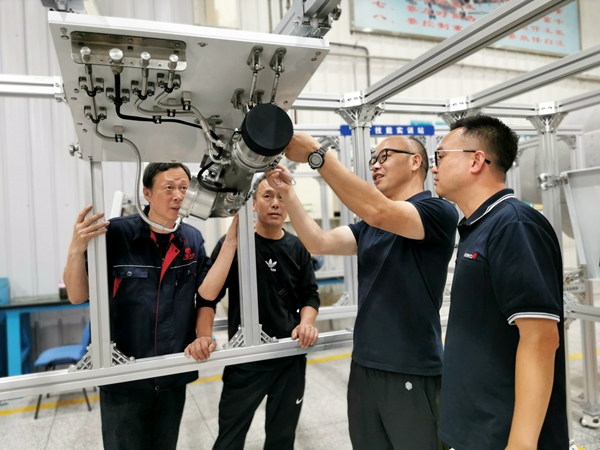
Core Viewpoint - The article highlights the development of five new training tools by Ameco's aviation technical training department, aimed at enhancing the practical training of maintenance personnel in the civil aviation industry, addressing the limitations of traditional training tools [1][2]. Group 1: Development of New Training Tools - Ameco has designed and developed five innovative training tools that were showcased at a recent aircraft maintenance skills selection competition in Chengdu [1]. - The new training tools are characterized by a "modular, standardized, and intelligent" design philosophy, focusing primarily on Boeing and Airbus aircraft types [2]. - The "Standard Line Construction Training Platform" tool fills a gap in the domestic civil aviation industry for virtual and real simulation training tools [2]. Group 2: Training Effectiveness and Future Plans - The successful development of these tools overcomes the limitations of traditional training tools, allowing for comprehensive training in troubleshooting, repair, and testing processes [4]. - The first batch of new training tools will be gradually implemented in Ameco and various civil aviation vocational colleges, as well as other airline training institutions, to enhance the maintenance skills of domestic personnel [4][5]. - Future plans include the development of more advanced training tools that incorporate new aircraft models, technologies, and materials, aiming to establish a new training system that combines virtual and intelligent capabilities [5].
2025MetaSVS光明冷饮虚拟滑雪公开赛完赛,虚实结合赛制改写中国冰雪未来
Sou Hu Wang· 2025-06-10 07:03
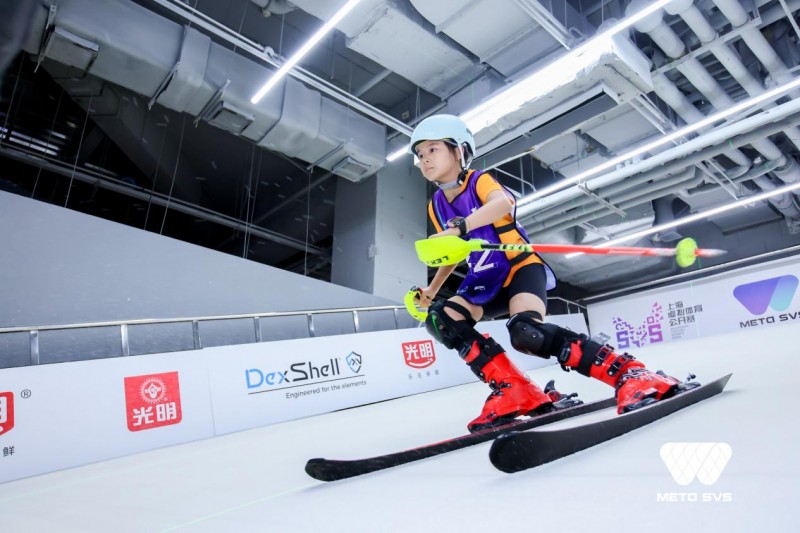
Core Insights - The first "virtual and real combined" ice and snow event in China, the 2025 MetaSVS Bright Dairy Virtual Skiing Open, has officially launched in Shanghai, marking a significant milestone in the MetaSVS annual skiing project [2][6] - The event aims to create a new ecosystem for ice and snow sports in China, characterized by "all-season, all-region, and virtual-real coexistence" [2][6] Event Overview - The MetaSVS 2025 annual skiing project includes four major events: the Asia-Pacific Youth Alpine Skiing Elite Competition, the Yangtze River Delta Youth Skiing Open, the Yangtze River Delta Youth Dry Snow Big Jump Open, and the Virtual Skiing Open, attracting over 600 participants [2][6] - The competition features five age groups from U8 to U16, with events in men's and women's alpine skiing giant slalom, providing a platform for youth athletes to showcase their skills [2][6] Innovative Competition Model - Shanghai Jiushi Smart Sports Co., Ltd. has pioneered the integration of virtual skiing events with physical competitions, creating a dual-track system that allows participants to accumulate points across events to determine overall champions [6][8] - The virtual skiing simulator enables athletes to train year-round, enhancing their skills, while real snow competitions allow them to apply their training in practical settings [6][8] Impact on Youth Participation - The virtual sports model has broken down regional barriers, allowing athletes from southern China to compete with their northern counterparts [8] - Notable young athletes, including champions from previous virtual competitions, participated in the event, demonstrating the effectiveness of the "virtual and real combined" training pathway [9][10] Brand Collaboration - Bright Dairy's partnership with MetaSVS aims to redefine the development model of virtual sports, enhancing brand engagement with younger audiences through innovative marketing strategies [12][14] - The collaboration merges traditional brand values with modern digital sports, creating a benchmark case for "virtual-real coexistence" [15] Future Outlook - The successful hosting of the MetaSVS Bright Dairy Virtual Skiing Open promotes the popularization and development of ice and snow sports, providing youth athletes with opportunities to connect with international standards [16] - The vision of "rooted in Shanghai, facing the nation, and linking the world" is becoming a reality, with expectations for more young athletes to transition from virtual to real competitions in the future [16]