《长生殿》

Search documents
情不知所起,一往而深
Xin Lang Cai Jing· 2026-02-01 06:56
Core Insights - The article highlights the significant contributions of three prominent Kunqu artists: Cai Zhengren, Yue Meiti, and Zhang Xunpeng, who have deep connections to the classic play "The Legend of the White Snake" [1][2][3] Group 1: Historical Context - The first Kunqu training class, known as "Kun Da Ban," was established in March 1954 with 60 students, marking a pivotal moment in the history of Kunqu [1] - The initial performance of "The Legend of the White Snake" by the students was a memorable event, showcasing their early experiences and challenges in mastering the art [1][2] Group 2: Individual Contributions - Cai Zhengren emerged as a notable performer, initially playing various roles before becoming the standout "Xu Xian" in "The Legend of the White Snake," despite facing vocal challenges during performances [1][2] - Yue Meiti, recognized for her exceptional talent, played the role of "Xu Xian" in the graduation performance of "The Legend of the White Snake," showcasing her ability to embody the character's depth and emotion [2][3] - Zhang Xunpeng, trained under renowned artists, contributed to the revival of Kunqu by blending traditional elements with innovative interpretations, particularly in her performances of "The Legend of the White Snake" [3][4] Group 3: Artistic Legacy - The article emphasizes the enduring impact of these artists on the preservation and evolution of Kunqu, as they continue to inspire new generations of performers [9][10] - The legacy of the Kunqu artists is reflected in the emergence of a new wave of talent, ensuring the art form's vitality and relevance in contemporary culture [10]
一部书尽览清代戏曲艺术盛景
Xin Lang Cai Jing· 2025-12-20 19:01
Core Insights - The publication of the academic work "History of Qing Dynasty Opera" marks a comprehensive overview of the development of Qing Dynasty opera, spanning nearly 300 years from the early to late Qing period, highlighting its significance as the third peak of Chinese opera art [1][2] Group 1: Structure and Content of the Book - The book is structured into two volumes and 21 chapters, detailing various dimensions such as creation, performance, vocal styles, and theories [1] - The first volume consists of 9 chapters that establish the peak status of Qing Dynasty opera in Chinese art history, focusing on the development from the early to mid-Qing period, including the works of Li Yu and the Suzhou writers [1] - The second volume contains 12 chapters that examine the rise of local operas in the mid to late Qing period, the decline of Kunqu, and the evolution of vocal styles, particularly focusing on Bangzi and Pihuang [1] Group 2: Contributions to Opera Research - The book is considered a significant contribution to the study of Qing Dynasty opera culture, filling gaps in research, especially regarding the development of the Bangzi and Pihuang vocal styles [2] - It provides innovative research on the formation and evolution of a grand vocal system, contributing to a deeper understanding of the cultural ecology of Qing Dynasty opera [2]
刘和平:现实主义和经典叙事回归下的多元创新
Ren Min Wang· 2025-10-31 05:22
Core Idea - The core idea of realism in creation is the pursuit of truth, which should go beyond merely representing the surface reality of social life. It requires a poet's perspective to seek the truth of characters' inner lives and an ethnographic approach to explore the cultural causes behind social life [1][2]. Group 1: Cultural Understanding and Exploration - The work of Nobel Prize-winning Hungarian author Laszlo exemplifies the importance of understanding cultural forms. He opposes a Eurocentric view of culture, advocating for the recognition of human culture as a collective memory of all ethnic groups [3][4]. - Laszlo's admiration for Chinese culture is evident in his appreciation for Laozi's "Tao Te Ching" and the "Book of Songs" compiled by Confucius, which he believes opened the path for the diversification of Chinese literature [4]. - His exploration of the cultural context that produced the poet Li Bai involved visiting multiple cities in China, highlighting the significance of understanding the cultural environment that shapes individual character [4]. Group 2: Ethnographic Approach in Cultural Analysis - The example of American cultural anthropologist Clifford Geertz illustrates the importance of deep engagement in different cultures through fieldwork. His study of the cockfighting culture in Bali emphasizes that understanding social behavior requires interpreting the meanings of cultural symbols [5]. - The discussion emphasizes that in a globalized era, incorporating diverse perspectives in realism can enhance the exploration of cultural causes behind social phenomena and the inner truths of individuals [5]. Group 3: Innovations in Narrative Structure - Traditional narrative structures are characterized by linear time, causal logic, clear conflict, and a complete closure. The article discusses the potential for breaking these conventions to allow for more innovative storytelling [6][7]. - The concept of leaving open-ended interpretations, as seen in poetry and films like "Rashomon," encourages a broader understanding of narratives beyond strict cause-and-effect relationships [7]. - The call for a return to a combination of realism and classic narrative forms suggests that contemporary literature and art should draw from various innovative achievements to create significant works that resonate with the current era [7].
《艺文北京》丛书:从传统文脉中读北京
Bei Jing Ri Bao Ke Hu Duan· 2025-09-29 00:51
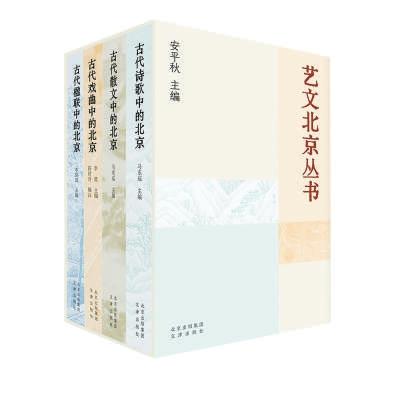
Core Insights - The article discusses the cultural significance of Beijing, highlighting its rich historical and literary heritage, which is explored through the publication of the "Art and Literature Beijing" series by Wenjin Publishing House [1][14] - The series aims to delve into the cultural connotations of Beijing through classical poetry, prose, drama, and couplets, showcasing the city's long-standing literary traditions [1][14] Summary by Sections Historical Context - Beijing has over 3,000 years of city-building history and more than 800 years as a capital, serving as a cultural center of the nation [1] - The article emphasizes the importance of ancient literary works that have become integral to the Chinese cultural identity [1] Poetry and Literature - The earliest known poetry referencing Beijing is attributed to the Han Dynasty, with the poem "Yanzhi Wangdan Ge" being highlighted as a significant work [5][6] - The Tang Dynasty is noted for its peak in Chinese poetry, with poets like Gao Shi and Li Yi contributing significantly to the literary landscape of Beijing [7] - The Song and Yuan Dynasties saw a shift in poetic themes, reflecting cultural exchanges and observations of minority customs [8] Prose and Essays - The Yuan, Ming, and Qing Dynasties marked a flourishing of prose, particularly travel essays that captured the beauty of Beijing's landscapes [9][10] - Notable prose writers from these periods, including Yuan Hongdao, depicted the changing seasons and the relationship between nature and the city [10] Cultural Practices and Drama - The development of drama, particularly Yuan Zaju, is highlighted as a significant cultural achievement, with prominent playwrights originating from Beijing [12][13] - The article discusses how the cultural landscape of Beijing evolved during the Jin and Yuan Dynasties, leading to a rich tapestry of artistic expression [13] Conclusion - The article concludes that Beijing's cultural identity is multifaceted, shaped by its historical significance and the contributions of various literary forms, making it a unique cultural hub [14]

大戏看北京 | 8月文艺资讯
Bei Jing Shang Bao· 2025-08-01 16:06
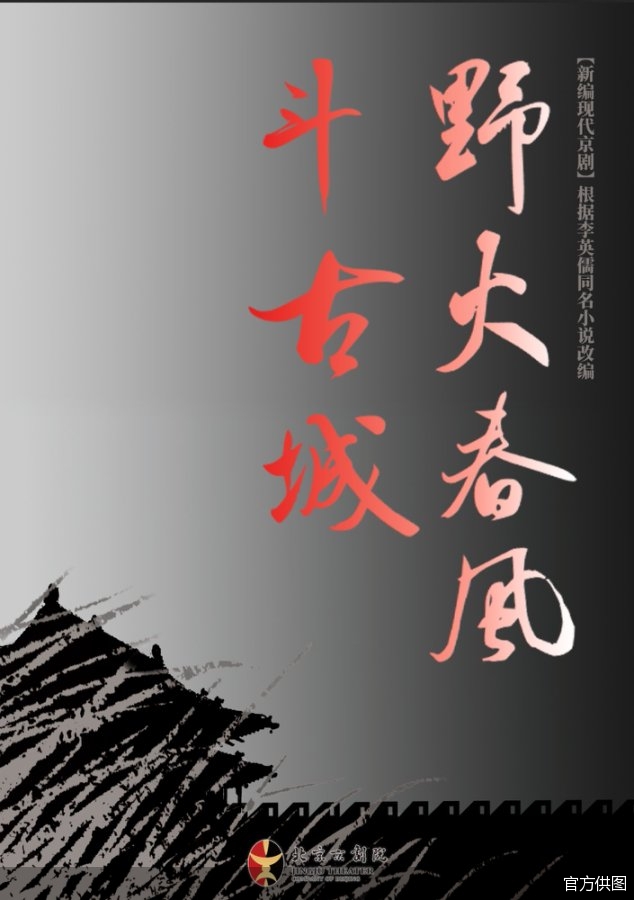
Group 1 - The Beijing Opera House is presenting a modern Peking opera titled "Wildfire Spring Breeze Fighting Ancient City" at the Chang'an Grand Theatre from August 1 to 3 and 5 [2] - The National Symphony Orchestra will perform a concert titled "Melody in My Heart" at the National Grand Theatre on August 1 [7] - The National Peking Opera Company will stage the modern Peking opera "Wisdom Takes the Tiger Mountain" at the National Grand Theatre on August 1 and 2 [7] Group 2 - The Chinese Coal Mine Art Troupe will present "The Warm Taste" at the Beijing Poly Theatre from August 1 to 3 [10] - The Beijing People's Art Theatre will perform "Camel Xiangzi" at the Capital Theatre from August 1 to 3 [10] - The Happy Mahua Theatre will stage "This Guy is Not Bad" at the Geological Hall Theatre from August 1 to 3 and 5 to 10 [10] Group 3 - The Northern Kunqu Opera Theatre will perform "Lankeshan" at the Beijing Tianqiao Arts Center on August 2 [14] - The Northern Kunqu Opera Theatre will also present "Changsheng Hall" on August 5 [14] - The Beijing National Orchestra will hold a concert titled "Victory Light" at the Beijing Arts Center on August 23 [7][14] Group 4 - The Italian MIC Company will present the original Italian musical "Divine Comedy" at the Century Theatre from August 1 to 3 [19] - The Shanghai Opera House will perform the opera "Dream of Hua Lu" at the National Grand Theatre on August 9 and 10 [17] - The Yunnan Yang Liping Cultural Communication Co., Ltd. will stage the dance drama "Pingtan Reflection" at the Chaoyang Theatre on August 16 and 17 [17]