
《牡丹亭》

Search documents
抒情为本唱“红楼”
Xin Lang Cai Jing· 2026-02-25 16:55
Group 1 - The core argument of the articles emphasizes that traditional Chinese literature, particularly novels and operas, is fundamentally lyrical in nature, despite appearing narrative on the surface [1][3][4] - The analysis of "Dream of the Red Chamber" reveals that its narrative is deeply intertwined with poetic and emotional expressions, showcasing a blend of storytelling and lyrical beauty [1][2] - The relationship between narrative and lyricism in Chinese opera, such as "Peony Pavilion," illustrates that storytelling serves as a vehicle for emotional expression, reinforcing the idea that literature is a medium for conveying feelings [2][3] Group 2 - The discussion highlights that the lyrical tradition remains a core element in the development of Chinese literature from the Ming and Qing dynasties, with significant works like "Dream of the Red Chamber" and "Peony Pavilion" embodying this duality of narrative and lyricism [3][4] - The articles suggest that the emotional depth in Chinese literature is a reflection of the cultural heritage, where poetry and music play integral roles in shaping the narrative structure [3] - The assertion that literature originates from emotional expression is supported by references to both Eastern and Western literary theories, indicating a universal understanding of literature as a reflection of human emotions [3]
不可以诗求史——评陈寅恪解《桃花源记》
Xin Lang Cai Jing· 2026-02-20 23:49
Core Viewpoint - The article critiques the tendency to conflate poetry with historical narrative, particularly in the interpretation of Tao Yuanming's "Peach Blossom Spring" and the historical context surrounding it, emphasizing that such interpretations often miss the essence of the poetry itself [3][4][6][12]. Group 1: Critique of Historical Interpretation - Wang Fuzhi argues against the confusion of poetry and history, specifically criticizing Du Fu for blending the two, suggesting that those who praise Du Fu's poetry as historical are misguided [3]. - Modern historian Chen Yinke's approach to interpreting "Peach Blossom Spring" as a historical document is seen as flawed, as he attempts to find a real location for the fictional paradise, which the author argues is inherently unattainable [4][6]. - The article highlights the contrast between Tao Yuanming's idealized "Peach Blossom Spring" and his own harsh reality, questioning the validity of interpreting the poem as a historical account [4][6]. Group 2: Philosophical and Political Implications - The text discusses the philosophical implications of Tao Yuanming's work, suggesting that his depiction of an ideal society without rulers contradicts Confucian values, thus complicating the interpretation of his political stance [9][11]. - It is noted that Tao Yuanming's rejection of political life and his embrace of a natural lifestyle reflect a deeper critique of the political environment of his time, particularly against the backdrop of the Liu Song dynasty [11][12]. - The article argues that the interpretations by scholars like Chen Yinke often overlook the literary qualities of Tao Yuanming's poetry, reducing it to mere political commentary rather than appreciating its artistic merit [12][20].

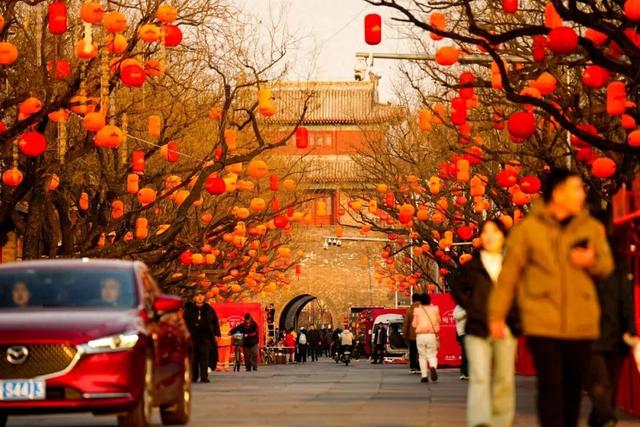
大年初一、初二累计游客破十万!2026宛平新春戏曲梨园庙会年味足
Xin Lang Cai Jing· 2026-02-18 12:08
Core Insights - The "Wanping Spring Festival Opera Fair" has attracted over 100,000 visitors in just the first two days since its opening on February 15, marking a significant cultural event in Beijing [1][2]. Group 1: Event Overview - The fair is a unique integration of traditional opera and local culture, featuring a full-scale immersive experience across the Wanping Ancient City [4][5]. - The event includes over 20 performance points throughout the city, transforming it into a "mobile theater" where visitors can engage with the performances in various locations [5][11]. Group 2: Cultural Significance - The fair combines multiple cultural IPs, including the Chinese People's Anti-Japanese War Memorial, Lugou Bridge, and local opera traditions, creating a distinctive experience that intertwines red culture with festive traditions [15][16]. - The event has become a new trend, attracting visitors from the Beijing-Tianjin-Hebei region, with over 20% of attendees coming from outside Beijing specifically for the opera performances [12][14]. Group 3: Visitor Experience - The immersive experience has led to an average visitor stay of over 3 hours, with families enjoying various activities, including games and traditional snacks [11][18]. - Interactive elements such as the "New Year Seeking Horse Order" and non-heritage markets have drawn significant participation, with creative gifts selling out quickly [24].
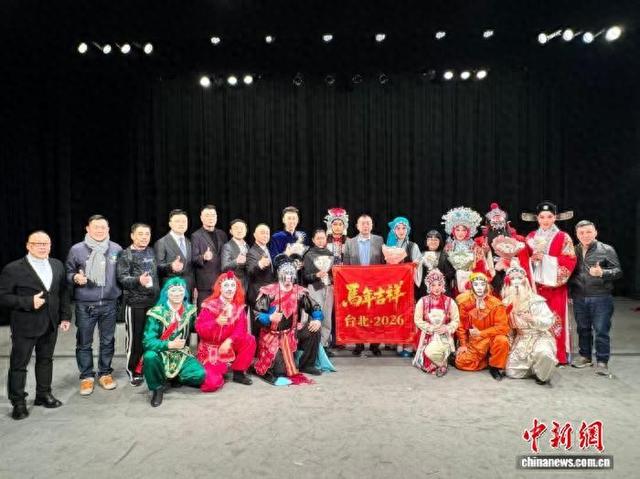
“无戏不成年”,“浙里有戏”200余场演出热闹开锣
Xin Lang Cai Jing· 2026-02-09 06:54
Core Viewpoint - The 2026 "Zhejiang has Drama" New Year Cultural Benefit Activity aims to promote traditional Chinese opera across various regions, featuring 11 exquisite performances and over 200 shows, extending cultural services to remote areas and enhancing community engagement [2][6]. Group 1: Event Overview - The event showcases 18 local opera genres, each with unique characteristics, through a grand provincial tour, allowing audiences to experience a variety of performances in one evening [3]. - The first performance took place in Hangzhou on January 10, featuring a collaborative performance of different opera styles, including a fusion of traditional and contemporary elements [3]. - The initiative includes performances from rare and previously endangered opera genres, highlighting the revival and cultural significance of these art forms [3]. Group 2: Youth Engagement - The event features both renowned actors and emerging young talents, with a focus on attracting younger audiences to traditional opera [4]. - Young actors are taking on leading roles, with performances designed to resonate with contemporary viewers, blending classical narratives with modern expressions [4][5]. - The audience demographic is shifting, with an increasing number of young people attending performances and engaging with the art form [5]. Group 3: Cultural Accessibility - The initiative emphasizes cultural accessibility, with performances reaching 11 cities and over 200 shows, including remote islands and mountainous areas [6]. - The event has received positive feedback from audiences, with sold-out shows and high demand for tickets, indicating a strong community interest in traditional opera [6][7]. - The use of various media channels, including television and online streaming, aims to broaden the reach of these performances, making them accessible to a wider audience [7].
北京市演艺新空间培育焕新再升级
Xin Lang Cai Jing· 2026-02-07 21:54
Core Insights - Beijing's cultural and tourism bureau has announced the 2025 support measures for the high-quality development of performing arts, with 32 new performance spaces selected [1] - The initiative aims to enhance the performing arts market through ten measures focusing on large commercial performances, new performance spaces, quality performances, and performing arts enterprises [1] Group 1: Development of New Performance Spaces - Since the launch of the new performance space pilot program in 2023, Beijing has established a collaborative mechanism involving government and associations to support the development of these spaces [2] - Various new performance spaces are revitalizing cultural consumption in Beijing, contributing to the city's identity as a "performing arts capital" [2] - Major brands like Happy Mahua are leading the way with innovative content and immersive experiences, planning over 2,000 performances in 2025 that are expected to attract nearly 300,000 audience members [2] Group 2: Innovative Content and Experiences - New performance spaces are characterized by innovative scenes and continuous breakthroughs in performance content, fostering original works and enhancing audience engagement [3] - The 77 Theater has become a popular destination for immersive drama, showcasing successful productions like "The Great Detective Zhao Chasing the Goose" and "Hamlet 1001" [3] - The Nanyang Shared Theater has introduced a national style immersive drama, while the Central Art District has hosted technology art festivals, contributing to the creation of original content [3] Group 3: Integration of Traditional Venues - A new wave of performance spaces has emerged from the adaptation of historical venues, offering diverse experiences that combine performances, exhibitions, and interactive elements [4] - The Yanliao Guild Hall, with over 400 years of history, has introduced immersive dramas that allow audiences to engage with the storyline in a historical setting [4] - The integration of traditional elements with modern performances, such as the immersive musical "Golden Wind and Jade Dew," enhances the audience experience [4] Group 4: Cultural and Commercial Synergy - New performance spaces are integrating with commercial complexes, tourist attractions, and parks, creating vibrant landmarks that link leisure, entertainment, and consumption [5] - The Sanlitun 024 Xiaobailou has become a popular destination for young audiences, combining music, fashion, and food in an immersive theme space [5] - The Royal Cuisine Museum is attracting visitors with its unique culinary experience, showcasing traditional cooking techniques through immersive performances [6] Group 5: Policy Support and Future Outlook - Beijing is focusing on enhancing the performing arts ecosystem through precise policy support and efficient resource integration, leading to the recognition of 148 new performance spaces by the end of 2025 [6] - The city aims to continue fostering innovation in performance spaces, enriching the cultural landscape and enhancing the vibrancy of urban life [6]
情不知所起,一往而深
Xin Lang Cai Jing· 2026-02-01 06:56
Core Insights - The article highlights the significant contributions of three prominent Kunqu artists: Cai Zhengren, Yue Meiti, and Zhang Xunpeng, who have deep connections to the classic play "The Legend of the White Snake" [1][2][3] Group 1: Historical Context - The first Kunqu training class, known as "Kun Da Ban," was established in March 1954 with 60 students, marking a pivotal moment in the history of Kunqu [1] - The initial performance of "The Legend of the White Snake" by the students was a memorable event, showcasing their early experiences and challenges in mastering the art [1][2] Group 2: Individual Contributions - Cai Zhengren emerged as a notable performer, initially playing various roles before becoming the standout "Xu Xian" in "The Legend of the White Snake," despite facing vocal challenges during performances [1][2] - Yue Meiti, recognized for her exceptional talent, played the role of "Xu Xian" in the graduation performance of "The Legend of the White Snake," showcasing her ability to embody the character's depth and emotion [2][3] - Zhang Xunpeng, trained under renowned artists, contributed to the revival of Kunqu by blending traditional elements with innovative interpretations, particularly in her performances of "The Legend of the White Snake" [3][4] Group 3: Artistic Legacy - The article emphasizes the enduring impact of these artists on the preservation and evolution of Kunqu, as they continue to inspire new generations of performers [9][10] - The legacy of the Kunqu artists is reflected in the emergence of a new wave of talent, ensuring the art form's vitality and relevance in contemporary culture [10]
北方昆曲剧院在台展演《牡丹亭》《青冢记》等经典选段
Xin Lang Cai Jing· 2026-01-25 12:05
Core Viewpoint - The Northern Kunqu Theatre recently held a series of performances in Taipei and Kaohsiung, showcasing classic excerpts from Kunqu operas, allowing audiences to experience the charm of this traditional art form [1][3]. Group 1: Event Details - The series of performances was co-organized by the Cross-Strait Peaceful Exchange Association, the Beijing Theatre Criticism Society, and the Taiwan Jingkun Arts Promotion Association [1]. - The first performance took place on January 20 at the Bihu Theatre of the Taiwan Academy of Arts, featuring works such as "The Blue Tomb: Wang Zhaojun Goes to the Frontier" and "The Merchant: The Female Performer" [3]. - Subsequent performances in Kaohsiung were held on January 22 and 24 at the Performing Arts Hall of Kaohsiung Normal University, including pieces like "The Peony Pavilion: Picking Paint" and "The Three Crossroads" [3]. Group 2: Cultural Significance - The performances attracted a large audience of opera enthusiasts, who noted the distinct singing styles of the Northern Kunqu Theatre actors compared to local Taiwanese performances, providing a refreshing experience [3]. - Dou Qiang, Vice President of the Beijing Theatre Criticism Society, emphasized that the collaboration between cross-strait Kunqu actors revitalizes classic works and highlights the shared cultural roots and connections between the two regions [5]. - Chen Xiuyuan, Secretary-General of the Cross-Strait Peaceful Exchange Association, expressed hope that such cultural exchanges would deepen ties and make art a more integral part of people's lives [5].
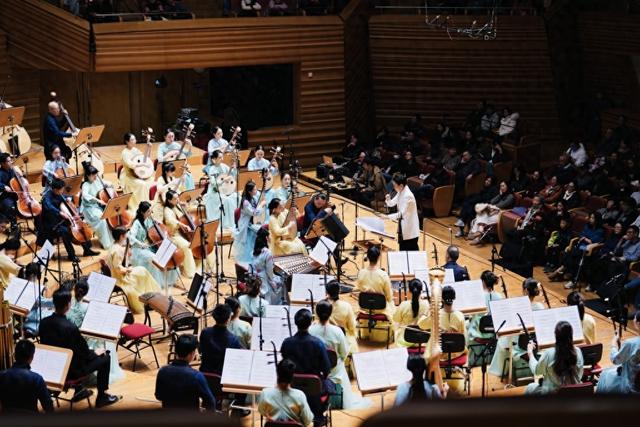
年逾八旬笔耕不辍,这是顾冠仁写给江南的一封长信
Xin Lang Cai Jing· 2026-01-18 07:08
Core Viewpoint - The concert "Jiangnan Scenes" featuring composer Gu Guanyin's works highlights the enduring cultural essence of Jiangnan, showcasing the region's influence on his music and creativity [1][9]. Group 1: Concert Highlights - The Shanghai National Orchestra premiered the fifth pipa concerto "Jiangnan Scenes in Three Chapters," which unfolds like three scrolls of ink painting, blending the pipa's melodies with the orchestra to depict a vibrant Jiangnan [3]. - The concert included various pieces such as the poetic music "Remembering Jiangnan," which resonates with the fourfold meaning of Bai Juyi's poetry, and the pipa and guzheng concerto "Peony Pavilion," narrating a romantic journey across life and death [7]. - Conductor Peng Fei described each piece as a painting waiting to be unveiled, using her baton to bring to life the landscapes of Jiangnan through music [7]. Group 2: Composer's Inspiration - Gu Guanyin's works consistently reflect the themes, styles, and flavors of Jiangnan, which he considers not only his birthplace but also a source of inspiration and emotional connection [9]. - He expressed a desire for his music to transport listeners to a familiar yet fresh Jiangnan, filled with old stories and new experiences [9]. - The concert concluded with Gu Guanyin conducting encore pieces "Galloping Horses" and "Three Six," further emphasizing his deep connection to Jiangnan [9].
去年全国营业性演出票房收入超616亿元
Xin Lang Cai Jing· 2026-01-13 21:57
Group 1 - The core viewpoint of the articles indicates that the Chinese performance market is experiencing robust growth, with significant increases in both the number of performances and box office revenue for 2025 [1][2] - The total number of commercial performances in China for 2025 is projected to reach 640,400, representing a year-on-year growth of 6.58% [1] - Box office revenue for the same year is expected to be 61.655 billion yuan, reflecting a year-on-year increase of 6.39% [1] Group 2 - Large-scale performances (over 5,000 attendees) are anticipated to generate box office revenue of 32.448 billion yuan in 2025, driven by supportive local policies and the integration of performance projects with regional tourism [1] - The musical theater segment is expected to see a box office revenue increase of 7.55% in 2025, highlighting a growing market for this art form [2] - The tourism performance sector is projected to achieve box office revenue of 17.442 billion yuan in 2025, indicating its significance in the overall performance market [2]
2025年全国营业性演出票房收入超616亿元
Xin Hua Wang· 2026-01-13 10:03
Core Insights - The Chinese performance industry is experiencing robust growth, with a projected 640,400 performances and ticket revenue of 61.655 billion yuan in 2025, reflecting year-on-year increases of 6.58% and 6.39% respectively [1] Group 1: Market Overview - The large-scale performance market (over 5,000 attendees) is expected to generate ticket revenue of 32.448 billion yuan in 2025, driven by supportive local policies and the integration of performance projects with regional tourism [1] - The "ticket economy" is enhancing consumer willingness to spend, positioning large performances as a significant driver of local cultural and tourism consumption [1] Group 2: Artistic Trends - The market for stage arts is showing a high degree of commercialization, with musical theater ticket revenue projected to grow by 7.55% in 2025 [1] - Mainstream themes in productions are becoming more vibrant, with works like "Finding Li Ergou" and "Under the Night in Harbin" showcasing high-quality performances that enrich the cultural landscape [1] - Traditional cultural elements are gaining popularity, with national style musicals such as "The Knight and the Flower" and "The Great Status King" resonating with audiences [1] Group 3: Theatre and Tourism Performances - The drama market is characterized by a dual approach of classic adaptations and original contemporary themes, with new productions like "Romance of the Three Kingdoms" and "Peony Pavilion" gaining market attention [2] - The ticket revenue for large and medium-sized tourism performances is projected to reach 17.442 billion yuan in 2025, with innovative elements like drones and fireworks enhancing audience engagement [2] - The integration of national trend IPs with cultural tourism is revitalizing traditional arts, making them more appealing to modern audiences [2]