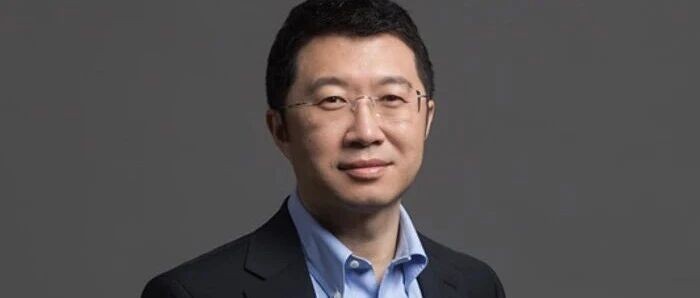
一段式端到端方案

Search documents
对话文远知行韩旭:智驾终局论是妄想,不存在必赢的技术路线
晚点LatePost· 2026-03-27 03:35
Core Viewpoint - The autonomous driving industry is still in its early stages, and the notion of a "final conclusion" is premature. Continuous technological advancements are expected, and the competition will persist beyond 2026, contrary to some industry predictions [3][30][31]. Group 1: Company Developments - WeRide has emerged as a significant player in the autonomous driving sector, achieving a 90% revenue growth to 690 million yuan in the past year, driven by its Robotaxi business and the introduction of an end-to-end model [4][5]. - The company has developed a simulation platform called WeRide GENESIS, which generates high-quality training data for autonomous driving, addressing the industry's data bottleneck [5][9]. - WeRide GENESIS is designed to create realistic driving scenarios, enhancing the training of autonomous models by simulating complex environments and interactions [8][9]. Group 2: Technological Innovations - The end-to-end model developed by WeRide is seen as a breakthrough, allowing for direct decision-making from sensor data without predefined rules, which contrasts with traditional methods [6][7]. - The platform's ability to generate diverse and realistic scenarios is crucial for training autonomous systems, as it overcomes the limitations of real-world data collection [8][9]. - The company emphasizes that the quality of data is critical for the success of the end-to-end model, and WeRide GENESIS provides a solution to generate high-quality synthetic data [27][10]. Group 3: Industry Perspectives - The industry is characterized by ongoing debates about the future of autonomous driving technology, with some leaders expressing skepticism about the emergence of new paradigms [3][31]. - WeRide's leadership believes that the competition will remain fierce, and the notion of a few companies dominating the market by 2026 is overly optimistic [30][31]. - The company aims to balance its focus on both high-level autonomous driving (L4) and advanced driver-assistance systems (ADAS), indicating a strategic approach to market demands [35][36].


对谈文远知行韩旭:智驾终局论是妄想,不存在必赢的技术路线
晚点Auto· 2026-03-25 12:33
Core Viewpoint - The autonomous driving industry is still in its early stages, and the notion of a "final conclusion" is premature as technology continues to evolve rapidly. The competition is ongoing, and significant advancements are expected in the coming years [2][33]. Group 1: Industry Insights - The CEO of WeRide, Han Xu, argues that the so-called "endgame theory" is driven by leading companies that are eager for the competition to conclude, but the reality is that the race is far from over [2][33]. - The industry is witnessing a shift towards a "final circle" or "elimination race," with predictions that by 2026, only a few companies will emerge victorious [2][33]. - WeRide's recent advancements, particularly in their end-to-end model, have positioned them as a new variable in the autonomous driving race, with a reported revenue growth of 90% to 690 million yuan [3][33]. Group 2: Technological Developments - WeRide's breakthrough in the end-to-end model is attributed to their internal simulation platform, WeRide GENESIS, which has made significant progress in generating high-quality training data [3][7]. - The WeRide GENESIS platform can create complex driving scenarios that are essential for training autonomous driving models, addressing the industry's data bottleneck [3][7]. - The platform is designed to generate realistic scenarios that adhere to physical laws, enhancing the training process for autonomous vehicles [7][9]. Group 3: Company Strategy - WeRide's strategy includes a focus on both L2++ and L4 autonomous driving technologies, with a commitment to developing high-quality products and services [15][36]. - The company emphasizes internal talent development and a collaborative culture, which they believe is crucial for long-term success in the competitive landscape [26][27]. - WeRide aims to integrate their end-to-end technology into their L4 offerings, enhancing the performance of their Robotaxi services [36][39].
博世拿下百亿ADAS订单
自动驾驶之心· 2025-12-19 00:05
Core Insights - The article highlights a significant global order in the intelligent driving industry, where Toyota has partnered with Bosch for a billion-level ADAS project, marking a shift from regional competition to a global collaborative framework [5][6][10] - This partnership is seen as a strategic move for Toyota to establish a benchmark for suppliers in the global intelligent driving era, emphasizing the importance of compliance and localization capabilities [6][7][10] Group 1: Partnership Significance - The collaboration between Toyota and Bosch is the largest single project in the global intelligent driving sector, covering key markets such as North America, the EU, the UK, and Japan, and enabling L2 level intelligent driving features [5][6] - This partnership signifies a transition in the automotive industry, where competition is evolving from regional technical showcases to global engineering implementation and ecosystem adaptation [6][9] Group 2: Challenges and Opportunities for Chinese Automakers - Chinese automakers face the challenge of adapting to global markets, where intelligent driving capabilities are no longer just an added advantage but a necessity for market entry [6][10] - The article suggests that understanding local markets and building a robust compliance network are critical for success in the global intelligent driving competition [10] Group 3: Bosch's Competitive Edge - Bosch's extensive global service capabilities and deep penetration in various markets make it an ideal partner for Toyota, as it can provide a comprehensive compliance system for intelligent driving [7][9] - Bosch's experience in both traditional and hybrid vehicle systems positions it uniquely to support Toyota's ambitions in the intelligent driving space, particularly in the context of hybrid vehicles [8][9]

文远知行韩旭:中国真正L4只有3家......
自动驾驶之心· 2025-12-16 09:25
Core Insights - The article discusses the evolution of autonomous driving, highlighting the progress made by WeRide, which is now a publicly listed company in both the US and Hong Kong, recognized as the "first Robotaxi stock" [3] - The CEO, Han Xu, emphasizes the importance of focusing on talent acquisition and international expansion, indicating a shift from proving the viability of autonomous driving to scaling operations [6][9] - Han Xu asserts that only three companies in China can truly operate Level 4 (L4) autonomous vehicles without a safety driver, indicating a significant technological barrier in the industry [7][28] Group 1 - WeRide has deployed over 1,600 autonomous vehicles globally, with more than 750 being Robotaxis, marking a growth of at least 30% since its IPO [9][10] - The company has recognized the international demand for Robotaxis, being the first to deploy in 11 countries and 30 cities, and has obtained eight different autonomous driving licenses [12][13] - Han Xu reflects on the past challenges of securing funding and the skepticism surrounding autonomous driving, contrasting it with the current landscape where the technology is being implemented at scale [14][16][18] Group 2 - The article highlights the distinction between L2 and L4 autonomous driving, with Han Xu stating that the barriers between these levels have not been broken, and many companies claiming to be L4 are actually "pseudo-Robotaxi" firms [24][29] - Han Xu sets two criteria for a company to be considered a true L4 operator: having a fleet of at least 20-30 vehicles operating without a safety driver for six months, and achieving pure unmanned commercial operations [25][27] - The article discusses the competitive landscape, with Han Xu predicting that if Tesla continues to use L2 vehicles without advanced sensors, it will not reach the operational level of Waymo in three years [33][34] Group 3 - WeRide is also advancing in the L2+ space, having launched a one-step end-to-end solution that is ready for mass production, indicating a dual focus on both L2 and L4 technologies [22][40] - The company collaborates with Bosch to enhance high-level intelligent driving solutions, showcasing its capability in both L4 and L2 technology stacks [37][40] - The article concludes with Han Xu's insights on the increasing salaries for AI talent, reflecting the growing demand and competition in the field, with top salaries reaching up to 5 million [54]